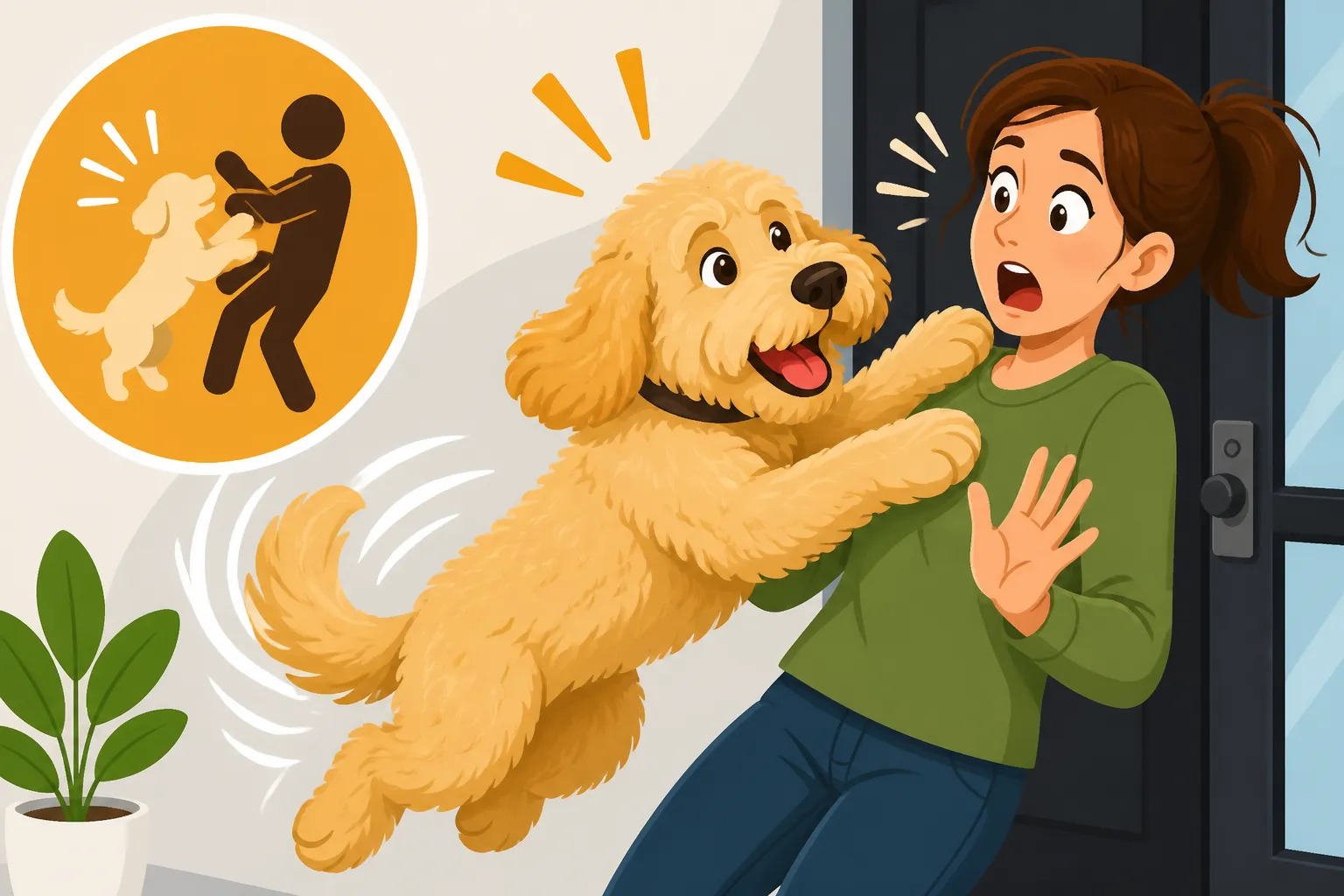
Frantic Greeting Behavior in a Goldendoodle
Oh, the Goldendoodle greeting! It's one of those moments that can go from heartwarming to utterly chaotic in a blink, leaving you feeling embarrassed and a little overwhelmed. That incredible exuberance, while a testament to their joyful nature, often translates into a furry, four-legged tornado launching itself at guests, knocking over toddlers, or dragging you halfway down the street to say hello. This guide is here to help you understand why your Goldendoodle acts like a rocket at greetings and, more importantly, to equip you with the practical, empathetic strategies to teach them a calmer, more polite way to welcome friends and strangers alike.
Understanding Why Goldendoodles Greet Frantically
It's easy to label frantic greetings as simply "bad behavior," but truly, it's often a deeply ingrained instinct mixed with excitement and a dash of misunderstanding on our part. Goldendoodles inherit a complex cocktail of traits from their Golden Retriever and Poodle parents, and many of these contribute to their enthusiastic, often over-the-top, welcome wagon routine.
The Golden Retriever's Eagerness to Please
Think about the Golden Retriever side of your Goldendoodle. They are renowned for their friendly, outgoing personalities and an almost boundless desire to connect with people. This "eagerness to please" is a double-edged sword: it makes them wonderfully trainable and devoted companions, but it also means they crave attention and interaction above almost all else. When a new person appears, especially one who expresses delight or calls their name, your Goldendoodle interprets this as an open invitation to full-contact greeting. They're not trying to be naughty; they're simply responding with every fiber of their being to what they perceive as an exciting, rewarding social opportunity.
Imagine a Golden Retriever bounding through a field to retrieve a bird for its handler – that same intense focus and physical drive to reach their goal is often channeled into reaching a new friend. When that friend is a human, the "retrieving" instinct can look a lot like launching themselves forward for pets and praise. This natural inclination, when unchecked, becomes the foundation for many of the frantic greeting behaviors we see. They genuinely want to make friends and be loved, and their default mode for achieving that is often a full-body embrace.
The Poodle's Intelligence and Sensitivity
Now, let's consider the Poodle influence. Poodles are incredibly intelligent and often quite sensitive. This means they pick up on cues very quickly, both intentional and unintentional. They can also be prone to excitement and, in some cases, a bit of anxiety or over-arousal if not properly managed. This isn't to say all Poodles are anxious, but their keen intelligence means they're constantly processing their environment. If greetings are consistently high-energy affairs, with lots of squeals, quick movements, or even just excited talk from humans, the Poodle brain learns that this is the appropriate way to interact.
The Poodle's energy, combined with the Golden's eagerness, can create a dog that gets incredibly "amped up" very quickly. Their sensitivity might also mean they react strongly to novel stimuli – a new sound, a new smell, a new person entering their space. If they haven't learned coping mechanisms for this excitement, it manifests as frantic physical expression. They might jump not just for joy, but because they're simply overwhelmed and don't know what else to do with all that pent-up energy and emotional charge.
Lack of Early Training and Boundary Setting
Often, frantic greetings stem from a lack of consistent early training and clear boundary setting. When your Goldendoodle was a tiny puppy, their excited jumps were probably adorable. Guests might have encouraged it, saying "oh, he's so cute!" or bending down to greet them enthusippedly. What started as cute puppy behavior, however, doesn't magically disappear when that 15-pound fluffy ball turns into a 60-pound powerhouse. If a Goldendoodle learns that jumping up, nipping, or excessive licking gets them the attention they crave – even negative attention like pushing them away or shouting "no!" – they'll continue the behavior because, to them, any attention is good attention.
Puppies need to learn early on what polite greetings look like, and that means teaching them that all four paws on the floor is the ticket to getting pets and praise. Without this consistent guidance, they simply don't understand that their exuberant greetings might be unwelcome or even painful for humans. It's not a malicious act; it's a learned behavior that was, at some point, inadvertently reinforced. This is why addressing the issue proactively with consistent boundaries and positive reinforcement is key from the very beginning. Early exposure to different types of people, in controlled settings, also helps them learn appropriate social etiquette.
Recognizing the Signs of Frantic Greetings
It's helpful to clearly identify what constitutes "frantic greeting behavior" so you can recognize it in the moment and intervene effectively. This isn't just about a happy wagging tail; it's about a dog that loses control of its impulses, often leading to undesirable and potentially unsafe interactions.
Jumping, Nipping, and Excessive Licking
These are perhaps the most common and immediately noticeable signs of a Goldendoodle who is greeting frantically. Your dog might launch themselves skyward, sometimes repeatedly, attempting to get their front paws on your chest or shoulders. For a smaller Goldendoodle, this might be manageable, but a standard-sized one can easily bowl over a child or an elderly person. This jumping is often accompanied by nipping at hands, arms, or clothing, which, while not usually aggressive, can be painful or damaging. It's a way for them to solicit attention, to get closer, and to express their overwhelming excitement.
Then there's the excessive licking. While a gentle lick can be endearing, a frantic Goldendoodle might try to lick your entire face, hands, or any exposed skin with incredible intensity. This isn't just a friendly smooch; it's often a desperate, overstimulated attempt to engage with you, sometimes bordering on obsessive. These behaviors together indicate a dog that's completely over threshold with excitement, unable to self-regulate its impulses and offer a calmer interaction. It's a clear sign that they need guidance on appropriate physical boundaries during greetings.
Vocalization and Hyper-Excitement
Beyond the physical contact, frantic greetings often come with a whole symphony of sounds. You might hear high-pitched excited yips, incessant barking, or urgent whining as your Goldendoodle anticipates or engages with a new person. This vocalization isn't just incidental; it's part of their overall hyper-arousal. Their body language will typically reflect this extreme excitement too: a stiff, quivering body, rapid tail wags that encompass their whole rear end, darting eyes, and often frantic pacing or circling before they even make contact.
This intense vocalization and hyper-excitement can be difficult to ignore, which often inadvertently rewards the behavior. If a guest, even with good intentions, talks to the dog or tries to calm them down while they're barking and whining, the Goldendoodle learns that these noisy displays are effective attention-getters. It's a vicious cycle where their internal state of excitement fuels the external display, which then, through human reaction, gets reinforced, making it harder for them to learn a calmer way to be. Goldendoodle Barking and What Sets It Off is a great resource if you're battling persistent vocalizations.
Over-Arousal Leading to Accidents
One of the more distressing and often embarrassing signs of frantic greeting behavior is when a Goldendoodle becomes so over-aroused that they have an accident. This might manifest as submissive urination – a small puddle forming as they greet someone, often accompanied by a low posture, averted gaze, and tail tucked between their legs. This isn't a deliberate "potty accident" but rather an involuntary physical response to being overwhelmed and excited. It's a sign that their emotional state has completely flooded their ability to control their bladder.
Another scenario could be actual loss of bladder or bowel control due to sheer excitement, without necessarily the submissive body language. This tells you that your Goldendoodle's nervous system is running on overdrive. These accidents are not only messy and frustrating for you, but they are also clear indicators that your dog is not comfortable or in control during these greeting moments. They're struggling to cope with the intensity of the situation, and it highlights the urgent need to teach them calmer, more structured ways to interact.
Strategies to Manage and Modify Greeting Behavior
Now that we understand why Goldendoodles greet the way they do and what those frantic greetings look like, let's dive into practical strategies to modify this behavior. The key here is consistency, patience, and positive reinforcement. Remember, we're not trying to extinguish their joyful nature, but rather redirect it into polite, acceptable channels.
Laying the Foundation with Impulse Control
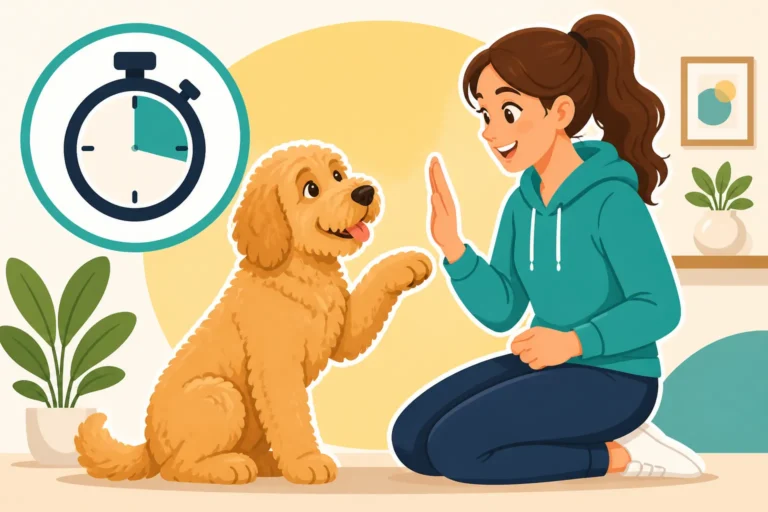
The bedrock of polite greetings is solid impulse control. Your Goldendoodle needs to learn that good things happen when they are calm and four paws are on the floor. This starts not just at the door, but throughout their day. Teach them basic commands like "sit," "stay," and "down" in various environments, gradually increasing distractions. Reward them heavily for holding these positions, especially when they're excited. This helps build their ability to pause, think, and choose a calmer action.
A crucial exercise is teaching "four paws on the floor." When your Goldendoodle starts to jump, immediately turn your back, cross your arms, and completely ignore them. No eye contact, no speaking, no touching. The moment all four paws are on the ground, even for a second, turn back, praise softly, and offer a calm pet or a small treat. If they jump again, repeat the sequence. Consistency is critical here; every person who interacts with your dog must follow this rule. You can find excellent guided programs for this kind of foundational training with resources like BAXTER & Bella, which offers online courses that break down these concepts step-by-step. Remember, consistency is key, as highlighted in Goldendoodle Jumping and the Impulse Control Problem.
Controlled Greetings: The "Doorbell Protocol"
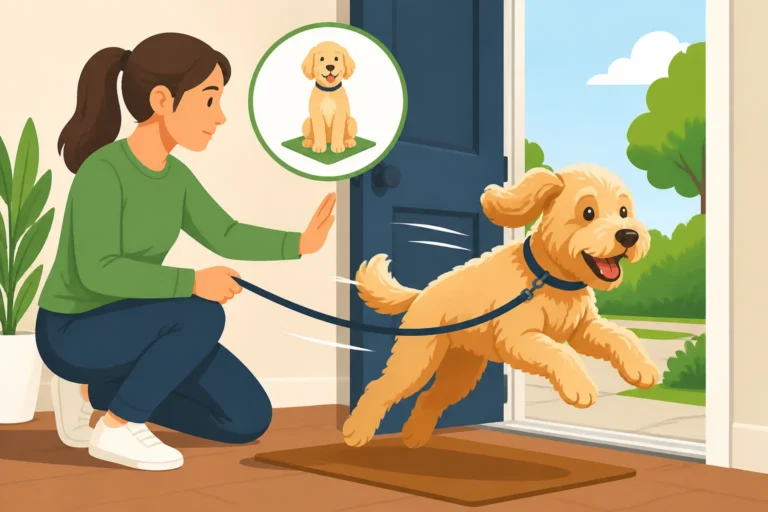
The "doorbell protocol" is a game-changer for Goldendoodles who go ballistic when someone rings the bell or knocks. The goal is to teach them that the sound of a visitor is a cue to go to a designated "place" (like their mat or bed) and stay there calmly until released.
Here’s a breakdown:
- Practice without a visitor: Start by having a family member ring the doorbell or knock. Immediately, direct your Goldendoodle to their "place" with a calm "place" command. Reward them generously with high-value treats (think tiny pieces of cheese or cooked chicken) for staying on their mat. Gradually increase the duration they must stay before you release them. Repeat this many times.
- Add a "pretend" guest: Have a family member leave the house and then return, ringing the bell and acting like a guest. Your dog should go to their "place." Once they are settled, open the door. If your dog breaks their stay, immediately close the door (without yelling) and repeat the process. They need to learn that an open door only happens when they are calm.
- Introduce real guests: When a real guest arrives, have them wait outside briefly while you get your Goldendoodle settled on their place. Reward them for staying. Greet your guest calmly, then once your dog is truly settled, the guest can approach slowly, praising the calm behavior. If the dog gets up or jumps, the guest should immediately turn their back and freeze. Only when four paws are on the floor should the greeting continue. This process takes time and practice, and it will feel awkward at first, but it teaches your dog valuable self-control. This also ties into Door Manners for a Goldendoodle That Bolts.
Managing Greetings in Public Spaces
Frantic greetings aren't just an at-home problem. Walks, dog parks, and visits to friends' houses can also be high-trigger situations. The same principles of impulse control and rewarding calm apply, but with added layers of distraction.
When out on a walk, if your Goldendoodle starts to pull or get overly excited when they see another person or dog, immediately stop moving. Do not proceed until they offer a moment of slack in the leash or make eye contact with you. Reward that moment of calm. This teaches them that pulling and frantic behavior stops forward progress, while calm behavior earns it. This is crucial for developing Goldendoodle Leash Manners by Size. If a friendly stranger approaches and wants to pet your dog, briefly explain you're working on polite greetings. Ask them to wait until your dog is sitting calmly before they offer a pet. If your dog jumps, they immediately stand up straight, turn their back, and "disappear" their hands. Once your dog is sitting calmly, they can try again.
For situations like dog parks or friend's houses, ensure your Goldendoodle gets ample exercise before you go. A tired dog is a calmer dog. Engage them in mental work like puzzle feeders or scent games, as outlined in The Thinking Work That Actually Tires a Goldendoodle, to burn off some mental energy. When arriving, keep them on leash initially. Practice short, calm greetings with new people, rewarding heavily for polite behavior. If they become over-aroused, remove them from the situation briefly for a "time-out" until they can settle before re-engaging. This isn't punishment; it's managing their environment to help them succeed.
Tools and Aids for Training Success
While training is primarily about consistent effort and communication, certain tools can significantly aid your journey to calmer greetings. These aren't magic fixes, but they can make the process smoother and more effective for both you and your Goldendoodle.
Appropriate Leashes and Harnesses
For Goldendoodles prone to pulling and lunging during greetings, the right leash and harness can make a world of difference. A standard flat collar often isn't enough to manage a strong, excited Goldendoodle, and it can put unnecessary pressure on their throat. Front-clip harnesses are excellent because they redirect the dog's forward momentum back towards you when they pull, making it physically harder for them to lunge. Look for harnesses designed to be comfortable and non-restrictive, but also effective at managing pulling. Some brands specifically design harnesses to avoid matting, which is a common concern with a Goldendoodle's coat, so it's worth exploring options mentioned in Harnesses That Suit a Goldendoodle Coat.
Avoid retractable leashes for training polite greetings. They offer little control, encourage pulling, and can be dangerous. A standard 4-6 foot leash gives you the control and proximity needed to give cues and reward good behavior effectively. Consider a hands-free leash if you need to manage multiple dogs or want to keep your hands free for treats, but ensure you still maintain a connection and control over your dog's movements.
High-Value Treats and Training Pouches
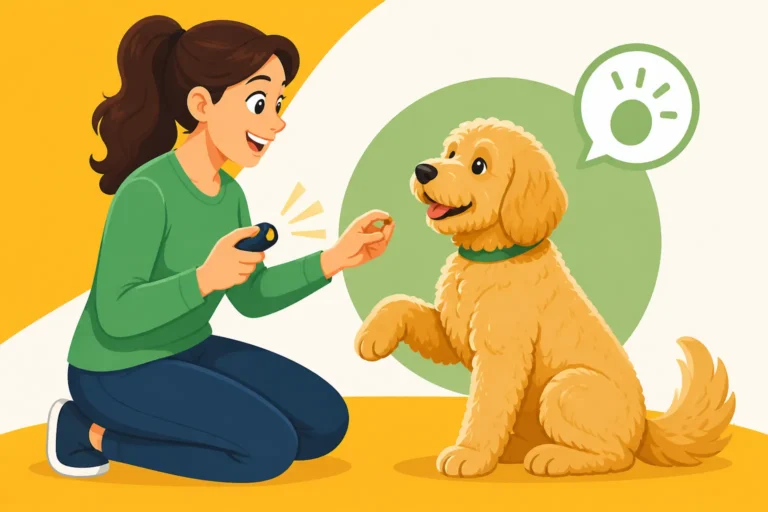
Positive reinforcement hinges on using rewards that genuinely motivate your Goldendoodle. For difficult behaviors like frantic greetings, you'll need high-value treats – something far more exciting than their regular kibble. Think small pieces of cooked chicken, cheese, hot dogs, or store-bought soft training treats. These treats should be tiny, pea-sized, so you can deliver many repetitions without overfeeding.
A training pouch is an invaluable aid. Wearing one keeps treats readily accessible, so you can reward your Goldendoodle the instant they offer a desired behavior (e.g., four paws on the floor, a calm sit). Timing is everything in positive reinforcement. If you have to fumble for a treat, the moment to reward their good choice passes, and they might not connect the reward to the correct action. You can find a wide variety of practical training pouches on platforms like Amazon, making it easy to keep your rewards within reach during training sessions.
Enrichment Toys for Mental Stimulation
A Goldendoodle with pent-up energy, especially mental energy, is far more likely to engage in frantic behaviors. Enrichment toys provide an outlet for their natural instincts and can help drain some of that excess excitement before a high-trigger situation like a greeting. Puzzle feeders, for example, require your dog to work to get their food, engaging their brain and satisfying their natural scavenging drives. Toys that dispense treats as they are manipulated can keep them occupied and mentally stimulated.
Think about giving your Goldendoodle a stuffed Kong or a LickiMat before guests arrive. This occupies them with a constructive, calming activity, diverting their focus from the impending arrival. Chew toys, especially those that last, can also be great for settling nerves and providing an appropriate outlet for oral fixation (which can sometimes manifest as nipping during greetings). Engaging them in regular "thinking work" like scent games or trick training, as described in Goldendoodle Puzzle Feeders and Scent Games, also helps manage their overall arousal levels, making them less likely to explode with excitement when a new person enters the scene.
Addressing Underlying Causes and Seeking Professional Help
Sometimes, frantic greeting behavior isn't just about training; it can be influenced by underlying factors that need a closer look. Being comprehensive means considering all angles to give your Goldendoodle the best chance at success.
Ruling Out Medical Issues
While frantic greetings are largely behavioral, it's always wise to rule out any potential medical issues, especially if the behavior has suddenly worsened or your Goldendoodle seems unusually agitated. Pain, discomfort, or certain neurological conditions can sometimes manifest as increased anxiety, excitability, or an inability to control impulses. For example, joint pain might make a dog less likely to settle, or an undiagnosed thyroid issue (common in Goldendoodles, as discussed in Thyroid Disease and a Goldendoodle Losing Coat) could affect their overall temperament and energy levels.
A thorough veterinary check-up is always a good first step, particularly if you notice other changes in your dog's behavior, appetite, or energy. Your vet can assess their general health, check for pain, and discuss any recent changes you've observed. While it's rare for a medical issue to be the sole cause of chronic frantic greetings, ensuring your dog is physically comfortable and healthy is a foundational step in any behavior modification plan.
The Role of Consistent Exercise and Mental Stimulation
We've touched on it already, but it bears repeating: a Goldendoodle that isn't adequately exercised, both physically and mentally, is a Goldendoodle that has an abundance of pent-up energy to unleash on greetings. These dogs are intelligent and active; they need more than just a quick trot around the block.
Aim for at least Goldendoodle Exercise at Thirty to Sixty Minutes of moderate to vigorous physical activity daily, broken into sessions. This could be a brisk walk, a run, fetch in the yard, or swimming. Beyond physical exertion, mental stimulation is paramount. Puzzle toys, training sessions, scent work, or even just exploring new environments can be incredibly tiring for their intelligent Poodle brains. Without this outlet, that excess energy will find a way out, and frantic greetings are an easy target. A dog whose needs are met physically and mentally is a dog better equipped to regulate its emotions and respond calmly in exciting situations.
When to Consult a Professional Dog Trainer or Behaviorist
If you've consistently applied the above strategies for several weeks or months and are still struggling, or if your Goldendoodle's greetings are escalating into truly unmanageable or aggressive displays (which is rare for a Goldendoodle but can happen if boundaries are completely absent), it's time to call in a professional. A certified professional dog trainer or a veterinary behaviorist can provide invaluable insight.
A good trainer can observe your Goldendoodle's behavior in context, identify specific triggers, and tailor a training plan unique to your dog's personality and your household's dynamics. They can teach you how to refine your cues, improve your timing, and troubleshoot challenges you might be facing. For more severe cases, especially if anxiety or fear is playing a significant role, a veterinary behaviorist (a DVM with specialized training in animal behavior) can offer comprehensive solutions, which might include behavior modification alongside medication if deemed necessary. Don't hesitate to seek help; a professional can provide the expertise to transform your Goldendoodle's greeting behavior and bring much-needed peace back to your home. Finding a Trainer for a Goldendoodle can help you navigate this decision.
Here's a quick comparison of popular training tools to help you decide what might work best for your Goldendoodle:
| Training Tool | Best For | Pros | Cons |
|---|---|---|---|
| Front-Clip Harness | Managing pulling & lunging on leash | Redirects forward motion, reduces pressure on throat | Can sometimes cause matting under the arms/chest; less control than head halters |
| Head Halter (Gentle Leader) | Strong pullers, extreme lungers, reactive dogs | Excellent control over the head, prevents pulling and jumping | Some dogs dislike the feel on their muzzle; requires careful introduction |
| Flat Collar (with ID tags) | Basic identification, gentle leash walking | Comfortable for everyday wear | Little control for strong pullers or frantic greeters; can injure throat if dog pulls hard |
| High-Value Treats | All positive reinforcement training | Strong motivator, helps create positive associations | Can be messy; must be small to avoid overfeeding |
| Training Pouch | Efficient reward delivery | Keeps treats accessible, improves timing of rewards | Can be an extra item to wear |
| Long Line (15-30 ft) | Practicing recall & distance commands | Allows safe practice of off-leash skills in open areas | Can get tangled; requires open space |
| Puzzle Toys/Kongs | Mental stimulation, redirecting energy | Keeps dogs occupied, reduces boredom, calms arousal | Can be messy; some dogs solve them too quickly |
| Manners Minder/Treat & Train | Remote treat delivery for place training | Reinforces distance work, helps with doorbell protocol | Requires batteries; initial investment |
Disclaimer
This article is for general informational purposes only and does not constitute professional advice. Laws, prices and regulations vary by location and change over time. Consult a qualified professional for guidance on your specific situation.