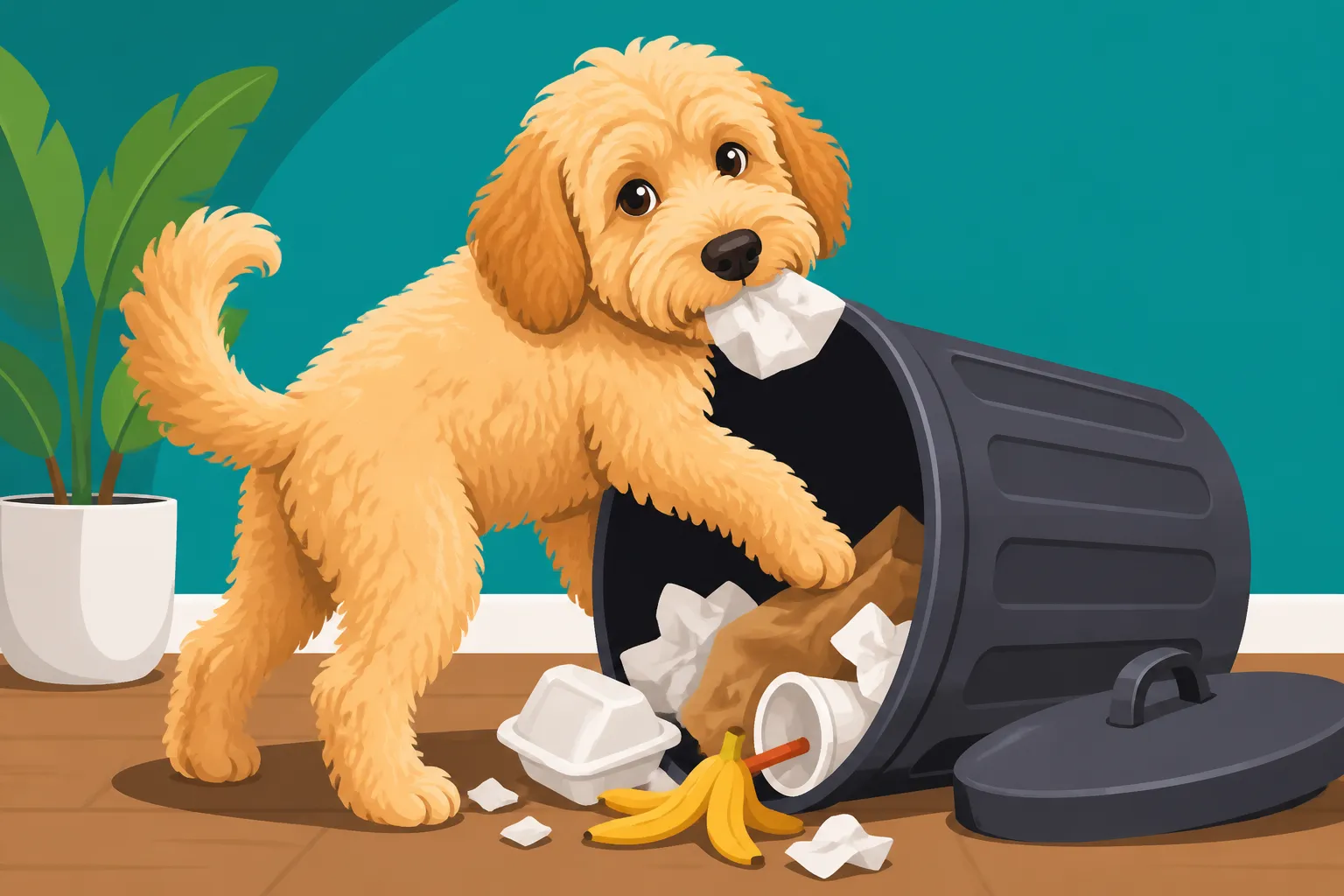
A Goldendoodle Raiding the Trash
Oh, the dreaded trash raid! You walk into the kitchen, maybe after stepping out for just a few minutes, or perhaps first thing in the morning, and there it is: a confetti of coffee grounds, crumpled paper, and last night's dinner scraps strewn across the floor. Your sweet, innocent-looking Goldendoodle is standing amidst the wreckage, tail wagging, looking like they've just discovered the meaning of life. It's frustrating, messy, potentially dangerous for your pup, and a challenge many Goldendoodle owners face. This guide is here to help you understand why your furry friend acts like a four-legged bandit and, more importantly, how to put a stop to this stinky habit for good.
Why Your Goldendoodle Sees the Trash as Treasure
It's easy to get mad, but from your Goldendoodle's perspective, the trash can is less a receptacle for waste and more a mysterious, exciting treasure chest bursting with tantalizing aromas and potential delights. Understanding why they do it is the first step toward effective prevention.
The Irresistible Scent Trail
Dogs live in a world of scent that we can barely imagine. Their noses are hundreds of thousands of times more sensitive than ours, which means that what smells like "nothing" to you in a closed trash can is a veritable buffet of information and temptation to your Goldendoodle. Imagine walking into a gourmet restaurant with every dish laid out before you, the aromas wafting directly into your nose. That's what your garbage can is to your dog.
Leftover food scraps, wrappers from tasty treats, even used paper towels with food residue are like neon signs flashing "COME AND GET IT!" for their powerful noses. Goldendoodles, with their Poodle intelligence and Golden Retriever biddability, are also incredibly curious. That intense curiosity, coupled with an unmatched sense of smell, creates a powerful drive to investigate every last crumb. They're not being "bad" on purpose; they're simply following their instincts. This is part of What a Goldendoodle Inherits From Each Parent Breed.
The Thrill of the Hunt and Reward Cycle
Beyond just the smell, there's a strong element of reward involved. Every time your Goldendoodle manages to tip the can, pull out a bag, or successfully extract an item, they get a 'reward.' Whether it's a morsel of food, an interesting texture to chew on, or simply the satisfaction of having achieved their goal, this reinforces the behavior. It becomes a self-perpetuating cycle: they try, they succeed, they're rewarded, they're more likely to try again.
Think about it from their perspective: it's like a slot machine that occasionally pays out. You keep pulling the lever because you know there's a chance for a jackpot. For a Goldendoodle, the "jackpot" could be anything from a chicken bone to a used tissue. This "thrill of the hunt" combined with intermittent rewards is a powerful motivator. They're learning that trash cans hold interesting things, and that persistence pays off. This is a common aspect of Goldendoodle Behavior Problems That Start in Puppyhood if not addressed early.
Immediate Fixes: Securing the Treasure Chest
When your Goldendoodle has decided the kitchen trash is their personal buffet, the first step is always about prevention and managing the environment. You have to make it impossible, or at least incredibly difficult, for them to access the trash.
Investing in a Dog-Proof Trash Can
This is often the most effective, immediate solution. A good dog-proof trash can isn't just about aesthetics; it's about engineering. You need something that your Goldendoodle can't tip over, can't pry open, and can't chew through. There are several types on the market, each with different features to consider.
Some are extra-heavy at the base, making them difficult to knock over, even for a larger Standard Goldendoodle. Others have locking lids, often requiring a human hand to operate a latch or a specific foot pedal mechanism that's too complex for paws. Stainless steel cans are great because they are virtually chew-proof, unlike softer plastics. Many popular options can be found on platforms like Amazon, where you can read reviews from other pet owners dealing with similar issues. Look for features like strong locking mechanisms, weighted bases, and sturdy construction.
| Feature | Description | Pros | Cons |
|---|---|---|---|
| Foot Pedal Lid | Opens with a foot pedal; common kitchen design. | Easy for humans to open. | Smart Goldendoodles can learn to step on it; no true lock. |
| Manual Locking Lid | Requires a hand-operated latch or button to open. | More secure, harder for dogs to figure out. | Less convenient for quick human access. |
| Sensor/Automatic Lid | Opens with motion sensor; often battery-operated. | Hands-free for humans. | Can open accidentally; some dogs learn to trigger it; no true lock. |
| Weighted Base/Heavy Duty | Designed with a heavier base to prevent tipping. | Excellent for deterring larger, determined Goldendoodles. | Can be cumbersome to move; generally more expensive. |
| Cabinet Mount | Trash can built into a cabinet with a pull-out or swing-out mechanism. | Completely hidden and inaccessible when cabinet is closed. | Requires existing cabinet space; installation may be needed. |
Relocating the Trash Can
If a dog-proof can isn't immediately in the budget or you're waiting for one to arrive, the next best thing is to remove temptation entirely by relocating the trash can. This sounds simple, but you'd be surprised how many creative solutions exist.
Consider moving it into a pantry with a door that closes securely. A laundry room, a garage, or even a bathroom are other temporary safe zones. For some, a baby gate might be enough to block access to the kitchen during unsupervised times, keeping the Goldendoodle out of the primary "danger zone" altogether. Even placing it inside a closed cupboard or under the sink, secured with a child-proof latch if necessary, can buy you time. The goal is to create a physical barrier between your Goldendoodle and the appealing smells of your discards. This is a vital part of managing their environment, especially for a curious pup prone to Goldendoodle Counter Surfing at Standard Height.
The "Nothing in the Trash" Protocol
This strategy requires more effort but can be incredibly effective in tandem with other methods. The idea is simple: make the trash can utterly uninteresting to your dog. This means being extremely diligent about what goes in there, and how long it stays there.
Immediately scrape and rinse plates before putting scraps in the bin. Place particularly smelly items, like meat bones or greasy food wrappers, into a small, sealed bag (like a Ziploc) before putting them in the main trash. Better yet, if you have very tempting items, take them directly outside to your larger, secured garbage bin immediately. Empty your kitchen trash can frequently, perhaps even daily, to prevent odors from accumulating and becoming an irresistible beacon for your Goldendoodle. The less appealing the scent, the less motivated your dog will be to investigate.
Long-Term Training Solutions to Build Good Habits
While environmental management is crucial for immediate relief, the long-term solution lies in training your Goldendoodle to respect boundaries and control their impulses around tempting items. Goldendoodles are intelligent and eager to please, making them excellent candidates for positive reinforcement training.
Teaching "Leave It" and "Drop It"
These two commands are absolute lifesavers for any dog owner, especially with a curious Goldendoodle. "Leave It" teaches your dog to ignore something tempting, while "Drop It" teaches them to release something they already have in their mouth.
Start teaching "Leave It" in a low-distraction environment with a low-value treat. Place the treat on the floor, cover it with your hand, and say "Leave It." When your dog looks away from your hand, reward them with a different, higher-value treat from your other hand. Gradually increase the difficulty by making the treat uncovered, then using more tempting items, and eventually practicing in different environments with real-world distractions like the tempting scents of a trash can. This builds crucial Goldendoodle Impulse Control With Food on the Floor.
For "Drop It," start by trading. Offer a high-value treat in exchange for a toy they are holding. As they drop the toy to take the treat, say "Drop It." With consistent practice, these commands become powerful tools for managing your Goldendoodle's interactions with anything they shouldn't have, whether it's trash, something dangerous on a walk, or even something they've snatched off the counter. BAXTER & Bella, for example, offers online puppy training programs that delve deep into these foundational commands, which can be incredibly helpful for Goldendoodle owners.
Managing Boredom and Providing Enrichment
A bored Goldendoodle is a creative Goldendoodle, and often, that creativity leads to mischief—like raiding the trash. Goldendoodles are intelligent and energetic, needing both physical exercise and mental stimulation to be truly content. Without it, they might invent their own "jobs," and cleaning out the garbage can sometimes fits the bill.
Ensure your Goldendoodle gets adequate daily exercise for their size and age. This could be a good walk, a game of fetch in the yard, or a trip to a dog park. But physical activity alone often isn't enough for these smart cookies. Incorporate mental enrichment into their routine. Puzzle toys that dispense treats, snuffle mats for sniffing out kibble, or even short training sessions to learn new tricks can engage their brains and tire them out in a different way. Interactive feeder toys from Amazon are a great option for keeping them busy and mentally stimulated. Engaging their natural "retriever drive" with appropriate toys can also help channel their instincts away from the trash. Think about Goldendoodle Puzzle Feeders and Scent Games as a daily activity.
Crate Training as a Safe Haven and Trash Barrier
For times when you cannot actively supervise your Goldendoodle, a properly introduced crate can be an invaluable tool. It provides a safe, comfortable den for your dog and, crucially, prevents them from engaging in undesirable behaviors like trash raiding.
If your Goldendoodle is still a puppy or hasn't mastered impulse control, using a crate when you leave the house or when you're distracted (like cooking dinner or working) can prevent them from practicing the unwanted behavior. Every time they successfully raid the trash, the behavior is reinforced. By using a crate, you prevent this reinforcement. Remember, the crate should be a positive place, associated with comfort and security, not punishment. Never use it as a timeout for trash raiding, but rather as a preventative measure to keep them safe and out of trouble. Learn more about positive crate experiences by looking into Crate Training a Goldendoodle That Screams (and how to avoid it).
When Trash Raiding Becomes a Bigger Problem
While often a nuisance, trash raiding can quickly escalate into a serious health concern for your Goldendoodle. Knowing when to worry and when to seek professional help is vital.
Health Risks of Ingesting Trash
The contents of a trash can are rarely benign for a dog. Ingesting certain items can lead to a range of severe health problems:
- Gastrointestinal Obstructions: Cooked bones (especially chicken bones), corn cobs, fruit pits, dental floss, plastic wrappers, or even large amounts of paper can cause blockages in your dog's digestive system. These obstructions are often life-threatening and require emergency surgery.
- Toxic Substances: Many common household items found in the trash are toxic to dogs. This includes certain foods (onions, garlic, chocolate, grapes, xylitol-sweetened items), cleaning products, medications, and even some plant matter.
- Bacteria and Parasites: Decomposing food contains harmful bacteria like Salmonella or E. coli, which can lead to severe gastrointestinal upset, vomiting, and diarrhea. If your Goldendoodle is experiencing Goldendoodle Vomiting and When It Matters or Goldendoodle Diarrhea Lasting More Than Two Days after a trash incident, it's time to call the vet.
- Puncture Wounds/Cuts: Sharp objects like broken glass, can lids, or even hard plastic pieces can cause painful cuts to the mouth, tongue, or internal organs.
Always err on the side of caution. If you suspect your Goldendoodle has eaten something potentially dangerous from the trash, contact your veterinarian immediately. They can advise you on whether to induce vomiting, monitor your dog, or bring them in for an emergency visit.
Seeking Professional Help
If you've implemented all the environmental management strategies, diligently worked on "Leave It" and "Drop It" commands, provided ample exercise and mental stimulation, and your Goldendoodle is still persistently raiding the trash, it might be time to call in the cavalry. Sometimes, the behavior is deeply ingrained, or there might be an underlying anxiety or compulsive component that needs professional intervention.
A certified professional dog trainer or a veterinary behaviorist can help identify the root cause of the behavior and develop a tailored training plan. They can observe your Goldendoodle's behavior in your home environment, suggest advanced training techniques, and provide guidance on managing particularly challenging situations. Don't feel ashamed to seek help; many owners struggle with persistent behavioral issues, and a professional can offer fresh insights and effective strategies to keep your Goldendoodle safe and your kitchen clean. You can find guidance on Finding a Trainer for a Goldendoodle who understands these specific challenges.
Dealing with a Goldendoodle who loves to raid the trash can be a real headache, but it's a fixable problem with a combination of prevention, training, and a lot of patience. Your Goldendoodle isn't trying to be naughty; they're just being a dog. By understanding their motivations and implementing consistent strategies, you can help them develop better habits and keep your home—and your beloved companion—safe and clean.
Disclaimer
This article is for general informational purposes only and does not constitute professional advice. Laws, prices and regulations vary by location and change over time. Consult a qualified professional for guidance on your specific situation.