What a Goldendoodle Should Never Eat
Toxic chocolate, grapes, raisins, and xylitol cause acute kidney failure, seizures, and severe illness in Goldendoodles.
The daily stuff, done right.
Feeding amounts by life stage, coat and skin routines, dental and nail care, exercise needs, and what changes as they age.
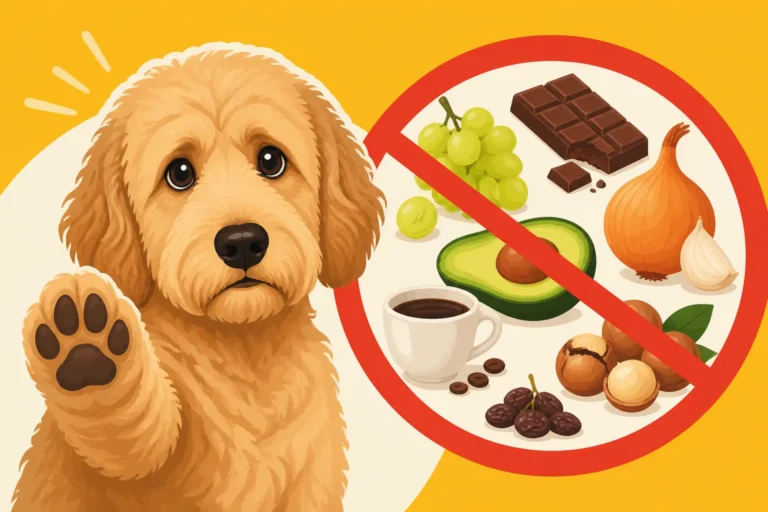
Toxic chocolate, grapes, raisins, and xylitol cause acute kidney failure, seizures, and severe illness in Goldendoodles.

Senior Goldendoodle care requires adjusting diets for aging dogs, managing coat changes, and supporting joint comfort around seven or eight years.

Goldendoodle physical and mental exercise needs explained to prevent boredom, anxiety, and destructive chewing behaviors.

At-home Goldendoodle grooming routines prevent painful mats, reduce salon stress, and maintain a healthy, tangle-free coat between professional appointments.

Goldendoodle ear care prevents painful bacterial and yeast infections caused by trapped moisture and dense internal hair.

Goldendoodle feeding strategies tailored for different sizes and activity levels explain calorie, protein, and fat requirements.

Goldendoodle grooming schedules every six to eight weeks prevent painful mats, protect coat health, and manage adult coat transitions.

Goldendoodle coat change causes tangles and mats at eight to twelve months as soft puppy fluff transforms into a denser adult coat.

Three Goldendoodle coat types and identification methods help owners understand genetics, shedding, and unique grooming requirements.

Goldendoodle coat brushing frequency prevents painful skin mats from restricting blood flow and causing skin infections.