Surviving the Goldendoodle Coat Change
Goldendoodle adolescence brings a challenging coat change between 8 and 12 months, causing severe matting from mixing fur.
The daily stuff, done right.
Feeding amounts by life stage, coat and skin routines, dental and nail care, exercise needs, and what changes as they age.

Goldendoodle adolescence brings a challenging coat change between 8 and 12 months, causing severe matting from mixing fur.

Goldendoodle coat changes at nine months explain why soft puppy fluff transforms into a dense adult coat prone to matting.

Goldendoodle puppy coat genetics and Golden Retriever or Poodle crossbreed traits explain why early fur predicts nothing about adult coats.

Goldendoodle coat genetics and the KRT71 and RSPO2 genes reveal why a curly coat does not guarantee a non-shedding dog.

The furnishings gene, RSP02, controls the facial hair, eyebrows, and beard appearance of Goldendoodles through dominant alleles.

Goldendoodle coat types, including straight, wavy, and curly, determine grooming needs, shedding levels, and allergy impacts.
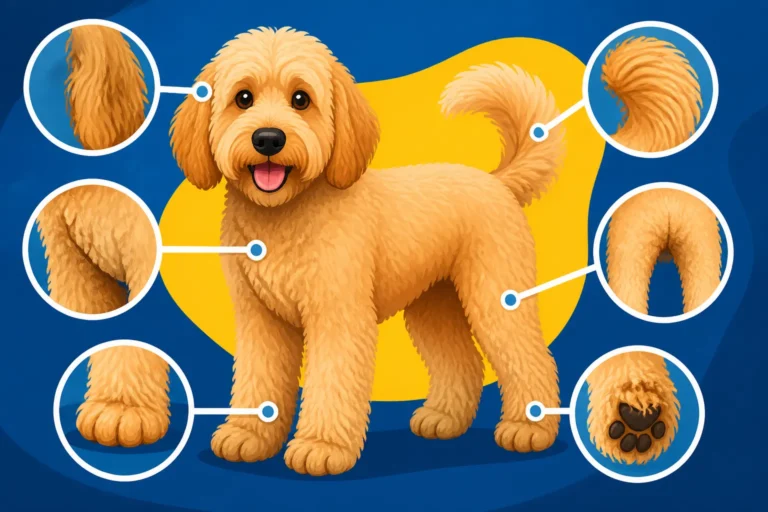
Goldendoodle matting danger zones, trapped shed hair causes, and common trouble spots like behind the ears where knots form fast.
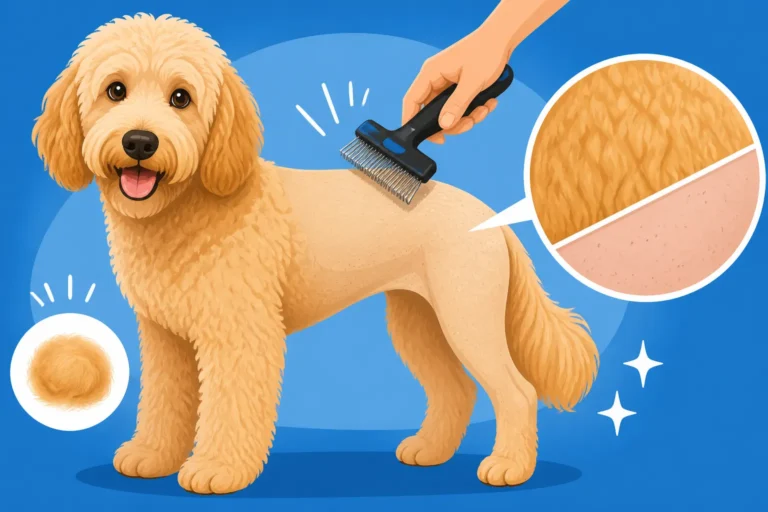
Line brushing reaches the skin where a quick pass leaves mats, a problem for the Golden Retriever and Poodle blend that tangles easily.

Goldendoodle coat brushing frequency depends on flat, wavy, or curly fur types, preventing painful mats and tangles in maturing adult dogs.
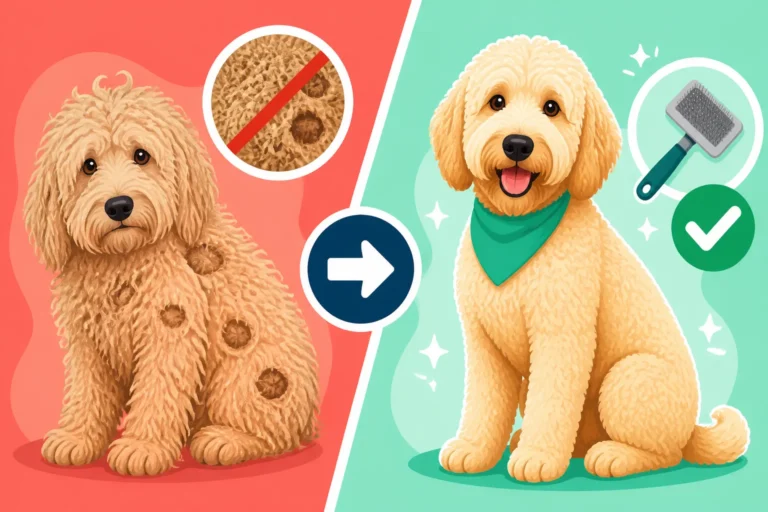
Goldendoodle coat matting is preventable through proper grooming routines and understanding straight, wavy, and curly coat types.