The Last Decisions for an Aging Goldendoodle
Aging Goldendoodle care details recognizing signs of decline, evaluating quality of life, and making compassionate end of life decisions.
Know what to watch for.
Breed-specific conditions, screening and DNA tests, what surgery actually costs, and the daily habits that stretch a healthy lifespan.

Aging Goldendoodle care details recognizing signs of decline, evaluating quality of life, and making compassionate end of life decisions.

Canine Cognitive Dysfunction causes senior Goldendoodles to experience disorientation, memory loss, and behavioral changes.

Senior Goldendoodle arthritis causes joint pain, stiffness, and behavioral changes. This explains early signs, aging, and genetics.
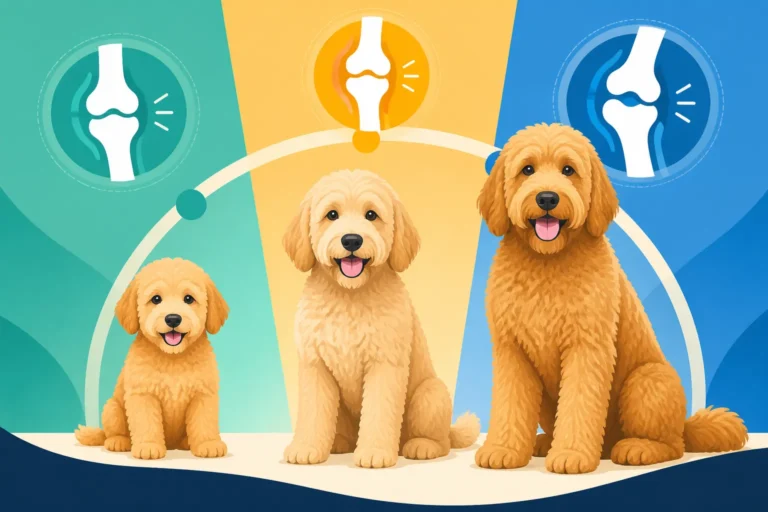
Goldendoodle joint health issues, including hip dysplasia and patellar luxation, explained by standard, mini, and toy size categories.

Goldendoodle puppy vaccination schedules and initial veterinary health checks prepare owners for crucial early medical care.

Goldendoodle crossbreed status explains the lack of official kennel club health schemes and centralized genetic condition registries.

OFA health clearances for Goldendoodle parents explain genetic risks and prevent inherited conditions like hip dysplasia.

Goldendoodle DNA testing requirements, specific genetic markers to check, and reading health report results for puppies.

Mini and Toy Goldendoodles often inherit forty two adult teeth in smaller jaws, causing painful dental crowding and structural health problems.
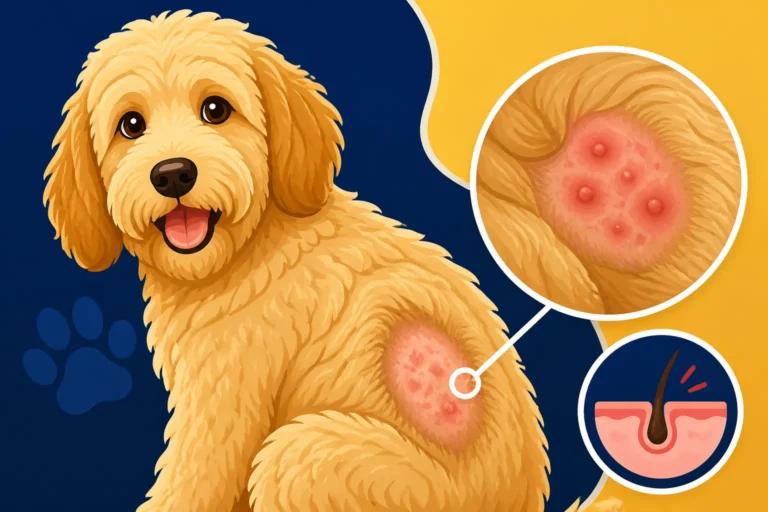
Goldendoodle hot spots hidden under thick coats are painful skin infections that spread rapidly without early detection.