Whether an F1b Goldendoodle Acts More Like a Poodle
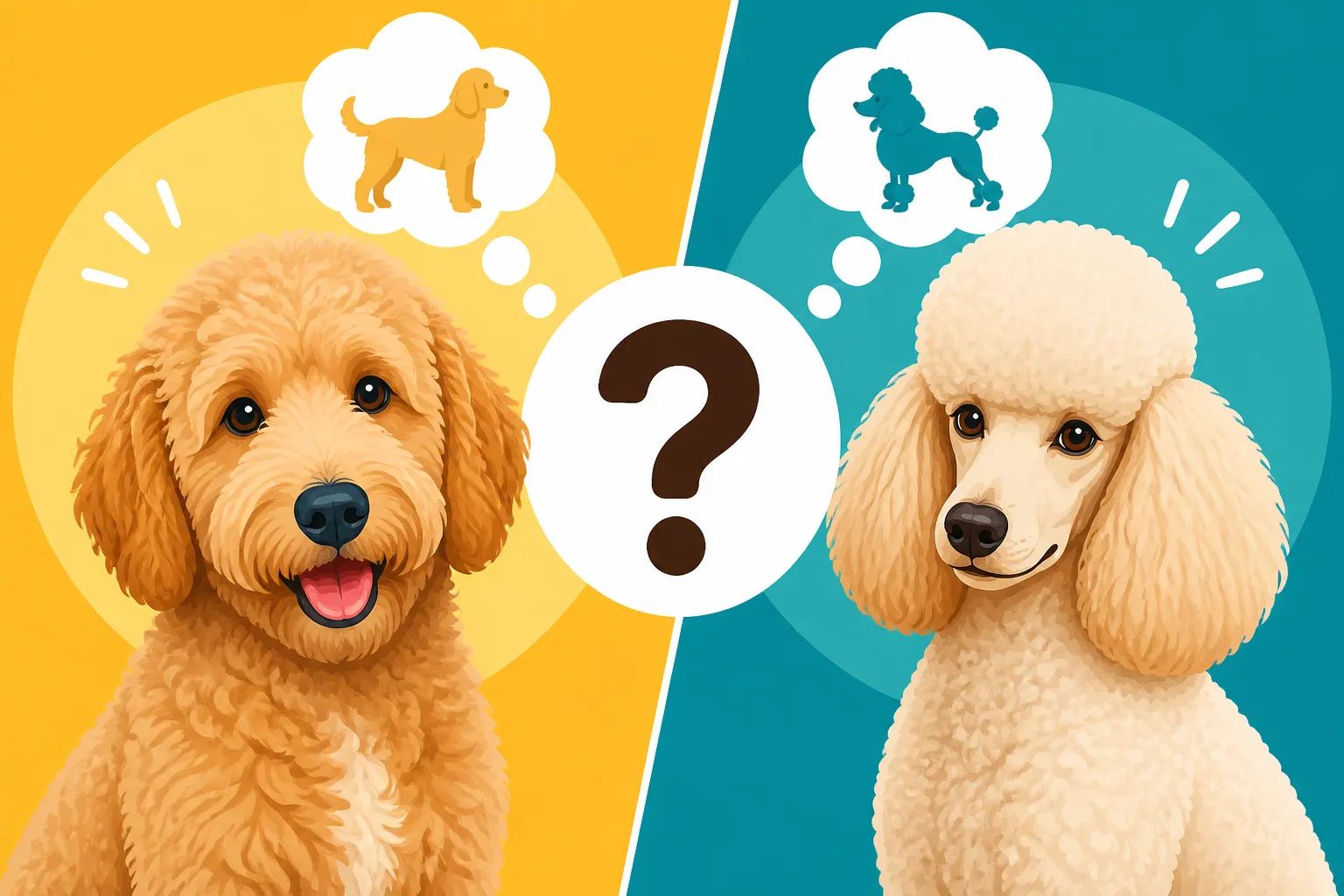
It’s a really common question, and one I hear all the time from folks considering an F1b Goldendoodle: “Will this generation act more like a Poodle?” We all have visions of those smart, elegant Poodles or the goofy, friendly Golden Retrievers, and it's natural to wonder how the genetic blend in an F1b puppy will shake out behaviorally. The truth is, while the F1b generation does lean heavily on the Poodle side genetically, temperament is a beautifully complex thing, and it’s about so much more than just a percentage. This guide will dive deep into what makes an F1b Goldendoodle tick, helping you understand the genetic influences, the role of their parents, and how your own efforts will shape their personality.
Understanding Goldendoodle Generations and Genetic Influence
When you start looking into Goldendoodles, you quickly encounter terms like F1, F1b, F2, and so on. It can feel like a secret code, but understanding these generations is key to grasping what might influence your dog's traits, even if it doesn't always tell the whole story.
What an F1b Goldendoodle Actually Is
An F1b Goldendoodle is typically the result of breeding an F1 Goldendoodle (which is a first-generation cross between a purebred Golden Retriever and a purebred Poodle, making it 50% Golden Retriever and 50% Poodle) back to a purebred Poodle. This means an F1b Goldendoodle is roughly 75% Poodle and 25% Golden Retriever. The "b" stands for "backcross."
The primary reason breeders create F1b Goldendoodles is often to achieve a more consistent non-shedding or low-shedding coat, which is heavily influenced by the Poodle's genetics. Because of this, it's a natural leap for prospective owners to assume that if the coat is more Poodle-like, the temperament will be too. This isn't an unreasonable thought process, especially when you're hoping for specific traits. You've done your research, you know the What the Letter F Means in a Goldendoodle Pedigree, and the math seems to add up. But when it comes to behavior, it’s rarely as simple as a clear percentage.
Beyond Simple Percentages: Temperament Is Complex
While the genetic makeup of an F1b does indeed give it a higher probability of exhibiting Poodle traits, it's not a guarantee. Dogs, like people, are a mix of their genetic inheritance and their life experiences. Think of it like a deck of cards: an F1b might have more Poodle cards in the deck, but you never know exactly which ones will be dealt to your specific puppy.
Temperament is polygenic, meaning it's influenced by many different genes working together, not just one or two. This is why even within the same litter of F1b puppies, you can see a wide range of personalities. Some might be bouncy and outgoing like a Golden, while others might be more reserved and thoughtful like a Poodle. The parents' individual temperaments, the specific genes they pass on, and even the early environment of the puppy's first weeks all play a huge role. It’s a fascinating, sometimes frustrating, puzzle for anyone trying to predict their future companion's personality.
For a deeper dive into the numbers and what they mean, check out Doing the Math on an F1b Goldendoodle. It's crucial to remember that Whether Generation Predicts Goldendoodle Temperament is a much more nuanced question than it first appears.
Poodle vs. Golden Retriever Temperament — A Quick Comparison
To understand how an F1b Goldendoodle might lean, it helps to first understand the core temperamental traits of its parent breeds. Both Poodles and Golden Retrievers are intelligent, loving dogs, but they express these qualities in distinct ways.
Key Poodle Temperament Traits
Poodles are renowned for their exceptional intelligence. They are incredibly smart, quick learners, and often excel in obedience and dog sports. This intelligence, however, comes with a need for mental stimulation; a bored Poodle can be a mischievous Poodle. They are generally biddable, meaning they are eager to please their owners and respond well to training.
While often playful and active, Poodles can also be quite sensitive. They tend to form strong bonds with their families and can be somewhat reserved or even a little aloof with strangers initially, taking their time to warm up. They possess a certain dignity and grace, but don't let that fool you – they love to play and can be quite goofy. Their energy levels are typically high, requiring regular exercise to keep them happy and well-adjusted.
Key Golden Retriever Temperament Traits
Golden Retrievers are famous for their friendly, outgoing nature. They are often described as perpetual puppies, maintaining a playful spirit well into adulthood. They are incredibly loyal and possess a deep desire to please their human companions, making them highly trainable, though sometimes with a bit more exuberance than a Poodle.
Goldens are known for their boundless enthusiasm for life, often greeting everyone as a long-lost friend. They thrive on companionship and are classic "velcro" dogs, wanting to be wherever their family is. Their energy levels are also high, driven by their retrieving instincts, and they need plenty of physical activity and engagement. Unlike Poodles who might be a bit more selective, Goldens typically love everyone and everything.
Want to understand the core influences? Check out What a Goldendoodle Takes From the Poodle and What a Goldendoodle Takes From the Golden Retriever to see how these characteristics combine.
The Blending of Traits in a Goldendoodle
When you mix these two wonderful breeds, you usually get a dog that embodies many of their best qualities. Goldendoodles are widely celebrated for their intelligence, trainability, and affectionate nature. They are typically good-natured, adaptable, and form strong bonds with their families.
Most Goldendoodles are friendly and eager to please, inheriting that lovely biddability from both sides. They tend to be intelligent and thrive on mental and physical activity. The blend often results in a dog that is sociable and active, but perhaps with a bit more of the Poodle's discernment or the Golden's overt charm, depending on the individual. It's truly a lottery, but often a winning one! The general consensus among owners aligns with The Goldendoodle Temperament Owners Describe.
Why an F1b Goldendoodle Might Lean Poodle (or Not)
Given the 75/25 Poodle/Golden Retriever genetic split, it’s understandable to hope your F1b Goldendoodle will be a bit more Poodle-like in certain ways. Let's explore why this might, or might not, be the case.
The Poodle's Genetic Dominance in F1b
With a higher percentage of Poodle genetics, an F1b Goldendoodle is indeed more likely to inherit traits such as the curly, low-shedding coat. This genetic skew can also influence temperament. For example, you might see an F1b that is:
- More biddable and focused in training: The Poodle’s keen intelligence and desire to work often come through, making them incredibly receptive to training. They might pick up commands faster and be more inclined to maintain focus during training sessions.
- More sensitive to their environment and handlers: Poodles can be quite sensitive, and an F1b might inherit this trait. They might be more attuned to your mood, react more strongly to changes in routine, or become easily startled by loud noises. This sensitivity often means they don't respond well to harsh training methods.
- Requiring more mental stimulation: While Goldens are smart, Poodles often demand a higher level of intellectual engagement. An F1b might show a stronger need for puzzle toys, training challenges, and varied activities to keep their brilliant minds occupied.
- Initially more reserved with strangers: While many Goldendoodles are universally friendly, an F1b might take a moment longer to assess new people, showing a touch more of that Poodle selectivity before offering full affection.
However, these are tendencies, not absolute guarantees. It’s like saying a child with more genes from one parent will definitely have that parent's personality – it increases the likelihood, but doesn't determine it entirely.
The Overriding Factor: Individual Variation and Parental Influence
This is where things get really interesting and, perhaps, a little unpredictable. Even with 75% Poodle genetics, you can still have a significant amount of variation within an F1b litter. Think about it: a Golden Retriever contributes 25% of the F1b's genetic code. If that Golden Retriever parent had a particularly strong personality or specific behavioral traits, those could still come through in the F1b offspring.
Moreover, the individual temperament of the Poodle parent and the F1 Goldendoodle parent used in the backcross is incredibly important. If the Poodle parent was very laid-back and the F1 Goldendoodle parent was exceptionally high-energy and Golden-like, you might find a puppy that still leans more towards the Golden side despite the genetic percentages. This is why when you see Why F2 Goldendoodle Litters Vary So Much, you can extend some of that understanding to F1bs too – there's always a roll of the genetic dice.
The key takeaway here is to always inquire about the temperaments of the specific parent dogs. A reputable breeder will be transparent about their dogs’ personalities and behavior.
The Role of Early Socialization and Training
No matter the genetic predisposition, a Goldendoodle's temperament is massively shaped by its environment and upbringing. This is where you, as an owner, have the most profound influence. A puppy's experiences during its critical socialization period (roughly 3-16 weeks) are paramount. Exposure to a wide variety of sights, sounds, people, and other friendly, vaccinated dogs helps build a well-adjusted, confident adult.
Consistent, positive reinforcement training from day one is also non-negotiable. Whether your F1b is more Poodle-brained or Golden-hearted, they will thrive on clear communication and reward-based methods. Things like puppy classes, home-based training, and enrichment activities all play a huge role. For instance, puzzle toys and durable chews from places like Chewy can be fantastic for channeling that potential Poodle intelligence and preventing boredom-induced mischief. Don’t underestimate the power of consistent effort in shaping your dog's behavior, regardless of their genetic blueprint. This is crucial for Why a Goldendoodle Learns Faster Than Most Crosses and Positive Reinforcement and Why It Suits a Goldendoodle are so true for these wonderful dogs.
What to Expect and How to Influence Your F1b's Behavior
Bringing home any puppy is a leap of faith and an exciting adventure. With an F1b Goldendoodle, you're hoping for a blend of traits that suits your lifestyle, and there are definite steps you can take to foster the behaviors you desire.
Observing the Parents and Littermates
This is perhaps the most practical advice for any prospective Goldendoodle owner, regardless of generation. When you're looking at F1b puppies, ask the breeder if you can meet the Poodle parent (the sire) and, crucially, the F1 Goldendoodle parent (the dam). Observe their personalities. Are they outgoing or reserved? Calm or high-energy? How do they interact with strangers and with their puppies? This gives you a much better real-world indicator than just percentages.
Also, spend time observing the littermates. Are there puppies that are particularly bold, or shy, or constantly wrestling? While puppy behavior can change, seeing the range of personalities in the litter can give you clues about the potential range in your own puppy. A responsible breeder will be able to tell you about the temperaments of the individual puppies and help guide you towards one that might be a good fit for your home.
Consistent Training and Enrichment
No matter if your F1b Goldendoodle leans more Poodle or more Golden, consistent, positive training and daily enrichment are essential. Both parent breeds are intelligent and thrive on having a "job" to do, even if that job is just learning new tricks or going for an engaging walk.
- Start early: Begin training and socialization the moment your puppy comes home. Enroll in puppy classes. Expose them to new sights, sounds, and experiences in a positive way. This is critical for What a Goldendoodle Puppy Must Meet Before Sixteen Weeks.
- Short, fun sessions: Goldendoodles love to learn, but keep training sessions short and engaging. Five to ten minutes a few times a day is far more effective than one long, boring session.
- Mental stimulation: Puzzle feeders, scent work, and learning new tricks can be just as tiring, if not more so, than physical exercise. This helps channel that sharp Poodle brain. Brands like Chewy offer a fantastic selection of brain games and snuffle mats that Goldendoodles adore.
- Boundary setting: Just because they're friendly doesn't mean they don't need boundaries. Teaching cues like "sit," "stay," "leave it," and Goldendoodle Impulse Control Exercises will make your life, and theirs, much smoother.
Remember, Finding a Trainer for a Goldendoodle who uses positive reinforcement methods is key, as Goldendoodles are sensitive and respond best to encouragement.
Managing Energy and Sensitivity
F1b Goldendoodles often have significant energy, a trait shared by both Poodles and Golden Retrievers. They typically need 30-60 minutes of vigorous exercise daily, split into multiple outings. However, it's not just about running; it's about engagement. Walks where they can sniff and explore, games of fetch, or even a session of "find it" in the house can be incredibly fulfilling. For tips on how to balance this, look into Goldendoodle Exercise and Mental Work Every Day.
If your F1b does inherit more of the Poodle's sensitivity, creating a calm, predictable home environment will be beneficial. Provide them with a comfortable crate or a quiet den space where they can retreat. Avoid yelling or harsh corrections, which can make sensitive dogs shut down or become anxious. Instead, focus on building trust and making every interaction a positive one. You might even find that items like calming treats or anxiety vests available on Chewy can be helpful for particularly sensitive individuals.
Here's a quick overview of potential leanings:
| Trait Category | Poodle Leaning (More Likely in F1b) | Golden Retriever Leaning (Less Likely, but Possible) |
|---|---|---|
| Trainability | Highly eager to learn, quick to pick up new commands, enjoys mental challenges. | Eager to please, but can be more easily distracted by enthusiasm. |
| Energy Level | High, needs consistent physical and mental stimulation. | High, thrives on physical exercise and interactive play. |
| Socialization | Can be initially reserved with strangers, forms strong family bonds. | Universally friendly, greets everyone with enthusiasm, loves attention. |
| Sensitivity | More sensitive to tone of voice and environment, can be easily startled. | Generally resilient, though still responsive to owner's mood. |
| Affection | Affectionate with family, sometimes preferring close physical contact. | "Velcro dog" — wants to be part of all family activities, demonstrative. |
| Independence | Can have moments of independent thought, but generally biddable. | Typically highly dependent on human companionship and direction. |
Ultimately, your F1b Goldendoodle will be a unique individual, a delightful tapestry woven from genetics, early experiences, and your ongoing love and guidance. Enjoy the journey of discovering who they truly are!
Disclaimer
This article is for general informational purposes only and does not constitute professional advice. Laws, prices and regulations vary by location and change over time. Consult a qualified professional for guidance on your specific situation.