How an F1 Goldendoodle Is Bred
Many prospective Goldendoodle owners hear the term "F1" thrown around and might nod along, but deep down, they're not quite sure what it actually means for the puppy they're bringing home. This isn't just jargon; understanding how an F1 Goldendoodle is bred is crucial because it directly impacts what you can expect in terms of coat, temperament, and even long-term health. This guide will walk you through the precise genetic makeup of a first-generation Goldendoodle, helping you confidently navigate the world of Doodle breeding and truly understand your future furry family member.
Deconstructing the "F1" in Goldendoodle Genetics
When you see "F1" attached to a Goldendoodle, it’s not just a fancy label; it’s a genetic roadmap. This designation tells you exactly how that particular puppy came into existence and offers significant clues about what traits it might carry. Understanding this fundamental building block is essential for any aspiring Goldendoodle parent.
What "F" and "1" Actually Stand For
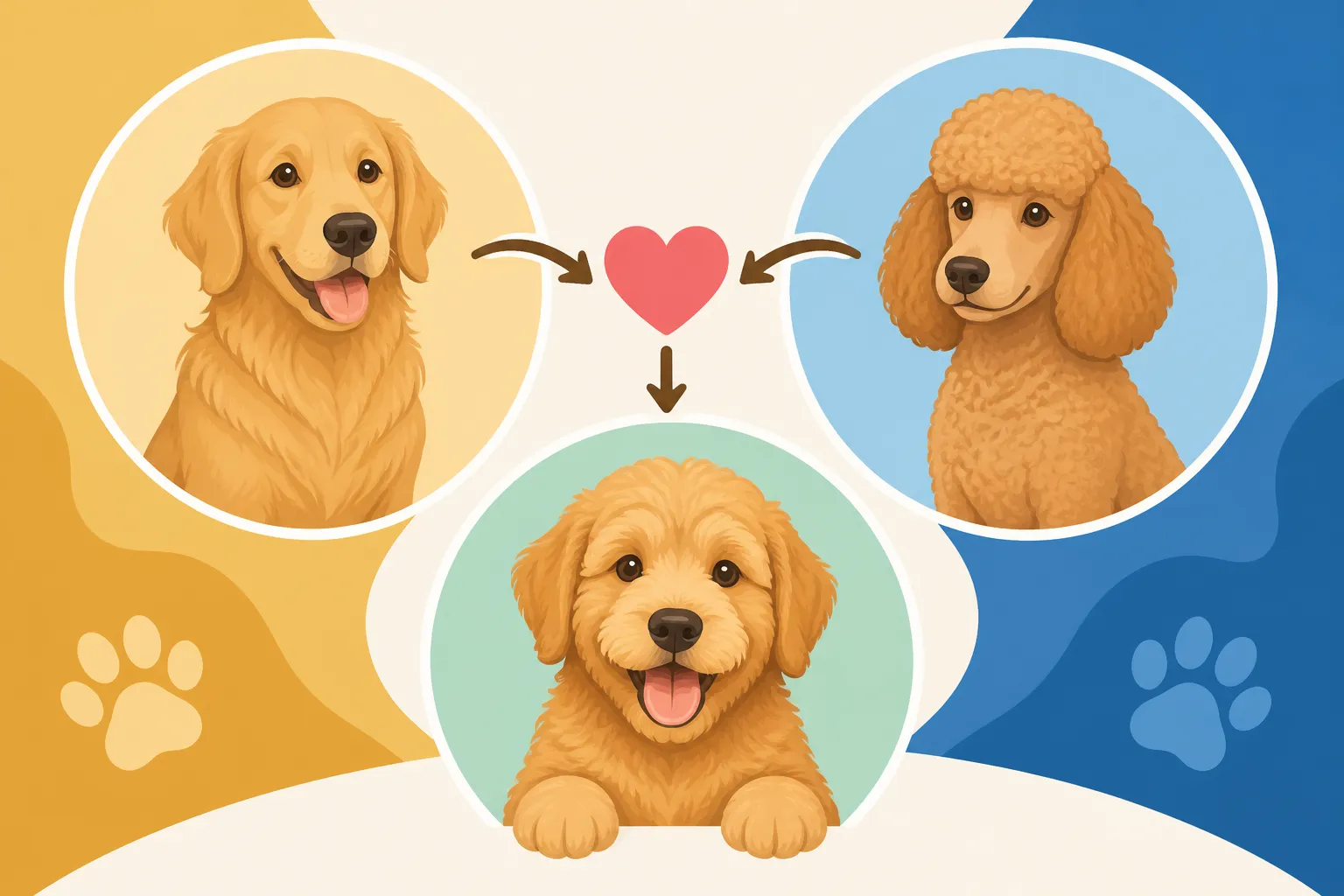
Let's break it down to the basics. The "F" in F1 stands for "Filial," a scientific term used in genetics to denote a generation of offspring resulting from a cross between two distinct parent types. In simple terms, it means "offspring generation." The "1" then indicates that this is the first generation of that specific cross. So, an F1 Goldendoodle is a first-generation hybrid, born directly from the pairing of two purebred dogs of different breeds. There's no Goldendoodle parent involved in an F1 litter, only the original ingredients. This direct cross is what sets the stage for everything that follows, from their charming personalities to their sometimes unpredictable coats. It's the purest form of the cross, where the genetic contributions of both parent breeds are at their most direct and undiluted.
The Importance of Purebred Parents
For a Goldendoodle to truly be an F1, its parents must be a purebred Golden Retriever and a purebred Poodle. There’s no wiggle room here. You won't find an F1 Goldendoodle with a Goldendoodle parent on either side. This distinction is absolutely critical because the health, temperament, and physical traits of those purebred parents are what will be directly passed down to the F1 puppies. This is why a reputable breeder will be transparent about their purebred parent dogs, readily providing information about their pedigrees, temperaments, and most importantly, their health testing results. Without rigorously health-tested purebred parents, you're essentially rolling the dice, hoping for the best. The idea isn't just about combining two popular breeds; it's about combining two healthy examples of those breeds. Without that foundation, many of the potential benefits of this cross can be lost. Remember, even with hybrid vigor, you're inheriting traits and potential predispositions from both sides, so healthy parents are non-negotiable. You’ll want to review documentation on Health Testing Both Goldendoodle Parents Should Have.
The Pairing: Golden Retriever Meets Poodle
The magic of the F1 Goldendoodle really begins with the careful selection of its purebred parents. Each breed brings its own unique set of characteristics to the table, and understanding these contributions helps paint a clearer picture of what kind of puppy might emerge from their union. It’s not just about mating two dogs; it’s about thoughtfully combining two distinct genetic lines.
The Golden Retriever Side of the Equation
The Golden Retriever is renowned for its friendly, tolerant, and intelligent nature. They are generally eager to please, making them highly trainable and wonderful family companions. From a physical standpoint, Golden Retrievers have a dense, water-repellent double coat that sheds quite a bit, especially seasonally. They typically have a sturdy, athletic build. When it comes to health, Golden Retrievers are unfortunately predisposed to certain conditions, including various cancers, hip and elbow dysplasia, and certain heart conditions. These potential health concerns from the Golden Retriever lineage are something to keep in mind, even when breeding with a Poodle. The Golden's temperament is a huge draw for many Goldendoodle owners – that sweet, goofy, devoted personality is often what people are hoping to capture. The drive to retrieve and carry things around is also a common Golden trait that can show up in an F1 pup. You can dive deeper into specific predispositions by reading about The Cancers a Goldendoodle Can Inherit.
The Poodle Side of the Equation
On the other side, we have the Poodle, a breed often misunderstood but incredibly intelligent, elegant, and athletic. Poodles come in three size varieties (Standard, Miniature, and Toy), which is key to creating the different Goldendoodle sizes. Their signature curly, non-shedding coat is a huge selling point, making them popular among allergy sufferers, though no dog is truly 100% hypoallergenic. Poodles are known for their sharp minds, eagerness to learn, and often a playful, sometimes mischievous, streak. Like Goldens, Poodles have their own set of potential health issues, including Addison's disease, certain eye conditions like Progressive Retinal Atrophy (PRA), hip dysplasia (though less prevalent than in Goldens), and some skin conditions. The Poodle's athletic build and keen intelligence contribute significantly to the Goldendoodle's overall athleticism and trainability. That distinctive Poodle "furnishing" gene, responsible for the beard and eyebrows, is also what gives many Goldendoodles their classic "doodle" look. To learn more about specific Poodle health concerns, check out Addison's Disease a Goldendoodle Gets From the Poodle.
Size Matching for F1 Goldendoodles
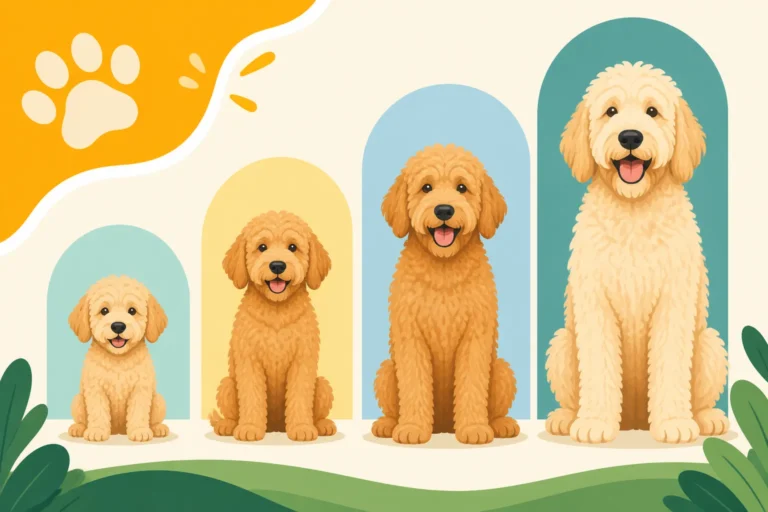
One of the most common questions about Goldendoodles revolves around their size. How do breeders ensure they get a Mini or a Standard? The answer lies almost entirely in the Poodle parent. While Golden Retrievers are fairly consistent in size (typically ranging from 55-75 pounds for females and 65-85 pounds for males), the Poodle comes in a much wider range.
Here's how breeders typically match sizes for F1 Goldendoodles:
- Standard Goldendoodle: Bred from a Standard Poodle and a Golden Retriever. These pups will generally mature to the larger end of the Goldendoodle spectrum, often weighing 50-90 pounds or more.
- Medium Goldendoodle: Often the result of a Miniature Poodle bred with a smaller Golden Retriever, or sometimes even a larger Miniature Poodle with a Standard Golden. These fall into the 35-50 pound range.
- Mini Goldendoodle: Bred from a Miniature Poodle and a Golden Retriever. These are smaller, usually weighing between 25-40 pounds.
- Toy Goldendoodle: Bred from a Toy Poodle and a Golden Retriever. These are the smallest, often under 25 pounds, though breeders must be very careful with this size pairing due to potential birthing and structural issues.
The Poodle parent is essentially the dial that controls the ultimate size of the F1 Goldendoodle. A good breeder will carefully select Poodles of appropriate size and structure to ensure healthy offspring that align with the desired Goldendoodle size category. Understanding How the Poodle Parent Sets Goldendoodle Size is really key to predicting your pup's adult stature.
What to Expect from an F1 Goldendoodle Litter
Bringing an F1 Goldendoodle home is exciting, but it's important to understand that while their parents are purebreds, the F1 generation introduces a fascinating blend of traits that can make each puppy unique, even within the same litter. This genetic lottery is part of their charm, but also something to prepare for, especially regarding their coats.
Coat Type Variability in F1 Litters
This is perhaps the most significant point of variability in F1 Goldendoodles. Unlike later generations (like F1b or Multigen), F1s are a 50/50 split of Golden Retriever and Poodle genes. This means that a single litter can produce puppies with a wide array of coat types, even from the same two parents. You might see:
- Flat Coats: These puppies often look more like a Golden Retriever with minimal curl and tend to shed. They inherit more of the Golden's straight coat gene.
- Wavy/Fleece Coats: This is a very common F1 coat type, a lovely soft wave that is lower shedding than a flat coat, but not entirely non-shedding.
- Curly/Wool Coats: These puppies lean more towards the Poodle's dense, tight curls and are generally the lowest shedding among F1s.
The unpredictable nature of F1 coats means that even if a breeder promises a "non-shedding" Goldendoodle, there's always a chance an F1 puppy might end up with a coat that sheds. This directly impacts potential allergy sufferers, as a flat-coated F1 Goldendoodle will likely shed. If you're hoping for a specific coat type or are concerned about allergies, spending time with the actual F1 puppy (and ideally its parents) is crucial. Don't rely solely on the word "F1" to guarantee a non-shedding dog. For more on this, you might find Why a Fluffy Goldendoodle Puppy May Shed as an Adult insightful.
Temperament Blending and Predictability
In terms of temperament, F1 Goldendoodles typically inherit the best of both worlds: the Golden Retriever's famous biddability and friendly nature, combined with the Poodle's intelligence and eagerness to please. This usually results in a highly trainable, affectionate, and social dog. However, it's not a guaranteed 50/50 split in personality either. Some F1 pups might lean more towards the Poodle's energy and sometimes sensitivity, while others might embody the Golden's laid-back, joyful demeanor more strongly.
Generally, F1 Goldendoodles are known for being:
- Intelligent and Trainable: Both parent breeds excel in this area, making F1s quick learners.
- Friendly and Social: They often adore people and other animals, though early socialization is still vital.
- Energetic: They require regular exercise and mental stimulation to thrive.
While the blend is generally positive, individual puppy personalities will vary. A reputable breeder will do temperament testing on their puppies to help match them with the right families. But ultimately, an F1 Goldendoodle's temperament is a wonderful, complex blend of its heritage. You can explore this further in Goldendoodle Temperament From Two Parent Breeds. Regardless of what specific blend your F1 puppy inherits, remember that early exposure to new experiences is key, as highlighted in What a Goldendoodle Puppy Must Meet Before Sixteen Weeks.
Health Outcomes and Hybrid Vigor
The concept of "hybrid vigor" is often discussed in the context of F1 crosses, and it's a valid point, but not a magical shield against all health problems. Hybrid vigor, or heterosis, refers to the increased strength, growth, fertility, and health of hybrid offspring compared to the purebred parents. In an F1 Goldendoodle, it means that by crossing two genetically distinct purebred lines, you can potentially reduce the likelihood of a puppy inheriting two copies of a recessive gene for a specific disease that might be more prevalent in one purebred line.
However, here's the crucial nuance:
- Not a Cure-All: Hybrid vigor doesn't guarantee a completely healthy dog. It primarily reduces the expression of recessive genetic diseases if the parent breeds don't share common genetic predispositions.
- Shared Conditions: If both Golden Retrievers and Poodles are susceptible to the same condition (like hip dysplasia or certain eye diseases), then hybrid vigor offers less protection. An F1 Goldendoodle can absolutely still inherit these conditions from either parent.
- Parental Health Testing is Paramount: This cannot be stressed enough. Hybrid vigor is only truly beneficial when both purebred parents have undergone comprehensive health testing and are clear of genetic diseases common to their respective breeds. A cross of two unhealthy purebreds will likely result in unhealthy offspring.
Ultimately, while F1 Goldendoodles can benefit from increased genetic diversity, they are still a product of their parents' genes. Responsible breeding practices, including thorough health testing, remain the single most important factor in promoting a healthy Goldendoodle. For a deeper dive, read The Goldendoodle Hybrid Vigor Claim and Where It Breaks. And be aware that issues like Goldendoodle Hip Dysplasia at 15 to 20 Percent can still be a concern.
Here’s a simplified look at potential F1 Goldendoodle traits derived from their parents:
| Trait Category | Golden Retriever Contribution | Poodle Contribution | F1 Goldendoodle Typical Outcome (Variability High) |
|---|---|---|---|
| Coat Type | Straight, dense, sheds | Curly, non-shedding | Wavy, fleece, or curly; shedding varies widely |
| Shedding | High | Low to none | Moderate to low, can shed |
| Temperament | Friendly, biddable, eager to please | Intelligent, active, sometimes sensitive | Intelligent, friendly, eager to please; social |
| Energy Level | Moderate to high | Moderate to high | Moderate to high, requires daily exercise |
| Trainability | High, responsive | Very High, smart | Excellent, quick learners |
| Health Risks | Cancer, hip/elbow dysplasia, heart disease | Addison's, PRA, hip dysplasia, bloat | Can inherit risks from both; hybrid vigor may reduce some expressions if parents are healthy and diverse |
| Size Influence | Generally consistent (medium to large) | Highly variable (Toy, Mini, Standard) | Poodle size dictates the overall Goldendoodle size |
Finding a Reputable F1 Goldendoodle Breeder
When you're looking for an F1 Goldendoodle, the breeder you choose is arguably the most critical decision you'll make. This isn't just about picking a cute puppy; it's about ensuring you're supporting ethical practices and bringing home a dog with the best possible start in life.
The Non-Negotiables: Health Testing
I cannot stress this enough: verifiable health testing for both purebred parents is an absolute non-negotiable. Any breeder who claims "hybrid vigor" means they don't need to test is a red flag you should run from. Hybrid vigor is a benefit that builds upon a foundation of healthy genetics, not a replacement for it.
Here’s what you should be looking for:
- Orthopedic Clearances: Hips (OFA or PennHIP) and Elbows (OFA) are critical for both Golden Retrievers and Poodles, as both breeds can suffer from dysplasia.
- Eye Clearances: Annual eye exams by a board-certified veterinary ophthalmologist (CAER or CERF) are necessary, along with DNA tests for Progressive Retinal Atrophy (PRA-prcd and other types if applicable to the breed).
- Cardiac Clearances: A cardiologist evaluation for heart health is important.
- Genetic Panels: DNA tests for conditions prevalent in Golden Retrievers (like ichthyosis, certain types of PRA, Von Willebrand's) and Poodles (like Von Willebrand's, Neonatal Encephalopathy, Degenerative Myelopathy, PRA-prcd).
A reputable breeder will not only perform these tests but will be eager to show you the certifications, often making them publicly verifiable on databases like the Orthopedic Foundation for Animals (OFA) website. They should explain what each test means and how it applies to their breeding program. This transparency is key. Don't be shy about asking for specific documentation; it's your right as a potential buyer to know. This topic is so vital that it has its own detailed discussion in Why Testing Beats the Word Hybrid on a Goldendoodle.
Breeder Practices and Transparency
Beyond health testing, a good F1 Goldendoodle breeder will demonstrate a commitment to the well-being and proper development of their puppies. When you visit or speak with a breeder, pay attention to these aspects:
- Environment: Is the environment clean, safe, and stimulating for the puppies? Do the puppies appear well-cared for, bright-eyed, and active? Are the parent dogs (at least the mother) on-site and appear healthy and friendly?
- Socialization: Good breeders start socializing puppies from day one. This includes exposure to various sights, sounds, textures, and gentle handling. They should be able to tell you about their puppy curriculum, often involving early neurological stimulation (ENS).
- Inquisitiveness: A responsible breeder will ask you as many questions as you ask them. They want to ensure their puppies are going to suitable, loving homes. Be prepared to discuss your living situation, experience with dogs, and lifestyle.
- No Pressure Sales: Avoid any breeder who pressures you into making a quick decision, refuses to answer questions, or won't allow you to see where the puppies are raised or meet the mother.
- Nutrition: Ask what food the puppies are being fed. Reputable breeders often feed high-quality kibble, and they can usually point you to resources like Chewy for sourcing the same food to ensure a smooth transition for your new puppy.
Look for a breeder who is passionate, knowledgeable, and genuinely invested in the long-term health and happiness of their dogs. They should be a resource for you for years to come, not just until the puppy leaves their home.
Understanding the Contract and Support
A comprehensive contract is a hallmark of a responsible F1 Goldendoodle breeder. This document isn't just paperwork; it outlines the breeder's commitment to you and your puppy's future. What should you expect in a solid breeder contract?
- Health Guarantee: This typically covers genetic health issues for a certain period, often 1-2 years. It might specify conditions under which the guarantee is valid, such as requiring regular vet check-ups.
- Spay/Neuter Clause: Many breeders require pet-quality puppies to be spayed or neutered by a certain age to prevent unplanned breeding and promote responsible pet ownership.
- Return Policy: A good breeder will always take a dog back at any point in its life if the owner can no longer care for it. This shows a lifelong commitment to their puppies.
- Detailed Information: The contract should include specific details about the puppy (date of birth, parentage, microchip number, vaccination record, deworming schedule) and transfer of ownership.
- Ongoing Support: A truly dedicated breeder offers support and advice for the lifetime of your dog. They welcome questions and want updates. This relationship is invaluable, especially during challenging times like adolescence or if unexpected health issues arise.
Remember, a contract protects both you and the breeder, laying out clear expectations for a happy and healthy partnership with your F1 Goldendoodle. When preparing for your pup's arrival, think about stocking up on essentials from trusted retailers like Chewy, ensuring you have the right food, toys, and grooming supplies to continue the care your breeder has already started.
Disclaimer
This article is for general informational purposes only and does not constitute professional advice. Laws, prices and regulations vary by location and change over time. Consult a qualified professional for guidance on your specific situation.