Sebaceous Adenitis and a Goldendoodle Losing Coat
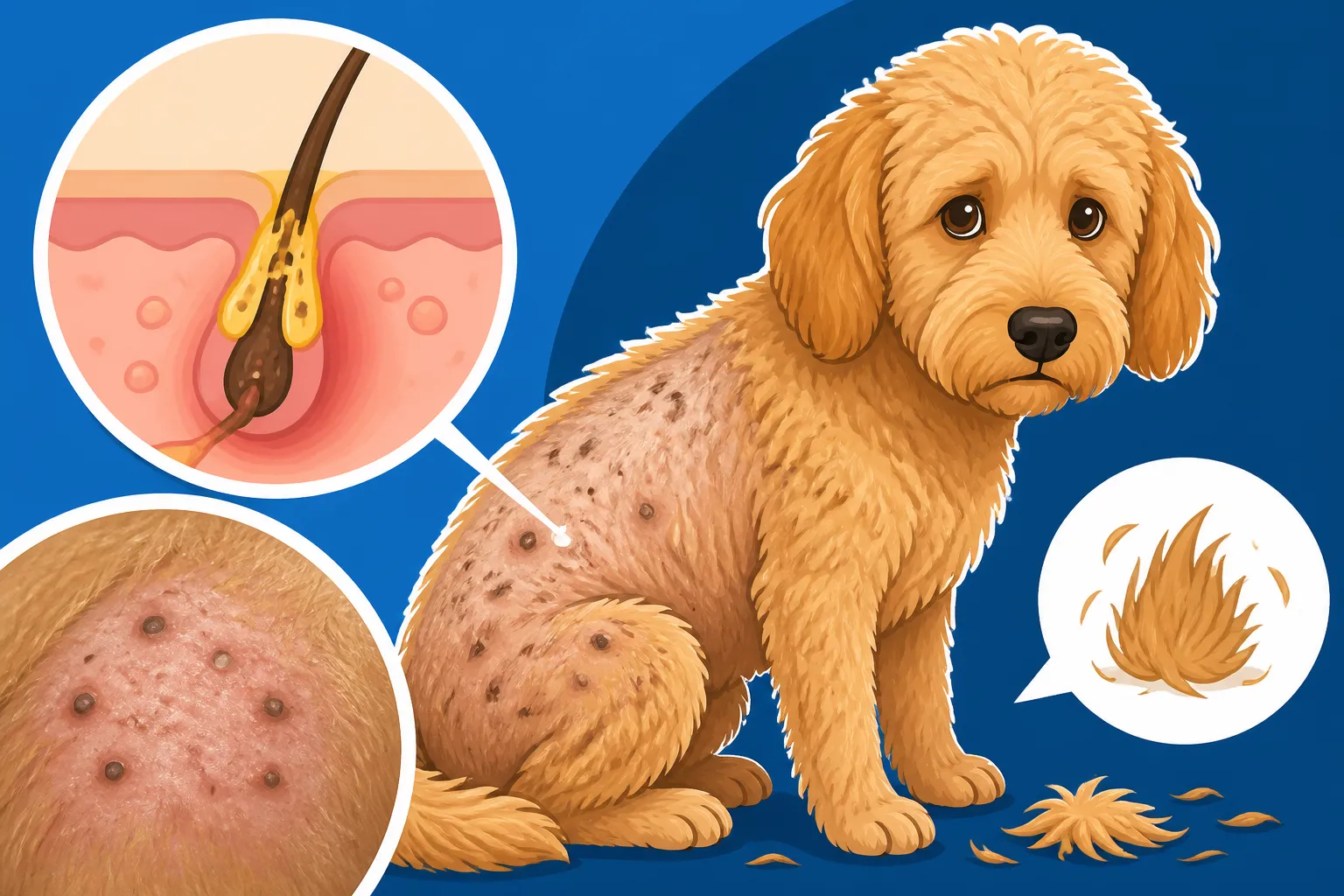
It's incredibly disheartening to watch your beloved Goldendoodle start losing patches of their beautiful, fluffy coat. You brush them, you feed them well, and yet, you might notice thinning hair, dry skin, and a dullness that wasn't there before. This distressing change can be a sign of a challenging condition called Sebaceous Adenitis (SA), an autoimmune skin disease that specifically attacks the glands responsible for healthy hair. This guide will walk you through what Sebaceous Adenitis is, how to spot its tell-tale signs, and what you can do to manage it, helping you understand this complex issue and provide the best care for your furry friend.
Understanding Sebaceous Adenitis in Goldendoodles
When you first notice your Goldendoodle's coat changing, it’s natural to feel a mix of worry and confusion. Is it allergies? Is it just seasonal shedding? For many Goldendoodle owners, the answer might be a condition far more specific and complex: Sebaceous Adenitis, often referred to simply as SA. It's a condition that might not be on every owner's radar, but it's particularly relevant for breeds like ours.
What is Sebaceous Adenitis?
At its core, Sebaceous Adenitis is an autoimmune disease where your dog's immune system mistakenly attacks and destroys the sebaceous glands in their skin. Think of these glands as tiny oil factories located at the base of each hair follicle. Their job is crucial: they produce sebum, a natural, oily substance that lubricates the skin and hair, keeping it supple, moisturized, and protected. Sebum is what gives a healthy coat its natural shine and helps prevent dryness and irritation.
When these glands are inflamed and progressively destroyed by the immune system, they can no longer produce sebum effectively. This lack of lubrication leads to a cascade of problems. The hair shafts become dry, brittle, and prone to breaking. The skin underneath becomes dry, flaky, and can easily develop a build-up of scales. Over time, without the proper function of these glands, the hair follicles themselves can become damaged, leading directly to the hallmark symptom of SA: hair loss. It's not just about aesthetics; it's about the fundamental health of the skin and coat. You might also want to read up on other issues, as Goldendoodles can face various challenges with their skin and hair, such as Goldendoodle Skin and Coat Disease.
Why Goldendoodles Are Prone to SA
So, why are Goldendoodles, in particular, a breed where we need to be aware of SA? The answer lies in their genetic makeup, specifically the Poodle side of their family tree. Standard Poodles, one of the two foundation breeds for the Goldendoodle, have a well-documented genetic predisposition to Sebaceous Adenitis. It's considered an inherited disease in Poodles, and it can be passed down to their Goldendoodle offspring. While it's not exclusive to Poodles or Goldendoodles, they are certainly among the breeds where it's more prevalent.
The inheritance pattern for SA is often recessive, meaning a dog needs to inherit two copies of the affected gene (one from each parent) to develop the disease. However, sometimes carriers (dogs with only one copy) can also show milder symptoms or contribute to the genetic pool. This is why thorough health testing of breeding dogs is so vital. If a breeder isn't testing for this condition, they could unknowingly perpetuate it in their lines. This genetic link is part of a broader discussion of The Skin Disease a Goldendoodle Gets From the Poodle Line and highlights why understanding a Goldendoodle's parentage is so important for anticipating potential health issues. It's a stark reminder that while Goldendoodles are wonderful, they're not immune to the genetic vulnerabilities of their purebred ancestors.
Recognizing the Signs of Sebaceous Adenitis
Spotting Sebaceous Adenitis early can be tricky because its initial symptoms can mimic other common skin issues. However, if you know what to look for, you can bring your concerns to your veterinarian sooner rather than later. The subtle changes in your Goldendoodle's glorious coat can be the first clue.
Early Symptoms and Coat Changes
The most prominent and often heartbreaking sign of SA is hair loss, or alopecia. This isn't usually a uniform shedding, but rather a more patchy or symmetrical thinning. You might first notice the coat becoming dull, losing its characteristic shine, and feeling coarse or brittle to the touch. It's as if the individual hairs are no longer receiving the nourishment they need.
Along with the dullness and fragility of the hair, you'll start to see skin changes. Expect to find scales – often described as silvery or white dandruff-like flakes – particularly along the back, ears, and tail. These scales can be dry and loose, but in some cases, they can be greasy or waxy, sticking to the hair and forming crusts. The skin itself may become dry and inflamed. Areas like the top of the head, the neck, and the back often show these changes first. For a curly-coated Goldendoodle, these flakes can be especially hard to spot until the condition is quite advanced, hidden beneath that thick, beautiful hair. It’s also crucial to distinguish these signs from other common irritations like Goldendoodle Allergies and Itchy Skin or localized problems such as Goldendoodle Hot Spots Under a Thick Coat, which present differently.
Advanced Stages and Secondary Issues
As Sebaceous Adenitis progresses without intervention, the symptoms become more pronounced and distressing. The hair loss can become much more extensive, leading to distinct patches of baldness. The remaining coat often takes on a very poor quality, looking sparse, broken, and unkempt. Many describe it as a "moth-eaten" appearance due to the irregular patches of hair loss.
The skin in affected areas can thicken (hyperkeratosis) and may darken (hyperpigmentation) over time. Because the skin's natural barrier is compromised and scales can accumulate, it becomes an ideal breeding ground for secondary bacterial or yeast infections. You might notice an unpleasant odor coming from your dog, increased itching, redness, and discomfort, which are all signs of these opportunistic infections taking hold. These secondary infections can significantly worsen your dog's quality of life, making an already challenging condition even more so. It’s important to stay vigilant, even if the primary cause is a genetic one. It’s also important to rule out other causes of hair loss, such as Goldendoodle Hypothyroidism and Weight Gain, which can present similarly but requires different treatment.
| Symptom | Sebaceous Adenitis (SA) | Goldendoodle Allergies | Hot Spots (Acute Moist Dermatitis) | Hypothyroidism |
|---|---|---|---|---|
| Primary Cause | Autoimmune destruction of sebaceous glands | Immune reaction to environmental or food allergens | Localized bacterial infection, often self-inflicted | Underactive thyroid gland |
| Hair Loss Pattern | Patchy, symmetrical thinning, "moth-eaten" appearance | Generalized or patchy, often due to scratching/licking | Localized, sudden, red, raw, oozing patches | Symmetrical thinning, especially on flanks, tail, bridge of nose |
| Skin Texture | Dry, scaly, dull, flaky, potentially greasy/waxy crusts | Red, inflamed, sometimes thickened, greasy | Moist, raw, ulcerated, painful | Dry, thickened, sometimes scaly, often accompanied by lethargy/weight gain |
| Itching | Can be present, especially with secondary infections | Prominent, intense itching, licking, chewing | Intense, localized itching and pain | Mild to moderate itching, or none |
| Odor | Possible if secondary infections develop | Possible if secondary infections develop | Often present, foul-smelling | None, unless secondary skin infections exist |
| Distribution | Head, neck, back, tail, often symmetrical | Paws, ears, belly, armpits, groin | Anywhere, but commonly face, neck, hips, base of tail | Flanks, tail, bridge of nose, sometimes generalized |
| Onset | Typically young to middle-aged adult dogs | Can be any age, often puppyhood or young adulthood | Sudden onset | Middle-aged to senior dogs |
Diagnosing and Managing Sebaceous Adenitis
If you suspect your Goldendoodle might have Sebaceous Adenitis, the next step is a trip to your veterinarian. Diagnosing SA isn't always straightforward, as its symptoms can be deceptive and mimic other conditions. However, with the right approach, a definitive diagnosis can be made, leading to effective management strategies.
The Diagnostic Process
When you bring your Goldendoodle in, your vet will start with a thorough physical examination and a detailed history of the coat changes. They'll want to know when it started, how it’s progressed, and if you’ve noticed any other symptoms. Because so many skin conditions can look similar, your vet will likely want to rule out other possibilities first. This might involve skin scrapes to check for mites, fungal cultures to test for ringworm, or even blood tests to check for hormonal imbalances like hypothyroidism.
However, the gold standard for diagnosing Sebaceous Adenitis is a skin biopsy. This involves taking small samples of affected skin, usually under local anesthesia or light sedation, and sending them to a specialized veterinary dermatopathologist. The pathologist examines the tissue under a microscope, looking for characteristic signs of sebaceous gland inflammation and destruction. This definitive test is crucial because it helps confirm SA and differentiate it from other conditions that might have similar outward appearances. For owners who have pet insurance, a comprehensive plan from providers like Healthy Paws can often help cover these diagnostic costs, which can add up quickly.
Treatment and Management Strategies
The hard truth about Sebaceous Adenitis is that there is no cure. It’s a chronic, lifelong condition that requires consistent and dedicated management. The goal of treatment is to reduce inflammation, minimize symptoms, prevent secondary infections, and improve the overall quality of your Goldendoodle's skin and coat.
A multi-modal approach is usually the most effective:
-
Topical Therapies: These are the cornerstone of SA management.
- Medicated Shampoos: Products containing ingredients like salicylic acid or benzoyl peroxide can help remove scales and flush out follicles.
- Emollient Conditioners and Oils: Crucially, since the sebaceous glands aren't working, you need to manually replace the oils they would normally produce. Special conditioners, oil treatments (like mineral oil or coconut oil baths), and hydrating sprays are essential for moisturizing the skin and coat. Applying these regularly helps to soften scales and prevent the hair from becoming too brittle. Many Goldendoodles will need to be bathed and conditioned frequently, perhaps once or twice a week, followed by thorough rinsing and drying to prevent matting.
- Spot Treatments: For specific dry or scaly patches, topical retinoids or corticosteroids might be prescribed.
-
Oral Medications and Supplements:
- Omega Fatty Acids: Supplements like fish oil (omega-3 and omega-6 fatty acids) can help reduce inflammation and improve skin barrier function.
- Vitamin A/Retinoids: In some cases, oral synthetic retinoids can help normalize skin cell growth and sebaceous gland function, but these require careful monitoring due to potential side effects.
- Immunosuppressants: For more severe or unresponsive cases, medications like cyclosporine (Atopica) might be used to modulate the immune system and stop it from attacking the glands. These are potent drugs and require close veterinary supervision.
- Antibiotics/Antifungals: If secondary infections are present, your vet will prescribe appropriate oral or topical antibiotics or antifungals to clear them up.
A consistent grooming routine is non-negotiable. Beyond medicated baths, regular brushing, perhaps even line brushing a Goldendoodle down to the skin, can help distribute natural oils (or applied oils) and remove loose scales. You might find more tips on maintaining coat health in Brushing a Goldendoodle Often Enough to Stop Matting.
Living with a Goldendoodle with SA
Living with a Goldendoodle diagnosed with Sebaceous Adenitis is a commitment, but it’s certainly manageable with dedication and patience. The first thing to understand is that management is a marathon, not a sprint. You'll need to develop a consistent routine of baths, conditioning treatments, and potentially oral medications, which will become a regular part of your life with your dog.
Regular vet check-ups are essential to monitor your dog's progress, adjust medications, and catch any secondary infections early. Your vet will work with you to find the most effective and tolerable regimen for your specific dog. It's a journey of trial and error sometimes, as every Goldendoodle responds differently to treatments.
While the condition doesn't typically shorten a Goldendoodle's lifespan, it can significantly impact their quality of life if not managed. The discomfort from dry, itchy, or infected skin can make them miserable. With proper care, however, many Goldendoodles with SA can live full, happy lives. This includes being prepared for the financial aspect of chronic care; having pet insurance, such as a plan from Healthy Paws, can be incredibly beneficial for offsetting the ongoing costs of medications, special shampoos, and vet visits associated with managing a chronic condition like SA. This is one of those situations where understanding Goldendoodle Pet Insurance for a Dog With No Breed Papers becomes paramount. It's also a clear example of Why a Goldendoodle Is a Poor Fit on a Tight Budget if you're not prepared for potential ongoing health costs.
It's natural to feel overwhelmed, but remember that you are your dog's best advocate. By understanding Sebaceous Adenitis, working closely with your vet, and committing to a consistent care plan, you can help your Goldendoodle stay comfortable and happy, regardless of their coat challenges. For breeders, considering The DNA Panel a Goldendoodle Breeder Should Run can help reduce the prevalence of this condition in future generations.
Disclaimer
The information provided in this article is for general informational purposes only and is not a substitute for professional veterinary advice. Always consult with a qualified veterinarian regarding any medical condition or treatment for your Goldendoodle.