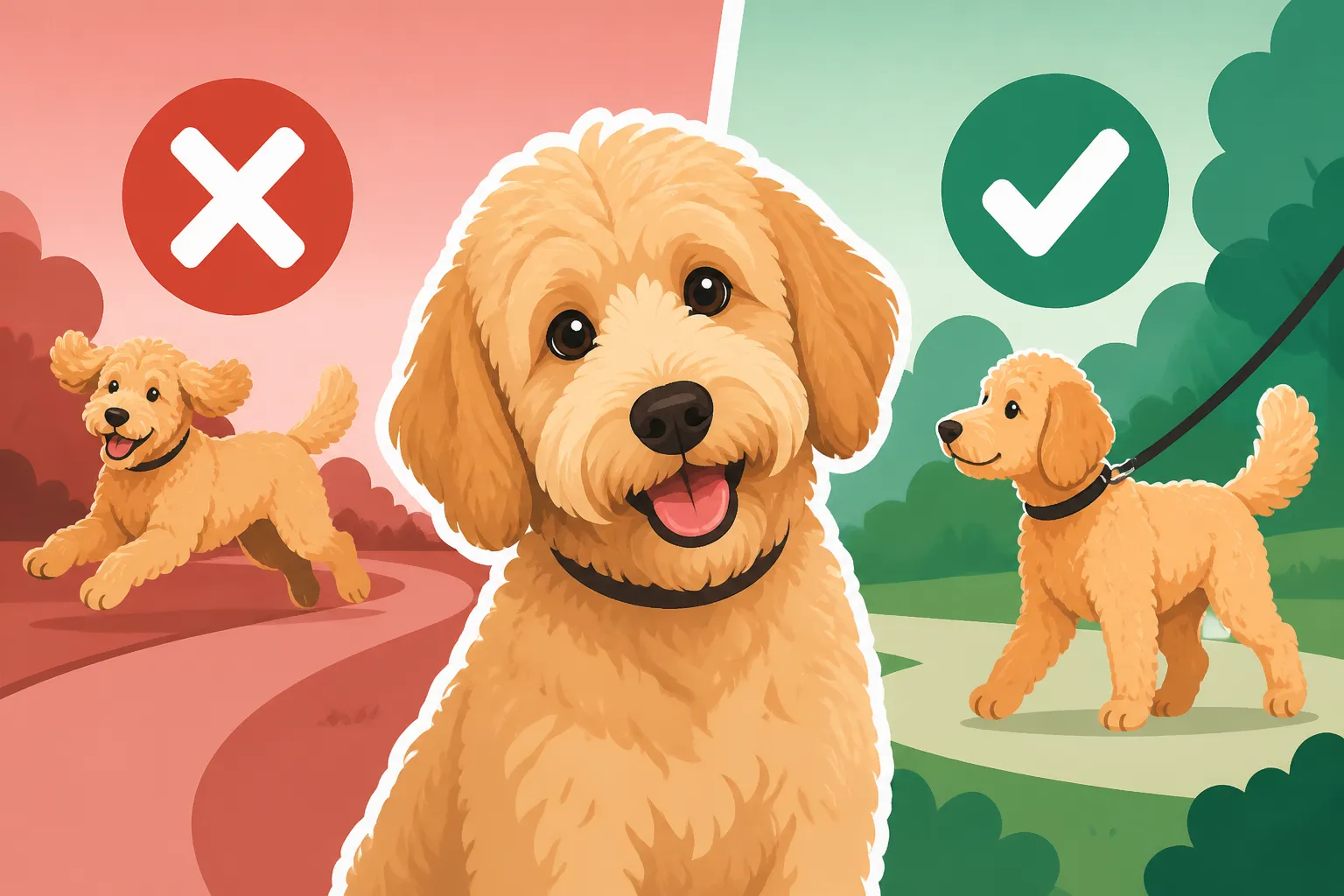
Whether a Goldendoodle Can Be Trusted Off Leash
Oh, the dream, right? That picture-perfect moment of your Goldendoodle galloping freely through a sun-drenched field, tail wagging, only to turn on a dime and sprint back to you the second you call. It’s a beautiful vision that many Goldendoodle owners chase, but the reality of achieving truly trustworthy off-leash reliability is often far more complex, fraught with distractions, and requires immense dedication. This guide will walk you through the real talk about off-leash training for your beloved Goldendoodle, from understanding their unique instincts to creating safe environments and building that unbreakable bond of trust.
Understanding Your Goldendoodle's Instincts and Why Recall Matters
Let's be honest, Goldendoodles are wonderful dogs – intelligent, eager to please, and often incredibly friendly. These traits can make them good candidates for off-leash work, but it's crucial to understand the genetic predispositions they carry from both the Golden Retriever and Poodle sides, as these play a huge role in how they perceive and respond to the world when the leash comes off.
The Golden Retriever's Wanderlust and the Poodle's Independence
Your Goldendoodle is a beautiful blend, but that blend means they inherit a mixed bag of instincts. From the Golden Retriever side, you get that incredible biddability and desire to retrieve, which often translates to a dog who loves to work with you. However, Goldens were also bred to cover ground, follow scents, and retrieve game, sometimes over long distances. This means they can have a strong independent streak when a captivating smell or a squirrel catches their attention. Suddenly, "working with you" takes a backseat to "investigating that really interesting thing over there." This inherent drive to explore can be a significant challenge for off-leash reliability. You might be interested in What a Goldendoodle Inherits From Each Parent Breed for more on these traits.
Then there's the Poodle influence. Poodles are highly intelligent and often considered one of the smartest dog breeds. They are also incredibly sensitive and form deep bonds with their people. This intelligence means they can learn very quickly, but it also means they can be independent thinkers. A Poodle might decide that chasing a bird is more rewarding than coming back to you, especially if you haven't made coming back the absolute best thing ever. They're not being stubborn; they're often weighing their options and making a choice that, to them, seems more exciting at that moment. This combination of potential wanderlust and independent thought means that trusting a Goldendoodle off-leash is never a given; it's a careful construction of training and trust.
What "Reliable Recall" Really Means
When we talk about reliable recall, we're not just talking about your dog occasionally coming back when there are no distractions. We're talking about a dog who will drop everything – chasing a rabbit, greeting another dog, sniffing an irresistible patch of grass – and return to you immediately, every single time, even in the face of significant temptations. It means they choose you over anything else in their environment. This level of reliability takes an enormous amount of consistent, positive training, and it’s something you continually reinforce throughout your dog's life.
Many owners mistakenly believe their Goldendoodle has good recall because they come when called in their backyard or a quiet park. But real-world situations are filled with unforeseen stimuli. A truly reliable recall means they'll ignore the cyclist whizzing by, the jogger, the dog barking from behind a fence, or the tempting aroma of a discarded half-sandwich. It's a high bar, and it's essential to recognize that anything less than this consistent, immediate response puts your Goldendoodle at risk. Goldendoodle Recall and the Retriever Half delves deeper into harnessing their natural instincts for better recall.
Building a Rock-Solid Off-Leash Foundation
Achieving reliable off-leash behavior isn't about wishing your Goldendoodle will be good; it's about systematic, consistent training that starts early and never truly ends. It’s about making coming back to you the most irresistible option available.
Starting Early and Making Recall a Game
The best time to start recall training is the moment your Goldendoodle puppy comes home. Begin in a low-distraction environment, like your living room or a fenced yard. Make recall a super fun game! Call your puppy's name in an excited voice, and when they turn towards you, immediately reward them with their absolute favorite high-value treat or a quick, enthusiastic play session with a special toy. Don't wait for them to reach you to reward; reward the intent to come. Then, when they get to you, give them another treat and lots of praise.
Vary your location and position. Call them from behind a couch, from another room, or when they're distracted by a toy. The key is to make it unpredictable and always rewarding. Never use "come" when you're angry or to do something unpleasant like nail trims or leaving the dog park. You want "come" to always predict something fantastic. For a deeper dive into puppy training, check out Why Goldendoodle Owners Get Wrong in Year One.
Here’s a simple game you can play:
| Recall Game Step | Description | Reward |
|---|---|---|
| 1. The "Ping-Pong" Game | Two people stand a short distance apart. One calls the dog, rewards, then the other calls and rewards. | High-value treats, enthusiastic praise, quick tug on a toy. |
| 2. Hide-and-Seek | In a secure area, hide and then call your dog. When they find you, it’s a jackpot! | Multiple treats, big praise, exciting play. |
| 3. Treat Toss & Call | Toss a treat a short distance away. While they're eating it, back up a few steps, then call them. | Another treat when they reach you. |
These short, frequent, and fun sessions are far more effective than long, boring ones. Remember, Goldendoodles thrive on positive reinforcement. Positive Reinforcement and Why It Suits a Goldendoodle explains this in more detail.
Proofing Your Goldendoodle's Recall in Real-World Scenarios
Once your Goldendoodle has a stellar recall in quiet, familiar environments, it's time to "proof" it by gradually introducing distractions. This is where many owners get stuck. You can't expect your dog to ignore a squirrel at the park if they've only ever practiced recall in your living room.
Start by practicing in slightly more distracting environments, always using a long line (a 15-30 foot training leash, easily found on Amazon). This allows you to practice off-leash recall safely, ensuring you can intervene if your dog decides to ignore you. Call your dog, and if they hesitate, give a gentle but firm tug on the long line while repeating the command. As they respond, reward heavily. Gradually increase the level of distraction:
- A quiet park with minimal other dogs or people.
- A park with a few people walking by at a distance.
- A park with other dogs on leashes.
- Areas with mild wildlife (birds, squirrels, but not intense deer trails).
The key is to set your Goldendoodle up for success. Don't introduce too many distractions too quickly. If they fail, it means you've moved too fast. Go back to an easier environment and build up again. Think of it like building muscle – you don't start with the heaviest weights. For more on using a long line, read Long Line Practice With a Goldendoodle.
Mastering Impulse Control for Off-Leash Safety
Recall isn't just about coming back; it's also about having the self-control to not chase that tempting something in the first place. This is where impulse control training becomes vital. Exercises like "leave it" and "wait" are cornerstones of off-leash safety.
- "Leave It": Teach your Goldendoodle to ignore food on the floor, toys, or even other dogs when you tell them to. Start with low-value items and gradually increase to highly desirable ones.
- "Wait" or "Stay": This teaches your dog to hold still and not move until released. Practice at doorways, before meals, and before getting out of the car. This helps them learn to pause and look to you for direction.
These exercises build a foundation of self-control, teaching your Goldendoodle that waiting for your cue, rather than acting on their impulses, leads to good things. A program like BAXTER & Bella offers structured lessons on these foundational commands, which are essential for off-leash reliability. Goldendoodle Impulse Control Exercises provides more specific strategies.
Assessing the Risks and Creating Safe Off-Leash Environments
Even with the best training, off-leash freedom isn't suitable for every Goldendoodle or every environment. It’s crucial to be realistic about the risks and to choose your battles wisely.
Evaluating the Environment for Potential Hazards
Before you even consider letting your Goldendoodle off-leash, you must meticulously evaluate the environment. This isn't just about looking for other dogs; it's about assessing a multitude of potential dangers:
- Traffic: Are there roads nearby? Even a quiet country lane can become deadly if a car appears unexpectedly. What about driveways or parking lots?
- Other Dogs: Are there other dogs present? Are they on leash? Are they friendly? Not all dogs are safe to interact with, and an off-leash encounter can quickly escalate into a dangerous situation, even if your Goldendoodle is friendly.
- Wildlife: Rabbits, deer, squirrels, birds – these are often irresistible prey drives for a Goldendoodle, especially those with a strong Golden Retriever lineage. A chase could lead them into dangerous territory or far from your sight.
- People: Are there children, joggers, or people who might be fearful of dogs? An exuberant Goldendoodle bounding up to someone can be frightening, even if they're just being friendly.
- Property Lines: Is the area clearly delineated? Are there fences or natural boundaries that your Goldendoodle understands? Many public parks or trails have unclear boundaries, making it easy for a dog to wander onto private property or into restricted areas.
- Environmental Dangers: Ponds, rivers, steep drops, sharp rocks, poisonous plants, discarded food, or even broken glass can pose serious threats. A Goldendoodle's enthusiasm can make them oblivious to these dangers.
A truly safe off-leash environment is rare and often requires a securely fenced area or a very remote, open space with no nearby roads and minimal distractions. Don't underestimate how quickly a situation can change.
The "Goldendoodle Test" for Off-Leash Readiness
Before ever un-clipping that leash in an unfenced area, put your Goldendoodle through a rigorous test. This isn't a one-time thing, but something you should consider regularly.
- The Invisible Leash Test: Walk your dog on a loose leash, but pretend it's not there. Does your dog stay close, checking in with you regularly? Or do they strain ahead, pulling towards every interesting smell? If they pull on leash, they are not ready for off-leash.
- The "Pop-Up" Distraction Test: While on a long line in a moderately distracting area, have a friend (or a dog-savvy person) unexpectedly appear, or have a ball roll past. Can your Goldendoodle successfully recall away from this distraction? If not, more training is needed.
- The "Stranger Approaching" Test: Does your Goldendoodle reliably return to you and stay with you when a stranger approaches, even if that stranger is calling their name or looking friendly? Their natural friendliness, a part of The Goldendoodle Temperament Owners Describe, can sometimes be a liability here.
- The "Movement" Test: If you start running in the opposite direction, does your Goldendoodle immediately reorient and follow you, or do they finish their sniff/interaction first? They should prioritize following you.
If your Goldendoodle doesn't pass these tests with flying colors every single time, they are not truly ready for off-leash freedom in open, unsecured areas. It's a hard truth, but it prioritizes their safety.
Legal and Ethical Considerations for Off-Leash Dogs
Beyond safety, there are legal and ethical implications to consider. Many public areas have leash laws, and ignoring them can result in fines. More importantly, an off-leash dog, no matter how friendly, can be perceived as a threat by others.
- Respecting Others: Not everyone loves dogs, and some people are genuinely afraid. An off-leash dog, even if just saying hello, can cause distress or even panic.
- Protecting Wildlife: Even if your Goldendoodle doesn't catch a wild animal, chasing them can cause immense stress, displace them from nesting sites, or separate parents from their young.
- Preventing Altercations: An off-leash dog approaching a leashed dog can lead to serious fights, regardless of intent. The leashed dog feels vulnerable and may react defensively.
As responsible Goldendoodle owners, it's our duty to ensure our dogs are not only safe but also respectful of their environment and the people and animals in it. When in doubt, keep the leash on. It's the safest and most considerate option.
Tools and Resources for Off-Leash Training
Even seasoned dog owners benefit from the right tools and sometimes, professional guidance. Investing in these resources can make a significant difference in your off-leash training journey.
Essential Gear for Recall Training
You don't need a mountain of gadgets, but a few key items will be invaluable as you work towards reliable off-leash behavior:
- High-Value Treats: These are the absolute most important tool. Think tiny pieces of cooked chicken, cheese, or specialized training treats your Goldendoodle goes absolutely wild for. Keep them readily accessible in a treat pouch during training sessions. You can find excellent treat pouches on Amazon that clip to your belt or pocket, making rewards quick and easy.
- Long Line: As mentioned, a 15-30 foot long line is crucial for practicing recall safely in open areas. It gives your Goldendoodle the illusion of freedom while giving you control. Ensure it's made of a durable, comfortable material.
- Whistle: A dog whistle can be a fantastic tool for recall, especially over longer distances or in noisy environments. The sound is consistent and cuts through distractions better than your voice. Always pair it with treats, just like your verbal recall cue.
- Secure Harness or Flat Collar: While training recall, always have your Goldendoodle on a secure harness or a well-fitting flat collar that they can't slip out of if you need to grab them or attach the long line quickly.
Professional Help and Online Programs
Sometimes, you hit a wall, or you just want to ensure you're doing everything right. That's perfectly normal! There's no shame in seeking expert guidance.
- Certified Professional Dog Trainer (CPDT-KA): A local certified trainer can assess your Goldendoodle's individual temperament, identify any gaps in your training, and provide personalized coaching. They can help you troubleshoot specific challenges like distraction management or building focus. Look for trainers who use positive reinforcement methods.
- Online Training Programs: If in-person classes aren't feasible, comprehensive online programs can be a fantastic resource. For example, BAXTER & Bella offers an extensive online puppy training program that covers everything from basic manners to advanced recall. These programs often provide step-by-step videos, live Q&A sessions, and a structured curriculum that you can follow at your own pace. They can be particularly helpful for building a strong foundation and addressing common Goldendoodle behaviors like Goldendoodle Adolescent and Selective Hearing.
Remember, off-leash reliability is a journey, not a destination. It requires ongoing commitment, patience, and a deep understanding of your Goldendoodle's unique personality. While the dream of effortless off-leash walks is enchanting, the reality is built on deliberate training and an unwavering focus on safety.
Disclaimer
This article is for general informational purposes only and does not constitute professional advice. Laws, prices and regulations vary by location and change over time. Consult a qualified professional for guidance on your specific situation.