Long Line Practice With a Goldendoodle
There’s nothing quite like watching your Goldendoodle bound through an open field, ears flopping, tail wagging, truly experiencing freedom. But for many of us, the nagging fear of them ignoring a recall command or disappearing over the horizon keeps that leash firmly in hand. It’s a real frustration, this desire to give them space tempered by the need for safety. This guide is all about bridging that gap, teaching you how to use a long line to safely grant your Goldendoodle more freedom while building a reliable recall, step by step.
Why Long Line Training Is a Game-Changer for Goldendoodles
Goldendoodles are wonderful, energetic dogs with a strong desire to please, but let's be honest, their Golden Retriever heritage means they love to explore, sniff, and chase. The Poodle side adds intelligence and often a good dose of speed. This combination means they thrive on exercise and mental stimulation, but also that off-leash freedom can feel like a high-stakes gamble. Long line training offers a safe, controlled way to let them stretch their legs and practice vital skills without the constant worry. It's not just about exercise; it's about building trust and understanding.
The Goldendoodle's Drive to Roam
You know that look, right? The one your Goldendoodle gives you when they spot a squirrel, or a patch of intriguing grass just out of reach? That's their inner retriever and scent hound kicking in, an instinct that drives them to investigate, often forgetting everything else in the process. Trying to practice recall in a fenced yard is one thing, but replicating the real-world distractions of a park or trail is another entirely. A long line allows you to simulate that freedom while maintaining a physical connection, giving you peace of mind. It’s a controlled release that respects their natural instincts while upholding your responsibility for their safety.
They're designed to cover ground, to sniff out interesting things, and to enjoy a good romp. Denying them this opportunity can lead to pent-up energy, boredom, and even some behavioral issues back home. Imagine a dog that only ever walks on a six-foot leash – they never truly learn to stretch their legs or respond to cues from a distance. The long line changes that equation, offering a bridge to more independence without the inherent risks of truly unleashed freedom until they are absolutely ready.
Safety First, Freedom Second
The primary goal of a long line isn't just to let your Goldendoodle run, it's to teach them that coming back to you is the best game in town, even when there are tempting distractions. It’s a crucial tool, especially if your Goldendoodle has Goldendoodle Recall and the Retriever Half or struggles with impulse control around other dogs or wildlife. With a long line, you can practice their recall command in environments where you might normally hesitate to let them off. If they get too far, a gentle tension on the line reminds them of your presence and the command, allowing you to guide them back without having to chase them down.
This safety net is invaluable. It means you can venture into open spaces, like quiet fields or less-trafficked hiking trails, knowing that you have a way to intervene if your Goldendoodle suddenly decides that distant deer is more interesting than your enthusiastic calls. It transforms stressful walks into opportunities for positive reinforcement and skill-building. You can focus on their training, rather than constantly scanning for potential hazards, which in turn makes the experience more enjoyable and productive for both of you.
Building a Rock-Solid Recall
For a Goldendoodle, a reliable recall is arguably one of the most important commands they can learn. It’s their lifeline to safety. The long line is the perfect stepping stone to this mastery. It allows you to practice the "come" command repeatedly, gradually increasing the distance and distractions, all while ensuring that success is always an option. Every successful recall, even when gently guided by the line, reinforces the behavior and builds your Goldendoodle's confidence in responding to you.
Think of it as a dynamic umbilical cord. You call your dog, they start to come, but then a butterfly flits by. Instead of yelling or getting frustrated, you can apply a gentle, consistent pressure on the line, reeling them in while still repeating your recall cue. As they respond and return, the pressure releases, and they get lavish praise and a fantastic treat. This physical consequence (the tension) combined with the positive reward for returning helps them understand that "come" means disengaging from whatever they're doing and re-engaging with you, immediately. It builds a history of success that's harder to achieve when they're truly off-leash and the stakes are higher.
Gearing Up: Choosing the Right Long Line and Accessories
Before you can hit the field, you need the right tools. A haphazard collection of old rope simply won't cut it, and using the wrong equipment can actually be detrimental to your Goldendoodle's training and safety. Making the right choices here sets you up for success.
Length, Material, and Durability
Long lines come in various lengths, typically from 15 feet to 50 feet, and are made from different materials. For Goldendoodles, especially active ones, you'll want something durable and easy to clean.
- 15-20 feet: Great for beginners, smaller Goldendoodles, or practicing in slightly more confined spaces where you still want a bit more reach than a standard leash. It's less prone to tangling.
- 30-40 feet: A versatile length, offering a good balance between freedom and control. Ideal for practicing recall in open fields.
- 50 feet (or more): Provides maximum freedom, perfect for advanced recall practice in very large, open, and safe areas. Can be more challenging to manage.
When it comes to materials, nylon and biothane are the most common.
- Nylon is often lighter and more flexible, but it can absorb water and get muddy, making it harder to clean and heavier when wet. It can also cause rope burns if it slides through your hand quickly.
- Biothane (a coated webbing) is a fantastic option for Goldendoodles. It's waterproof, mud-proof, doesn't absorb odors, and is super easy to wipe clean. It's also less likely to cause rope burn. Many Goldendoodle owners swear by biothane lines for their durability and ease of maintenance. You can find a wide variety of these on platforms like Amazon.
| Feature | Nylon Long Line | Biothane Long Line |
|---|---|---|
| Material Feel | Soft, flexible, lightweight | Smooth, slightly stiffer, leather-like feel |
| Waterproof | No, absorbs water and gets heavy | Yes, completely waterproof |
| Cleaning | Can be difficult, holds mud and odors | Very easy, just wipe clean |
| Durability | Good, but can fray over time | Excellent, highly resistant to wear and tear |
| Grip | Can cause rope burn if wet and pulled fast | Less prone to rope burn, consistent grip |
| Visibility | Often available in bright colors | Wide range of bright and subtle colors available |
| Ideal Use | General training, dryer conditions | All-weather training, muddy environments, water |
Harness Over Collar
This is a non-negotiable for long line training. Always attach your long line to a well-fitting harness, never directly to your Goldendoodle's collar. If your dog runs to the end of a long line and hits the end of their tether, the sudden jolt on a collar can cause severe neck injuries, including damage to the trachea, spine, or even the soft tissues in their throat. A harness distributes the pressure across their chest and shoulders, minimizing the risk of injury. It also gives you more control and makes it easier to gently guide them.
Make sure the harness is secure and fits snugly without rubbing or restricting movement. A Y-front harness is often a good choice, as it doesn't impede shoulder movement. If your Goldendoodle has Goldendoodle Leash Manners by Size, a front-clip harness can also offer a bit more steering control, though for long line work, the primary attachment point is usually the back clip. Always double-check the harness before each session to ensure it's not loose or damaged.
Essential Extras for Long Line Adventures
Beyond the long line and harness, a few other items will make your training sessions smoother and more enjoyable:
- High-Value Treats: Think chicken, cheese, hot dogs – something truly irresistible that your Goldendoodle only gets for recall success.
- Treat Pouch: A hands-free pouch that clips to your waist makes quick rewarding easy.
- Comfortable Footwear: You'll be doing a lot of walking, potentially running, and sometimes dealing with muddy or uneven terrain.
- Poop Bags: Always, always be prepared.
- Water: For both you and your Goldendoodle, especially on warmer days or longer sessions.
- Weather-Appropriate Clothing: Dress for the outdoors!
Having all your gear ready ensures you can focus on your Goldendoodle and the training, rather than fumbling for treats or worrying about uncomfortable shoes. Remember, these sessions are part of Goldendoodle Exercise and Mental Work Every Day, so come prepared for an active time.
Step-by-Step: Mastering Long Line Practice with Your Goldendoodle
Ready to dive in? This isn't just about snapping on the line and letting them run wild. There’s a methodical approach that ensures safety and maximizes learning.
Starting in a Safe, Low-Distraction Zone
The very first long line sessions should happen in a super boring, contained environment. Think of a quiet, empty field, a large, secure yard, or an unused tennis court. The fewer distractions, the better. The goal here isn't to test their recall against a flock of pigeons, but to simply get your Goldendoodle used to the feeling of the line being attached and dragging behind them.
Start by letting them explore. Don't actively try to train; just let them sniff around with the line trailing. Observe how they move, how they react when the line gets tangled in their legs (it will!), or when they reach the end of the line. Your job is to stay calm and present, intervening only if they seem genuinely distressed by the line itself. Keep your voice light and positive. You want them to associate the long line with fun and freedom, not stress. This foundational step is critical before moving on to more complex exercises.
The Dance of the Line: Handling and Management
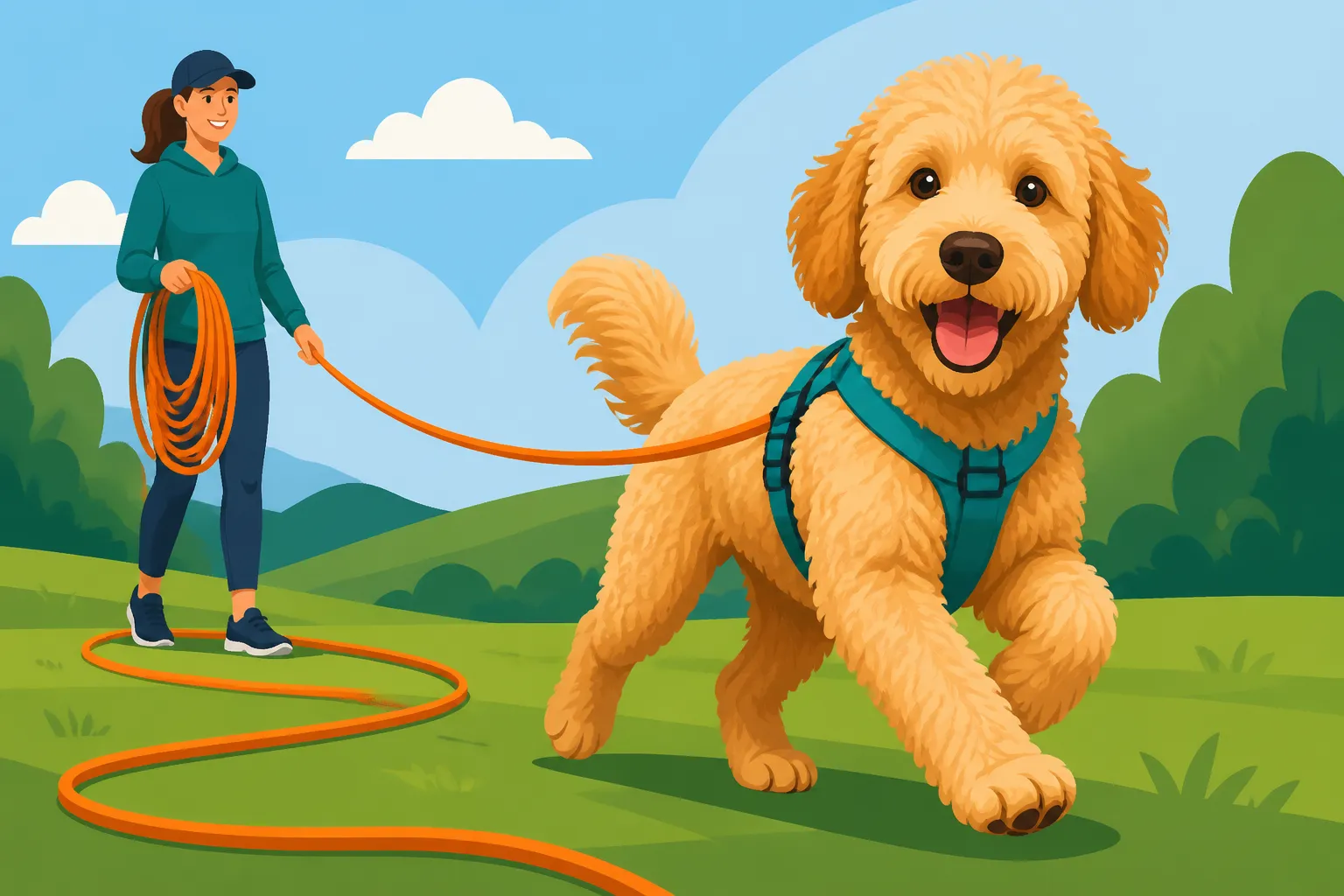
Managing a long line, especially a longer one, takes a bit of practice. It's more of a dance than a static hold. Your goal is to keep the line relatively slack, allowing your Goldendoodle freedom, but always be ready to gather it up or step on it if needed.
Here’s how to handle it:
- Never wrap the line around your hand or wrist. If your Goldendoodle suddenly bolts, you could suffer a severe injury.
- Hold the end of the line loosely in your hand, or let it trail, stepping on it if you need to stop your dog quickly. This requires awareness of where your dog is and how much line is out.
- Gather and release. As your Goldendoodle moves closer, gather loops of the line. As they move away, let them go. This keeps slack in the line and prevents sudden jerks.
- Use gloves. If you're working with a powerful Goldendoodle or a nylon line, gloves can protect your hands from rope burn.
The key is to be proactive, not reactive. Watch your Goldendoodle's body language. If you see them about to bolt after something, gently apply tension to the line before they hit the end of it, and use your recall cue. Consistency here is key. You might consider using a structured program, like those offered by BAXTER & Bella, which often incorporate safe handling techniques into their broader training modules.
Practicing Recall and Check-ins
Now, for the main event: practicing recall! Remember to keep it positive and rewarding.
- Start simple: With your Goldendoodle exploring, call their name excitedly and give your recall cue (e.g., "Come!" or "Here!").
- Make it easy to succeed: As they turn towards you, back away a few steps to create more distance and excitement. If they hesitate, gently reel them in with the long line while continuing to use your cue and positive encouragement.
- Massive reward: The moment they reach you, make it a party! Lots of enthusiastic praise, physical affection (if they like it), and those high-value treats. You can also throw a favorite toy for them to chase, turning the recall into a fun game.
- Practice "check-ins": Even without a full recall, encourage your Goldendoodle to check in with you periodically. When they glance your way, mark it with a "Yes!" and toss a treat to them. This teaches them that keeping an eye on you is rewarding, a crucial step for Whether a Goldendoodle Can Be Trusted Off Leash in the future.
Keep sessions short, positive, and end on a high note. Aim for several successful recalls in each session. Over time, your Goldendoodle will start to understand that coming back to you isn't losing their freedom, but gaining a reward and another chance to play. Remember Goldendoodle Training Sessions and How Long to Run Them should ideally be short and focused, especially when introducing new concepts.
Gradually Increasing Distractions
Once your Goldendoodle is consistently returning to you in a low-distraction environment, you can slowly, incrementally, introduce more challenges. This is where the real world begins to creep in.
- Add mild visual distractions: Start with a few cones or toys scattered in the field.
- Introduce sounds: Play some background music softly, or practice near a quiet road with minimal traffic.
- Practice with a friendly, calm dog in the distance: This is a big one for Goldendoodles who get easily excited around other canines. Have a friend with a calm dog stand far away, then gradually move closer as your Goldendoodle's recall improves. This is vital for Calling a Goldendoodle Off a Dog It Wants to Greet.
- Move to busier locations: A park during a less busy time, a nature trail, or even a community field where people are walking, but not directly interacting with your dog.
Always remember the line is your safety net. If your Goldendoodle struggles, backtrack to an easier step. The goal is to build confidence and success, not to overwhelm them. Their adolescent months can be particularly challenging, as Goldendoodle Adolescence and Selective Hearing might make them seem to forget all their training. This is precisely when consistent long line practice becomes invaluable to reinforce good habits.
Overcoming Obstacles: Common Long Line Challenges
Long line training, while incredibly effective, isn't always smooth sailing. You might encounter a few bumps along the way. Don't get discouraged – these challenges are normal, and there are strategies to navigate them.
The Tangled Goldendoodle
One of the most common frustrations is the long line getting tangled. It wraps around your Goldendoodle's legs, snags on bushes, or turns into a spaghetti monster on the ground. This can be annoying, unsafe, and interrupt your training flow.
- Line choice matters: Biothane lines are often less prone to tangling than nylon because of their smoother, stiffer nature.
- Manage the slack: Keep the line gathered and let it out as needed. Don't just let 30 feet of line drag wildly if you're only covering a small area.
- Pay attention to terrain: Practice in open areas with minimal obstacles (bushes, tall grass, rocks).
- Teach a "leave it" cue: This can be invaluable if your Goldendoodle starts to investigate something the line is snagged on.
- Practice, practice, practice: Both you and your Goldendoodle will get better at moving with the line. Over time, they'll learn to step over it, and you'll become more adept at anticipating tangles.
If your Goldendoodle gets tangled and seems distressed, calmly walk over, untangle them, and then resume play or training. Don't make a big deal out of it.
When Your Goldendoodle Ignores the Line
Sometimes, your Goldendoodle might seem completely oblivious to the long line, acting as if they're truly off-leash, or even get spooked by the line dragging behind them.
- Start shorter: If a 30-foot line is too much, go down to 15 or 20 feet. Get them comfortable with that, then gradually increase.
- Make the line part of the fun: Attach a lightweight toy to the end of the line and drag it, encouraging them to chase. Play games where the line is just a natural extension of their movement.
- Reinforce proximity: In the early stages, reward them for staying relatively close to you, even if not actively called. This builds a positive association with your general vicinity.
- Re-evaluate distractions: If they're ignoring the line and you, the environment might be too stimulating. Go back to a quieter place.
- Enlist a training partner: Have a friend gently hold the end of the line (without pulling!) as you call your Goldendoodle. This adds an element of connection without you having to manage the entire length.
- Think about Positive Reinforcement and Why It Suits a Goldendoodle. If they're ignoring the line, your rewards might not be high-value enough, or the distractions are simply too overwhelming for their current training level.
Avoiding Aversion: Making the Experience Positive
The worst thing that can happen is your Goldendoodle developing an aversion to the long line or to coming back to you. This usually happens if the long line is used primarily for punishment or if recalls are always associated with ending fun.
- Never use the long line to yank or punish. The long line is a teaching tool, not a punitive device. Gentle, consistent pressure is the key.
- Don't only call them back to end the fun. Call your Goldendoodle, reward them, and then immediately send them back out to play. Do this several times during a session. Only end the session after a truly successful, enthusiastic recall.
- Keep sessions short and fun. End before your Goldendoodle gets tired or bored.
- Vary your locations. Keep things fresh and exciting by exploring different safe spots.
- Treat every return like they've won the lottery. Your enthusiasm is contagious!
By consistently making long line practice a positive, engaging, and rewarding experience, you'll foster a Goldendoodle who loves to come back to you, knowing that it leads to great things, whether that's another round of play, a delicious treat, or simply a moment of shared joy with their favorite person.
Disclaimer
This article is for general informational purposes only and does not constitute professional advice. Laws, prices and regulations vary by location and change over time. Consult a qualified professional for guidance on your specific situation.