Asking for a Half Inch Goldendoodle Trim
One of the trickiest parts of owning a Goldendoodle, especially in those early years, is learning how to talk to your groomer. You have this beautiful vision in your head—often a soft, fluffy "teddy bear" look—but translating that into technical grooming terms can feel like trying to speak a foreign language. Many owners walk away from the salon feeling frustrated because their beloved Goldendoodle came back looking much shorter or different than they imagined. This guide is all about helping you master the art of asking for a "half-inch Goldendoodle trim," understanding what that actually means, and how to ensure you get the look you're hoping for.
Understanding the Half-Inch Goldendoodle Trim
When you ask for a specific length like "half-inch" at the groomer, it's easy to assume everyone is on the same page. However, the world of dog grooming has its own language, and what you envision might not be what the groomer immediately interprets. This section will help bridge that communication gap and set clearer expectations.
What "Half-Inch" Really Means on a Goldendoodle Coat
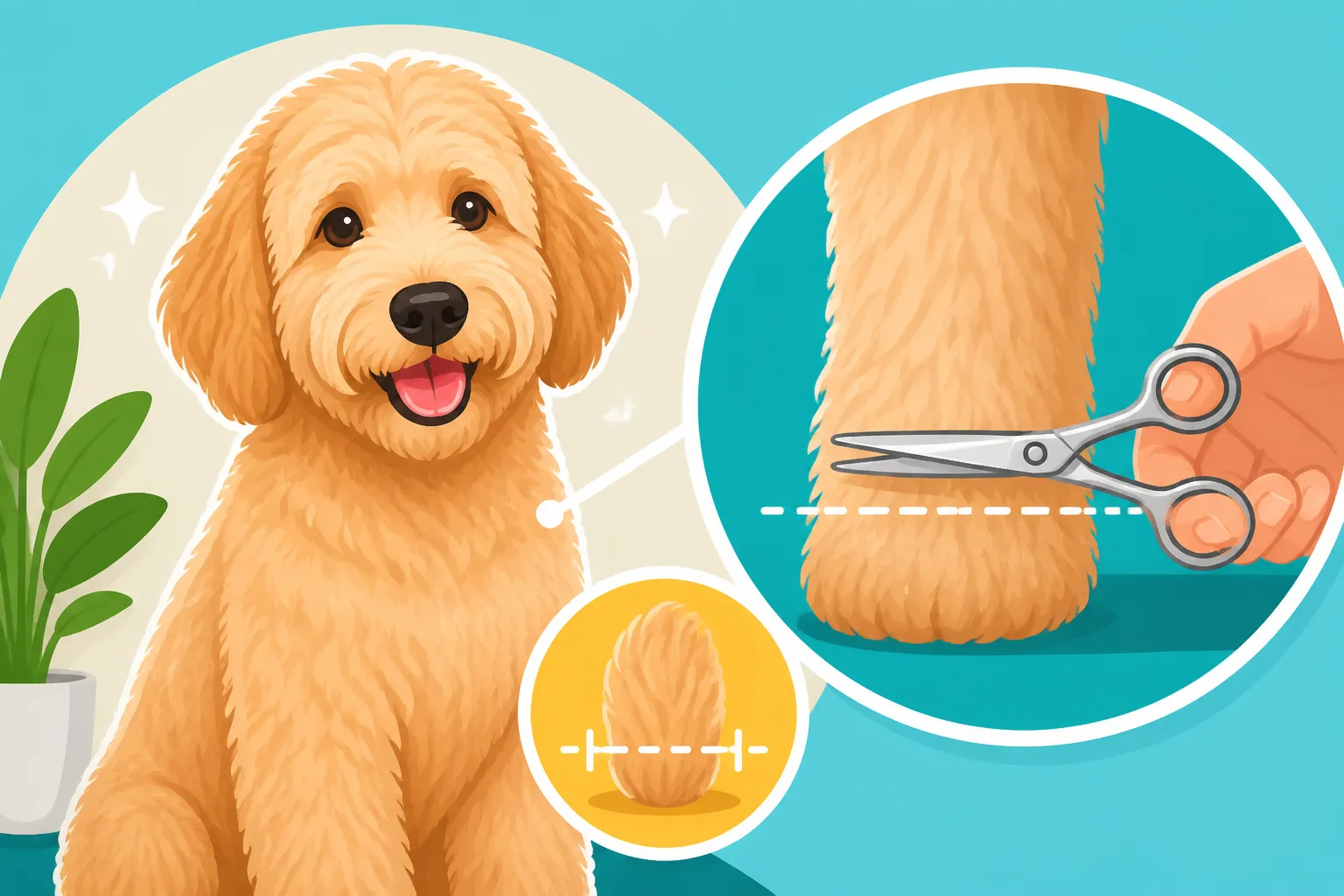
In grooming terms, "half-inch" usually refers to the length of the guard comb attachment used on the clippers. These combs act as a barrier, allowing the clipper blade to cut the hair to a uniform length through the comb. So, when a groomer selects a 1/2-inch guard, they are aiming to leave approximately 1/2 inch of hair on the dog's body.
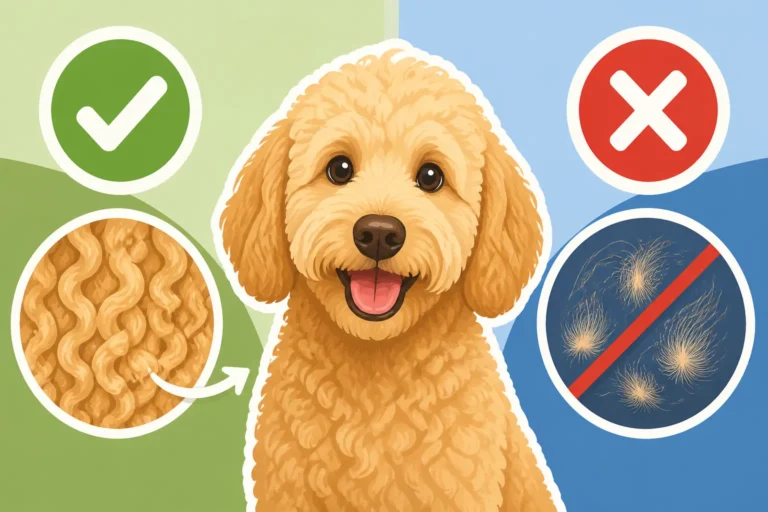
The actual visual outcome of that 1/2-inch, though, is heavily influenced by your Goldendoodle's specific coat type. A dog with a very straight or slightly wavy coat might look a bit sleeker and shorter at 1/2 inch than a dog with a thick, curly, or "wool" coat, which will appear much fluffier and fuller at the same length because of the natural curl and density. The direction the groomer runs the clippers (with or against the grain) also impacts the final length, making it appear slightly longer or shorter than the stated guard size.
Imagine you're picturing your Goldendoodle with about an inch of fluffy hair, and you think "half-inch" will achieve that neat but still soft look. However, if your dog has a very dense, curly coat, a groomer using a 1/2-inch comb might achieve a perfect "teddy bear" look because the curls spring up, making it appear longer. Conversely, if your Goldendoodle has a straighter, thinner coat, that same 1/2-inch blade might leave them looking quite short and slicked down, especially right after the groom, which can be a real shock if you were expecting more fluff. It's crucial to understand this distinction so you can manage your expectations and communicate more effectively.
The Aesthetic Appeal of the Half-Inch Length
For many Goldendoodle owners, the half-inch trim—or something very close to it—is the holy grail of grooming. It hits a sweet spot: long enough to maintain that adorable, signature "teddy bear" look, but short enough to be far more manageable than a full-length, shaggy coat. This length often allows the natural waves or curls of the Goldendoodle to shine without becoming excessively long, which can quickly lead to matting and a much messier appearance.
This particular length provides a great balance for an active Goldendoodle who loves to play outdoors but also needs to be clean and comfortable indoors. It's short enough to minimize the amount of dirt, burrs, and general debris that can get caught in the coat during adventures, while still providing some insulation and protection for their skin. For families, it often means less time spent on daily rigorous brushing, making it a popular choice. The half-inch trim aims for practicality without sacrificing that irresistibly cute Goldendoodle charm.
Think of those heartwarming pictures you see online or in magazines of Goldendoodles with soft, fluffy faces and neatly trimmed bodies. Often, that look is achieved with a relatively short overall body length, combined with careful scissoring on the head and legs to create that rounded, inviting appearance. It’s a length that says, "I'm a Goldendoodle, and I'm ready for anything!" It's appealing because it simplifies care while maintaining the desired aesthetic, embodying the best of both worlds for many busy Goldendoodle households.
Factors That Influence the Actual Outcome
Several factors beyond the clipper comb size can dramatically influence how your Goldendoodle's half-inch trim actually turns out. One of the biggest culprits is the condition of your dog's coat when they arrive at the groomer. If your Goldendoodle has matting—even minor tangles hidden beneath the surface—the groomer may not be able to achieve a uniform half-inch cut without leaving choppy patches or even having to shave down those matted areas much shorter for the dog's comfort and safety. Why a Groomer Shaves a Matted Goldendoodle goes into more detail on this.
The texture and density of your Goldendoodle’s individual coat also play a huge role. A dog with a thin, fine coat will look very different at half an inch compared to one with a thick, dense "wool" coat. The latter will appear much fuller, while the former might look almost naked. Plus, the way the groomer runs their clippers – whether with the grain of the hair or against it – can result in a visible difference in length. Clipping against the grain removes more hair, resulting in a shorter final look even with the same comb attachment. These subtle variations are why a conversation with your groomer is so vital.
For example, you might have two Goldendoodle siblings from the same litter, both with a lovely wavy coat. One might have slightly denser hair than the other. If both get a half-inch trim, the denser-coated dog will likely look fluffier and fuller. The groomer's experience with Goldendoodle coats, their specific equipment, and even the natural lay of your dog's hair all contribute to the final result. It’s not just about the numbers on the clipper guard; it’s an art form applied to a living, breathing, uniquely coated creature.
Communicating Your Half-Inch Request to the Groomer
Simply saying "half-inch trim" might not always convey your exact vision. Groomers are professionals who deal with a wide range of breeds and owner expectations, and Goldendoodle coats are notoriously diverse. Clear, detailed communication is your best friend in getting the haircut you desire.
Beyond Just Saying "Half-Inch"
While "half-inch" is a great starting point, it's just that—a start. Many owners have been disappointed after a groom simply because they didn't elaborate enough. Your groomer isn't a mind-reader, and what "fluffy" or "neat" means to you might be entirely different from their interpretation. Instead of just stating the length, think about the overall style and shape you're aiming for. Do you want a rounded head, neatly trimmed ears, and slightly longer "furnishings" on the legs? All these details need to be part of the conversation.
Visual aids are incredibly powerful. Don't hesitate to bring in photos of other Goldendoodles whose haircuts you admire. These images provide a concrete reference point that speaks volumes more than words alone. Showing examples helps bridge the gap between abstract terms and the tangible result you're hoping for. Remember, groomers often use technical terms for different styles and lengths, so clarify if they say something like "a utility cut" or "a puppy trim" to ensure it aligns with your vision. Bringing Photos to a Goldendoodle Groomer offers more tips on this.
Consider a real-life scenario: a client walks in and says, "Give him a half-inch all over, please." The groomer uses a 1/2-inch comb, clips the body, and trims the head proportionally. The client returns, dismayed, because they wanted the body short, but the head left fuller and rounder, like a true "teddy bear." They assumed "half-inch all over" still implied the classic Goldendoodle face. This is why being specific about different body parts, and using photos, can prevent misunderstandings and ensure your dog comes home looking exactly how you imagined.
Essential Details to Discuss with Your Groomer
When discussing a half-inch trim, break down your Goldendoodle into different sections. The body is typically where the uniform clipper length is applied, but the legs, head, ears, and tail often require different, often longer, lengths or hand-scissoring to achieve the desired look. For example, you might want a 1/2-inch on the body, but ask for 1-inch on the legs and a rounded, slightly longer cut around the face to maintain that soft, puppy-like expression.
Don't forget the practical necessities! Always specify your preferences for the sanitary trim (under the tail and belly), the hair between the paw pads (often trimmed short for hygiene and to prevent slipping), and the hair around the eyes (kept clear for vision and to prevent irritation). These smaller details are crucial for your dog's comfort and cleanliness, and they significantly contribute to the overall finished look. It's these precise instructions that elevate a basic "half-inch" trim to the perfectly sculpted Goldendoodle look you desire.
| Area of Body | Common Request for Half-Inch Trim | Why It Matters |
|---|---|---|
| Body | "1/2-inch all over" (using a guard comb) | Main uniform length, impacts overall silhouette. |
| Legs | "Slightly longer, blended," "1-inch scissored" | Keeps a fluffy appearance, avoids stick-legs. |
| Head/Face | "Rounded," "teddy bear cut," "leave beard" | Defines the Goldendoodle's characteristic expression. |
| Ears | "Trimmed but fluffy," "blended to match head" | Prevents matting, maintains soft look. |
| Tail | "Natural length, lightly shaped," "feathered" | Avoids a "rat tail" or overly short look. |
| Sanitary Area | "Shaved short" or "cleanly clipped" | Essential for hygiene and cleanliness. |
| Paw Pads | "Clipped short between pads" | Prevents slipping, collects less dirt/debris. |
| Eyes | "Trimmed to clear vision" | Prevents irritation, allows them to see clearly. |
Building a Relationship with Your Goldendoodle's Groomer
Finding a groomer who truly understands Goldendoodle coats and your preferences is like striking gold. Once you find someone whose work you love, stick with them! Consistency with the same groomer builds trust and allows them to truly get to know your dog's unique coat, temperament, and your specific styling preferences over time. They'll remember that your Goldendoodle's ears tend to mat quickly or that you prefer the head slightly fluffier than the body. This familiarity is invaluable in achieving consistent, satisfactory results.
Regular appointments are also key to maintaining both your Goldendoodle's coat health and your desired look. A Goldendoodle’s coat grows surprisingly fast, and waiting too long between grooms can lead to matting that makes achieving a half-inch trim impossible without going shorter. Most Goldendoodles benefit from professional grooming every six to eight weeks. If you let it go much longer, the groomer might have no choice but to shave the coat shorter than you'd like to remove extensive matting. Booking a Goldendoodle Groom Every Six to Eight Weeks provides a comprehensive guide to scheduling.
Beyond just the haircut, a good groomer will offer advice on at-home coat care, recommending brushes or techniques specific to your Goldendoodle's coat type. They become a partner in your dog's well-being, helping you navigate the challenges of their unique coat. Don't be afraid to ask questions, solicit their expert opinion, and build a rapport; it makes the entire grooming experience better for both you and your Goldendoodle.
Maintaining the Half-Inch Look Between Grooms
Achieving that perfect half-inch trim is only half the battle. To truly maintain that look and keep your Goldendoodle comfortable and mat-free between professional appointments, a consistent at-home grooming routine is essential. Many owners assume that a shorter coat requires less work, but that's a common misconception.
Brushing Requirements for a Half-Inch Coat
Even at a half-inch length, a Goldendoodle's coat will still mat if neglected. The shorter length might reduce the likelihood of severe matting compared to a full, shaggy coat, but it certainly doesn't eliminate it. Regular brushing, at least two to three times a week, is still crucial. The key is to brush all the way down to the skin, not just skimming the top layer of hair. This prevents small tangles from tightening into dense mats, especially in friction areas like behind the ears, under the armpits, and where harnesses or collars rub.
You'll need the right tools for the job. A good quality slicker brush is excellent for working through the coat and removing loose hair and surface tangles. Following up with a metal comb, particularly a greyhound comb with both wide and narrow teeth, is essential. The comb is your "mat detector" – if the comb can't easily glide through the coat from root to tip, you've got tangles or mats that need attention. You can find excellent options for both slicker brushes and metal combs on Amazon or Chewy, ensuring you have the tools that truly penetrate the Goldendoodle's dense coat. For more details on effective brushing, check out Brushing a Goldendoodle Often Enough to Stop Matting and Line Brushing a Goldendoodle Down to the Skin.
Consider a scenario where an owner gets their Goldendoodle a beautiful half-inch trim and thinks, "Great, no more daily brushing!" They might brush once a week, but only superficially. Over time, little knots start to form closer to the skin, especially around the ears and under the collar. By the next grooming appointment, these tiny knots have become tight, painful mats. The groomer then has to go even shorter than the desired half-inch just to get under them, leaving the owner frustrated. Consistent, deep brushing is the only way to prevent this cycle.
Bathing and Drying at Home
If you're bathing your Goldendoodle at home between professional grooms, proper technique is paramount. A quick, sloppy bath can actually cause matting rather than prevent it, especially if the coat isn't thoroughly brushed before getting wet. Always brush out any tangles or mats before bathing. Use a good quality dog shampoo and conditioner that suits your Goldendoodle's coat type; there are many excellent options available on Chewy. Rinse thoroughly, ensuring no soap residue is left behind, as this can irritate the skin and make the coat sticky, which promotes matting.
The drying process is arguably even more critical than the bath itself. Leaving a Goldendoodle's coat to air dry, even if it's trimmed short, is a recipe for disaster. As the coat dries, the hairs shrink and intertwine, making matting much worse. After towel-drying, use a high-velocity force dryer (or even a human hairdryer on a cool setting, held at a distance) while continuously brushing the coat. You need to ensure the coat is completely dry down to the skin. If any dampness remains, particularly in denser areas, it will quickly lead to matting and potential skin issues. Shampoo That Suits a Goldendoodle Coat and Drying a Goldendoodle Down to the Skin offer comprehensive advice.
Imagine a humid summer day, and you give your Goldendoodle a quick rinse after a muddy play session. You towel dry and let them run around, thinking the short coat will dry on its own. A few days later, you notice an unpleasant, musty smell coming from behind their ears or under their armpits. When you investigate, you find a dense, damp mat that has trapped moisture against the skin, causing irritation and a foul odor. Proper, thorough drying, combined with brushing, is non-negotiable for a healthy Goldendoodle coat.
Recognizing When the Coat Needs Attention
Even with a meticulous home routine, a Goldendoodle's coat has its own agenda. Learning to recognize the early signs that your half-inch trim needs attention, whether it's a quick tidy-up or a full professional groom, is crucial. The most obvious sign is when the coat starts looking shaggy and losing its shape. The beautiful rounded head might flatten, the legs might look chunky, and the overall neatness you paid for will diminish.
More importantly, keep an eye (and hand) out for the subtle development of matting. Run your fingers through your Goldendoodle’s coat, especially in those common trouble spots like behind the ears, in the armpits, and around the tail base. If you feel any resistance, or small hard clumps, those are mats forming. Don't wait until they become large, painful tangles. Small mats can sometimes be carefully worked out with a detangler spray (many effective ones are found on Amazon) and a comb, but if they're too tight, it's best to call your groomer for an early appointment.
Beyond aesthetics and matting, pay attention to your Goldendoodle’s behavior. If they start scratching or biting at certain areas more than usual, it could be an early sign of skin irritation developing under a tight mat or from a damp, dirty coat. Regular maintenance checks will help you catch these issues early. Staying on top of coat care, even with a shorter trim, ensures your Goldendoodle remains comfortable, healthy, and looking their best.
What to Expect and Potential Challenges
While the half-inch trim is fantastic, it's important to have realistic expectations and be prepared for some challenges that can arise with Goldendoodle coats, regardless of length. Understanding these nuances will help you navigate your Goldendoodle's grooming journey with greater ease.
The Goldendoodle Coat Change and Haircut Length
One of the most significant challenges Goldendoodle owners face, especially those with puppies, is navigating the dreaded "coat change." Around eight to twelve months of age, your Goldendoodle puppy will begin to shed their soft, easy-to-manage puppy coat and transition to their denser, more adult coat. This period is notorious for intense matting, often seemingly overnight. Even a half-inch trim can become a matted mess during this time, seemingly defying all your diligent brushing efforts.
During the coat change, the old puppy hair gets trapped within the new, thicker adult coat, creating a dense, tangled underlayer that mats incredibly easily. This means that while you might desire a half-inch length, the reality of a matted coat during this transition period often means the groomer will have to go shorter to get under the mats safely. It's a frustrating but completely normal phase, and being prepared for it mentally can save you a lot of disappointment.
A real-life scenario: A Goldendoodle puppy sails through its first six months with easy-to-manage, fluffy hair after a half-inch trim. Suddenly, at nine months, despite daily brushing, their coat feels dense, heavy, and full of hidden knots, even at that short length. The groomer explains they have to go down to a 1/4-inch blade to comfortably remove all the trapped puppy coat. This isn't the groomer's fault; it's just the nature of the Goldendoodle's unique coat development. For more guidance, read The Goldendoodle Coat Change at Eight to Twelve Months.
Managing Expectations and Adjusting the Trim
It's important to remember that every Goldendoodle's coat is unique, even within the same litter. One Goldendoodle might have a soft, wavy coat that looks perfectly "teddy bear" at half an inch, while another with a denser, curlier coat might appear much puffier at the same length. Some Goldendoodles have more hair, some less, and some have different The Three Goldendoodle Coat Types and How to Tell Them. Be flexible with your expectations. If a half-inch is consistently leading to matting too quickly for your lifestyle, don't be afraid to try a slightly shorter length, like a quarter-inch, especially in problem areas like the armpits or behind the ears.
Conversely, if the half-inch trim feels a little too short or sleek for your taste, discuss with your groomer the possibility of leaving a bit more length, perhaps using a longer guard comb or relying more on scissoring, especially on the legs and head, to give a fuller appearance without going too long on the body. Sometimes, a "half-inch" body with a slightly longer, hand-scissored face is the perfect compromise to achieve the desired aesthetic while maintaining manageability.
A common situation involves an owner who loves the idea of the fluffy "teddy bear" look but struggles with daily brushing. They insist on the half-inch, but their dog keeps coming back severely matted due to their schedule. After a few frustrating grooms, the groomer might suggest trying a 1/4-inch trim or even shorter, explaining that it will be much easier to maintain at home and better for the dog's comfort. Being open to these adjustments is key to finding the ideal balance for both you and your Goldendoodle.
Health Considerations with a Shorter Coat
While a shorter, half-inch coat is generally more manageable, there are a few health considerations to keep in mind, especially for lighter-colored Goldendoodles. Just like humans, dogs can get sunburn, and a very short coat exposes their skin to the sun's harsh UV rays. For light-skinned Goldendoodles, especially if they have a thinner coat, a half-inch trim in the summer might necessitate the use of dog-specific sunscreens if they're going to be spending extended time outdoors. Goldendoodle Summer Cuts and Sunburn offers more advice.
In colder climates, a short coat provides less insulation than a longer one. If you opt for a half-inch trim in winter, be mindful of how long your Goldendoodle is spending outdoors, especially if they are not naturally very cold-tolerant. A doggie sweater or coat can provide much-needed warmth during chilly walks. Additionally, keeping the coat clean and well-nourished contributes to overall skin health, which is vital for any length. While specific food choices like those offered by Ollie focus on balanced nutrition for overall canine health, a healthy diet certainly supports skin and coat integrity, regardless of how short you keep their fur.
Finally, a shorter coat makes it easier to spot skin issues, lumps, or bumps that might otherwise be hidden under longer fur. This can be a significant benefit for early detection of potential health concerns. Regularly inspecting your Goldendoodle’s skin during brushing sessions, especially after a fresh trim, allows you to become familiar with their normal skin condition and quickly identify anything unusual that warrants a vet visit.
Disclaimer
This article is for general informational purposes only and does not constitute professional advice. Laws, prices and regulations vary by location and change over time. Consult a qualified professional for guidance on your specific situation.