Keeping Hair Out of a Goldendoodle’s Eyes
It's such a common struggle, isn't it? You adore your Goldendoodle's fluffy, expressive face, but that charming hair has a mind of its own, constantly falling into their eyes. It's not just a cosmetic nuisance; that persistent poke and tickle can lead to genuine discomfort, irritation, and even more serious health issues for your beloved companion. This comprehensive guide is here to walk you through practical, empathetic strategies for keeping that unruly hair out of your Goldendoodle's eyes, ensuring they stay happy, healthy, and able to see the world clearly.
The Hidden Dangers of Untamed Eye Hair
We all want our Goldendoodles to look their best, but when it comes to the hair around their eyes, aesthetics take a back seat to health and comfort. That adorable shaggy fringe, if left untamed, can become a source of ongoing irritation and potential medical problems for your dog. It's more than just a bad hair day; it can genuinely impact their well-being.
Irritation, Scratches, and Infections
Imagine having a stray hair constantly poking your eye. Annoying, right? That's precisely what many Goldendoodles experience if their eye area isn't maintained. The continuous friction of hair against the delicate surface of the eye can lead to chronic irritation, causing your dog to squint, rub their face, or produce excessive tears. You might notice persistent dampness or staining, which isn't just a cosmetic issue but a visible sign that their eyes are genuinely bothered.
Over time, this constant rubbing and the damp environment created by tears and hair become a perfect breeding ground for bacteria and yeast. What starts as mild irritation can easily escalate into painful conjunctivitis, an inflammation of the lining of the eye, or even more severe corneal ulcers if the surface of the eye gets scratched and infected. Suddenly, a simple grooming oversight can lead to an urgent vet visit, causing your Goldendoodle discomfort and hitting your wallet. It's a preventable problem, and understanding the risks highlights why regular maintenance is so important. These kinds of issues can sometimes become recurring concerns, as explored in Goldendoodle Ear Infections as a Recurring Claim for ears, but the principle applies equally to the eyes.
Impaired Vision and Safety Risks
Beyond discomfort and potential infection, a curtain of hair hanging over your Goldendoodle's eyes can significantly impair their vision. Goldendoodles are active, curious dogs who rely heavily on their sight to navigate their environment, understand your cues, and interact safely with the world around them. If they can't clearly see what's in front of them, their confidence can plummet, and their spatial awareness becomes compromised. This is particularly true for Goldendoodles who love to run, jump, and explore.
Imagine your Goldendoodle chasing a ball in the park, but only seeing fuzzy outlines. They could trip over unseen obstacles, run into other dogs or people, or misjudge a jump, leading to potential accidents and injuries. This isn't just a hypothetical scenario; it's a very real safety risk, both for your dog and for those around them. Even simple tasks like navigating stairs or avoiding furniture can become challenging when their vision is constantly obstructed. It's crucial for their quality of life and safety that their vision remains as unobstructed as possible, allowing them to engage fully and happily with their surroundings.
At-Home Strategies for Eye Hair Management
Tackling eye hair at home can feel like a delicate operation, but with the right tools, a calm approach, and a bit of practice, it's absolutely manageable. Consistency is your best friend here. Regular, short sessions are far more effective and less stressful for your Goldendoodle than infrequent, long, and arduous grooming battles.
The Right Tools for the Job
Before you even think about trimming, it's essential to gather the correct tools. Safety is paramount when working so close to your dog's eyes. Never, ever use sharp-pointed household scissors. These are far too dangerous for such a delicate task.
You'll want to invest in a good pair of small, blunt-nosed grooming scissors. These scissors are specifically designed with rounded tips to prevent accidental pokes or cuts if your Goldendoodle makes a sudden movement. Paired with these, a fine-toothed metal comb – sometimes called a facial comb or a flea comb – is invaluable for separating and lifting the hair precisely. You can find excellent quality blunt-nosed scissors and combs from reputable brands on platforms like Amazon or Chewy. These aren't fancy gadgets, but they are crucial for a safe and effective home grooming routine. For a more comprehensive overview of what you might need, check out Home Grooming Tools a Goldendoodle Actually Needs.
Beyond trimming specific tools, don't forget the importance of a good slicker brush and a steel comb. Daily brushing, particularly around the face, can prevent mats from forming that might pull on the delicate skin around the eyes or clump hair directly into them. Mats are not just unsightly; they're painful and can harbor moisture and debris.
Step-by-Step Home Trimming Technique
Trimming your Goldendoodle's eye hair requires patience and a gentle touch. The key is to make it a positive, calm experience for your dog.
- Preparation is Key: Start when your Goldendoodle is calm and relaxed, perhaps after a long walk or a quiet cuddle session. If you have a second person available, their help can be invaluable for gently holding and distracting your dog with treats, especially when you're first getting started. Always have plenty of high-value treats on hand to reward good behavior.
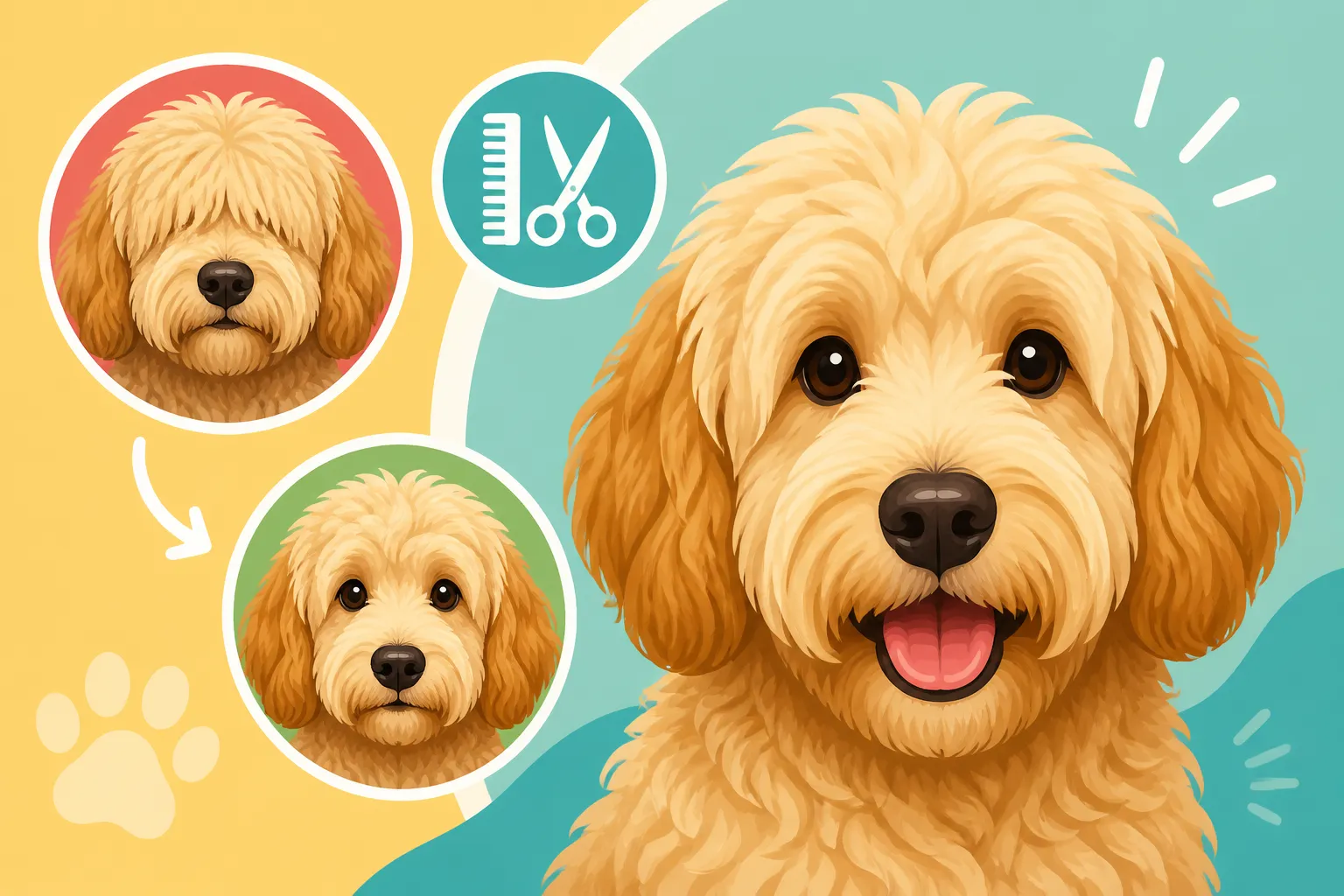
- Comb and Lift: Use your fine-toothed comb to gently comb the hair up and away from their eyes. The goal is to lift the hair so you can clearly see the strands that are falling into or across their eye line. You want to create a clear visual field, not to remove every single hair around their eyes. Think of it as giving them a tiny, functional haircut, like trimming bangs to keep them out of your own eyes.
- Trim Carefully: With your blunt-nosed scissors, point the tips away from the eye, angling them slightly upwards towards the top of the head. Trim only a tiny bit at a time, making small, controlled snips. Focus specifically on the hair that is directly impeding their vision. Never attempt to cut in one sweeping motion, and always err on the side of taking off too little rather than too much. Your aim is to clear the path for their vision, not to create a perfectly symmetrical coif.
- Check and Reward: After trimming, comb the hair again to check your work and remove any loose strands that might fall into their eyes later. Immediately reward your Goldendoodle profusely with praise and treats, making the entire experience as positive as possible. Short, frequent sessions (even just once a week for a quick tidy) are much better than trying to do a big trim once a month when the hair is already long and problematic. This type of handling is part of a broader cooperative care approach, similar to Practicing Face and Beard Handling on a Goldendoodle.
Cleaning the Eye Area Regularly
Beyond trimming, maintaining cleanliness around the eyes is equally vital. Goldendoodles, particularly those with lighter coats, are often prone to tear staining, which can be a visible indicator of excessive tearing or minor irritation.
Gently wipe their eyes daily with a soft, damp cloth or a specialized pet eye wipe. Always wipe away from the eye, moving from the inner corner outwards, and use a fresh part of the cloth for each eye to prevent any potential cross-contamination. For stubborn tear stains, you can find pet-safe tear stain removers, but it's crucial to read the ingredients carefully and consult your vet before introducing any new product, especially around such a sensitive area. Some products contain ingredients that aren't suitable for long-term use or may cause irritation.
Sometimes, persistent tear staining can even be linked to dietary factors. While not a universal solution, some owners find that certain high-quality, balanced diets, such as those offered by brands like Ollie, might contribute to overall canine health, which can sometimes anecdotally reduce issues like excessive tearing. Regardless of diet, always ensure the hair around the eyes stays dry after wiping or bathing. Damp hair acts like a wick, attracting moisture and creating an ideal environment for yeast and bacteria, which can worsen both staining and skin irritation. A quick, gentle dab with a clean, dry towel can make a significant difference in preventing problems from building up. This meticulous cleaning is as important as other hygiene routines, like Cleaning a Goldendoodle Ear Every Week.
Professional Grooming and Long-Term Solutions
While at-home maintenance is crucial, a professional groomer is an invaluable partner in managing your Goldendoodle's coat, especially around their face and eyes. They possess the specialized tools, training, and experience to handle even the wiggliest of dogs with precision and care.
Communicating with Your Groomer
Clear and specific communication with your groomer is absolutely vital. Don't just generically ask them to "trim the face" or "clean up the eyes." Be precise about your concerns regarding eye hair and the visual outcome you desire. Many groomers offer "face trim" or "eye tidy" services between full grooming appointments, which can be a lifesaver for keeping things neat.
When you book, specifically mention that your primary concern is ensuring the hair stays clear of your Goldendoodle's eyes, and that you want to maximize their line of sight. It can be incredibly helpful to bring photos – either pictures of other Goldendoodles with a facial style you admire, or even photos of your own dog's face when the hair is at a length you find optimal. This visual aid leaves less to interpretation. Discuss the exact length you prefer for the hair directly above the eyes and on the bridge of the nose. A good groomer will listen attentively to your preferences while also offering their professional advice on what is practical, safe, and comfortable for your Goldendoodle's specific coat type and lifestyle. Understanding how to articulate your needs is key to successful grooming, as highlighted in Telling a Groomer What You Want on a Goldendoodle. Remember, regular professional grooming is a commitment, and budgeting for it is important, as discussed in Goldendoodle Grooming Every Six Weeks Adds Up.
Popular Goldendoodle Face Styles for Eye Health
While we all love a cute Goldendoodle face, prioritizing eye health should always guide your choice of facial trim. There are several popular styles that can be adapted to keep the eyes clear without sacrificing their adorable look.
The "teddy bear cut" is incredibly popular for Goldendoodles, characterized by a rounded, fluffy appearance. This style can certainly be maintained while keeping the eyes clear; a skilled groomer will carefully scissor or trim the hair immediately above and around the eyes to prevent it from falling into their line of vision. They'll ensure there's enough length for the "teddy bear" look but not so much that it causes irritation.
For a more practical and lower-maintenance approach, especially if your Goldendoodle is very active or prone to severe tear staining, you might consider asking for a shorter "puppy cut" on the face. This style involves keeping the hair around the eyes quite short, significantly reducing the chances of hair irritation and making daily cleaning much simpler. It's often favored by owners who spend a lot of time outdoors or who simply want a fuss-free facial style. Another option is a simple "visor" or "bangs" trim, where only the hair directly above the eyes is shortened or carefully swept to the sides. This maintains much of the Goldendoodle's characteristic fluffy face while ensuring clear vision. Regardless of the style you choose, the non-negotiable goal is to ensure the hair isn't constantly brushing against the eyeballs or collecting debris.
When to Call the Vet
Even with the most diligent home grooming and regular professional trims, sometimes eye issues can arise, or what you initially thought was simple hair irritation might turn out to be something more serious. It's crucial for every Goldendoodle owner to recognize the signs that warrant a trip to the veterinarian. Your vet is the ultimate expert in your Goldendoodle's eye health and can diagnose and treat underlying conditions that grooming alone cannot fix.
Recognizing Signs of Eye Problems
It's important to differentiate between mild irritation and a more serious eye problem. You should be on the lookout for symptoms that go beyond typical redness or occasional watering. Persistent redness that doesn't resolve within a day or two, excessive blinking or squinting, holding one eye shut, or any signs that your Goldendoodle seems to be in pain (such as rubbing their face compulsively or withdrawing from touch) are all immediate red flags.
Furthermore, pay close attention to discharge from the eye. While clear, watery tears can be normal with irritation, thick, yellow, or green discharge is almost always indicative of an infection. Swelling around the eye, cloudiness in the eye itself, or any sudden changes in their vision (such as bumping into things) also warrant urgent veterinary attention. If your Goldendoodle avoids bright light or seems unusually lethargic, it could be connected to their eye discomfort. Never attempt to self-diagnose or use human eye drops, as many human medications can be harmful or even toxic to dogs. These symptoms could indicate anything from a severe infection to an ulcer, glaucoma, or even other serious conditions like those discussed in Goldendoodle Cataracts and Vision Loss. Early intervention can prevent minor problems from escalating into severe, sight-threatening conditions.
Underlying Causes Beyond Hair
While hair is a common culprit for eye irritation in Goldendoodles, it's certainly not the only reason your dog might be experiencing problems. Sometimes, seemingly persistent irritation can be due to an underlying medical issue that requires veterinary diagnosis and treatment.
For instance, some Goldendoodles, inheriting traits from their parent breeds, can be predisposed to conditions like entropion, where the eyelid rolls inward, causing eyelashes or facial hair to rub directly against the cornea. Another condition, distichiasis, involves extra eyelashes growing from the oil glands in the eyelid, which can also irritate the eye. These are anatomical issues that require surgical correction, not just trimming. You can learn more about these specific issues in Goldendoodle Eyelashes That Rub the Cornea.
Additionally, allergies – both environmental and food-related – can manifest as itchy, watery eyes, often accompanied by other symptoms like persistent paw licking, skin irritation, or ear infections. If you've diligently managed their eye hair and kept the area clean, yet problems persist, your vet might explore allergy testing or suggest a food elimination trial to pinpoint the cause. Goldendoodle Allergies and Itchy Skin offers more insight into this common problem. Even systemic issues or anatomical peculiarities can contribute to chronic eye irritation, which is why a thorough veterinary examination, potentially including specialized diagnostic tests to assess tear production, check for foreign bodies, or rule out more serious conditions, is so incredibly important. They'll ensure your Goldendoodle receives the appropriate treatment for whatever is truly causing their discomfort.
Goldendoodle Eye Care Tools
Here's a quick overview of essential tools for keeping your Goldendoodle's eyes clear and healthy:
| Tool Type | Primary Purpose | Key Features | Recommended Usage |
|---|---|---|---|
| Blunt-nosed Scissors | Safely trimming hair around the eyes | Rounded tips, small size | Small, precise snips, away from eyes |
| Fine-toothed Metal Comb | Lifting hair, checking for small mats, removing debris | Close-set teeth, sturdy metal | Daily combing around eyes |
| Pet Eye Wipes | Cleaning tear stains and discharge | Hypoallergenic, pre-moistened | Daily gentle wiping of eye area |
| Slicker Brush (small) | Preventing mats and tangles on the face | Fine wire bristles | Daily gentle brushing of facial hair |
| High-Value Treats | Rewarding cooperation during grooming | Easily chewable, highly palatable | Crucial for positive reinforcement |
Disclaimer
This article is for general informational purposes only and does not constitute professional advice. Laws, prices and regulations vary by location and change over time. Consult a qualified professional for guidance on your specific situation.