Why a Goldendoodle Curl Gene Is Not a Shedding Gene
It's a common, understandable hope that a Goldendoodle with a beautiful, curly coat will automatically be a non-shedding marvel. Many people choose Goldendoodles specifically for this perceived trait, only to find themselves surprised by stray hairs or, in some cases, a significant amount of shedding. This guide is here to untangle the confusion and explain the genetic realities behind why a Goldendoodle's curl gene isn't the same thing as a non-shedding gene, helping you understand your furry friend's coat much better.
Decoding the Goldendoodle Coat: More Than Just Curl
When you look at a Goldendoodle, the first thing that often captures your eye is that wonderful, plush coat. It can range from shaggy waves to tight curls, and it’s undeniably part of their charm. But the journey from Golden Retriever and Poodle to Goldendoodle involves a fascinating genetic mix, and not all of these genes impact shedding in the way many owners assume. It’s a common misconception that if a Goldendoodle is curly, it automatically won't shed. The truth is far more nuanced, rooted in a few specific genetic markers that govern hair texture and growth.
The Golden Retriever and Poodle Influence
Let's start with the parent breeds. Golden Retrievers are known for their beautiful, flowing double coats that shed quite a bit, especially seasonally. Poodles, on the other hand, have a single, continuously growing coat that is often described as "hypoallergenic" because it sheds minimally, trapping loose hairs within its dense curls. When these two breeds are crossed to create a Goldendoodle, they bring their distinct genetic blueprints to the table. The goal, often, is to combine the Golden Retriever's friendly temperament with the Poodle's low-shedding coat.
However, genetics isn't always a simple 50/50 split, even in an F1 generation. You might see a range of coat types even within the same litter, from straight and shaggy to wavy and very curly. This variability is one of the most exciting — and sometimes frustrating — aspects of Goldendoodle genetics. Understanding what each parent contributes is the first step in appreciating why curl isn't the sole indicator of shedding. The traits we see, like curl, are controlled by specific genes, and it's essential to pinpoint which genes influence which characteristics to truly grasp the shedding puzzle.
Genes That Shape the Goldendoodle Look
The appearance of your Goldendoodle, from its hair length to its curl and whether it has that adorable beard, is determined by a few key genes. These genes interact in complex ways, sometimes producing unexpected results, especially in earlier Goldendoodle generations. The specific genes we're most interested in when talking about coat characteristics are those for length, curl, and most importantly for shedding, "furnishings."
The length of the coat is generally pretty consistent among Goldendoodles, usually medium to long, thanks to the genes inherited from both Golden Retrievers and Poodles. Where things get really interesting is with curl and furnishings. The KRT71 gene is primarily responsible for the curl in a dog's coat. A dog can be straight-coated (two copies of the straight allele), wavy (one copy of straight, one of curl), or curly (two copies of the curl allele). You can visually tell these differences, and breeders can even test for them. Then there's the RSPO2 gene, which is what gives Goldendoodles their distinctive facial hair – the beard, mustache, and eyebrows – collectively known as "furnishings." This particular gene plays a much larger role in shedding than the curl gene itself, and understanding its function is critical to debunking the curly-but-shedding mystery.
The Curl Gene (KRT71) and What It Actually Does
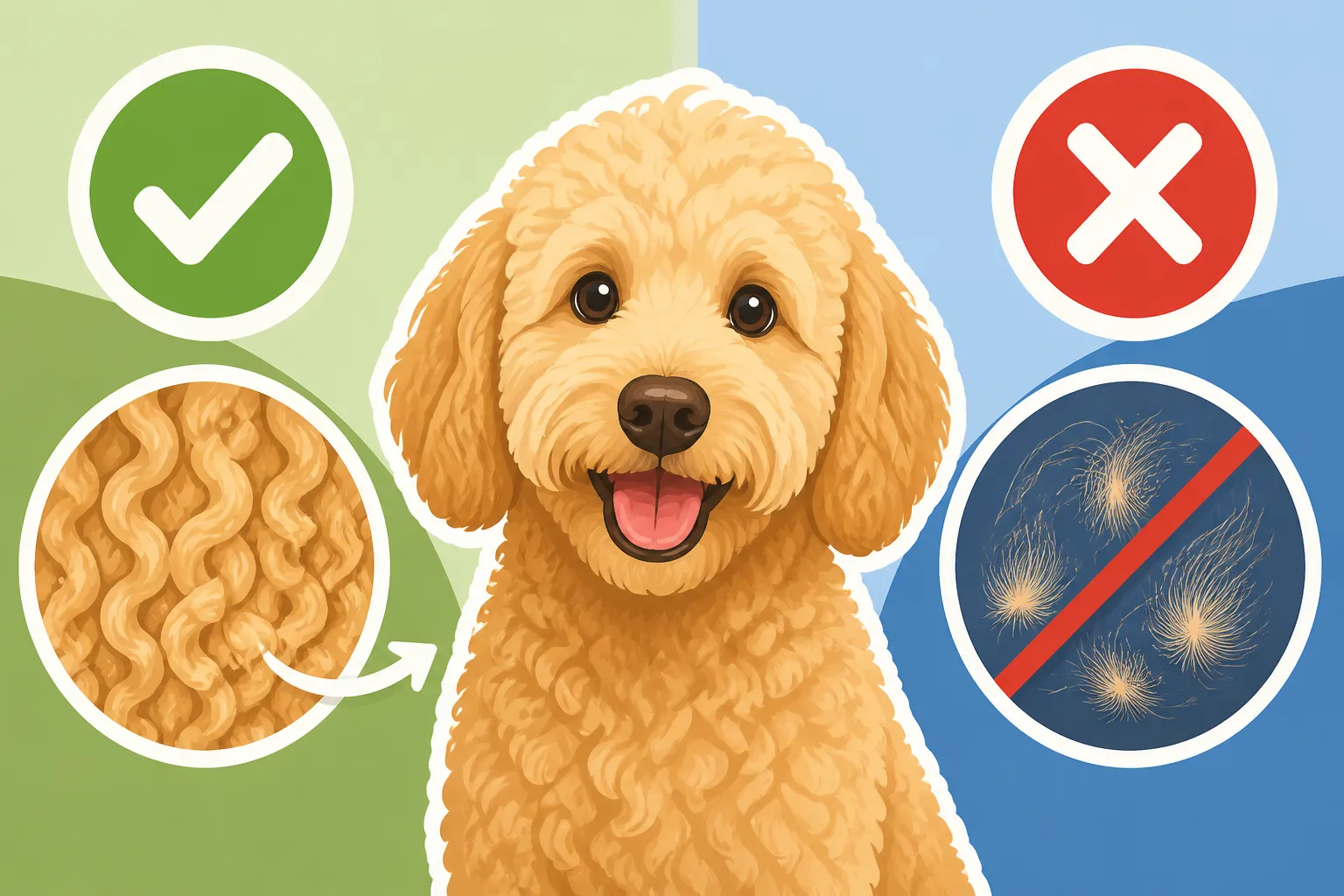
Let's dive a bit deeper into the science of curl. The KRT71 gene, or keratin 71, is the primary genetic switch for whether your Goldendoodle will have a straight, wavy, or curly coat. It literally controls the shape of the hair follicle, which in turn dictates how the individual hairs grow. A round follicle produces straight hair, while an oval or kidney-bean-shaped follicle produces wavy or curly hair.
The Science Behind Curly Hair
Think of it like this: if you have straight hair, each strand comes out of your scalp in a relatively straight line. If you have curly hair, each strand spirals or kinks from the moment it emerges. For dogs, it's the same principle. A Goldendoodle with two copies of the curly allele for the KRT71 gene will likely have a very curly, often Poodle-like, coat. If they have one straight and one curly allele, they'll likely have a wavy coat. And if they inherit two straight alleles, their coat will be much straighter, more like a Golden Retriever's, even if they are still a Goldendoodle.
This is fascinating because it means you can have a Goldendoodle that is genetically predisposed to have a straight coat, and another that is genetically predisposed to have a very curly coat. The presence of curl is purely about the texture and shape of the hair, not its growth cycle or propensity to fall out. It influences how the coat looks and feels, how it knots, and how it needs to be groomed, but it doesn't directly dictate the amount of loose hair found on your furniture. This is where the crucial distinction between curl and shedding really begins to emerge.
Curl Doesn't Equal Non-Shedding Growth Cycles
Here's the kicker: the KRT71 gene, responsible for curl, does not control the hair growth cycle. Dog hair grows in cycles: anagen (growth), catagen (transition), and telogen (rest), followed by exogen (shedding). Dogs with continuously growing coats, like Poodles, have a very long anagen phase and a short telogen phase, meaning their hair keeps growing and doesn't shed much. Dogs with seasonal shedding, like Golden Retrievers, have a shorter anagen phase and a more pronounced exogen phase.
The curl gene simply dictates the structure of the hair as it grows. A Goldendoodle could have a highly curly coat (thanks to KRT71) but still have a relatively short anagen phase and therefore shed more than you might expect from a "curly" dog. This is especially true if they haven't inherited the "furnishings" gene from their Poodle parent. So, while curl can be associated with low shedding in certain breeds (like the Poodle), it's not the curl itself that causes the low shedding. It's another, separate genetic factor entirely. Without understanding this difference, many Goldendoodle owners are left wondering why their curly companion leaves hair on the couch.
The Furnishings Gene (RSPO2): The Real Shedding Driver
If curl isn't the primary driver of low shedding, then what is? The answer lies predominantly with the furnishings gene, known as RSPO2. This is the genetic MVP when it comes to the classic "Doodle look" and, crucially, to the low-shedding quality many people seek.
Understanding Furnishings: Beards and Eyebrows
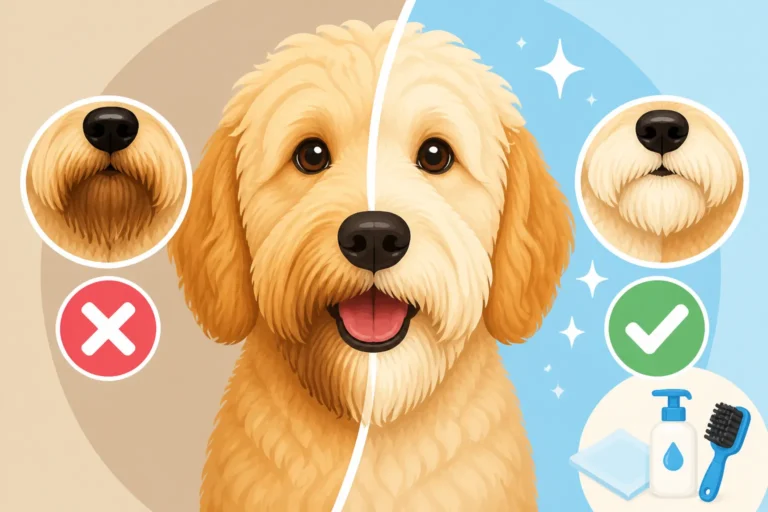
Furnishings are those distinctive longer hairs on a Goldendoodle's face, forming the mustache, beard, and eyebrows that give them that endearing, teddy bear-like appearance. These are not present on a Golden Retriever, which has a smooth face, but they are a hallmark of the Poodle. The RSPO2 gene dictates whether a dog has these furnishings. If a Goldendoodle inherits two copies of the furnishing gene, they will have prominent facial hair. If they inherit one copy, they will still have furnishings, but perhaps less pronounced. If they inherit two copies of the "unfurnished" allele, they will have a smooth face, often called an "improper coat" by breeders, even if their body coat is wavy or curly. This smooth-faced Goldendoodle will very likely shed much more, regardless of how curly the rest of its body hair is. This is a critical point that often gets overlooked in the excitement of choosing a Goldendoodle.
How Furnishings Impact Shedding
Now, here's the connection: the furnishings gene (RSPO2) is strongly linked to the continuously growing, low-shedding coat characteristic of Poodles and other "hypoallergenic" breeds. Dogs with furnishings tend to have a longer anagen (growth) phase for their hair follicles, meaning their hair grows for a longer period before entering the resting and shedding phases. This is why Poodles don't "shed" in the traditional sense; their hair just keeps growing and needs to be cut regularly, with loose hairs getting caught in the surrounding coat rather than falling out easily.
Therefore, a Goldendoodle that does have furnishings (i.e., has inherited at least one copy of the RSPO2 gene) is far more likely to be low-shedding. A Goldendoodle that is curly but lacks furnishings (meaning it inherited two copies of the "unfurnished" allele from both parents) will still shed, potentially quite a bit, because it lacks the genetic instruction for that continuously growing hair cycle. This dog might look curly, but genetically, its shedding mechanism is closer to that of a Golden Retriever. This is why a Goldendoodle is really hypoallergenic is a complex topic – it's not just about curls, but about the presence of furnishings and other factors.
The Spectrum of Goldendoodle Coats and Shedding
The combination of the curl gene (KRT71) and the furnishings gene (RSPO2), along with other genetic modifiers, creates a beautiful and often unpredictable spectrum of Goldendoodle coat types. It's not a simple "on or off" switch for shedding, but rather a blend of traits that results in varying degrees of hair loss.
Flat, Wavy, and Curly: Not Just for Looks
Let's break down the common coat types you'll encounter in Goldendoodles and their general shedding tendencies:
- Flat Coat: This coat is very similar to a Golden Retriever's, straight or slightly wavy, and typically smooth on the face (lacks furnishings). These Goldendoodles will shed the most, often as much as a Golden Retriever, and require less grooming in terms of matting but more vacuuming! If you see a Goldendoodle puppy with a very smooth, flat face and short muzzle hair, it's a good indicator that they may shed considerably as an adult.
- Wavy/Fleece Coat: This is arguably the most common and sought-after Goldendoodle coat. It's soft, flowing, and has a noticeable wave, often combined with furnishings. These dogs typically shed minimally to moderately. They may still drop some hair, especially during seasonal changes or if not brushed regularly, but it’s usually much less than a flat-coated Goldendoodle. This coat type is often the sweet spot for many families seeking a low-shedding dog that still has that soft, flowing texture.
- Curly/Wool Coat: This coat is dense, tightly curled, and very Poodle-like. These Goldendoodles almost always have furnishings. They are generally the lowest shedding Goldendoodles and are often the best choice for people with moderate allergies. However, this coat type is also the most prone to matting and requires the most intensive grooming, often every Booking a Goldendoodle Groom Every Six to Eight Weeks to prevent severe tangles.
It's important to remember that even the lowest shedding Goldendoodle will still lose some hair, just like humans do. The term "non-shedding" is a bit of a misnomer in the canine world. What we mean is minimally shedding, with hair being trapped in the coat rather than released into the environment.
The Impact of Generation on Coat Predictability
The generation of your Goldendoodle (F1, F1b, F2, Multigen) also plays a significant role in coat predictability and therefore shedding.
- F1 Goldendoodles (50% Golden Retriever, 50% Poodle): These are the first-generation crosses, and their coats can be the most unpredictable. You can get any of the three coat types – flat, wavy, or curly – in a single litter, depending on which genes each puppy inherits from its diverse parents. An F1 Goldendoodle might be curly, but if it only gets one copy of the furnishings gene, or even none, it might still shed. This is why Why an F1 Goldendoodle Is the Least Predictable Healthwise also applies to their coats.
- F1b Goldendoodles (75% Poodle, 25% Golden Retriever): This generation is bred by crossing an F1 Goldendoodle back to a Poodle. This significantly increases the chances of a curly, furnished, and thus low-shedding coat, as the Poodle parent contributes a strong genetic push towards these traits. If a breeder is specifically aiming for low-shedding qualities, this is a common strategy. Most F1b Goldendoodles will have a wavy or curly fleece/wool coat and minimal shedding. This is generally considered the most reliable generation for low shedding.
- F2 and Multigen Goldendoodles: These generations involve breeding Goldendoodles to other Goldendoodles, or further back-crossing. Coat predictability can vary. While Multigen breeders strive for consistency, recessive genes for flat or unfurnished coats can still pop up, leading to a surprise shedding puppy even after several generations. This is why a thorough understanding of the parentage and The DNA Panel a Goldendoodle Breeder Should Run is so vital for predicting coat type and shedding.
A useful way to visualize these differences is through a table showing the primary genetic influences:
| Trait / Gene | KRT71 (Curl) | RSPO2 (Furnishings) | Shedding Impact |
|---|---|---|---|
| Straight Coat | Two straight alleles | Two unfurnished alleles | High shedding (Golden Retriever-like) |
| Wavy Coat (Furnished) | One curl, one straight | At least one furnished | Low to moderate shedding (Common Goldendoodle) |
| Curly Coat (Furnished) | Two curl alleles | At least one furnished | Very low shedding (Poodle-like, requires intensive grooming) |
| Curly Coat (Unfurnished) | Two curl alleles | Two unfurnished alleles | Moderate to high shedding (Curly but still sheds noticeably) |
As you can see, simply having a curly coat doesn't automatically mean low shedding. The presence of furnishings is the far more critical factor.
What to Do If Your Curly Goldendoodle Sheds
Finding that your beautifully curly Goldendoodle sheds can be disheartening, especially if you were hoping for a truly low-shedding companion. But don't despair! There are practical steps you can take to manage the shedding and maintain your Goldendoodle's coat, regardless of its genetic makeup.
Regular Grooming Is Key
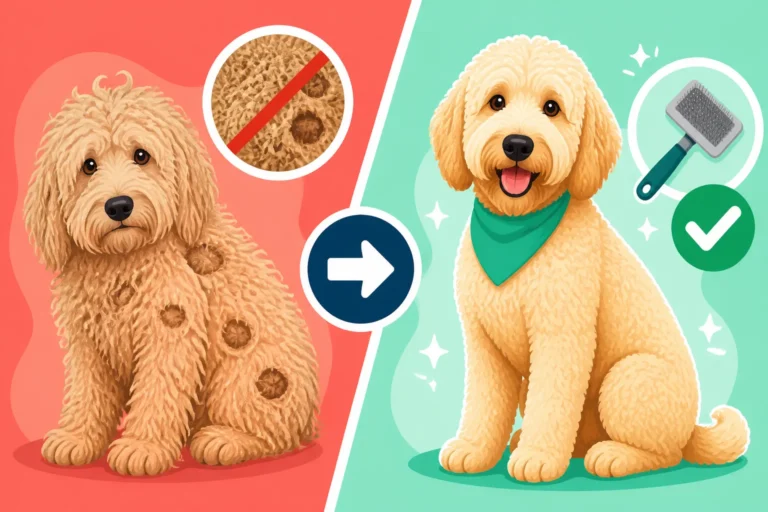
This is paramount for any Goldendoodle, but especially for those that shed more. Regular brushing is your best friend. For a shedding Goldendoodle, you'll want to brush several times a week, if not daily, using the right tools. A good quality slicker brush and a metal comb will be indispensable. The goal is to remove loose hair before it has a chance to fall out onto your furniture and floors. Brushing a Goldendoodle Often Enough to Stop Matting isn't just about preventing mats; it's also about managing shedding.
Consider investing in a de-shedding tool designed for double coats, like those available on Chewy or Amazon. While Goldendoodles typically don't have a true double coat like a Golden Retriever, if your dog sheds, it means some of that undercoat trait has come through. These tools can gently pull out loose hair from deeper within the coat without damaging the top layer. Professional grooming can also help significantly. Groomers can use high-velocity dryers to blow out loose undercoat and specialized shampoos and conditioners to improve coat health, which in turn can reduce shedding. Discuss your shedding concerns with your groomer; they can offer specific advice and techniques tailored to your dog's coat type.
Diet and Coat Health
Believe it or not, your Goldendoodle's diet plays a huge role in the health of their skin and coat, and a healthy coat is less likely to shed excessively. Ensure your dog is on a high-quality, balanced diet appropriate for their age, size, and activity level. Look for foods with good sources of Omega-3 and Omega-6 fatty acids, such as fish oil, flaxseed, or salmon. These fatty acids are crucial for skin hydration and coat luster, and can help minimize excessive shedding due to dry skin or poor coat condition.
Some owners opt for fresh food diets, like those offered by Ollie, believing they contribute to better overall health and a shinier, healthier coat. While individual results vary, providing optimal nutrition gives your dog the best chance for a healthy coat. If you notice unusually heavy shedding or skin issues, it's always a good idea to consult your vet. They can rule out any underlying health problems, allergies, or nutritional deficiencies that might be contributing to the shedding. Sometimes, a simple dietary change or a supplement can make a noticeable difference.
Managing Hair in Your Home
Even with the best grooming and diet, a shedding Goldendoodle will still leave some hair behind. The key is managing it. Regular vacuuming is a must, and investing in a good pet hair-specific vacuum cleaner can be a game-changer. Lint rollers become your constant companions for clothes and furniture. Wash pet bedding frequently, and consider machine-washable covers for furniture where your Goldendoodle likes to relax.
Air purifiers can also help capture airborne dander and hair, improving air quality in your home, especially if anyone has mild allergies. While the focus here is on shedding, remember that allergens are also carried in dander and saliva. Even low-shedding dogs produce dander. For families managing allergies, a combination of grooming, home cleanliness, and potentially Managing Dog Allergens in a Goldendoodle Household becomes a holistic approach, not just relying on the dog's coat type.
The Allergy Angle: Separating Shedding from Allergens
This discussion about curl, furnishings, and shedding naturally leads us to the topic of allergies. It’s a huge reason why Goldendoodles gained so much popularity – the promise of a "hypoallergenic" dog. But just as curl doesn't directly equal non-shedding, neither does a low-shedding coat automatically mean no allergies for sensitive individuals.
The Misconception of "Hypoallergenic" Dogs
The term "hypoallergenic" is highly misleading when applied to dogs. No dog is 100% hypoallergenic. People aren't allergic to dog hair itself, but to proteins found in a dog's dander (dead skin cells), saliva, and urine. These allergens cling to hair, and when hair sheds, these allergens are dispersed into the environment. Dogs that shed less are less likely to spread these allergens around the house, making them better tolerated by many allergy sufferers, but they still produce the allergens.
A Goldendoodle with a curly, furnished coat that sheds minimally is often a great choice for individuals with mild to moderate dog allergies because there's less hair (and thus less dander and saliva) released into the home. However, if your Goldendoodle sheds, even if it's curly, it will be dispersing more allergens than a truly low-shedding dog. This is where Can f 1 and Where a Goldendoodle Carries Allergens becomes relevant. The key allergen, Can f 1, is present in all dogs, regardless of coat type.
Testing and Spending Time Before You Commit
If allergies are a major concern for your family, relying solely on a Goldendoodle's curl is a gamble. The best approach involves proactive steps before bringing a puppy home.
Firstly, ask your breeder about genetic testing for the furnishings gene (RSPO2). A reputable breeder should be able to tell you if the parent dogs, and therefore the puppies, are genetically furnished. Knowing a puppy's genetic likelihood of having furnishings (and therefore being low-shedding) can provide much more certainty than simply looking at its puppy coat, which can be deceiving. DNA Coat Testing on a Goldendoodle is becoming increasingly common and valuable.
Secondly, and perhaps most importantly, spend time with the actual adult parents of the puppy you are considering, and if possible, adult Goldendoodles with similar coat types. This allows you to gauge your allergic reaction firsthand. If you react significantly to the parents, it's a strong indicator you might react to the puppy, even if it has a low-shedding coat. For severe allergy sufferers, even a minimally shedding dog might not be suitable. It’s about managing expectations and ensuring the best fit for your family and your health. Remember, a curly coat might look like a Poodle's, but without the underlying genetic machinery for low shedding, it won't truly solve allergy issues.
Understanding the "Unfurnished" Goldendoodle
In our deep dive into Goldendoodle coats, we've touched upon the furnishings gene. Now, let's really zoom in on what it means to have an "unfurnished" Goldendoodle, sometimes referred to as having an "improper coat." This is where the distinction between curl and shedding becomes crystal clear, often surprising new owners who expect a certain look and shedding level.
Identifying the Unfurnished Coat
An unfurnished Goldendoodle lacks the characteristic long facial hair – the beard, mustache, and eyebrows – that most people associate with the "Doodle look." Instead, their face will be smooth and streamlined, much like a Golden Retriever's. Their muzzle will typically be covered in short hair, and they won't develop the "teddy bear" appearance that is so beloved. This is entirely due to inheriting two copies of the "unfurnished" allele of the RSPO2 gene. It's not a fault, simply a genetic outcome.
You can often spot an unfurnished puppy by around 6-8 weeks of age, though sometimes it becomes more apparent as they get a little older. Their face will remain smooth while their littermates start to show scruffier, longer facial hair. This physical characteristic is a direct visual cue to a crucial genetic difference. Many breeders use DNA testing to ensure their breeding stock carries at least one copy of the furnishings gene to avoid producing unfurnished puppies, especially if they are marketing their Goldendoodles as low-shedding.
Shedding Realities for the Unfurnished Goldendoodle
Here's the crucial part: an unfurnished Goldendoodle, even if its body coat is wavy or curly (due to the KRT71 gene), will shed significantly more than a furnished Goldendoodle. This is because the RSPO2 gene, which dictates furnishings, is also strongly associated with the continuous hair growth cycle of the Poodle. Without that gene, the hair growth cycle will be more akin to that of a Golden Retriever.
This means that an unfurnished Goldendoodle with a wavy body coat might shed as much as a Golden Retriever. An unfurnished Goldendoodle with a curly body coat will still shed more than a furnished one, though the curls might trap some of the loose hair, making it seem less. Owners of unfurnished Goldendoodles often report finding hair on furniture, clothing, and floors, similar to what you'd expect from a shedding purebred. If you specifically chose a Goldendoodle for its low-shedding reputation, an unfurnished puppy might come as a bit of a shock, proving once again that a curl gene is not the same as a non-shedding gene.
| Coat Feature | Furnished Goldendoodle | Unfurnished Goldendoodle |
|---|---|---|
| Facial Hair | Has beard, mustache, eyebrows | Smooth face, short muzzle hair |
| Shedding Level | Minimal to moderate | Moderate to high (similar to Golden Retriever) |
| Grooming Needs | Prone to matting, regular brushing/clipping needed | Less matting, but frequent brushing to remove loose hair |
| Genetic Basis | At least one RSPO2 furnished allele | Two RSPO2 unfurnished alleles |
| Allergy Impact | Generally better tolerated by allergy sufferers | More likely to trigger allergies due to higher dander release |
Embracing Your Goldendoodle's Unique Coat
Regardless of whether your Goldendoodle is straight, wavy, or gloriously curly, furnished or unfurnished, each one is a unique individual with a coat that demands attention and care. Understanding the genetics behind their coat helps us move past assumptions and truly appreciate the beautiful diversity within the Goldendoodle world.
Love the Coat You Have
It's easy to get caught up in the ideal of the "perfect" Goldendoodle coat – the one that looks just like those Instagram stars, always perfectly coiffed and seemingly never shedding. But the reality is, every Goldendoodle's coat is a product of its unique genetic blend, a roll of the genetic dice that makes them distinct. Whether your Goldendoodle has inherited a flat, shedding coat, a beautiful wavy fleece, or a tight, Poodle-like curl, learning to love and care for the coat they have is part of the journey.
A shedding Goldendoodle is still a loving, intelligent, and joyful companion. Their coat just requires a different set of expectations and grooming tools. Instead of feeling frustrated, channel that energy into learning the best way to maintain your dog's specific coat type. Perhaps you'll find The Three Goldendoodle Coat Types and How to Tell Them even more fascinating now, armed with this genetic knowledge. Remember, the bond you share with your dog isn't dependent on a particular hair texture or the amount of shedding.
The Ongoing Grooming Commitment
One thing is certain: all Goldendoodles require a significant grooming commitment. For those with low-shedding, furnished coats (wavy or curly), the primary concern is preventing mats. Their continuously growing hair doesn't fall out easily, so it tangles and knots without regular brushing and professional trims. This means a routine of brushing every few days, line brushing down to the skin, and professional grooming every 6-8 weeks. Neglecting this leads to painful mats that often require a full shave-down, which no one wants for their furry friend.
For Goldendoodles with more shedding coats (flat or unfurnished), the grooming focus shifts slightly. While mats are less of an issue, regular brushing is still crucial to remove dead hair and minimize its spread throughout your home. A good de-shedding routine, perhaps with specific brushes bought from Chewy or Amazon, will be your friend. And don't forget the basics for all coats: regular bathing with appropriate shampoo, nail trims, and ear cleaning, especially with those furnished ears prone to infection like in Goldendoodle Ear Hair and Chronic Infection.
Ultimately, the Goldendoodle's coat is a defining characteristic, but it’s just one piece of the puzzle that makes them such wonderful companions. By understanding the genetics of curl and furnishings, and separating them from the act of shedding, you're better equipped to choose a Goldendoodle that fits your lifestyle and to care for them effectively throughout their lives.
Disclaimer
This article is for general informational purposes only and does not constitute professional advice. Laws, prices and regulations vary by location and change over time. Consult a qualified professional for guidance on your specific situation.