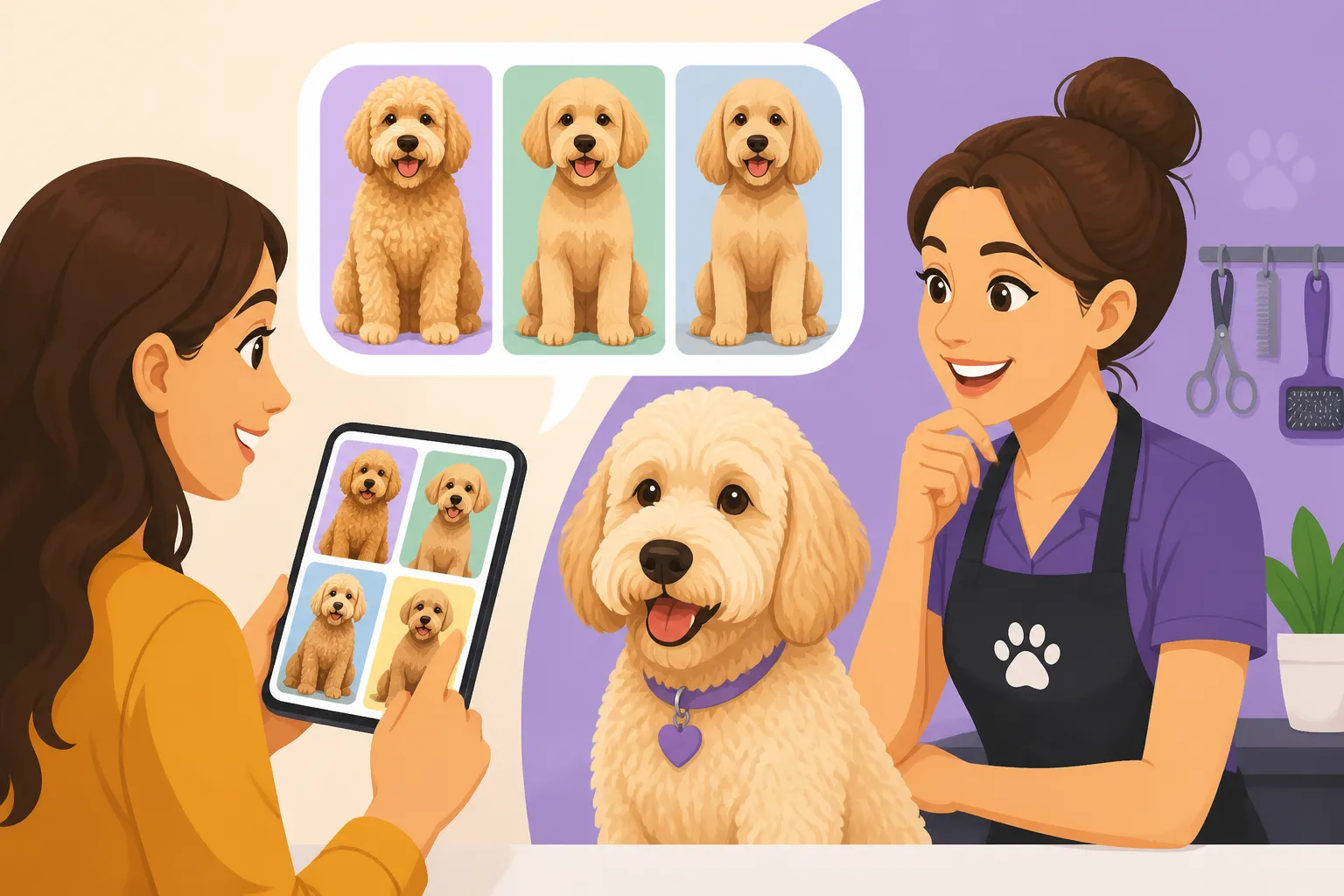
Bringing Photos to a Goldendoodle Groomer
It’s a tale as old as time for Goldendoodle parents: you walk into the groomer, describe the perfect cut for your beloved companion, pick them up later, and… it’s not quite what you envisioned. Sometimes it's a completely different dog staring back at you! The frustration of feeling misunderstood or having your dog shaved too short when you wanted a fluffy look is incredibly real. This guide is here to help you bridge that communication gap by showing you how to effectively use photos to ensure your Goldendoodle gets the haircut of your dreams every single time.
The Universal Language of Pictures: Why Photos Matter for Your Goldendoodle's Cut
When it comes to grooming, words can be surprisingly slippery. One person's "short and tidy" might be another's "barely there," and a "fluffy teddy bear cut" can have a hundred interpretations. This communication challenge is amplified with Goldendoodles, whose coats are famously varied and complex. Relying solely on verbal descriptions often leaves too much room for misunderstanding, leading to those all-too-common post-grooming disappointments.
Why Words Alone Aren't Enough for Goldendoodles
Think about it: describing your desired Goldendoodle haircut using terms like "scissored," "clippered," "blended," or "stripped" can be incredibly confusing if you're not a professional groomer yourself. Even if you try to be precise, saying "I want an inch off the body, but keep the legs a little longer" still leaves a lot to the groomer's interpretation of "a little longer" and how to blend those lengths seamlessly. The Goldendoodle coat, with its unique blend of Poodle curl and Golden Retriever wave, doesn't always behave predictably. Some coats lie flat, others spring into tight curls, and the way they look when wet versus dry can be drastically different.
A groomer might hear "teddy bear cut" and have a very specific vision based on past clients, but that vision might not align with yours. Perhaps their "teddy bear" involves a shorter face than you prefer, or a less rounded head. The beauty of a Goldendoodle's coat is also its challenge; it can be styled in so many ways, which means the potential for miscommunication is high. You want to walk away feeling like your dog looks exactly as you imagined, not just "okay." Telling a Groomer What You Want on a Goldendoodle is all about clarity, and nothing beats a visual aid.
The Power of Visual Communication
This is where photos become your secret weapon. A picture truly is worth a thousand words, especially in the grooming salon. When you show a groomer a photo, you're not just showing them a length; you're showing them a look, a style, a vibe. They can see the proportions, the rounding of the head, the shape of the ears, the length around the eyes, and how the fur lies on the body and legs. It eliminates much of the guesswork and subjectivity inherent in verbal descriptions.
Moreover, photos can help pinpoint specific details that you might not even know how to articulate. You might not realize you like a slightly longer beard or a certain taper on the tail until you see it in a picture. A photo provides a concrete reference point for both you and the groomer, ensuring you're both on the same page from the outset. It’s about creating a shared understanding of the desired outcome before the clippers even come out, minimizing surprises and maximizing satisfaction.
Curating Your Goldendoodle's Style Guide: What to Look for in Photos
Choosing the right photos isn't just about grabbing the first cute Goldendoodle picture you see online. To truly get the most out of this visual communication strategy, you need to be intentional about the images you select. Think of it as creating a mood board or a detailed blueprint for your dog’s next salon visit. The more precise and relevant your examples, the better your groomer can execute your vision.
Finding the Perfect Goldendoodle Examples
Start by looking for Goldendoodles that have a similar coat type and color to your own. While any Goldendoodle photo can be a good starting point, one with a coat similar to yours will give a more realistic expectation. If your Goldendoodle has a wavy, fleece coat, a picture of a Goldendoodle with a tight, woolly curl might not translate perfectly. Consider your dog's The Three Goldendoodle Coat Types and How to Tell Them and seek out examples that align. Look at photos from various angles – front, side, and even a back view if you're particular about the tail or rear shaping.
Pinterest, Instagram, and even Goldendoodle-specific Facebook groups are fantastic resources. Save multiple photos that appeal to you, noting what you like about each one. Maybe one picture has the ideal head shape, another shows the perfect body length, and a third illustrates the exact leg style you prefer. Don't be afraid to combine elements from different photos. For instance, you might love the round face from Photo A but the shorter body from Photo B. Being able to point to these specific details within a collection of images is incredibly powerful.
What Makes a Good Reference Photo
A good reference photo is clear, well-lit, and shows the dog in a natural pose. Avoid blurry photos, or those where the dog is wet, muddy, or heavily shadowed, as these can distort the true appearance of the coat. The best photos will clearly showcase the length, texture, and overall shape of the haircut.
Here's a quick checklist for evaluating your potential reference photos:
| Feature | What to Look For | Why It Matters |
|---|---|---|
| Clarity & Lighting | Bright, clear, no harsh shadows, dog is clean and dry. | Groomer can accurately see coat length, texture, and overall style. |
| Angles | Front, side, back views, close-ups of face/paws. | Provides a comprehensive understanding of the 3D shape and desired proportions. |
| Coat Type Match | Dog in photo has a similar coat texture (wavy, curly). | Ensures the desired look is achievable and realistic for your Goldendoodle. |
| Style Specificity | Clearly shows desired length on body, legs, head, ears. | Reduces ambiguity and helps groomer understand precise styling requests. |
| Realism | Photos of actual Goldendoodles, not just illustrations. | Offers practical examples of how the coat will behave and look in real life. |
If you have photos of your own Goldendoodle from a previous groom that you particularly loved (or hated!), those are invaluable too. A "loved it" photo tells the groomer exactly what to replicate, while a "hated it" photo, combined with explanations, helps them understand what to avoid. For example, "I loved this length, but the head was too square." This direct feedback, linked to an image, is gold.
Beyond the Image: Communicating Clearly with Your Groomer
Having the perfect collection of photos is only half the battle. The other crucial part is how you present and discuss these images with your groomer. This isn't just about handing over your phone; it's about engaging in a dialogue that ensures every detail is understood.
Discussing Length and Style with Your Visuals
When you arrive for your appointment, pull up your photos and be prepared to talk through them. Start by showing the overall look you're aiming for. "This is generally the length and style I'm hoping for, a The Goldendoodle Teddy Bear Cut with a rounded head." Then, zoom in on specific areas. Point to the face and say, "I really like how fluffy the muzzle is here, but I don't want the hair in the eyes." Or, "See how the ears are blended seamlessly into the head? That's what I'm looking for."
Be specific about critical areas like:
- Face: Do you want a rounded face, a shorter muzzle, or a specific length above the eyes?
- Ears: Should they be shorter to prevent Goldendoodle Ear Infections Under a Furnished Ear, or longer for a more traditional look? How should the hair around them be blended?
- Body: What length do you envision? "I'm looking for a length that still looks fluffy, but not so long it mats easily."
- Legs and Paws: Do you want them column-like, trimmed tight, or with a slight flare?
- Tail: Tapered, plumy, or shaved short?
Ask your groomer questions too. "Is this length achievable with my dog's coat type?" or "How long do you think this style will typically last before needing another groom?" Their professional insight can help manage your expectations and guide your choices. If they suggest something slightly different, listen to their reasoning; they might be considering your dog's coat condition, lifestyle, or comfort.
Addressing Problem Areas and Future Maintenance
It's also a great opportunity to discuss any specific challenges your Goldendoodle faces. If your dog tends to get mats behind the ears or in the armpits, point those out and ask how the chosen style can help mitigate them. "My Goldendoodle always gets matted here. Could we keep this area a bit shorter?" This proactive approach helps prevent future matting issues and makes the grooming process more comfortable for your dog. A shorter style around these areas can significantly reduce the risk of matting.
You should also discuss how often you plan to groom and brush your Goldendoodle. "I try to brush Brushing a Goldendoodle Often Enough to Stop Matting a few times a week, so I'd like a length that's manageable for that." This helps the groomer advise you on a practical style. Longer cuts require more frequent home maintenance and professional grooms. Booking a Goldendoodle Groom Every Six to Eight Weeks is common, but a very long, fluffy style might need touch-ups sooner.
Consider discussing the cost implications of different styles. A more intricate hand-scissored cut, for example, will naturally take longer and cost more than a basic clipper cut. Don't be shy about asking for an estimate or discussing how adjustments to the style might affect the price. Knowing what to expect financially avoids surprises later.
Bridging the Gap: What if the Groomer Can't Replicate It?
Sometimes, a groomer might tell you that the exact look you've brought in a photo isn't quite achievable for your particular Goldendoodle. This isn't necessarily a bad thing! It could be due to your dog's specific coat type, density, or current condition (e.g., if there's significant matting that requires a shorter shave). It could also be related to their size category, as certain styles look different on a Standard Goldendoodle Puppies at $3,000 to $5,000 versus a Mini and Toy Goldendoodle Puppy Prices. Listen to their expertise.
Instead of getting discouraged, treat this as another collaborative problem-solving session. Ask, "Okay, what's the closest we can get to this look with my dog's coat?" Or, "What would you recommend for a similar aesthetic that is more practical?" They might suggest a slightly different length, a variation in shaping, or advise on growing out the coat to achieve the desired look over time. This open communication is key to building a trusting relationship with your groomer and ensuring your Goldendoodle always looks their best, within the realistic possibilities of their unique coat.
To help maintain your Goldendoodle's coat between professional grooms, having the right tools at home is essential. You can find a wide range of slicker brushes, combs, and detangling sprays on platforms like Chewy or Amazon. These resources offer various options for Home Grooming Tools a Goldendoodle Actually Needs to keep that lovely coat in top condition and prevent severe matting, which can limit styling options at the groomer. Investing in quality tools and learning basic techniques for Home Grooming Tools a Goldendoodle Actually Needs can make a huge difference in the outcome of professional grooms and your dog's comfort.
Disclaimer
This article is for general informational purposes only and does not constitute professional advice. Laws, prices and regulations vary by location and change over time. Consult a qualified professional for guidance on your specific situation.