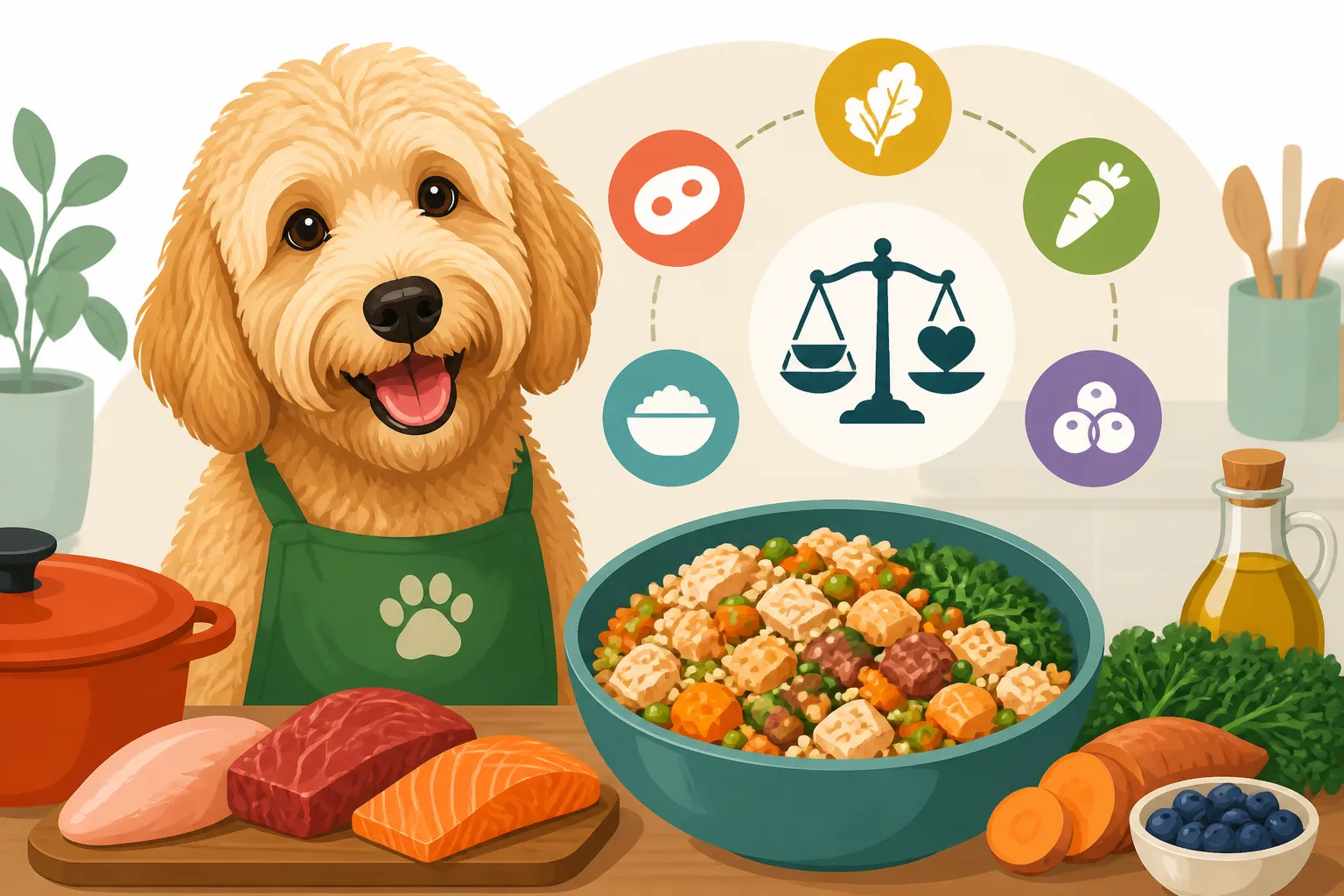
Cooking for a Goldendoodle and Getting It Balanced
There's a special kind of love that makes you want to cook for your Goldendoodle. You want to give them the very best, avoid mysterious ingredients, and maybe even tackle those pesky allergies that seem to plague so many of our furry friends. But the world of homemade dog food isn't as simple as just throwing some chicken and rice in a bowl and calling it a day. It’s a journey that requires careful planning, knowledge, and dedication to ensure your beloved companion receives all the nutrients they need without accidentally causing deficiencies or health problems down the line. This guide will walk you through the real talk about cooking for your Goldendoodle and how to make sure you're truly providing a balanced, healthy diet.
The Appeal (and Challenge) of Home-Cooked Meals for Your Goldendoodle
It's completely understandable why so many Goldendoodle owners dream of preparing their dog's meals from scratch. We see our doodles as family, and just like we try to eat well ourselves, we want them to have wholesome, recognizable food. But there's a significant leap from human-grade ingredients to a nutritionally complete canine diet, and it’s a hurdle that catches many well-meaning pet parents off guard.
Why Owners Consider Cooking for Their Doodles
The motivation behind home-cooking for your Goldendoodle often stems from a deep desire for control and transparency. You’ve probably looked at the ingredient list on a bag of kibble and felt a pang of concern, seeing words you can’t pronounce or fillers you don't recognize. Many doodle owners are grappling with specific issues like Goldendoodle Food Allergies Showing on the Skin or chronic digestive upset, and store-bought foods just don't seem to cut it. The idea of knowing exactly what goes into every meal, selecting fresh, whole ingredients, and customizing portions feels like the ultimate act of love and care.
You might want to avoid certain common allergens like chicken or beef, or perhaps you're worried about the sourcing of rendered proteins and by-products. For a Goldendoodle with sensitive skin or a rumbling tummy, a controlled, home-cooked diet can seem like a beacon of hope. The satisfaction of preparing a meal you know is free from artificial preservatives, colors, and mystery meats is a powerful draw, making you feel more connected to your dog's overall well-being.
The Hidden Complexities of Canine Nutrition
While the intention is pure, the reality of canine nutrition is incredibly complex. It's not enough to simply feed your Goldendoodle "healthy" foods that humans eat. Dogs have very specific dietary requirements that differ significantly from our own, and achieving the right balance of proteins, fats, carbohydrates, vitamins, and minerals can be a true scientific endeavor. Unlike us, dogs need a precise ratio of calcium to phosphorus for bone health, for example, and even slightly off-kilter amounts can lead to serious long-term skeletal problems.
Many essential micronutrients are present in different amounts in various ingredients, and simply rotating chicken with beef or adding a new vegetable won't guarantee completeness. You might be providing plenty of protein, but inadvertently short-changing your Goldendoodle on crucial vitamins like D or E, or minerals like zinc or selenium, which are vital for everything from immune function to Goldendoodle Skin and Coat Disease prevention. These deficiencies might not show up immediately, but over weeks or months, they can slowly undermine your Goldendoodle's health, leading to insidious problems that are hard to trace back to the diet. It’s a huge responsibility to ensure every single nutrient is accounted for, and it’s where many well-intentioned home-cooks stumble.
Essential Nutrients Your Goldendoodle Needs to Thrive
Understanding the fundamental building blocks of your Goldendoodle's diet is the first step toward successful home cooking. It's not just about calories; it's about providing the right types and amounts of nutrients to support their energetic nature, their unique coat, and their overall health.
Protein: The Building Block
Protein is absolutely non-negotiable for your Goldendoodle. It's the powerhouse nutrient, crucial for building and repairing muscles, creating enzymes and hormones, and supporting a healthy immune system. Think of it as the foundation of your dog's physical structure. Good sources of lean protein for your Goldendoodle include chicken breast, turkey, lean ground beef, lamb, and fish like salmon or cod (always cooked, and bones removed!). The quality of the protein matters immensely; fresh, whole meat is generally more digestible and utilized better by the body than highly processed alternatives.
While protein is essential, finding the correct quantity is where professional guidance becomes important. Too little protein can lead to muscle wasting and a dull coat, but simply throwing in more meat isn't always the answer either, especially if it throws off the balance of other nutrients or caloric intake, potentially contributing to Goldendoodle Weight Gain and the Strain on Joints. Remember, your Goldendoodle, whether a Standard or a Mini, has different protein needs than you do, and these needs also shift with age, activity level, and any underlying health conditions.
Fats: Fuel and Absorption
Fats often get a bad rap, but for dogs, healthy fats are incredibly important. They are a concentrated source of energy, helping to fuel your Goldendoodle's boundless enthusiasm and activity. Beyond energy, fats play a critical role in the absorption of fat-soluble vitamins (A, D, E, and K), which are vital for vision, bone health, immune function, and antioxidant protection. They are also crucial for maintaining that beautiful Goldendoodle coat and healthy skin, often helping to prevent dryness and flakiness. Omega Oils for a Goldendoodle Coat are particularly beneficial for their anti-inflammatory properties.
Sources of healthy fats include cooked chicken skin (in moderation), fish oil, flaxseed oil, and the natural fats found in lean meats. However, just like protein, balance is key. Too much fat, especially unhealthy saturated fats, can lead to weight gain, pancreatitis, and digestive upset. Too little can result in a dull, dry coat, flaky skin, and energy deficits. Striking the right balance ensures your Goldendoodle gets enough fuel and essential fatty acids without overdoing it.
Carbohydrates: Energy and Fiber
Carbohydrates provide readily available energy for your Goldendoodle, supporting their daily activities and brain function. Beyond energy, complex carbohydrates are an excellent source of dietary fiber, which is crucial for a healthy digestive system. Fiber helps regulate bowel movements, feeds beneficial gut bacteria, and can aid in managing weight by promoting a feeling of fullness.
Good sources of complex carbohydrates include cooked sweet potatoes, pumpkin, brown rice, oats, and quinoa. These provide sustained energy and a good dose of fiber. It's important to differentiate these from simple carbohydrates found in sugary treats or highly processed foods, which offer little nutritional value and can contribute to energy crashes and weight gain. When preparing meals, ensure carbohydrates are thoroughly cooked to make them easily digestible for your Goldendoodle.
Vitamins and Minerals: The Micronutrient Maze
This is perhaps the most challenging aspect of home-cooking a balanced diet for your Goldendoodle. The world of vitamins and minerals is vast and intricate, with each playing a specific and often interdependent role in your dog's body. We're talking about everything from calcium and phosphorus for strong bones, potassium for nerve and muscle function, zinc for immune health, and a whole spectrum of B vitamins for metabolism, to vitamins A, C, D, and E for myriad bodily processes.
Unlike preparing a meal for yourself where a varied diet usually covers most bases, missing even one or two critical micronutrients in a dog's diet can have severe consequences over time. For example, an imbalance in calcium and phosphorus can lead to brittle bones, while a deficiency in certain B vitamins can impact energy levels and neurological function. It's incredibly difficult for a home cook, no matter how dedicated, to consistently measure and ensure adequate levels of all these micronutrients without specialized knowledge or the use of a specifically formulated supplement. This is where many home-cooked diets fall short, creating what might seem like a healthy meal but is actually lacking in vital components.
Crafting a Balanced Goldendoodle Diet: Where to Start
If you're truly committed to cooking for your Goldendoodle, you absolutely must approach it with careful planning and expert guidance. Guesswork simply isn't an option when it comes to your dog's long-term health.
Consulting a Veterinary Nutritionist
This step is, without a doubt, the most crucial. Attempting to formulate a balanced, home-cooked diet for your Goldendoodle without the input of a board-certified veterinary nutritionist is akin to building a house without an architect – it might stand for a bit, but it’s likely to have critical flaws that emerge over time. A veterinary nutritionist has the specialized knowledge to understand your Goldendoodle's specific needs, taking into account their age, size (e.g., Daily Calories for a Standard Goldendoodle will differ vastly from a Toy), activity level, and any existing health conditions or sensitivities.
They can design a precise recipe tailored to your dog, outlining exact quantities of ingredients, cooking methods, and necessary supplements. This personalized plan ensures that your Goldendoodle receives the correct balance of all essential nutrients, from macronutrients like protein and fat down to the trace minerals that are so easy to overlook. They can help you avoid the pitfalls of common deficiencies and excesses, which can lead to problems ranging from bone deformities in growing puppies to organ damage in adults. Investing in this professional guidance is an investment in your Goldendoodle's health and longevity. It also helps you understand The Senior Panel a Goldendoodle Should Have at Nine if you are cooking for an older doodle.
Using Formulated Supplements and Premixes
Even with a nutritionist-designed recipe, it's highly likely that you'll need to incorporate a specially formulated vitamin and mineral supplement or premix. This isn't a sign of failure; it's a recognition of the sheer difficulty in sourcing and balancing all micronutrients through whole ingredients alone. These supplements are designed to bridge the nutritional gaps that almost inevitably exist in home-cooked meals, ensuring your Goldendoodle gets everything they need in the correct ratios. You can often find these professional-grade supplements on platforms like Amazon or Chewy, but always ensure they are recommended by your veterinary nutritionist or explicitly designed for home-cooked dog diets and not just generic "multivitamins."
Never assume that a human vitamin supplement is appropriate for your dog, as the dosages and ingredient forms are often vastly different and can even be toxic to canines. These premixes take a huge amount of the guesswork out of the equation, making the process of home-cooking much safer and more reliable. They provide the peace of mind that comes from knowing you're not inadvertently creating a deficiency that could lead to serious health issues years down the road.
Sample Meal Components and Considerations
While I can't give you a specific recipe (that's for your vet nutritionist!), I can outline the general components you'd expect to see in a balanced home-cooked meal for your Goldendoodle. Think of it as a blueprint for the types of ingredients you might discuss with your nutritionist:
- Lean Protein Source: Cooked chicken, turkey, lean beef, lamb, or fish. Always ensure it's unseasoned and thoroughly cooked.
- Complex Carbohydrate: Cooked sweet potato, brown rice, oats, or quinoa. These provide energy and fiber.
- Healthy Fats: A small amount of added fat like fish oil (for Supplements That Actually Help a Goldendoodle Coat) or flaxseed oil, or naturally occurring fats in the protein source.
- Vegetables: A variety of cooked, non-starchy vegetables like green beans, carrots, peas, or spinach. These add fiber, vitamins, and antioxidants.
- Calcium Source: Often provided through bone meal, eggshells, or a specific calcium supplement, as meat alone doesn't contain enough.
- Vitamin/Mineral Premix: As discussed, this is critical to fill in any remaining nutritional gaps.
When you're preparing these components, remember to cook everything thoroughly, as raw feeding carries its own set of risks, including bacterial contamination that can affect both your Goldendoodle and your household. Always avoid ingredients toxic to dogs, such as onions, garlic, xylitol, chocolate, and grapes. Make sure to chop ingredients into appropriate, bite-sized pieces for your Goldendoodle to prevent choking. What a Goldendoodle Should Never Eat is a crucial list to memorize.
Here's a simple comparison of different feeding approaches:
| Feeding Method | Pros | Cons | Key Consideration |
|---|---|---|---|
| Commercial Kibble | Convenient, nutritionally complete (if good quality), cost-effective | Less control over ingredients, potential for fillers/allergens, often highly processed | Choose a reputable brand with AAFCO statement. |
| Home-Cooked (with vet nutritionist guidance & supplement) | Full control over ingredients, tailored to individual needs, fresh | Time-consuming, requires significant education, risk of imbalance without expert help | Mandatory: Consult a board-certified vet nutritionist. |
| Fresh-Prepared Meal Services | Convenient, human-grade ingredients, often nutritionally balanced | More expensive, less customization than full home-cooking, may still use common allergens | Research brand quality; services like Ollie offer various recipes. |
The "Fresh-Prepared" Alternative
If the idea of full-time home cooking feels overwhelming, but you're still keen on fresh, whole ingredients, consider fresh-prepared meal delivery services. Brands like Ollie offer pre-portioned, balanced meals made with human-grade ingredients that are formulated by veterinary nutritionists. This can be a fantastic middle-ground solution, giving your Goldendoodle the benefits of fresh food without you having to manage all the complex nutritional balancing yourself. It’s also often easier to manage Feeding an Old Goldendoodle With Worn Teeth with softer, fresh food. They'll arrive ready to serve, removing the daily cooking and balancing stress from your plate, while still offering transparency about ingredients.
Common Pitfalls and How to Avoid Them
Even with the best intentions, it's incredibly easy to fall into traps when home-cooking for your Goldendoodle. These pitfalls can range from minor digestive upsets to severe, long-term health problems. Recognizing and actively avoiding them is just as important as knowing what to include in your dog's diet.
The Danger of "Just Scraps"
This is perhaps the most common and dangerous mistake well-meaning owners make. Feeding your Goldendoodle "just scraps" from your dinner plate, or even simply feeding them unseasoned human food without careful formulation, is a recipe for disaster. While a small, occasional piece of plain chicken won't hurt, making it a regular practice, or basing their diet on it, guarantees nutritional imbalances. Human meals are often high in fats, sodium, and seasonings that are not only unhealthy for dogs but can also be toxic in certain quantities (think garlic, onions, excessive salt).
The occasional fatty piece of steak, for instance, could lead to a severe case of pancreatitis in your Goldendoodle, a painful and potentially life-threatening condition. Regular feeding of table scraps also often leads to obesity, which puts immense strain on your Goldendoodle's joints and vital organs, dramatically increasing their risk of conditions like Goldendoodle Arthritis After the Age of Eight and even shortening their How Long Goldendoodles Usually Live. It also teaches them to beg, reinforcing unwanted behaviors. While you might feel like you're spoiling them, you're actually doing them a disservice to their long-term health.
Inconsistent Ratios and Deficiencies
One of the sneakiest pitfalls of home-cooked diets is the gradual onset of nutrient deficiencies or imbalances. You might be consistent for a few weeks, but then life gets busy, and you start improvising. Or perhaps you rotate ingredients without understanding how that impacts the overall nutrient profile. The problem with deficiencies, especially mineral imbalances like calcium and phosphorus, is that they often don't manifest with obvious symptoms until significant damage has already occurred. For instance, an incorrect calcium-to-phosphorus ratio can lead to painful bone deformities in puppies or weakening bones in adult dogs, making them more susceptible to fractures.
These long-term issues can lead to chronic health problems, expensive veterinary bills (which might become The Goldendoodle Bill Owners Never See Coming), and a reduced quality of life for your Goldendoodle. Without precise measurements, a carefully followed recipe from a veterinary nutritionist, and the consistent use of appropriate supplements, your home-cooked diet, no matter how lovingly prepared, risks being incomplete. It's not about making a meal that looks healthy; it's about providing one that is healthy at a molecular level, day in and day out.
Food Safety and Preparation
Beyond nutritional balance, food safety is paramount when cooking for your Goldendoodle. Raw ingredients, especially meats, can harbor bacteria like Salmonella or E. coli, which can make your dog sick and also pose a significant risk to human members of your household through cross-contamination. Always cook meats thoroughly to the appropriate internal temperatures, just as you would for yourself.
When preparing large batches, ensure proper storage. Cooked food should be cooled quickly and then stored in airtight containers in the refrigerator for no more than 3-4 days, or frozen for longer-term storage. Always thaw frozen portions safely in the refrigerator, not on the countertop. Maintain clean kitchen hygiene, washing hands, cutting boards, and utensils thoroughly after handling raw meat. This vigilance prevents foodborne illnesses that could lead to severe Goldendoodle Vomiting and When It Matters or Goldendoodle Diarrhea Lasting More Than Two Days. Whether you're making a single meal or batch-cooking for the week, prioritizing food safety protects everyone.
Cooking for your Goldendoodle can be a deeply rewarding experience, but it’s one that comes with a significant responsibility to ensure their nutritional needs are met perfectly. It’s a commitment that requires education, precision, and often, the invaluable guidance of a veterinary nutritionist. While the journey might seem daunting, the peace of mind that comes from knowing you’re providing a truly balanced, wholesome diet tailored specifically for your furry family member is absolutely worth it.
Disclaimer
This article is for general informational purposes only and does not constitute professional advice. Laws, prices and regulations vary by location and change over time. Consult a qualified professional for guidance on your specific situation.