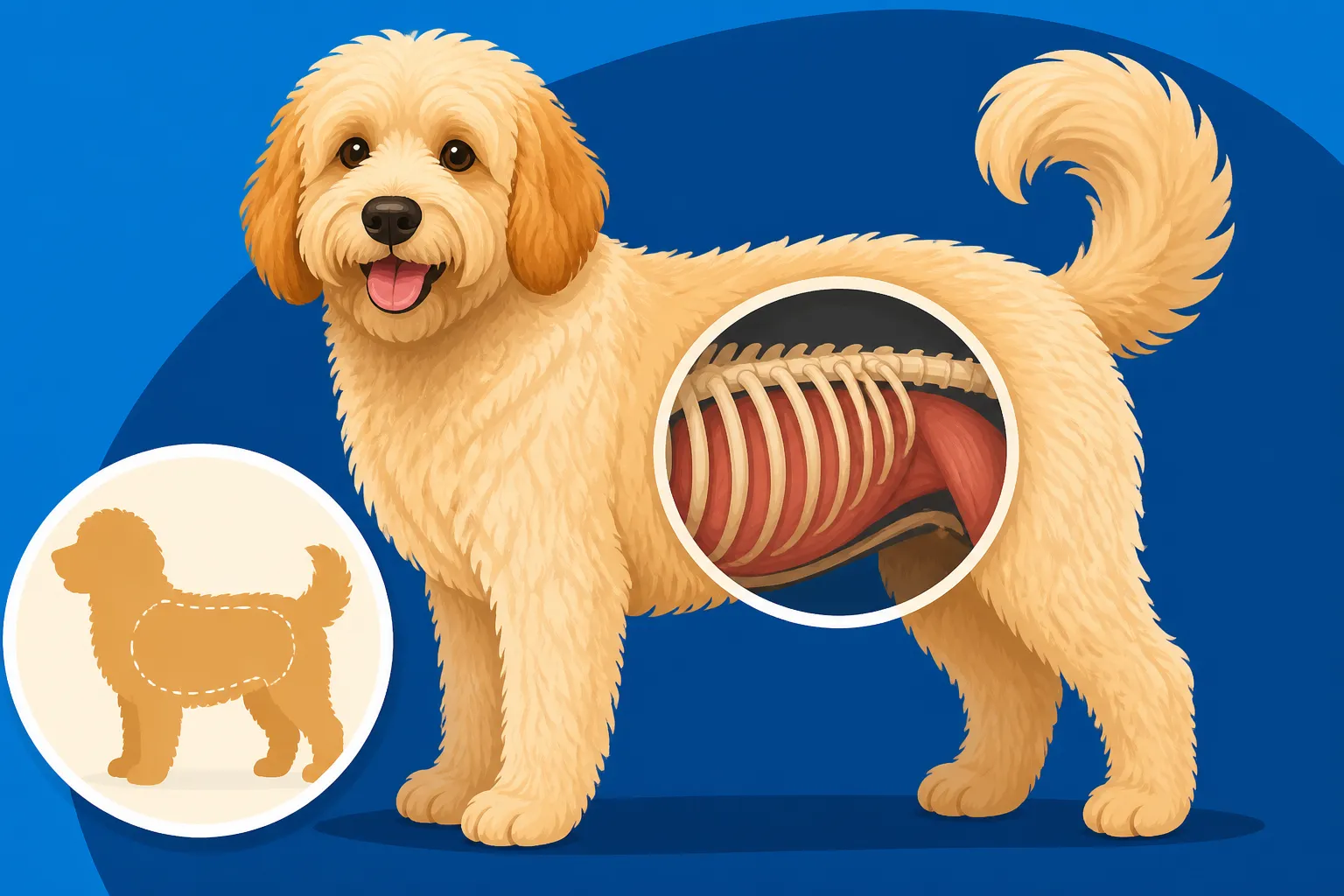
Goldendoodle Body Condition Under a Thick Coat
One of the most common frustrations Goldendoodle parents face is simply knowing if their furry friend is at a healthy weight. Unlike short-haired breeds where you can easily see if ribs are showing or a waistline is tucked, that beautiful, thick, often curly Goldendoodle coat acts like a wonderful, fluffy disguise. It's a genuine struggle to discern body condition when every dog looks like a cloud on legs, making it hard to catch weight changes before they become a real health concern. This comprehensive guide will walk you through exactly how to assess your Goldendoodle's body condition, even with that luxurious coat, ensuring you can keep them in tip-top shape.
Why Assessing Body Condition is Tricky for Goldendoodles
Let's be real, you love that floof! It's one of the reasons you fell in love with your Goldendoodle. But that very same floof, while adorable and soft, is also a master of illusion when it comes to your dog's physical form. Many owners find themselves caught off guard at vet visits when the doctor gently suggests their Goldendoodle might be carrying a few extra pounds, or conversely, seems a little too lean. It's not a reflection of your care, but simply a testament to the deceptive nature of their fabulous fur.
The Illusion of the Fluffy Coat
Imagine trying to guess the size of a person wearing a giant, oversized puffer coat – that's often what it feels like trying to assess a Goldendoodle. Their dense, sometimes woolly coat can add inches to their apparent circumference, making a dog that's actually quite slender appear robust, or a dog that's a bit chunky look merely "fluffy." You might look down at your Goldendoodle and think, "They look perfectly fine, maybe even a little lean!" when in reality, their ribs are a treasure hunt under layers of fat, or perhaps they're almost protruding, hidden by a puffy halo of hair. This visual trickery means you can't rely solely on your eyes; you have to get hands-on.
It's particularly challenging because you don't typically see the subtle definition of muscle or the gentle curve of a waist that you might in a Labrador or a sleek Doberman. The coat uniformly covers everything, creating a smooth, uninterrupted silhouette that gives very little away. This can lead to a delay in recognizing weight fluctuations, allowing small issues to become bigger ones before they're noticed. We often hear from owners who are surprised to learn their dog has gained weight, lamenting, "But I couldn't even tell!" because the coat simply absorbed the change.
The Impact of Coat Type on Perception
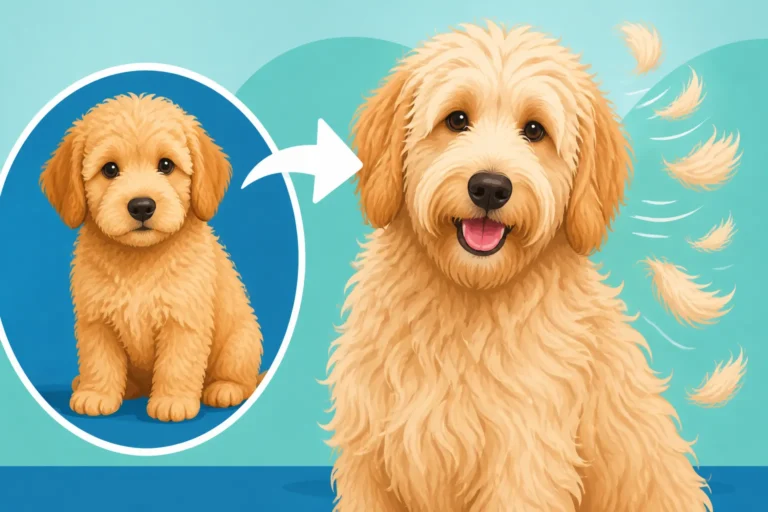
Not all Goldendoodle coats are created equal, and this variation further complicates body condition assessment. You have The Three Goldendoodle Coat Types and How to Tell Them, ranging from flatter, wavy coats (often seen in F1 generations) to denser, curly, wool-like coats (common in F1b and multigen Goldendoodles). Each type presents its own set of challenges.
A Goldendoodle with a straighter, wavier coat might offer a slightly better visual clue to their underlying shape, but even then, the length and volume can still obscure the truth. However, those with the thick, curly, Poodle-like coats are the true masters of disguise. This woolly texture holds volume and stands away from the body, creating an almost impenetrable fortress of fluff. It makes feeling for ribs, hips, and waistlines incredibly difficult, as your fingers have to push through inches of springy hair before even reaching the skin. Owners of these particularly fluffy Goldendoodles really need to commit to the hands-on method, perhaps even more so during The Goldendoodle Coat Change at Eight to Twelve Months, when the puppy fluff transitions to the denser adult coat, often making the dog appear even larger. It's a constant battle to distinguish between coat and actual body mass.
The Hands-On Approach: How to Feel for Body Condition
Since your eyes can deceive you, your hands are your best tools for assessing your Goldendoodle's body condition. This isn't just a quick pat; it's a deliberate, systematic check that should become a regular part of your routine, perhaps when you're Brushing a Goldendoodle Often Enough to Stop Matting or during a quiet cuddle session. Getting comfortable with this tactile examination will empower you to catch subtle changes and keep your Goldendoodle at their healthiest weight, ensuring you're Keeping a Goldendoodle Lean When the Coat Hides It.
Mastering the Rib Test
This is perhaps the most crucial part of the hands-on assessment. Your Goldendoodle's ribs provide an excellent indicator of their overall fat reserves.
- Locate the Ribs: Start by placing both hands flat on your Goldendoodle's side, just behind their shoulder blades. Gently run your fingers along their rib cage, pushing lightly through their coat until you can feel the individual ribs. Don't be shy; you need to apply enough pressure to get past the fluff and feel the bone beneath.
- Assess the Feel: The goal is to feel the ribs easily, almost like the knuckles on your hand when it's flat, but without them feeling sharp or protruding. You should be able to count them without having to press hard. If you have to push deeply, dig around, or can't feel them at all, your Goldendoodle might be carrying too much weight. Conversely, if the ribs feel very distinct, sharp, and prominent with minimal pressure, they might be too thin. This sensation is often described as feeling like the back of your hand when it's relaxed – you can feel the bones, but they're not jutting out. This test is vital for Finding Ribs Through Two Inches of Goldendoodle Hair.
- Practice Makes Perfect: This takes practice, especially if your Goldendoodle has a very dense coat. Try it regularly so you become familiar with what a healthy rib cage feels like on your specific dog. What feels normal for a Standard Goldendoodle might differ slightly from a Toy Goldendoodle, purely due to size and bone structure, but the principle of "easily palpable but not visible" remains universal.
Checking the Waist and Tummy Tuck
Even with a full coat, you should be able to feel for a waistline and an abdominal tuck. This is where your hands truly become extensions of your eyes.
- Feeling for the Waist: Stand over your Goldendoodle and place your hands on their sides, just behind their last rib. Gently run your hands inward towards their spine. You should feel a slight inward curve, a narrowing, as you move from the rib cage back towards the hips. This indicates a waist. If your hands slide straight back without any indentation, or if it feels like a continuous "log," your Goldendoodle might be overweight. Think of it like a subtle hourglass shape, rather than a straight cylinder.
- Assessing the Tummy Tuck: From the side, even if you can't see a dramatic tuck because of the belly fur, you should be able to feel one. Place your hand under your Goldendoodle's belly, behind the rib cage. It should curve gently upwards towards the groin, not hang low or feel distended. A healthy Goldendoodle will have a slight upward slope here. If the belly feels heavy, saggy, or parallel to the ground, this can be another indicator of excess weight. This tactile check is invaluable because the longer hair around the belly can create a visual illusion of a tuck even when none exists.
Palpating the Spine and Hip Bones
These areas provide additional clues about your Goldendoodle's fat reserves, complementing your rib and waist assessment.
- The Spine: Run your hands gently along your Goldendoodle's spine, from their neck down to their tail. You should be able to feel the individual bumps of the vertebrae, but they should be rounded and covered by a light layer of muscle and fat, not sharp or bony. If the spine feels like a row of prominent, sharp knobs, your dog is likely too thin. If you have to press very firmly to feel any definition at all, and it feels like a smooth, fleshy mound, they're probably carrying too much weight. The Goldendoodle's biddable nature often makes them agreeable to these gentle explorations.
- The Hip Bones: Now, move your hands to their hips. These bony prominences should be palpable, but again, not sharply protruding. You should feel them through the coat and a thin layer of flesh. If they stick out dramatically, your Goldendoodle is likely underweight. If you can't find them easily, or they feel deeply buried, your dog is likely overweight. The subtle contours of the hips often get completely lost in the luxurious furnishings of a Goldendoodle.
By consistently performing these hands-on checks, you'll develop a keen sense for your Goldendoodle's ideal body condition, allowing you to make proactive adjustments to their diet or exercise routine long before problems escalate.
What a Healthy Goldendoodle Body Condition Looks Like (and Feels Like)
Understanding the ideal body condition for your Goldendoodle goes beyond just anecdotal observation; it involves knowing what a healthy dog should feel like, regardless of their coat. Veterinary professionals use a Body Condition Score (BCS) system to standardize this assessment, and while it's often visual, for a Goldendoodle, the tactile component is absolutely paramount. It’s about finding that sweet spot where they’re lean enough to be agile and healthy, but not so thin that their bones are unprotected.
The Ideal Body Condition Score
The most common Body Condition Score system ranges from 1 to 9, where 1 is emaciated, 9 is morbidly obese, and 4 or 5 is considered ideal. For Goldendoodles, targeting a BCS of 4 or 5 is generally recommended. This isn't just a number; it translates directly to what you should feel and, if you could see through the fluff, what you would observe.
Here's what an ideal Goldendoodle feels like at a BCS of 4-5:
- Ribs: Easily palpable without pressing hard, feeling like the knuckles of your hand when held flat. You can count them with gentle pressure, but they don't protrude.
- Waist: When viewed from above, a discernible (though often felt more than seen through the coat) narrowing behind the ribs. Your hands should feel this gentle inward curve.
- Abdominal Tuck: From the side, the abdomen should tuck up slightly behind the rib cage. Again, this is often a tactile sensation rather than a stark visual due to the coat.
- Spine & Hips: The vertebrae and hip bones are palpable but covered by a modest layer of muscle and fat; they should not feel sharp or overly prominent, nor should they be buried.
Achieving and maintaining this ideal body condition is crucial for your Goldendoodle's long-term health, directly impacting everything from joint health to overall longevity.
Recognising Underweight vs. Overweight
Knowing what's ideal helps you identify when your Goldendoodle is veering off track. Both being too thin and too heavy carry significant health risks.
Signs of Being Underweight (BCS 1-3):
- Ribs: Feel very prominent, sharp, and easy to see (if the coat allows) or feel with minimal pressure. They might feel like the knuckles on a clenched fist.
- Spine & Hips: Vertabrae and hip bones are sharply visible and easily felt, often with little to no muscle or fat covering them. You might even see them "stick out" through the coat in some areas.
- Muscle Loss: You might notice a general loss of muscle mass, especially over the back and hindquarters.
- No Body Fat: There's little to no fat layer under the skin.
Being underweight can indicate underlying health issues, insufficient calorie intake, or excessive exercise for their diet. It can lead to a weakened immune system, poor coat quality, and lack of energy.
Signs of Being Overweight (BCS 6-9):
- Ribs: Difficult to feel, requiring firm pressure, or completely impossible to palpate under layers of fat.
- Waist: No discernible waistline when felt or viewed from above; the body appears uniform or barrel-shaped.
- Abdominal Tuck: The abdomen hangs low, feels distended, or is parallel to the ground; there's no upward curve.
- Fat Deposits: Noticeable fat pads over the hips, base of the tail, and around the neck. You might feel "flabby" areas.
- General Heaviness: Your Goldendoodle may move more slowly, breathe harder with less exertion, or struggle with activities they once enjoyed. This can lead to issues like Goldendoodle Weight Gain and the Strain on Joints or even exacerbate conditions like Goldendoodle Arthritis After the Age of Eight.
Being overweight is a rampant problem in companion animals and dramatically increases the risk of numerous health problems, including diabetes, heart disease, joint issues, certain cancers, and a reduced lifespan. It also places unnecessary strain on their joints, especially if they are already predisposed to conditions like hip or elbow dysplasia.
Here’s a simplified table to help you with your hands-on assessment:
| Body Condition Score | Ribs (Tactile) | Waist (Tactile) | Spine/Hips (Tactile) | General Impression (Through Coat) |
|---|---|---|---|---|
| 1-3 (Underweight) | Very prominent, sharp, easily felt with no fat | Severe tuck, very narrow, often hollow | Sharp, easily visible/felt, little muscle/fat | Very lean, potentially gaunt, despite coat |
| 4-5 (Ideal) | Easily palpable, distinct but not sharp | Discernible narrowing behind ribs, slight tuck | Palpable but rounded, covered by muscle/fat | Balanced, athletic feel under the coat |
| 6-9 (Overweight) | Difficult to feel, require firm pressure/buried | Little to no narrowing, straight or bulging | Difficult to palpate, buried under fat | Rounded, heavy, lack of definition, "fluffy but solid" |
Regularly using this hands-on approach will make you confident in monitoring your Goldendoodle's health between vet visits.
Maintaining a Healthy Weight for Your Goldendoodle
Once you're adept at assessing your Goldendoodle's body condition through their magnificent coat, the next step is actively maintaining that healthy weight. It's a continuous commitment, but an incredibly rewarding one, as it directly translates to a longer, happier, and more active life for your beloved companion. This involves consistent vigilance, a balanced diet, and appropriate physical activity.
Regular Hands-On Checks and Professional Guidance
Making the hands-on body condition assessment a routine is probably the single most important thing you can do. Try to make it a weekly habit. Perhaps during your Brushing a Goldendoodle Often Enough to Stop Matting sessions, which should be happening multiple times a week anyway, you can dedicate a few extra minutes to feeling their ribs, waist, and hips. This regular contact not only helps you bond with your Goldendoodle but also allows you to catch any subtle changes in their body composition before they become significant.
Don't hesitate to involve your veterinarian. They are your best resource for professional guidance. During your Goldendoodle's annual check-ups, specifically ask them to assess your dog's Body Condition Score and discuss their findings with you. They can offer an objective perspective and valuable advice on diet and exercise adjustments. If you've noticed a significant change in their body condition, or if you're consistently struggling to feel their ribs or find their waist, an unscheduled vet visit is a wise idea. Sometimes, an unexpected weight change can be a sign of an underlying health issue, not just a dietary one, making professional input crucial.
Diet and Exercise Tailored to Body Condition
Maintaining a healthy weight is fundamentally a balance between calorie intake and calorie expenditure. Goldendoodles, being a mix of two active breeds, typically have a good metabolism, but they still need careful management.
Diet Adjustments:
If your hands are telling you your Goldendoodle is gaining weight, the first place to look is their food bowl. Reviewing Daily Calories by Goldendoodle Size Category is a great starting point. Many owners inadvertently overfeed, especially with generous treat portions. Consider:
- Measuring Food Precisely: Use a measuring cup or, even better, a kitchen scale to ensure you're feeding the exact amount recommended by your vet or the food manufacturer for your Goldendoodle's ideal weight, not their current weight.
- Treat Moderation: Treats should be a small part of their daily caloric intake. Opt for low-calorie options or use small pieces of their regular kibble for training. If you're on a weight loss journey, cut treats down significantly.
- Quality Food: Ensure your Goldendoodle is on a high-quality, nutritionally complete dog food. Brands available on platforms like Chewy offer a wide variety of options that cater to different life stages and activity levels. For a more personalized approach, services like Ollie provide fresh, portion-controlled meals tailored to your dog's specific needs, which can be invaluable for weight management.
Exercise Regimen:
Goldendoodles are active dogs and require consistent exercise to stay healthy and happy. Goldendoodle Exercise for Body and Mind is vital.
- Daily Walks: Most Goldendoodles need at least 30-60 minutes of brisk walking or active play daily, often split into two sessions. A Standard Goldendoodle might need more than a Mini.
- Mental Stimulation: Don't forget that mental exercise also burns calories! Puzzle toys, training sessions, and scent games can engage their intelligent Poodle side and biddable Golden Retriever side, helping to tire them out without solely relying on physical exertion.
- Activity Levels: Tailor exercise to your Goldendoodle's age and health. A young, energetic Goldendoodle can enjoy running, fetch, and even swimming, while a senior Goldendoodle might need shorter, gentler walks. Always ensure they are comfortable and not overheating, especially those with very dense coats. For tools like long leashes for safe outdoor play or durable puzzle toys, Amazon is often a convenient place to find a variety of options.
By combining diligent hands-on assessment with thoughtful dietary choices and a consistent exercise routine, you'll be well-equipped to keep your Goldendoodle in prime body condition, ensuring they lead a full, vibrant life by your side.
Disclaimer
This article is for general informational purposes only and does not constitute professional advice. Laws, prices and regulations vary by location and change over time. Consult a qualified professional for guidance on your specific situation.