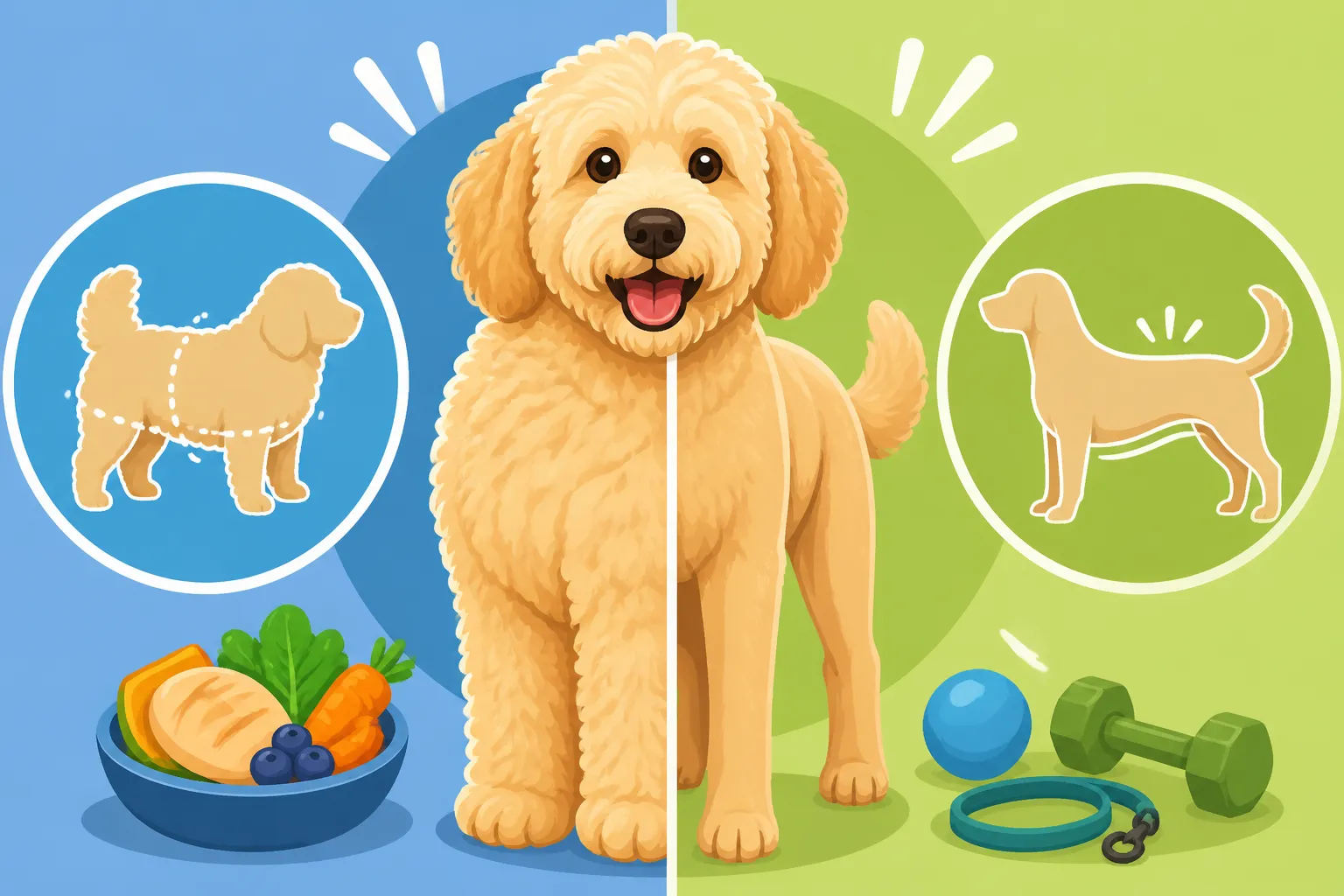
Keeping a Goldendoodle Lean When the Coat Hides It
It's a frustration many Goldendoodle parents know all too well: you look at your fluffy, adorable companion, and all you see is a cuddly cloud of curls. But beneath all that gorgeous fur, are they carrying a little extra weight? This guide is here to help you navigate the unique challenge of accurately assessing your Goldendoodle's body condition and keeping them lean and healthy, even when their coat tries its best to hide the truth.
The Sneaky Problem of the Goldendoodle Coat
Let's be honest, those luxurious Goldendoodle coats are one of their most appealing features. Whether it's a loose wave or a tight curl, it's just so soft and inviting. But this very trait, the thing we love so much, can also be a master of disguise when it comes to weight. You see other breeds and can instantly tell if they've put on a few pounds, but with a Goldendoodle, it’s a whole different ballgame.
Why Their Fluff Masks Reality
Imagine trying to feel the contours of a couch under a thick, fluffy blanket. That's a bit like trying to assess your Goldendoodle's weight just by looking at them. Their dense, often long, and voluminous coat creates a visual illusion of consistent fullness. You might think, "Oh, they just have a lot of hair!" when in reality, that extra insulation could be hiding a layer of fat. It’s not your fault; it’s genuinely hard to spot. A short-haired dog will show a slight paunch or broadening silhouette almost immediately, but your Goldendoodle could be well into carrying excess weight before it’s visually apparent. This is especially true for those with the curlier, wool-like coats that really hold their shape.
The fluff can make them appear uniformly large, rather than showing the subtle bulges or loss of waistline that are tell-tale signs in other breeds. This visual deception can lead to owners inadvertently overfeeding, simply because they don't perceive a problem. It's a common trap, and one that requires a more hands-on approach to ensure your Goldendoodle stays at a healthy weight.
The Health Risks of Hidden Weight
While a little extra fluff might seem harmless, hidden weight gain in a Goldendoodle carries the same serious health implications as it does for any dog. When your Goldendoodle is overweight, every system in their body is working harder than it should, silently, under that beautiful coat. Their joints, already prone to issues like hip and elbow dysplasia from their parent breeds, bear an enormous burden. Extra pounds accelerate the wear and tear on cartilage, leading to Goldendoodle Arthritis After the Age of Eight and significantly increasing the risk and severity of conditions like Goldendoodle Hip Dysplasia and the OFA Numbers or patellar luxation.
Beyond musculoskeletal problems, excess weight is a known contributor to heart disease, diabetes, respiratory issues, and even certain types of cancer. It can reduce their overall mobility, make them less eager to play, and shorten their precious lifespan. It's an insidious problem because the visible signs are often delayed, meaning by the time you see your Goldendoodle looking overweight, they might have been carrying that extra load for quite some time, and the internal damage could already be progressing. Thinking about Goldendoodle Lifespan and What a Cross Really Buys You really puts it into perspective – we want our furry friends with us for as long as possible, and maintaining a healthy weight is one of the most impactful ways to contribute to that longevity.
How to Accurately Assess Your Goldendoodle's Body Condition
Since looking at your Goldendoodle can be deceiving, you need to rely on your hands and a bit of tactile detective work. This isn't about giving them a full body massage (though they probably wouldn't mind!), but rather about performing specific checks to feel what's going on underneath all that lovely hair. It takes practice, but once you know what you're looking for, it becomes second nature.
Feeling for Those Elusive Ribs
This is arguably the most crucial step in assessing your Goldendoodle's weight, and it's where the coat really plays tricks. You need to get your hands right in there, not just stroke the surface. Start by placing both hands flat on your Goldendoodle's chest, just behind their front legs, where their ribs begin. With gentle but firm pressure, run your fingertips along their side, trying to feel each individual rib. The goal is to feel the ribs easily beneath a thin layer of skin and muscle, without having to press hard or search for them. They should feel a bit like the knuckles on your hand when your palm is open and flat, not sharp and prominent like when you make a fist, but definitely distinct.
If you have to press down deep, or if it feels like you're feeling through a thick mattress before you get to bone, your Goldendoodle is likely carrying too much fat. Conversely, if their ribs are easily seen through their coat even without much effort, or feel like the sharp knuckles of a clenched fist, they might be too thin. Remember, the objective is "easily felt, not seen." This tactile assessment provides a much more accurate picture than your eyes ever could through that dense Goldendoodle coat. If you want to dive even deeper, understanding Finding Ribs Through Two Inches of Goldendoodle Hair offers even more detailed tips.
The Tummy Tuck and Waistline Test
Once you've felt for the ribs, it's time to move on to the other key indicators: the waistline and the abdominal tuck. Again, this is a hands-on examination. Stand behind your Goldendoodle, or kneel beside them, and run your hands along their sides from the rib cage back towards their hips. You should feel a slight indentation or narrowing as your hands move from the rib cage to the hips – this is their waist. From an overhead perspective, this should create a subtle "hourglass" shape. With a Goldendoodle, their fluffy coat can often create the illusion of a waistline from above, so feeling it with your hands is vital.
Next, look at your Goldendoodle from the side. Their abdomen should tuck up slightly from the bottom of their chest to their hind legs, not running straight back or, worse, sagging. If their belly hangs low or is completely straight from their rib cage back, they're likely overweight. A proper tuck means the underside of their body slopes upward. Again, the fur can obscure this, making their belly look fuller than it is, or conversely, making it seem tucked when it's just the hair creating the illusion. Your hands will be your best guide here, helping you feel the actual body structure beneath the floof.
Overhead View vs. Side View
While the tactile assessment is primary, visual cues still play a supportive role, especially once you've learned what to look for through the fluff. For the overhead view, get eye-level with your Goldendoodle and look down at their back. You're trying to discern that subtle hourglass shape. Their body should be broadest at the ribs and then taper slightly towards the waist before widening again over the hips. If you see a straight, blocky shape from ribs to tail, or if their sides bulge outwards, it's a strong indicator of excess weight.
From the side view, observe the abdominal tuck we discussed earlier. The line from their chest to their hind legs should not be perfectly horizontal or dip downwards. It should angle slightly upwards. Their coat might make this hard to see, but try to mentally (or actually, gently with your hands) push the fur down to see the true silhouette. It's about combining what your eyes can tell you, even if partially obscured, with what your hands confirm. Think of it as painting a complete picture of their Goldendoodle Body Condition Under a Thick Coat.
| Body Condition Feature | Ideal Goldendoodle | Overweight Goldendoodle |
|---|---|---|
| Ribs | Easily felt with slight pressure, like wet knuckles; not visible. | Difficult to feel, requires firm pressure; covered by a layer of fat. |
| Waistline | Clearly discernible "tuck" behind the ribs when viewed from above and felt by hand. | Little to no discernible waist; body is more straight or bulging from ribs to hips. |
| Abdominal Tuck | Belly tucks up from chest to hind legs when viewed from the side. | Abdomen is straight or sags downwards; no visible or palpable tuck-up. |
| Overall Energy | Eager to play, good stamina, comfortable movement. | Less energetic, easily winded, may move stiffly or slowly. |
Practical Strategies for Weight Management
Once you've accurately assessed your Goldendoodle and determined they could stand to shed a few pounds (or simply maintain their ideal weight), it's time to put a plan into action. This isn't about drastic changes, but consistent, sustainable habits that prioritize their long-term health and well-being. Think of it as a lifestyle adjustment for both of you!
Precise Portion Control and Measuring Food
This is the absolute foundation of weight management. Many of us eyeball portions, use a generic scoop, or simply fill the bowl until it "looks right." For a Goldendoodle, especially one whose coat hides their true shape, this is a recipe for accidental overfeeding. You must measure their food accurately. The best way to do this is with a digital kitchen scale. Scoops can vary wildly based on how densely you pack the kibble, but grams or ounces are always consistent. Check the feeding guidelines on your dog food bag, but remember these are just starting points, usually for intact, active adults. Your Goldendoodle's individual metabolism, activity level, and age will dictate their true needs.
If you're feeding kibble, weigh out the recommended amount for their ideal weight, not their current weight, and divide it into two or three meals a day. If you're using fresh food options, like those from Ollie, they often come pre-portioned, which takes the guesswork out of it. If you're cooking for your Goldendoodle, Cooking for a Goldendoodle and Getting It Balanced will give you a wealth of information, but measuring ingredients precisely is just as crucial. Even a small handful extra at each meal can add up to significant calories over weeks and months, especially for a dog whose Daily Calories for a Standard Goldendoodle or Daily Calories for a Mini Goldendoodle can be surprisingly lower than you think. Consistency is key here.
Smart Snacking and Treat Management
Treats are wonderful for training, bonding, and just showing love, but they are often the hidden culprits in weight gain. Those tiny bites can quickly accumulate calories, and let's face it, Goldendoodles are masters of the puppy-dog eyes! It's important to factor treats into their daily caloric intake. Don't just give them randomly; have a "treat budget."
Consider healthier, low-calorie alternatives. Many Goldendoodles adore fresh vegetables like baby carrots, green beans, cucumber slices, or apple pieces (without seeds). These offer crunch and satisfaction with far fewer calories than traditional dog biscuits. You can also break larger treats into tiny pieces to make them last longer during training sessions. If you're using a puzzle feeder or a KONG, fill it with a portion of their regular kibble or low-fat yogurt rather than extra, high-calorie spreads. Remember, anything given outside their main meals contributes to their overall calorie intake, so be mindful of every morsel. You can even find great options on Chewy or Amazon that are specifically marketed as low-calorie training treats.
Boosting Exercise Without Overdoing It
Exercise is vital for overall health, muscle tone, and burning calories, but it needs to be appropriate for your Goldendoodle's current weight and joint health. If your dog is significantly overweight, starting with intense, high-impact exercise could actually do more harm than good, putting excessive strain on their joints. Begin with gentle, consistent activity and gradually increase intensity and duration.
Daily walks are a fantastic start. Aim for consistent, moderate-paced walks, even if it's just 20-30 minutes twice a day initially. As their fitness improves, you can extend the length or add a bit of brisk jogging. Mental exercise is also incredibly important for Goldendoodles, who are intelligent and eager to please. Incorporate puzzle toys, training sessions, or scent work into your routine. These activities burn mental energy, which can be just as tiring as physical exertion and can help reduce boredom-related overeating. Remember to tailor Goldendoodle Exercise at Every Life Stage to their current capabilities, always prioritizing their comfort and safety. Swimming, if your Goldendoodle enjoys it, is an excellent low-impact exercise for dogs with joint concerns.
Monitoring Progress and Adjusting as Needed
Weight management is rarely a "set it and forget it" process. Your Goldendoodle's needs will change over time due to age, activity level, and even seasonal variations. Consistent monitoring and a willingness to adjust your approach are essential for long-term success. This is where you become their personal health coach, celebrating small victories and making tweaks when things aren't quite on track.
Regular Weigh-Ins and Charting Progress
While your hands tell you a lot, a number on a scale provides objective data. Aim to weigh your Goldendoodle once a month, or at least every six to eight weeks. For smaller Goldendoodles, you might be able to use your bathroom scale: weigh yourself, then weigh yourself holding your dog, and subtract the difference. For larger Standard Goldendoodles, this might require a trip to your vet's office (most are happy for you to pop in just for a weigh-in) or investing in a large pet scale.
Keep a simple chart or log of their weight. This allows you to visualize trends and catch any upward creep early. A slight fluctuation from month to month is normal, but a consistent increase over several weigh-ins indicates a need for adjustment in their diet or exercise. This data helps you stay accountable and provides clear evidence of what's working and what isn't, removing the guesswork that the fluffy coat so often encourages.
Consulting Your Veterinarian
Your veterinarian is your most valuable partner in your Goldendoodle's health journey. If you're concerned about your dog's weight, or if you're struggling to help them lose it, schedule an appointment. Your vet can provide an objective assessment of their body condition score, recommend a specific caloric intake based on their ideal weight and activity, and help you choose an appropriate diet food if necessary.
More importantly, they can rule out any underlying medical conditions that might be contributing to weight gain, such as Goldendoodle Hypothyroidism and Weight Gain. Sometimes, a seemingly healthy Goldendoodle gains weight not just from overeating but from an undiagnosed metabolic issue. They can also offer guidance on safe exercise routines, especially if your Goldendoodle has pre-existing joint issues or other health concerns. Think of them as the expert consultant who can provide tailored advice beyond general recommendations.
Adjusting as Your Goldendoodle Ages
A Goldendoodle puppy, adolescent, adult, and senior dog all have vastly different metabolic rates and caloric needs. An active two-year-old Goldendoodle burning off energy like a rocket needs more calories than a nine-year-old Goldendoodle enjoying a slower pace of life. As your Goldendoodle enters their senior years, typically around ages 7-9, their metabolism often slows down, and their activity levels naturally decrease. This means their caloric intake will likely need to be reduced to prevent weight gain.
It's common for senior dogs to become less active, perhaps due to subtle arthritis or just a general slowing down. If you continue to feed them the same amount of food they ate in their prime, weight gain is almost inevitable, and this extra weight will put further strain on their aging body. Discuss Feeding a Goldendoodle in Its Last Years with your vet, as they might recommend senior-specific foods that are lower in calories but still provide essential nutrients for joint health and cognitive function. Regular reassessment of their body condition and caloric needs is vital throughout their life, particularly as they transition into their golden years.
Common Pitfalls and How to Avoid Them
Even with the best intentions, it's easy to fall into common traps when trying to manage a Goldendoodle's weight. Their charming personalities and deceiving coats can make it particularly challenging. Being aware of these pitfalls is the first step in avoiding them.
The "But They Look Skinny!" Misconception
This is perhaps the biggest pitfall for Goldendoodle owners. Because their fur adds so much volume, people often perceive a healthy Goldendoodle as "skinny" or even underweight, especially if they're used to seeing other, less-fluffy breeds. This perception can lead well-meaning owners to overfeed their dogs, thinking they need to "bulk them up." This is where the tactile assessment becomes absolutely non-negotiable. Trust your hands, not just your eyes.
A Goldendoodle at an ideal weight will have easily palpable ribs and a distinct waistline when felt. Their coat will prevent you from seeing every rib or the sharpness of their hip bones, which might be visible on a short-haired dog. Embrace the idea that your Goldendoodle should be lean and athletic underneath that beautiful coat, even if it means they don't look as "fluffy" as you might initially expect. It's about their health, not just their appearance. For a deeper understanding of what to feel for, revisit Finding Ribs Through Two Inches of Goldendoodle Hair.
Free-Feeding and Grazing Habits
Free-feeding, where food is left out all day for your dog to graze on as they please, is generally not recommended for weight management, especially with a Goldendoodle. Many dogs, Goldendoodles included, lack the inherent ability to self-regulate their food intake when a constant supply is available. They might eat out of boredom, habit, or just because it's there, consuming far more calories than they actually need.
Instead, switch to scheduled meal times. Two meals a day is typical for adult Goldendoodles, though some do well with three smaller meals. This allows you to precisely control their caloric intake and monitor how much they are actually eating. If you have multiple dogs, scheduled meals also prevent one dog from eating another's portion. This structured approach helps regulate their metabolism and gives you a clear picture of their daily consumption, making it much easier to make adjustments if weight gain becomes an issue.
Overlooking Hidden Calories
We've talked about treats, but there's a whole host of other "hidden" calories that can sabotage your Goldendoodle's weight goals. This includes table scraps, flavored dental chews, caloric supplements, and even the dollop of peanut butter on a lick mat. Every single calorie counts, and these little additions can quickly add up to significant amounts without you even realizing it.
Be vigilant about what your Goldendoodle consumes outside of their measured meals. Even small bits of cheese, a piece of toast, or a lick of your ice cream contribute. Dental chews, while good for teeth, often contain a surprising number of calories, so factor them into the daily allowance or opt for non-caloric alternatives. If your Goldendoodle is on supplements, check their caloric content. Even things like flavored medications can add hidden calories. And make sure to teach "leave it" to avoid your Goldendoodle A Goldendoodle Raiding the Trash or A Goldendoodle Taking Snacks From a Toddler's Hand. If you're using a KONG or lick mat, consider filling it with plain, fat-free yogurt or a portion of their regular kibble mixed with water, rather than high-calorie spreads. Being mindful of these hidden calories can make a huge difference in maintaining a lean Goldendoodle.
Disclaimer
This article is for general informational purposes only and does not constitute professional advice. Laws, prices and regulations vary by location and change over time. Consult a qualified professional for guidance on your specific situation.