Slow Feeders for a Fast Eating Goldendoodle
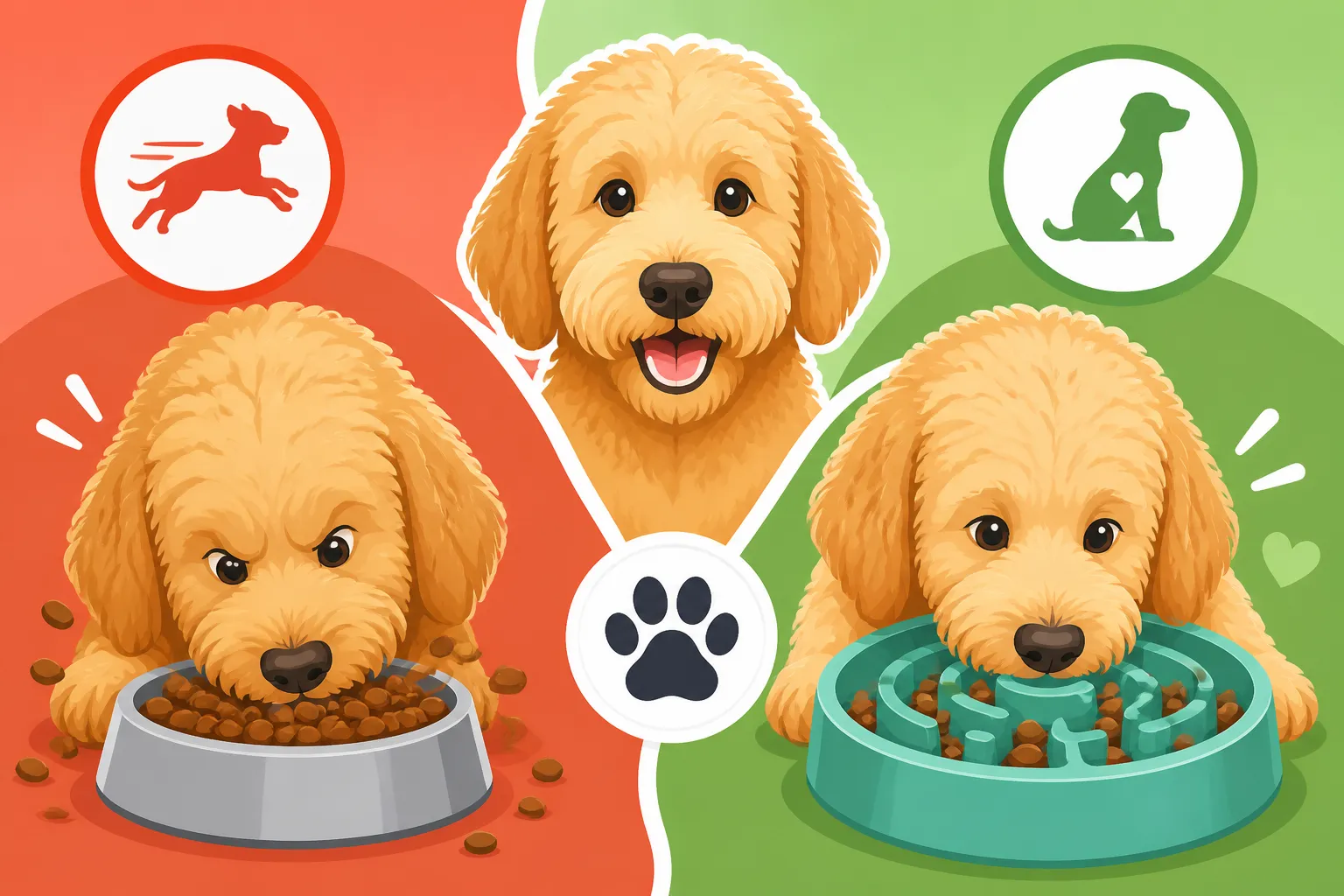
It's a common sight for Goldendoodle owners: you put down a fresh bowl of kibble, and before you can even turn around, it's GONE. Your furry friend has inhaled their meal in a blink, leaving you to wonder if they even tasted it. While it might seem harmless, fast eating can actually lead to a host of health problems for your beloved Goldendoodle, from uncomfortable gas to serious conditions like bloat. This guide is here to help you understand why your Goldendoodle acts like a vacuum cleaner at meal times and how slow feeders can be a game-changer for their digestion and overall well-being.
Why Your Goldendoodle Eats So Fast and Why It Matters
That lightning-fast gobbling isn't just a quirky Goldendoodle trait; it's often rooted in a mix of instinct, breeding, and sometimes, early experiences. Understanding why they do it is the first step toward addressing the problem, and recognizing the risks involved will motivate you to find a solution.
The Instinctual Drive to Gulp
Dogs, by nature, are wired to eat quickly. In the wild, before domestication, food was often scarce, and competition was fierce. A dog that ate slowly risked having its meal snatched away by another pack member or a rival predator. This deep-seated instinct to "eat it before someone else does" is still very much alive in our modern canine companions, even when they're the only dog in a secure, loving home with an endless supply of kibble.
For Goldendoodles, this instinct can be amplified by their heritage. Both Golden Retrievers and Poodles are intelligent, food-motivated breeds. Golden Retrievers, in particular, were bred to retrieve game and often had to work quickly and efficiently. This inherent drive to "get the prize" can easily translate into a frantic approach to their food bowl. Think about it: food is a highly prized reward for many dogs, and your Goldendoodle’s eagerness to please you, combined with that strong retriever drive, means they're often very enthusiastic about mealtime. They might associate the arrival of the bowl with a rush of excitement, and that can trigger a fast-eating frenzy.
In some cases, early puppyhood experiences can also contribute. Puppies from large litters might learn to eat quickly to ensure they get their share amidst their siblings. If your Goldendoodle came from such a background, those early feeding habits can stick, even if they're now the sole focus of your affection and the only dog at the dinner table. It’s not a reflection of starvation; it’s a learned behavior and an instinctual response.
The Health Risks of Rapid Eating
While a speedy eater might just seem like a goofy habit, the reality is that scarfing down food too fast carries some significant health risks that every Goldendoodle owner should be aware of. We're not talking about minor inconveniences here; some of these can be quite serious.
First off, there's the immediate danger of choking and aspiration. When your Goldendoodle inhales food instead of chewing and swallowing it properly, pieces of kibble can get stuck in their throat. In severe cases, food can even be accidentally inhaled into the lungs (aspiration), which can lead to serious respiratory infections like aspiration pneumonia. Imagine trying to eat a handful of crackers in one go – it’s just not safe or comfortable.
Beyond choking, rapid eating almost always leads to indigestion, gas, and vomiting. When dogs eat too fast, they swallow a lot of air along with their food. This swallowed air can cause bloating, uncomfortable gas, burping, and sometimes even regurgitation or vomiting shortly after eating. It's not pleasant for them, and it's certainly not pleasant for you to clean up! If you constantly find your Goldendoodle burping, passing gas, or throwing up undigested food, their eating speed is likely the culprit. You might even notice loose stools or diarrhea, as their digestive system struggles to process the food efficiently when it hasn't been properly chewed. This also makes it harder for them to absorb all the nutrients from their food.
But perhaps the most alarming risk, especially for larger Goldendoodles (Standard and even some Medium sizes), is bloat, medically known as Gastric Dilatation-Volvulus (GDV). This is a life-threatening condition where the stomach fills with gas and twists, cutting off blood supply and potentially leading to shock and death if not treated immediately. While the exact causes of bloat are complex and not fully understood, eating too quickly, especially large meals, drinking excessive amounts of water quickly after eating, and exercising vigorously before or after meals are all considered risk factors. Because Goldendoodles often have deep chests, they are considered more susceptible to this terrifying condition. You can learn more about Bloat Risk in a Standard Goldendoodle to understand the warning signs and what to do if you suspect it. It's a terrifying possibility, and anything we can do to reduce that risk is worth it.
What a Slow Feeder Is and How It Works
So, if eating too fast is such a problem, what's the solution? Enter the slow feeder – a brilliantly simple innovation designed to make mealtime last longer and be safer for your Goldendoodle.
The Basic Design and Philosophy
At its core, a slow feeder is any feeding device designed with physical barriers or obstacles that force your dog to eat around, over, or through them to get to their food. Instead of a wide-open bowl where they can scoop up huge mouthfuls of kibble, a slow feeder transforms mealtime into a mini-puzzle. These barriers might be ridges, mazes, posts, or even intricate patterns moulded into the bowl itself.
The philosophy behind them is straightforward: by making it physically impossible for your Goldendoodle to gulp down large quantities of food at once, you slow them down. They have to use their tongue, nose, and sometimes even their paws to navigate the obstacles, picking up only a few pieces of kibble at a time. This process not only extends mealtime but also encourages them to chew their food more thoroughly.
Beyond the physical slowdown, there's a significant mental engagement aspect. Foraging for food is a natural dog behavior, and slow feeders tap into this. Instead of a boring, quick meal, it becomes an enriching activity that stimulates their brain. This mental workout can be just as tiring and satisfying as a short walk, helping to alleviate boredom and even some anxiety. It shifts mealtime from a frantic race to a thoughtful pursuit, which is much healthier for their digestive system and their overall emotional state. For a Goldendoodle that wants to work with you and enjoys a challenge, it's often a welcome addition to their day.
Different Types of Slow Feeders
The market for slow feeders has exploded, offering a variety of designs to suit different dogs, eating styles, and budgets. You can find everything from basic inserts to complex interactive toys.
Standard Bowl Inserts: These are often the simplest and most affordable option. They are typically silicone or plastic inserts that you place into your existing dog bowl. The insert has ridges or shapes that break up the surface of the bowl, creating obstacles. This is a great starting point if you're not sure your Goldendoodle will take to a full slow-feeder bowl or if you want to repurpose bowls you already own. You can often find a variety of these on major retailers like Amazon or Chewy, offering different patterns and flexibility levels. They prevent your dog from suctioning up a whole meal in one go, extending the process by a few minutes.
Puzzle Bowls: These are purpose-built bowls with integrated designs. They come in countless variations, from shallow bowls with elaborate mazes to deeper ones with prominent bumps and swirls. Some popular types include:
- Maze Bowls: These feature intricate pathways and channels that dogs must navigate with their noses and tongues to push kibble out. They vary greatly in complexity, so you can choose one that challenges your Goldendoodle without overly frustrating them.
- LickiMats (and similar textured mats): While not traditional "bowls," these textured silicone mats are fantastic for slowing down wet food, yogurt, or peanut butter. The intricate patterns require your dog to lick and work to get every morsel, providing mental stimulation and promoting calm behavior. Some Goldendoodle owners spread a small amount of wet food or pumpkin on these to extend a snack or supplement a meal.
- Wobble Bowls/Interactive Dispensers: These are more dynamic, often requiring your dog to nudge, bat, or roll the feeder to release kibble. Think of them as a combination of a slow feeder and a puzzle toy. They add an extra layer of challenge and enrichment, engaging your Goldendoodle's natural problem-solving skills. These are particularly great for active Goldendoodles who need extra mental stimulation.
Interactive Toys/Dispensers: For the ultimate mental workout, some slow feeders come in the form of toys that dispense kibble as your dog plays with them. These can be balls with holes, cubes, or other shapes that require rolling, nudging, or even slight manipulation to release food. They transform mealtime into a prolonged game, which can be fantastic for engaging highly intelligent Goldendoodles. Just remember these are often better for smaller portions or treats, or for dogs who are already comfortable with slow feeders, as they can be quite challenging for a beginner.
Choosing the Right Slow Feeder for Your Goldendoodle
With so many options, how do you pick the best slow feeder for your furry family member? It's not a one-size-fits-all situation, and considering your Goldendoodle's unique traits is key.
Material and Durability for Chewers
This is a big one, especially if you have a Goldendoodle who likes to put everything in their mouth. Slow feeders come in various materials, each with its pros and cons:
- Plastic: Often the most affordable and lightweight. Many plastic slow feeders are made from durable, food-grade plastic, but some Goldendoodles (especially strong chewers) might be able to gnaw off pieces, creating a choking hazard. Always look for BPA-free claims. If your Goldendoodle is known for destroying toys, a plastic slow feeder might not be the safest or most lasting option.
- Ceramic: Heavy, sturdy, and usually non-toxic. Ceramic bowls are much harder for a dog to flip over, and they're generally impervious to chewing. However, they are breakable. If dropped or knocked against a hard surface, they can chip or shatter, posing a risk of sharp edges. They also tend to be more expensive.
- Silicone: Flexible, soft, and durable. Silicone slow feeders, especially the mat-style ones, are great for gentle eaters or as inserts. They're usually dishwasher-safe and easy to store. While most Goldendoodles won't chew through a silicone mat, a determined chewer might make short work of a standalone silicone bowl.
When making your choice, think about your Goldendoodle's chewing habits. Are they a gentle eater, or do they treat every new item like a chew toy? Prioritizing safety and durability is paramount. You want something that will withstand daily use and won't pose a risk if they decide to get a bit too enthusiastic.
Size and Capacity for Different Goldendoodle Sizes
Just like with regular food bowls, the slow feeder needs to be appropriately sized for your Goldendoodle's adult weight and daily food intake. What works for a Toy Goldendoodle won't cut it for a Standard.
- Standard Goldendoodles: These majestic floofs can weigh anywhere from 50 to 90+ pounds and consume a significant amount of food daily. Daily Calories for a Standard Goldendoodle can be quite high, meaning they need a slow feeder with ample capacity. A small, shallow bowl designed for a Chihuahua simply won't hold their meal, leading to spillage and frustration. Look for bowls labeled "large" or "extra-large" with deep, wide mazes.
- Mini and Medium Goldendoodles: Falling in between, these sizes also need feeders that match their build. A feeder too small might still allow for quick gulping, while one too large could be awkward for them to use. Feeding a Toy Goldendoodle Small Meals requires a feeder that presents a challenge without being overwhelming due to its size.
- Toy Goldendoodles: The smallest of the Goldendoodles, these tiny companions still need a challenge, but with smaller obstacles. Their smaller muzzles and tongues mean that intricate, tight mazes might be too frustrating, or conversely, gaps that are too wide will let them eat too fast. Look for feeders designed specifically for small breeds, with appropriately scaled patterns.
The key is to match the feeder's capacity to the volume of food your Goldendoodle eats in a single meal. You want the food to spread out across the feeder's surface and fill the obstacles without overflowing. A feeder that's too small for their meal means you'll either have to feed in multiple sittings (which defeats some of the purpose) or risk them still eating too fast due to food piling up.
Cleaning and Maintenance
Let's be real, Goldendoodles can be messy eaters, especially with those adorable beards! (We'll get to how to manage a wet beard with slow feeders in a moment!) A slow feeder, by its very design, has more nooks and crannies than a regular bowl. This means cleaning can be more involved, and proper hygiene is crucial to prevent bacteria buildup.
- Dishwasher-Safe Options: This is a huge convenience. Many plastic, silicone, and ceramic slow feeders are top-rack dishwasher safe, making daily cleaning a breeze. Always check the manufacturer's instructions.
- Hand-Washing Challenges: For feeders that aren't dishwasher safe or have very intricate designs, you'll need to hand wash them. Look for feeders that don't have extremely deep, narrow crevices that are impossible to reach with a sponge. A bottle brush or an old toothbrush can become your best friend for getting into those tricky spots. Food residue, especially from wet food or slobber, can quickly become a breeding ground for bacteria if not thoroughly cleaned.
- Consider the Beard: Goldendoodles with full furnishings (their signature beard and mustache) are prone to getting food and water caught in their facial hair. This can lead to staining and even skin irritation if not kept clean. When selecting a slow feeder, consider how easily your Goldendoodle's beard might dip into the food or get caught in the design. Some feeders are designed with slightly raised edges or specific patterns that might help mitigate this, or you might find that a flatter, mazier style works better. Water Bowls That Keep a Goldendoodle Beard Dry are often designed with similar principles, so think about that synergy.
Ultimately, choose a slow feeder you can commit to cleaning regularly and thoroughly. A dirty slow feeder is no better than a dirty regular bowl.
Tips for Introducing and Using a Slow Feeder
Bringing a new slow feeder into your Goldendoodle's life should be a smooth, positive transition, not a source of stress. Here’s how to set yourselves up for success.
Gradual Introduction and Positive Reinforcement
Imagine going from eating off a dinner plate your whole life to suddenly being handed a complex puzzle box for every meal. You'd probably be a bit confused, maybe frustrated! Your Goldendoodle might feel the same way. The key is to introduce the slow feeder gradually and make it a highly positive experience.
Don't just switch cold turkey. For the first few meals, you might start by putting a small portion of their food in the slow feeder and the rest in their regular bowl. This allows them to explore the new feeder without the pressure of an entire meal. Or, if it's an insert, try it with only a little food at first to build their confidence. When they successfully get food from the slow feeder, offer verbal praise ("Good dog!") or even a little extra treat to reinforce that this new way of eating is a great thing.
Some Goldendoodles might be immediately adept, while others might stare at it bewildered or try to tip it over. Be patient! If they seem overly frustrated, make it easier initially. For instance, if you have a puzzle bowl with very deep ridges, you could sprinkle a few extra high-value treats on top for the first day or two to entice them. The goal is for them to associate the slow feeder with delicious food and a fun challenge, not with struggle or punishment. Remember, Goldendoodles are smart and eager to please, so with the right encouragement, they'll usually catch on quickly. Consider using Training Treats Sized for a Mini Goldendoodle as positive reinforcement for any Goldendoodle size.
Incorporating Slow Feeders into a Daily Routine
Once your Goldendoodle is comfortable, the slow feeder should become an integral part of their daily routine. For optimal health benefits, aim to use it for all their meals. Whether you feed them once or twice a day (and many Goldendoodle owners feed twice, especially after Dropping a Goldendoodle Puppy to Two Meals), consistent use will yield the best results for slowing down their eating and improving digestion.
Using a slow feeder can also be a fantastic opportunity to add mental enrichment to their day, especially if you have an active Goldendoodle. Instead of just a quick gulp-and-go, mealtime becomes a mental exercise. This can be especially helpful on rainy days or when you can't provide as much physical exercise as usual. Combine it with other mental games, like scent work or training sessions, to keep their brains buzzing. Puzzle Toys That Occupy a Goldendoodle for an Hour can be a great addition for other times of the day, but the slow feeder makes mealtime a consistent mental task.
Always supervise your Goldendoodle, especially in the beginning. This allows you to monitor their progress, intervene if they get overly frustrated, or ensure they're not trying to chew on the feeder itself if it's not a chew-proof material. Over time, you'll know exactly how long their meal takes and can trust them with it.
Addressing Specific Goldendoodle Challenges
Goldendoodles, with their unique coats and personalities, might present a few specific challenges when using slow feeders.
One common issue is beard staining and wetness. That lovely Goldendoodle beard can easily dip into food and water, leading to unsightly staining and keeping the fur constantly damp, which can cause skin irritation. When using a slow feeder, some dogs with long beards might make more of a mess as they root around for kibble. To combat this, regularly clean their beard, especially after meals. Cleaning a Goldendoodle Beard After Every Meal isn't just about aesthetics; it's about hygiene. You can also try elevating the slow feeder slightly to reduce the angle at which their face dips, or opt for feeders with shallower, wider obstacles that don't require them to push their face too deeply into the bowl. Some owners even trim the beard slightly shorter around the mouth to keep it cleaner.
Another challenge can be Goldendoodles who try to flip the bowl. If your dog is getting frustrated, they might try to simply upend the feeder to get all the food out at once. This usually happens with lighter plastic bowls. If this is a problem, switch to a heavier ceramic feeder, or one with rubberized feet that prevent sliding. Some slow feeders even have suction cups on the bottom to keep them firmly in place. Consistency in training them to eat from it, and making it less frustrating, can also help.
Finally, if you have a multiple dog household, ensure each Goldendoodle has their own slow feeder and a designated, separate feeding spot. Even if they're the best of friends, the "competition" instinct can still kick in, and you don't want one dog scarfing down their meal and then trying to push the other away from theirs. Separate feeding areas reduce stress and allow each dog to eat at their own pace.
| Slow Feeder Type | Design | Best For | Cleaning Ease | Cost Shape |
|---|---|---|---|---|
| Standard Bowl Inserts | Silicone or plastic inserts with ridges/patterns. | Goldendoodles new to slow feeding, budget-conscious owners. | Moderate (can have nooks) | Low |
| Puzzle Bowls (Maze) | Integrated hard plastic or ceramic bowls with mazes. | Most Goldendoodles, varying levels of challenge. | Moderate to Difficult | Mid-Range |
| LickiMats | Flat, textured silicone mats. | Wet food, yogurt, peanut butter; calming/distraction. | Easy (flexible) | Low to Mid-Range |
| Wobble/Interactive Bowls | Dynamic bowls that release food as they're moved. | Engaged, playful Goldendoodles; extra mental stimulation. | Moderate to Difficult | Mid-Range to High |
| Food Dispensing Toys | Balls or cubes that drop kibble as dog plays. | Advanced mental challenge, smaller meals/treats; highly motivated dogs. | Moderate (often fewer crevices) | Low to Mid-Range |
By carefully selecting and thoughtfully introducing a slow feeder, you can transform mealtime from a frantic gulping session into a healthier, more engaging experience for your Goldendoodle. It's a simple change that can make a world of difference for their digestion, health, and overall happiness, potentially preventing issues like Gas in a Goldendoodle That Eats Too Fast or even the terrifying prospect of bloat. It's a worthy investment in their long-term well-being.
Disclaimer
This article is for general informational purposes only and does not constitute professional advice. Laws, prices and regulations vary by location and change over time. Consult a qualified professional for guidance on your specific situation.