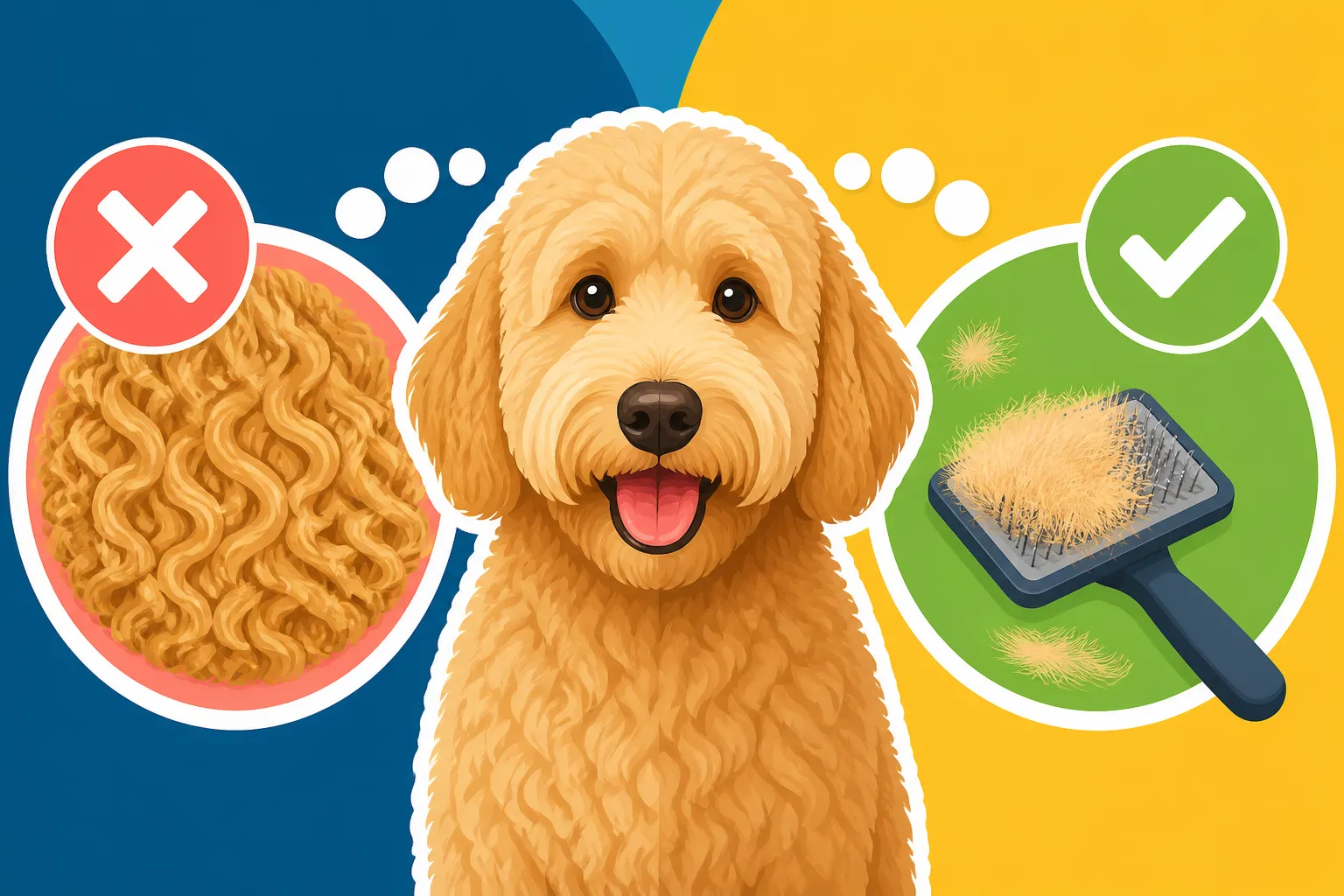
Why Goldendoodle Curl Says Nothing About Shedding
It's a common belief, and one I hear all the time, that a Goldendoodle's curly coat automatically means they don't shed. So many prospective owners choose a Goldendoodle specifically hoping for a truly "hypoallergenic" dog, thinking that more curl equals less mess. But I'm here to tell you that the reality is far more nuanced, and honestly, a bit more complicated than just looking at how many waves or curls your puppy has. This guide will dive deep into why curl alone is a poor indicator of shedding and what truly determines how much hair your beloved Goldendoodle will leave on your couch.
The Myth of the "Hypoallergenic" Curl
Let's address the elephant in the room right away: the idea that a Goldendoodle's curl directly translates to being "hypoallergenic" or non-shedding. It's a pervasive myth, fueled by marketing and often by well-meaning but misinformed breeders. While it's true that some Goldendoodles shed very little, and many do have curly coats, the connection isn't as direct as simply counting the number of ringlets.
Understanding the Allergic Reaction
When people talk about dog allergies, they often mistakenly point to shedding hair as the culprit. In reality, it's not the hair itself that causes allergic reactions, but rather the proteins found in a dog's dander (dead skin cells), saliva, and urine. These microscopic allergens are carried on the hair, and when hair is shed, these allergens are dispersed into the environment. So, a dog that sheds less might release fewer of these allergen-laden hairs, but they still produce the allergens. You can read more about this in Why No Goldendoodle Is Truly Hypoallergenic.
Think of it this way: a dog with a coat that sheds profusely, like a Golden Retriever, will distribute a lot of dander and saliva-coated hair throughout your home. A dog that sheds minimally, like a Poodle, will still produce dander and saliva, but less of it will be released into the air and onto your furniture because it's trapped within their dense, curly coat until brushed out. The key takeaway is that the dog's body chemistry, not just their hair, is what truly matters for allergy sufferers.
Why Hair Texture Doesn't Tell the Whole Story
Now, let's talk about the hair itself. A curly coat can appear to shed less because the shed hairs get caught within the surrounding curls, rather than falling out and landing on your floor or clothes. This is why Poodles are often considered low-shedding; their dense, woolly curls act like a natural net. However, this doesn't mean the hair isn't shedding; it simply means it's not being released into your environment as easily.
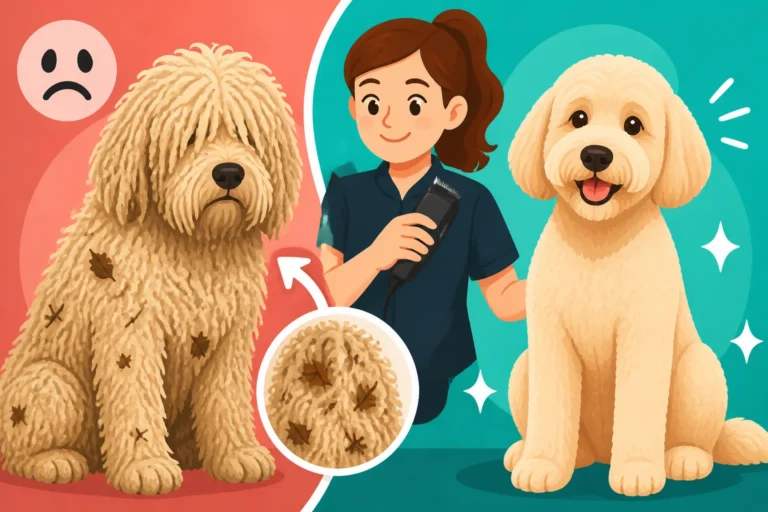
This is where grooming comes in. Those shed hairs, trapped within the curls, don't just magically disappear. If not regularly brushed out, they will quickly intertwine with the live hair, forming mats and tangles that can be painful for your dog and a nightmare to remove. A Goldendoodle with a very curly coat might seem to shed less, but if you don't keep up with brushing, you'll find yourself dealing with significant matting, and potentially needing to shave your dog down. Conversely, a Goldendoodle with a straighter or wavier coat might drop more hair around the house, but their coat might be easier to maintain without daily brushing. It's a trade-off that many new Goldendoodle owners don't anticipate.
The Genetics Behind Goldendoodle Coats and Shedding
To truly understand why curl isn't the sole determinant of shedding, we need to talk genetics. It's not just one gene at play, but a combination of genes that influence everything from coat texture to the presence of facial hair and, yes, how much they shed.
The Furnishings Gene (F/IC Locus)
This is perhaps the most critical gene when discussing shedding in Goldendoodles. The "furnishings" gene, often referred to as the F or IC locus, is responsible for the characteristic long hair on a Goldendoodle's face (the beard, mustache, and eyebrows) and legs. Dogs without furnishings will have a smooth face, much like a Golden Retriever. Dogs with furnishings will have that classic "doodle" look.
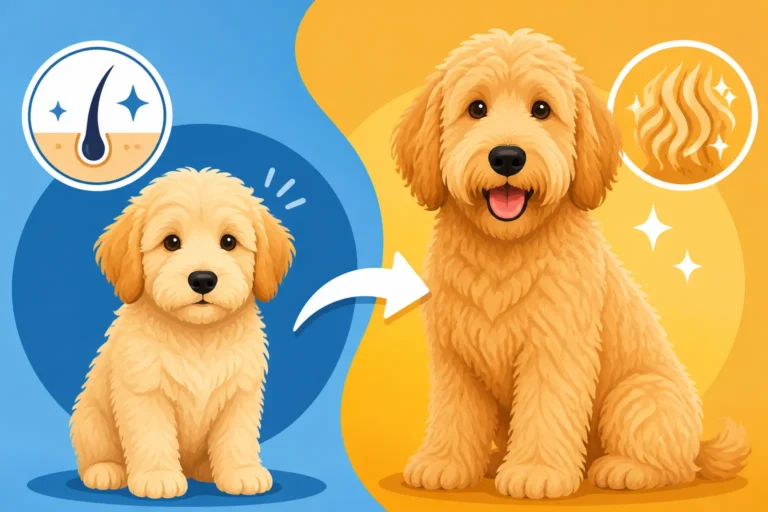
Here's why furnishings are so important: the presence of furnishings is strongly linked to a low-shedding coat. The gene responsible for furnishings also affects the growth cycle of the hair, making it longer and reducing its propensity to shed. A Goldendoodle can have a very curly coat, but if they lack the furnishings gene (meaning they have a smooth face), they are still likely to be a shedder. Many Goldendoodle puppies, especially F1s, might look fluffy and curly, but if they don't inherit the dominant furnishing gene, their adult coat will shed more. You can learn more about this specific trait in What Furnishings Give a Goldendoodle Its Beard.
The Curl Gene (KRT71) and Its Role
The KRT71 gene is what determines how curly a dog's coat is. It has different alleles (versions), often noted as Cu (curly), C (wavy), or straight. A Goldendoodle inherits one allele from each parent. So, a dog could be Cu/Cu (very curly), Cu/C (wavy to curly), or C/C (wavy), or even straight if they inherit straight alleles.
While this gene dictates the texture of the hair, it doesn't directly dictate whether the dog sheds. It's possible for a Goldendoodle to have a super curly coat (thanks to KRT71) but still shed because it might not have the correct combination of genes at other loci that control shedding. Often, Poodles, which are known for their low-shedding qualities, carry both the curl gene and the non-shedding genes. When they are bred with a Golden Retriever, the combination of these genes determines the Goldendoodle's ultimate coat type and shedding level. This is why Why a Goldendoodle Curl Gene Is Not a Shedding Gene is a critical read for understanding the distinction.
The Shedding Gene (MC5R)
Beyond furnishings and curl, there's another gene that plays a direct role in shedding: the MC5R gene. This gene (and others that are still being researched) influences the hair follicle cycle and, consequently, how much hair a dog sheds. A Goldendoodle can be tested for these genetic markers to get a more accurate prediction of their shedding potential.
It's entirely possible for a Goldendoodle to have a beautiful, curly, furnished coat and still shed more than expected if they inherit certain alleles at the MC5R locus or other shedding-related genes from their Golden Retriever parent. This is why relying solely on visual inspection of a puppy's coat for shedding prediction can be misleading. A curly coat might trap shed hair, but the genetic predisposition to shed is still present and active. Comprehensive DNA Coat Testing on a Goldendoodle can provide valuable insights into these complex genetic traits.
Here's a simplified look at how these genes combine:
| Gene Locus | Trait Controlled | Impact on Shedding |
|---|---|---|
| F/IC (Furnishings) | Presence of facial hair (beard, brows) | Most Critical: Dominant "furnishings" allele strongly correlated with low shedding. Dogs without furnishings (smooth face) will shed more, regardless of curl. |
| KRT71 (Curl) | Coat texture (straight, wavy, curly) | Determines how curly the coat is. Does not directly prevent shedding, but curly coats trap shed hair more effectively. |
| MC5R (Shedding) | Hair follicle cycle | Directly influences the amount of hair shed. Specific alleles contribute to low or high shedding. |
What to Look For Beyond the Curl
Given the complexities of Goldendoodle genetics, how can a prospective owner get the best sense of a puppy's likely shedding habits? It goes far beyond just looking at a cute, fluffy puppy.
The Importance of Parentage and DNA Testing
The most reliable way to predict a Goldendoodle's shedding potential is to look at the genetic makeup of its parents. Reputable breeders should conduct DNA testing on their breeding dogs for coat traits, including furnishings, curl, and shedding alleles. Don't be afraid to ask for these results. A breeder who truly understands Goldendoodle genetics will be able to explain what genes each parent carries and what that means for the puppies in the litter.
For example, if both parents carry dominant furnishing genes and low-shedding alleles, their puppies are far more likely to be low-shedding and have that classic "doodle" look. If one parent lacks furnishings or carries shedding alleles, there's a higher chance of variability in the litter. This is why The DNA Panel a Goldendoodle Breeder Should Run is so important, as is understanding Which DNA Tests Matter for a Goldendoodle Litter. This scientific approach offers a much clearer picture than simply guessing based on a puppy's appearance.
Understanding Goldendoodle Generations
The generation of a Goldendoodle also plays a significant role in coat predictability.
- F1 Goldendoodles (50% Golden Retriever, 50% Poodle): These are the first-generation crosses, and they tend to be the most unpredictable in terms of coat. You can get anything from a straight, shedding coat (more like a Golden) to a wavy or curly, low-shedding coat. It's a bit of a genetic lottery.
- F1b Goldendoodles (75% Poodle, 25% Golden Retriever): These are F1 Goldendoodles bred back to a Poodle. Because they have a higher percentage of Poodle genetics, they are much more likely to have a curly, low-shedding coat, as they inherit more of the dominant furnishings and non-shedding genes from the Poodle side.
- Multigen Goldendoodles: These are Goldendoodles bred to other Goldendoodles for several generations, often with specific coat goals in mind. Reputable multigen breeders use DNA testing to ensure consistency in coat type, aiming for low-shedding, furnished coats. For more on this, check out Multigen Goldendoodles and Coat Consistency.
While no generation guarantees zero shedding, the F1b and multigen Goldendoodles bred with careful genetic testing offer the highest probability of a low-shedding coat.
Grooming Needs Regardless of Curl
Here's the kicker: even if you get a Goldendoodle with a perfectly non-shedding, curly, furnished coat, you are signing up for significant grooming. Those shed hairs still exist, but instead of falling out, they get tangled in the surrounding live hair. This leads to matting, which can be incredibly painful for your dog if not addressed.
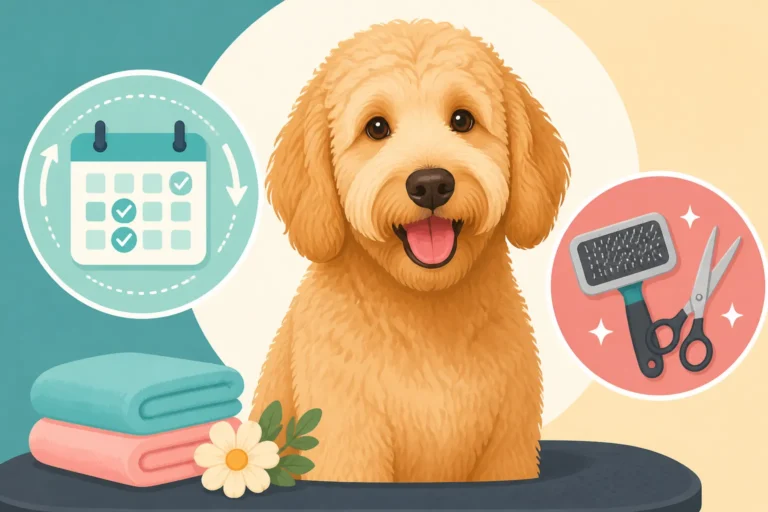
This means regular, consistent brushing is non-negotiable. You'll need a good slicker brush and a metal comb (I find many great options on platforms like Chewy and Amazon) to line brush your Goldendoodle down to the skin several times a week, if not daily, depending on their coat type and length. Ignoring this will inevitably lead to costly professional dematting fees or, worse, a full shave-down. It's why Brushing a Goldendoodle Often Enough to Stop Matting is one of the first articles I recommend to new owners. You also need to understand The Three Goldendoodle Coat Types and How to Tell Them to tailor your grooming approach effectively.
Practical Implications for Goldendoodle Owners
So, what does all this mean for you, the current or future Goldendoodle owner? It boils down to managing expectations and committing to proper care.
Managing Expectations for Shedding and Allergies
First and foremost, understand that there is no such thing as a 100% hypoallergenic dog. While Goldendoodles can be low-shedding, which often means low-allergen for many people, they still produce dander and saliva. If you or a family member has severe allergies, it's absolutely crucial to spend time with the specific puppy or adult dog you are considering before bringing them home. Visit the breeder, interact with the parents, and see if you react. This is far more reliable than relying on a breeder's "hypoallergenic" claim or a puppy's curly looks. Don't skip this step! Spending Time With a Goldendoodle Before Buying is a must-read for this reason.
Even with a low-shedding Goldendoodle, some people with sensitivities might still react. It's about minimizing exposure, not eliminating it entirely. Regular cleaning of your home, using HEPA filters, and frequent dog bathing can all help reduce allergen load.
The Ongoing Commitment to Coat Care
Whether your Goldendoodle has a wavy, curly, or even a straighter coat, diligent coat care is essential. This commitment doesn't change based on curl; it changes based on the presence of furnishings and the density of the coat, which all Goldendoodles possess to some degree.
- Brushing: As mentioned, consistent line brushing several times a week (or daily during the infamous The Goldendoodle Coat Change at Eight to Twelve Months) is vital to prevent mats. Invest in quality tools. You can find excellent slicker brushes, wide-toothed combs, and detangling sprays from reputable online retailers like Chewy or Amazon.
- Professional Grooming: Most Goldendoodles require professional grooming every six to eight weeks. This includes bathing, drying, trimming, and often shaving down certain areas. This isn't just for aesthetics; it's critical for their health and comfort. Regular grooms prevent severe matting, keep their ears clean, and ensure their paw pads are trimmed for traction. Neglecting professional grooming will quickly lead to painful mats and potentially skin infections. Understand the importance of Booking a Goldendoodle Groom Every Six to Eight Weeks.
Having a Goldendoodle is a wonderful experience, but it comes with a commitment to their unique coat needs. The curl is just one part of the equation, and it certainly doesn't give you a free pass on shedding or grooming. Understanding the genetics, managing expectations, and committing to proper care will ensure you and your Goldendoodle live a happy, comfortable, and relatively shed-free life together!
Disclaimer
This article is for general informational purposes only and does not constitute professional advice. Laws, prices and regulations vary by location and change over time. Consult a qualified professional for guidance on your specific situation.