Burrs and Foxtails in a Goldendoodle Coat
Oh, the joy of a Goldendoodle romp in a grassy field, followed by the sheer headache of discovering what Mother Nature decided to attach to their beautiful, flowing coat! If you've ever spent an hour meticulously picking tiny, barbed seeds out of your dog's ears or felt the dread of a swollen paw, you know the frustration. This guide is all about tackling those sneaky invaders – burrs and foxtails – that seem to have a special magnetic attraction to Goldendoodle fur, and how you can keep your furry friend safe and comfortable.
The Unseen Dangers of the Great Outdoors for Goldendoodle Coats
Our Goldendoodles love to explore, to sniff every interesting scent, and to dive headfirst into whatever vegetation catches their eye. But sometimes, what looks like a harmless patch of tall grass or a bushy trail can hold hidden dangers for their unique coats.
What Exactly Are Burrs and Foxtails?
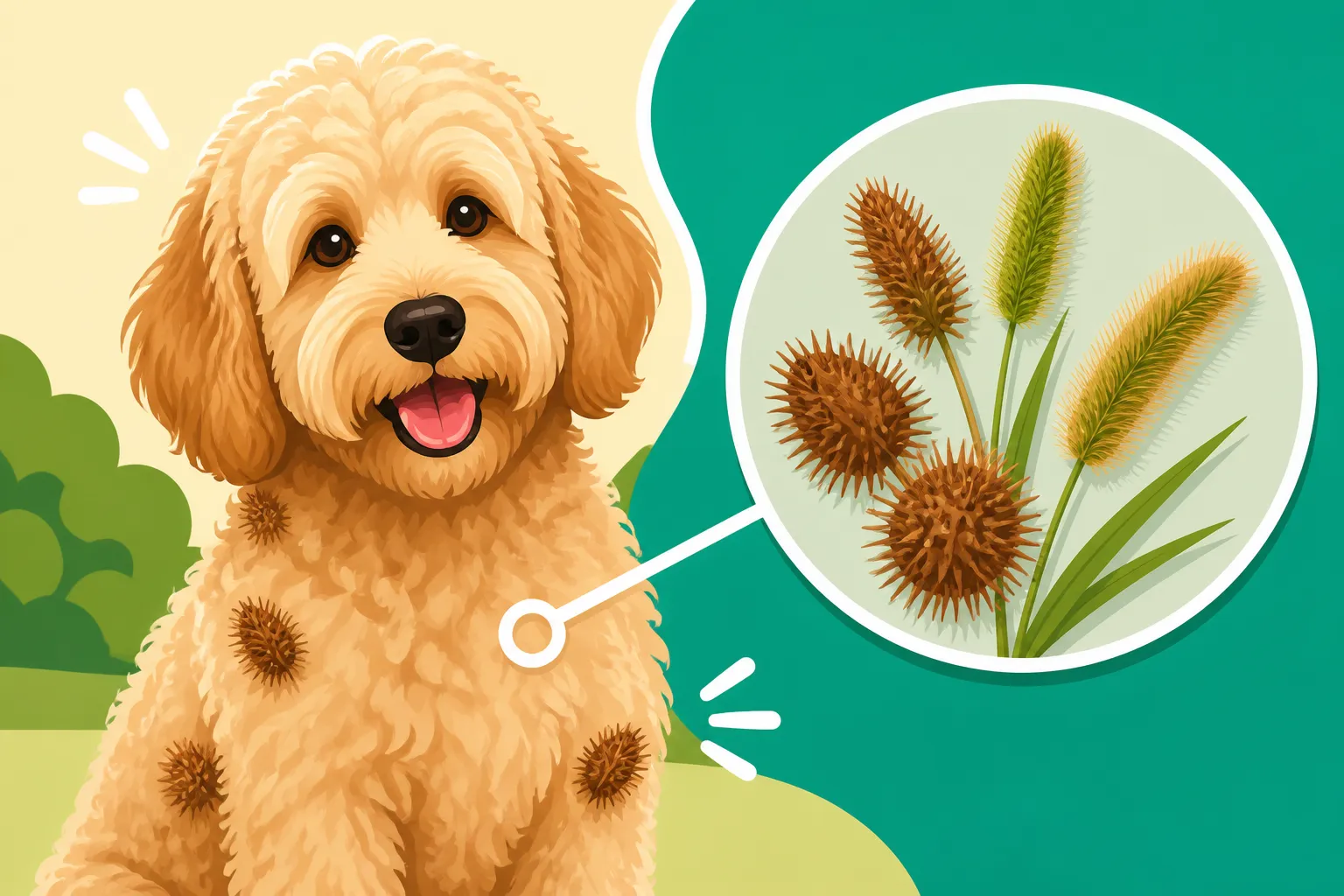
Let's break down these common culprits. Burrs are essentially nature's Velcro. They're the seed pods of various plants, designed with tiny hooks or barbs that allow them to attach to passing animals (or your Goldendoodle's lovely fur) and hitch a ride to new locations. There are many types, from the spherical, spiky burdock burrs to the smaller, flatter ones from beggar-ticks. They might seem innocuous, just annoying to remove, but they can pull on the skin, cause irritation, and if left too long, even lead to painful mats or skin infections.
Foxtails, however, are a different beast entirely, and far more dangerous. These are the dried seed heads of certain grasses, typically found in late spring and summer. They are characterized by a sharp, barbed point at one end and an arrangement of bristles that allow them to move in only one direction – forward. Think of them like a tiny harpoon that can burrow into skin, ears, nose, eyes, or even between paw pads. Unlike burrs, foxtails don't just cling to the surface; they can migrate into the body, causing serious infections, abscesses, and other severe health problems if not removed promptly.
Why Your Goldendoodle's Coat is a Natural Trap
If you have a Goldendoodle, you already know their coat is special. It’s what we love about them – that soft, wavy, or curly fur. But this very trait makes them incredibly susceptible to picking up burrs and foxtails. A Goldendoodle's coat, whether it's more Golden Retriever-like wavy or Poodle-curly, has a density and texture that acts like a natural net for these plant hitchhikers. The soft, often slightly oily nature of the fur, combined with its tendency to form slight tangles, provides a perfect anchoring point. Foxtails, with their unidirectional barbs, get caught and then, with every movement your dog makes, they work their way deeper into the coat or even into the skin. It’s a frustrating reality for Goldendoodle owners; a quick dash through a field can turn into an extensive grooming session trying to undo what nature has done. This is why consistent coat care is paramount, especially after any outdoor adventures.
Early Detection and Safe Removal Techniques
The key to preventing serious issues from burrs and foxtails is vigilance. Being proactive with checks and knowing how to safely remove these nuisances can save you a lot of heartache and vet bills.
Daily Checks Are Your First Line of Defense
After every walk, every romp in the park, or even just a quick dash out into a grassy yard, you need to make checking your Goldendoodle a habit. Don't just glance; get your hands on them and really feel through their fur. These daily checks are your absolute best line of defense. Pay special attention to areas where burrs and foxtails love to hide:
- Ears: Goldendoodles have those lovely, floppy ears with feathering, which are perfect for catching things. Check the inside and outside. Goldendoodle Ear Infections Under a Furnished Ear is a common problem area already, and adding foreign objects just makes it worse.
- Armpits and Groin: These are high-friction areas where things can get easily tucked in and rubbed against the skin.
- Paws and Between Toes: Foxtails especially love to embed here. Gently spread their toes and inspect the webbing.
- Belly and Tail: Low-hanging fur on the belly and a fluffy tail can also act as collection points.
- Around the Eyes and Mouth: Smaller burrs or foxtail awns can get caught in facial furnishings.
It's not just about what you see. Often, especially with a dense Goldendoodle coat, you might feel a lump or a change in texture before you visually spot the offending plant material. Get down and dirty, feel every inch, and if you find something, address it immediately.
Step-by-Step Guide to Removing Burrs
Finding a burr is annoying, but usually manageable. Here's how to tackle them:
- Gather Your Tools: You'll need a good slicker brush, a metal comb (preferably one with both wide and narrow teeth), and a detangler spray or a leave-in conditioner. Sometimes, a pair of blunt-tipped scissors might be necessary for stubborn mats. Brands like Chewy and Amazon offer a wide range of these grooming essentials, so you can always find what you need.
- Locate and Isolate: Gently part the fur around the burr to get a clear view. Try to hold the fur close to the skin to minimize pulling.
- Spray and Work: Liberally spray the detangler or conditioner directly onto the burr and the surrounding tangled fur. Let it sit for a minute to help loosen things up.
- Break It Down: For larger burrs, try to gently break them apart with your fingers. This reduces the size of the object you're trying to pull through the fur.
- Comb It Out (Carefully): Start from the outer edge of the burr, working from the tip of the hair towards the skin. Use the wide-toothed side of your comb first, then switch to the narrower side. A slicker brush can also help tease out the smaller pieces. Be patient and gentle! Yanking will hurt your dog and potentially create more mats.
- When to Trim: If a burr is deeply embedded, creating a tight mat, or simply too painful to comb out, don't hesitate to carefully trim it out. Use blunt-tipped scissors and always point the tips away from your dog's skin. Slide a comb between the mat and the skin as a guard before cutting. Remember, it's better to have a small bald spot than to cause pain or serious skin irritation.
- Finish with a Brush: Once the burr is out, brush the area thoroughly to remove any remaining small pieces and to smooth the fur. This is a good time to ensure no other smaller burrs are lurking nearby. The Slicker Brush and Comb a Goldendoodle Needs will become your best friend in these situations.
Tackling Dangerous Foxtails
Foxtails are a different story and require a much more serious approach. If you find a foxtail, immediate action is crucial because of their migratory nature.
- Surface Level: If a foxtail is just caught in the outer layer of the fur and hasn't broken the skin, you can attempt to remove it carefully with tweezers or your fingers, ensuring you get the entire seed head. Be absolutely certain it hasn't started to embed.
- Immediate Vet Attention: If a foxtail has already broken the skin, is embedded in an ear canal, nostril, eyelid, or you see any swelling, redness, discharge, or signs of pain, do not try to remove it yourself. These require professional removal, often under sedation, to ensure the entire barbed seed is extracted without causing further damage. A foxtail can disappear under the skin within hours.
- Watch for Migration Signs: If you suspect a foxtail but can't find it, watch for symptoms:
- Paws: Licking excessively, limping, swelling between the toes. Goldendoodle Paw Licking and What It Means
- Ears: Head shaking, scratching at the ear, discharge, holding the head to one side. Goldendoodle Ear Infections That Return Every Month
- Nose: Sudden, violent sneezing, pawing at the nose, discharge from one nostril.
- Eyes: Squinting, redness, excessive tearing, pawing at the eye.
- Skin: A small, red bump that might resemble a bug bite, often painful to the touch, and can develop into an abscess.
Never assume a foxtail will just "come out on its own." They are designed to travel forward, not backward, and will continue to burrow.
Prevention: Making Your Yard and Walks Safer
An ounce of prevention is truly worth a pound of cure when it comes to burrs and especially foxtails. Modifying your environment and your Goldendoodle's routine can significantly reduce their exposure.
Managing Your Outdoor Environment
This might seem obvious, but it's often overlooked.
- Trim Your Yard Regularly: Keep your lawn mowed, especially in areas where your Goldendoodle plays. Eliminate tall, grassy weeds where foxtails thrive. If you have areas of your property that tend to get overgrown with weeds or wild grasses, consider fencing them off or converting them to a less plant-heavy landscape.
- Choose Walking Paths Wisely: Avoid walking your Goldendoodle through fields of tall, dry grasses, especially during late spring, summer, and early fall when foxtails are abundant. Stick to paved paths or well-maintained park areas. If you're hiking, be mindful of overgrown trails.
- Seasonal Awareness: Be extra vigilant during foxtail season. Knowing when these plants are most prevalent in your region will help you adjust your outdoor activities and increase your post-walk checks.
Protective Gear and Coat Care Strategies
Sometimes, simply avoiding danger isn't enough, especially for an adventurous Goldendoodle.
- Protective Clothing: For Goldendoodles who love to dive into every bush, consider a lightweight dog vest or bodysuit, especially for their belly and legs, when venturing into areas with known burr or foxtail presence. These can act as a physical barrier. While you might find these on Amazon, ensure they're breathable to prevent overheating.
- Keep the Coat Manageable: A longer, flowing coat might look beautiful, but it's a magnet for everything. Consider keeping your Goldendoodle's coat trimmed to a shorter, more manageable length, especially during warmer months or if they are very active outdoors. This doesn't mean shaving them bald, which can lead to sunburn, but a practical "summer cut" can make a huge difference in preventing deep tangles and allowing you to spot invaders more easily. Booking a Goldendoodle Groom Every Six to Eight Weeks is essential for maintaining coat health and length. Discuss practical cuts with your groomer.
- Conditioning Sprays Before Walks: A good quality leave-in conditioner or detangler spray applied before a walk can create a smoother surface on the fur, making it harder for burrs to cling and easier for you to brush them out. Think of it as creating a protective barrier. Detangler Sprays That Help a Goldendoodle are a must-have for Goldendoodle owners.
The Role of Consistent Brushing in Prevention
This is perhaps the most critical preventive measure. A well-maintained, tangle-free Goldendoodle coat is far less likely to harbor burrs and foxtails deep within its layers.
- Regular, Thorough Brushing: Don't just brush the top layer of the coat. You need to perform Line Brushing a Goldendoodle Section by Section down to the skin, several times a week, if not daily, depending on coat type and activity level. This prevents mats from forming, which are prime hiding spots for burrs. A mat will literally suck a burr in and hold it tight, making removal exponentially harder and more painful. Why a Goldendoodle Mats in a Week Without Brushing is a common lament, and burrs only accelerate that process.
- Post-Outdoor Brush: Even after a quick yard visit, a thorough brush-through, especially on the legs, belly, and around the ears and tail, can catch burrs and foxtails before they have a chance to embed deeply. This habit reinforces good coat health and makes those daily checks much more effective. Your routine for Cleaning a Goldendoodle Ear Before It Gets Infected should extend to checking for foreign objects as well.
Here's a quick comparison of burrs and foxtails to help you distinguish and react appropriately:
| Feature | Burrs | Foxtails |
|---|---|---|
| Appearance | Round, spiky, or flat seed pods with hooks | Grassy, barbed seed heads with a pointed end |
| Danger Level | Annoying, can cause mats, skin irritation | Highly dangerous, migratory, causes infection |
| Primary Risk | Coat matting, skin tugging, discomfort | Internal migration, abscesses, severe infection |
| Common Location | Entire coat, especially longer feathering | Paws (between toes), ears, nose, eyes, skin |
| Removal Method | Comb out, detangler, careful trimming | Surface: Tweezers; Embedded: Vet visit |
| Prevention | Regular brushing, shorter coat, avoidance | Yard trimming, careful walk routes, protective gear |
When to Call the Vet: Recognising Serious Complications
While it's empowering to handle minor burr removals at home, there are definitive signs that indicate it's time to put down the comb and pick up the phone to your veterinarian. Ignoring these can lead to serious health consequences for your Goldendoodle.
Signs a Bur or Foxtail Has Caused Trouble
It's heartbreaking to see your happy-go-lucky Goldendoodle suddenly acting out of sorts. Pay close attention to these red flags:
- Persistent Licking or Chewing: If your Goldendoodle is relentlessly licking a paw, chewing at their leg, or scratching at an ear, even after you've thoroughly checked, it's a strong indicator that something is irritating them. This could be an embedded foxtail or a deeply irritating burr. Goldendoodle Paw Licking and What It Means is rarely just "a habit."
- Swelling, Redness, or Discharge: Any visible swelling, redness, or pus-like discharge on the skin, around a paw pad, in an ear canal, or near an eye, suggests an infection has begun. Foxtails are notorious for causing painful abscesses as they burrow.
- Limping or Favoring a Paw: If your Goldendoodle is suddenly limping or reluctant to put weight on a paw, especially after being outside, a foxtail might be lodged between their toes or has already entered the paw pad.
- Head Shaking or Ear Sensitivity: Excessive head shaking, holding the head to one side, or yelping when their ear is touched are classic signs of an irritant deep within the ear canal. This could be a foxtail, or even a deep-seated burr that's causing immense discomfort. Goldendoodle Ear Infections That Return Every Month can be triggered or worsened by such foreign bodies.
- Repeated Sneezing, Nasal Discharge, or Pawing at Face: If your dog suddenly starts sneezing violently, repeatedly paws at their nose or face, or has discharge coming from one nostril, a foxtail might have been inhaled into the nasal cavity. This is an emergency.
- Eye Irritation: Squinting, rubbing the eye, excessive tearing, or a red, inflamed eye could mean a foxtail or small burr has made its way into the delicate eye area, potentially scratching the cornea.
When in doubt, always err on the side of caution and contact your vet. It's much better to have a false alarm than to delay treatment for a serious issue.
Understanding Foxtail Migration and Internal Damage
This is where the true danger of foxtails lies and why quick action is so vital. Foxtails are designed with barbs that only allow them to move in one direction. Once they breach the skin or enter an orifice, they don't just sit there; they start to travel.
Imagine a tiny, barbed spear making its way through soft tissue. They can migrate astonishingly far from their entry point. A foxtail that enters a paw pad could travel up the leg. One that enters the ear can puncture the eardrum and cause neurological issues. If inhaled, it can move into the lungs, leading to severe pneumonia or even a collapsed lung. There are documented cases of foxtails migrating to the brain, spinal cord, or even internal organs, causing life-threatening complications.
The problem is, once they're inside, they become incredibly difficult to locate and remove. They don't show up on X-rays because they're plant matter, not metal. Vets often rely on endoscopy, ultrasound, or even exploratory surgery to find and extract them. These procedures are not only costly but also traumatic for your Goldendoodle, and the longer the foxtail remains, the greater the risk of deep-seated infection, chronic pain, and permanent damage.
So, if you suspect a foxtail has embedded or your Goldendoodle is showing any of the signs listed above, do not wait. Call your vet immediately. The faster it's addressed, the less likely it is to cause severe, long-term problems. Your Goldendoodle relies on you to be their advocate, and knowing when to seek professional help is a crucial part of responsible pet ownership.
Disclaimer
This article is for general informational purposes only and does not constitute professional advice. Laws, prices and regulations vary by location and change over time. Consult a qualified professional for guidance on your specific situation.