When Both Goldendoodle Parents Carry the Same Gene
Bringing a Goldendoodle into your family is an incredibly exciting time, full of dreams of joyful romps and cuddly evenings. But imagine the heartbreak and confusion when, despite all your research, your beloved puppy develops a serious inherited health condition, and you later discover both its parents carried the exact same problematic gene. This isn't just a hypothetical scenario; it's a real and often devastating reality that many Goldendoodle families face. This comprehensive guide aims to peel back the layers of Goldendoodle genetics, explaining in detail what happens when both parent dogs carry the same recessive gene, the potential consequences for their offspring, and how you, as a prospective or current owner, can navigate this complex landscape to ensure the healthiest possible future for your furry friend.
Understanding Goldendoodle Genetics and Inherited Traits
The world of dog genetics can feel like a labyrinth, especially with crossbreeds like Goldendoodles. While they might seem like a simple blend of two beloved breeds, their genetic makeup is anything but straightforward. Understanding how genes are passed down is crucial, especially when it comes to recessive traits that can hide in plain sight.
The Basics of Recessive Genes in Dogs
Think of genes like tiny instruction manuals, tucked away inside every cell of your dog's body. Each gene comes in pairs, with one copy inherited from the mother and one from the father. Some genes are "dominant," meaning if a dog gets even one copy of that gene, the trait it codes for will be expressed. Others are "recessive," which means a dog needs two copies of that gene—one from each parent—for the trait to show up.
For example, if a dog inherits one dominant gene for a healthy trait and one recessive gene for a disease, it won't actually suffer from the disease. It's a "carrier" – perfectly healthy itself, but it carries that hidden recessive gene and can pass it on to its puppies. It's like having a secret recipe ingredient; you might carry it around, but you don't use it unless you have a second copy of that ingredient to make the full dish. This is where the complexity, and the risk, truly begins for Goldendoodles.
Why Goldendoodles Can Be a Genetic Wildcard
Goldendoodles are often celebrated for their "hybrid vigor," the idea that mixing two purebreds reduces the incidence of genetic diseases found in either line. While there's a kernel of truth to this when the two parent breeds don't share common genetic predispositions, it’s not a magic bullet. In fact, if not carefully managed, crossing two different breeds can sometimes introduce new combinations of genetic risks.
Both Golden Retrievers and Poodles, the foundation breeds for the Goldendoodle, have their own distinct lists of inherited health conditions. Many of these are caused by recessive genes. When you cross them, you're essentially shuffling two decks of genetic cards. If a Goldendoodle breeder isn't diligent with comprehensive health testing, they could unknowingly breed two healthy carriers for the same recessive condition. Because the Goldendoodle isn't a recognized breed, there's no overarching breed club health scheme like there would be for a purebred Golden Retriever or Poodle. This means it's entirely up to individual breeders to implement rigorous testing protocols, which unfortunately, not all do. This lack of standardization can make a Goldendoodle a bit of a genetic wildcard if you're not careful about your breeder selection. You might think you're getting the best of both worlds, but without proper testing, you could inadvertently be setting the stage for genetic issues.
The Risks When Both Goldendoodle Parents Are Carriers
The concept of "carrier" status is often misunderstood, leading many prospective puppy owners to believe a carrier parent is perfectly fine to breed. While the parent themselves may be perfectly healthy, the implications for their offspring can be dire when two carriers are bred together. This is where diligent health testing becomes not just recommended, but absolutely critical.
What "Carrier" Status Truly Means
When a dog is identified as a "carrier" for a specific genetic disease, it means they have inherited one copy of the normal, healthy gene and one copy of the mutated, disease-causing recessive gene. Crucially, because the healthy gene is dominant, the carrier dog will not exhibit any symptoms of the disease. They are clinically normal and often live full, healthy lives. This is why a simple vet check-up, no matter how thorough, cannot identify a carrier. Only specific genetic DNA tests can uncover this hidden status.
The danger of a carrier isn't to themselves, but to their potential offspring. They are silent transmitters of a genetic legacy that, if paired with another carrier, can lead to heartbreak. Many people, and unfortunately, some less-than-reputable breeders, will dismiss carrier status, arguing that since the parent is healthy, the puppies will be too. This couldn't be further from the truth. Understanding what a carrier PRA result means for a Goldendoodle, for instance, is vital. It means that while the parent won't go blind from Progressive Retinal Atrophy, they carry the blueprint for it.
The 25% Chance of Affection in Offspring
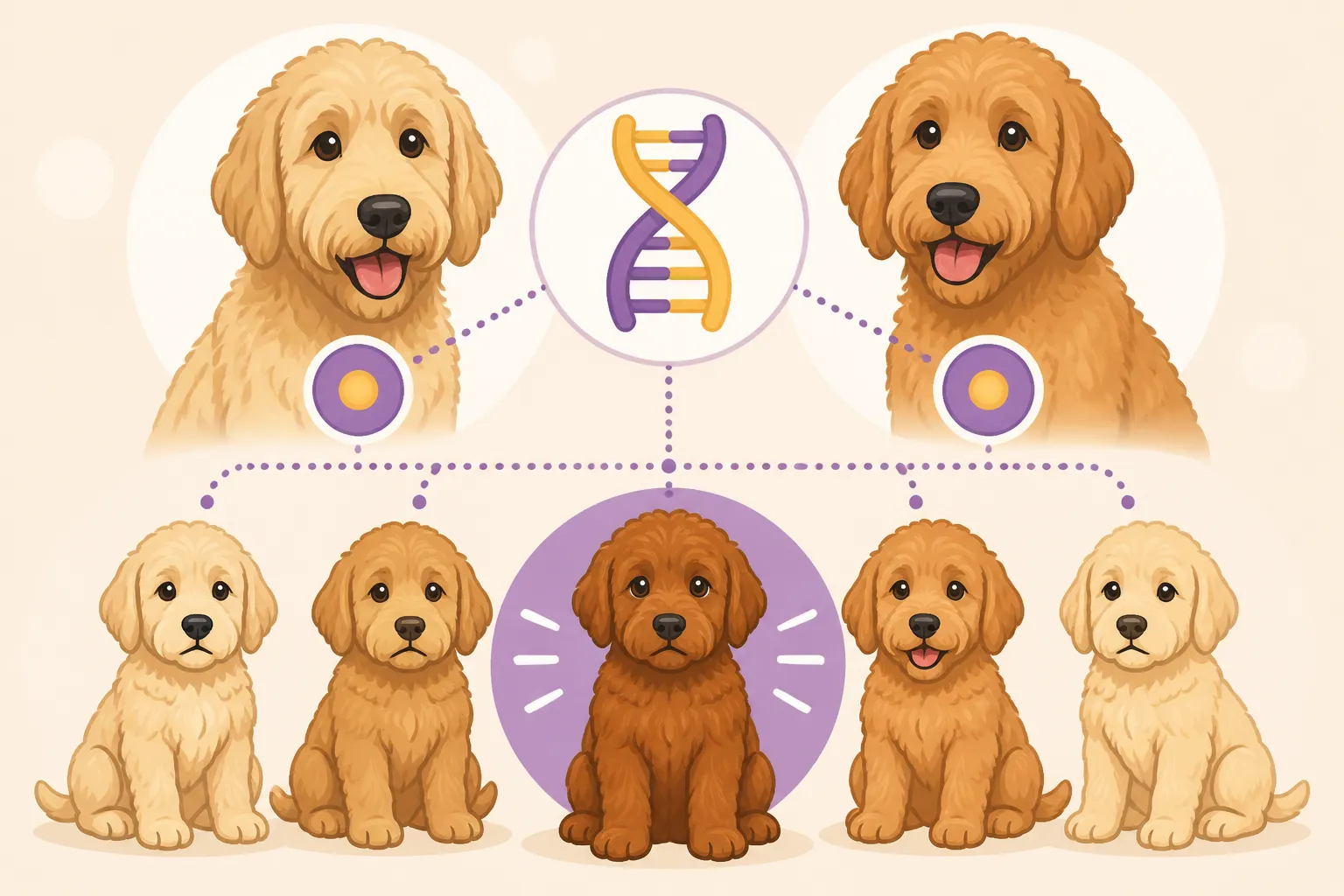
This is the mathematical reality that responsible breeders understand and fear: when two carrier dogs are bred together, each puppy in the litter has a 25% chance of inheriting two copies of the recessive disease gene – one from each carrier parent – and thus being affected by the disease. It also has a 50% chance of being a carrier itself, just like its parents, and a 25% chance of being completely clear, inheriting two healthy genes.
Let's break this down with a simple Punnett square example for a recessive disease:
| Parent 2 (Carrier: Dd) | ||
|---|---|---|
| Parent 1 (Carrier: Dd) | D | d |
| D | DD | Dd |
| d | Dd | dd |
- DD (25%): Inherits two dominant healthy genes. The puppy is "Clear."
- Dd (50%): Inherits one dominant healthy gene and one recessive disease gene. The puppy is a "Carrier" (like its parents).
- dd (25%): Inherits two recessive disease genes. The puppy is "Affected" by the disease.
This 25% chance of an affected puppy is significant. In a litter of eight puppies, on average, two could be born with a debilitating genetic condition. It’s a roll of the dice that ethical breeders refuse to take. This is why the DNA panel a Goldendoodle breeder should run is so crucial, as it screens for these very genes.
Common Goldendoodle Diseases with Recessive Inheritance
Goldendoodles, inheriting genes from both Golden Retrievers and Poodles, are susceptible to several recessive genetic conditions. Knowing these helps you understand what to specifically look for in parent health clearances.
One of the most concerning is Progressive Retinal Atrophy Carried by Both Goldendoodle Lines. This cruel disease causes a gradual degeneration of the retina, leading to blindness, often starting with night blindness as a Goldendoodle's first PRA sign. Both Golden Retrievers and Poodles carry forms of PRA (e.g., prcd-PRA), making it particularly important for Goldendoodle breeders to test for it. Imagine the devastation of watching your vibrant puppy slowly lose its sight.
Another significant concern is Von Willebrand Carried Down Both Goldendoodle Lines (vWD). This is a blood clotting disorder, meaning affected dogs can suffer from excessive bleeding, even from minor cuts or during routine surgeries like spaying/neutering. Both Golden Retrievers (Type I vWD) and Poodles (Type I, II, and III vWD) can carry variations of this gene, necessitating careful testing. Testing a Goldendoodle before elective surgery becomes absolutely critical if there's any doubt about its vWD status.
Addison's Disease a Goldendoodle Gets From the Poodle is also a recessive condition, though its inheritance pattern can be more complex (sometimes involving multiple genes). It’s an endocrine disorder where the adrenal glands don't produce enough hormones. Affected dogs can have vague symptoms like lethargy, vomiting, and diarrhea, often leading to a sudden, life-threatening "Addisonian crisis" where they crash. The lifetime Addison's medication costs for a Goldendoodle can be substantial, making prevention through testing paramount.
While not purely recessive like the single-gene disorders above, conditions like Goldendoodle Hip Dysplasia at 15 to 20 Percent and elbow dysplasia have a strong genetic component, involving multiple genes as well as environmental factors. Even if a breeder tests for recessive genes, they still need to perform OFA or PennHIP evaluations for these polygenic conditions. Both Golden Retrievers and Poodles are prone to hip and elbow dysplasia, so Goldendoodles are certainly not immune.
Identifying Carrier Parents Through Health Testing
The only way to truly understand the genetic health of potential Goldendoodle parents and mitigate the risks of inherited diseases is through comprehensive health testing. Relying on visual assessment or anecdotal evidence is simply not enough. Knowledge is power, and in this case, it's the power to prevent unnecessary suffering.
The Critical Role of DNA Health Panels
DNA health panels are the gold standard for identifying carriers of single-gene recessive conditions. These tests involve taking a simple cheek swab or blood sample from the dog, which is then sent to a specialized laboratory. Companies like Embark, Canine HealthCheck, and Animal Genetics offer panels that screen for dozens, even hundreds, of genetic mutations known to affect Golden Retrievers and Poodles.
A responsible breeder will use these panels to test both the sire (father) and dam (mother) of a Goldendoodle litter. What they're looking for, ideally, are "clear" results for all screened conditions. If a dog comes back as a "carrier" for a specific disease, it doesn't mean they can't be bred, but it absolutely means they must not be bred with another dog who is also a carrier for that same condition. This is a non-negotiable rule for ethical breeding. The information from Which Embark results matter on a Goldendoodle parent and which DNA tests matter for a Goldendoodle litter helps guide these choices. These tests provide peace of mind, or, in the case of a carrier result, critical information for making responsible breeding decisions that protect future puppies.
Understanding OFA and PennHIP for Polygenic Conditions
While DNA panels target single-gene disorders, other conditions like hip and elbow dysplasia are polygenic, meaning they are influenced by multiple genes as well as environmental factors. For these, breeders rely on orthopedic evaluations such as those provided by the Orthopedic Foundation for Animals (OFA) or the PennHIP method.
OFA evaluations involve X-rays of a dog's hips and elbows, taken once the dog is at least 24 months old (to ensure skeletal maturity). A board-certified veterinary radiologist reviews these X-rays and assigns a grade (e.g., Excellent, Good, Fair for hips; Normal for elbows). Reading an OFA hip result on a Goldendoodle parent will tell you if their hips are deemed free of dysplasia. PennHIP, on the other hand, measures hip laxity (looseness) and can be performed on dogs as young as 16 weeks, providing a quantitative score that predicts the likelihood of developing hip dysplasia.
Both OFA and PennHIP clearances on a Goldendoodle sire and dam are crucial because Goldendoodles are at risk for these issues from both parent breeds. A Golden Retriever with excellent hips paired with a Poodle with excellent hips significantly reduces the risk for their Goldendoodle offspring. While these aren't "carrier" tests in the same way as DNA panels, they are a vital part of preventing dogs from passing on predispositions to debilitating orthopedic problems. Ignoring these tests simply because a dog has "hybrid vigor" is a dangerous gamble.
Deciphering Health Test Results for Buyers
As a prospective Goldendoodle owner, you have every right—and indeed, a responsibility—to ask a breeder for proof of their parent dogs' health testing. A reputable breeder will be transparent and eager to share these results. Here's a breakdown of what you might see:
- "Clear": This is the ideal result. It means the dog does not carry the gene mutation for the specific disease tested and cannot pass it on to its offspring.
- "Carrier": As discussed, this means the dog carries one copy of the recessive gene but is not affected by the disease itself. If a breeder has a carrier parent, they absolutely must breed that dog only with a mate that is "Clear" for the same condition. This ensures that no puppy in the litter will be affected by that specific disease, though approximately 50% will still be carriers. Breeding two carriers together is a massive red flag.
- "Affected": This means the dog has two copies of the recessive gene and is, or will be, affected by the disease. An ethical breeder would never breed an affected dog.
For OFA results, you'll look for hip ratings of "Good" or "Excellent" and "Normal" elbow ratings. A breeder should provide documentation from the OFA or PennHIP. Don't accept vague assurances; ask for the actual certificates or look up the dogs' public records on the OFA website. If a breeder shows you Goldendoodle puppies sold with a health guarantee, it should be backed by transparent parent health testing, not just a promise. Remember, thorough health testing is a significant investment for a breeder, which often reflects in Goldendoodle puppy prices from $2,000 to $5,000, but it's an investment in your puppy's future health.
Responsible Breeding Practices and Buyer Due Diligence
Navigating the Goldendoodle breeding landscape can feel overwhelming, especially with varying standards and a lack of official breed recognition. However, understanding what constitutes responsible breeding—and what you should demand as a buyer—is paramount to avoiding the heartache of genetic health issues.
Why Reputable Breeders Test Both Parents Extensively
For truly ethical Goldendoodle breeders, genetic health testing is not an option; it's a fundamental obligation. They understand the immense responsibility of bringing new lives into the world and are committed to producing puppies with the best possible chance at a long, healthy life. This means a multi-faceted approach to testing:
First, they perform comprehensive DNA health panels on both the sire and dam. They are meticulously screening for conditions like Progressive Retinal Atrophy, Von Willebrand Disease, and others that are prevalent in the Golden Retriever and Poodle lines. When a reputable breeder has a "carrier" parent for a specific recessive condition, they will only breed that dog to a partner who is "clear" for that exact same condition. This ensures that no puppy from that pairing will ever be "affected" by the disease, though some may still be carriers themselves. This careful pairing is the cornerstone of preventing genetic diseases from manifesting in puppies.
Second, they obtain OFA or PennHIP clearances for hips and elbows on both parent dogs. This is crucial for mitigating the risk of polygenic conditions like Goldendoodle hip dysplasia and elbow dysplasia. They also ensure eye certifications (like CERF or OFA Eye) are current and that hearts are cleared by a cardiologist. This exhaustive approach to health testing is a hallmark of a breeder who prioritizes the well-being of their dogs over profit. They often invest significant time and money into these tests, which, while raising the initial cost of a puppy, dramatically reduces the chances of expensive vet bills down the line. This is a stark contrast to backyard breeders who skip testing, often citing the "hybrid vigor" claim and where it breaks down when untested dogs are bred.
What to Ask a Goldendoodle Breeder About Health Clearances
When you're speaking to a potential Goldendoodle breeder, don't be shy about asking direct, specific questions about health testing. A good breeder will welcome your inquiries and be ready with documentation. Here’s a checklist of questions to ask:
- "Can I see the DNA health panel results for both the sire and dam, specifically for conditions like PRA and vWD?" Look for "clear" results across the board. If a parent is a "carrier" for anything, ask to see the results of the other parent for that exact same condition to ensure they are "clear."
- "Do you have OFA or PennHIP clearances for hips and elbows for both parents, and what were the ratings?" Ask for "Good" or "Excellent" hips and "Normal" elbows for OFA. For PennHIP, ask for the distraction index scores.
- "Are current OFA Eye (or CERF) and OFA Cardiac certifications available for both parents?" Eye certifications should be updated annually.
- "What is your philosophy on breeding carriers for recessive genes?" Listen for a clear commitment to only breeding carriers to clear mates. Any hesitation or dismissal of carrier status is a major red flag.
- "How many generations back do you track health clearances in your breeding lines?" Reputable breeders often track health information for several generations to understand potential predispositions.
Be prepared to see official documents, not just verbal assurances. A transparent breeder will have everything organized and verifiable. This proactive questioning is your best defense against inadvertently supporting irresponsible breeding practices that lead to inherited health problems.
The Importance of a Health Guarantee (and Its Limitations)
Most reputable Goldendoodle breeders will offer a health guarantee with their puppies. This guarantee typically outlines the breeder's responsibility if the puppy develops certain inherited conditions within a specified timeframe, often one to two years. It usually covers genetic diseases that would have been detected through proper parent health testing.
However, it's crucial to understand that a health guarantee is not a substitute for thorough parent health testing. While it offers some financial protection, it can't erase the emotional pain of having a sick puppy. Moreover, these guarantees often come with limitations:
- Timeframes: They usually only cover conditions that manifest within the first year or two of life. Many genetic conditions, like some forms of cancer risk a Goldendoodle carries from the Golden side, might not show up until later.
- Reimbursement Limits: Guarantees rarely cover the full cost of veterinary treatment. They might offer a partial refund of the purchase price or a replacement puppy, which isn't always what you want when you've bonded with an ailing pet.
- Specific Conditions: The guarantee might only cover a limited list of conditions.
- Veterinary Proof: You’ll almost always need extensive veterinary documentation to prove the condition is inherited and covered by the guarantee.
While a health guarantee is a good sign that a breeder stands behind their puppies, it's far better to prevent issues through proper parent health testing than to rely on a guarantee after the fact. Always read the health guarantee carefully before committing to a puppy. It's also wise to consider Goldendoodle pet insurance for a dog with no breed papers, as this can help cover unexpected health costs that a breeder's guarantee might not. Providers like Healthy Paws are well-versed in covering crossbreeds and can be a lifeline if an unforeseen issue arises, regardless of genetics.
Living with a Goldendoodle from Carrier Parents (If It Happens)
Despite the best efforts of responsible breeders and diligent buyers, sometimes genetic surprises can happen. Or perhaps you've adopted a Goldendoodle whose lineage wasn't fully documented. If your Goldendoodle develops a genetic condition due to carrier parents, it's a challenging road, but one that can be navigated with love, early detection, and proactive care.
Early Detection and Proactive Care for Affected Pups
If you suspect your Goldendoodle might have inherited a genetic condition, or if you know its parents were carriers and you’re monitoring for potential issues, early detection is absolutely key. Many inherited diseases, while not curable, can be managed much more effectively if caught in their initial stages.
For example, with conditions like Progressive Retinal Atrophy (PRA), noticing signs like your dog struggling in dim light or bumping into furniture at dusk (night blindness) should prompt an immediate visit to a veterinary ophthalmologist. The earlier these vision changes are identified, the sooner you can implement strategies to help your dog adapt. Similarly, for conditions like Addison's Disease, which can manifest with vague symptoms, being alert to changes in energy levels, appetite, or occasional vomiting/diarrhea can lead to a diagnosis before a full-blown crisis. Your vet might recommend regular blood work or specific diagnostic tests if there's a known risk.
Maintaining open communication with your veterinarian is crucial. Share any family history of genetic conditions if known, and discuss a proactive screening schedule. This might include more frequent check-ups, specialized blood tests, or specific examinations to monitor for early signs of disease. While it’s certainly not the path you hoped for, being proactive can significantly improve your Goldendoodle’s quality of life.
Managing Inherited Conditions: Treatment and Support
Living with a Goldendoodle affected by an inherited condition often means a lifelong commitment to management and support. The specific treatments will vary greatly depending on the condition:
- Progressive Retinal Atrophy (PRA): There is currently no cure for PRA. Management focuses on helping your Goldendoodle adapt to vision loss. This includes keeping furniture in consistent locations, using scent markers, and maintaining a predictable routine. Emotional support for your dog is vital as they adjust to their changing world. Regular check-ups with a veterinary ophthalmologist are still important to monitor progression and rule out other eye issues like Goldendoodle cataracts and vision loss.
- Von Willebrand Disease (vWD): For affected dogs, management involves careful monitoring for bleeding and taking precautions around potential injuries. Before any surgery, including spaying or neutering, the vet must be aware of the vWD status so they can take preventive measures like administering a plasma transfusion.
- Addison's Disease: This condition requires lifelong medication, typically corticosteroids and hormone replacement therapy (DOCP injections or oral fludrocortisone). While the initial diagnosis can be scary, once regulated, many Addisonian Goldendoodles can live full, active lives. However, strict adherence to medication schedules and regular veterinary monitoring are essential. The cost of lifelong Addison's medication for a Goldendoodle can be significant, highlighting the importance of pet insurance like Healthy Paws, which can help cover these ongoing expenses.
Beyond specific medical treatments, providing a loving, stable, and enriched environment is paramount. This might involve physical therapy for orthopedic issues like Goldendoodle joint health by size category, dietary adjustments, or environmental modifications to ensure their comfort and safety. You are your Goldendoodle's best advocate, and understanding their condition empowers you to provide the best possible care.
The Emotional Toll and Financial Realities
It’s important to acknowledge that caring for a Goldendoodle with a serious inherited health condition takes a significant emotional and financial toll. The initial shock and sadness can be profound, as you grieve the healthy future you envisioned. Seeing your beloved pet suffer, even with the best medical care, is incredibly difficult. It can lead to feelings of guilt, frustration, and exhaustion.
Financially, the costs can quickly add up. Diagnostic tests, specialized veterinary consultations, lifelong medications, prescription diets, and potential surgeries can run into thousands of dollars each year. For instance, Goldendoodle knee surgery costs can be substantial, and managing chronic conditions like Goldendoodle allergies and itchy skin often requires ongoing expenses. This is where comprehensive pet insurance becomes an invaluable safety net. Many Goldendoodle owners wisely choose to enroll their puppies early with providers like Healthy Paws, knowing that even with diligent breeding, unexpected health issues can arise. These policies can reimburse a significant percentage of eligible veterinary bills, alleviating some of the financial stress and allowing you to focus on your dog's care without compromising on treatment options. Remember to carefully review The Goldendoodle conditions insurers exclude when choosing a plan.
It's okay to feel overwhelmed. Seek support from your veterinary team, online communities of owners facing similar challenges, or even friends and family. Caring for a dog with special needs is a testament to your love and commitment, and you don't have to go through it alone.
Disclaimer
This article is for general informational purposes only and does not constitute professional advice. Laws, prices and regulations vary by location and change over time. Consult a qualified professional for guidance on your specific situation.