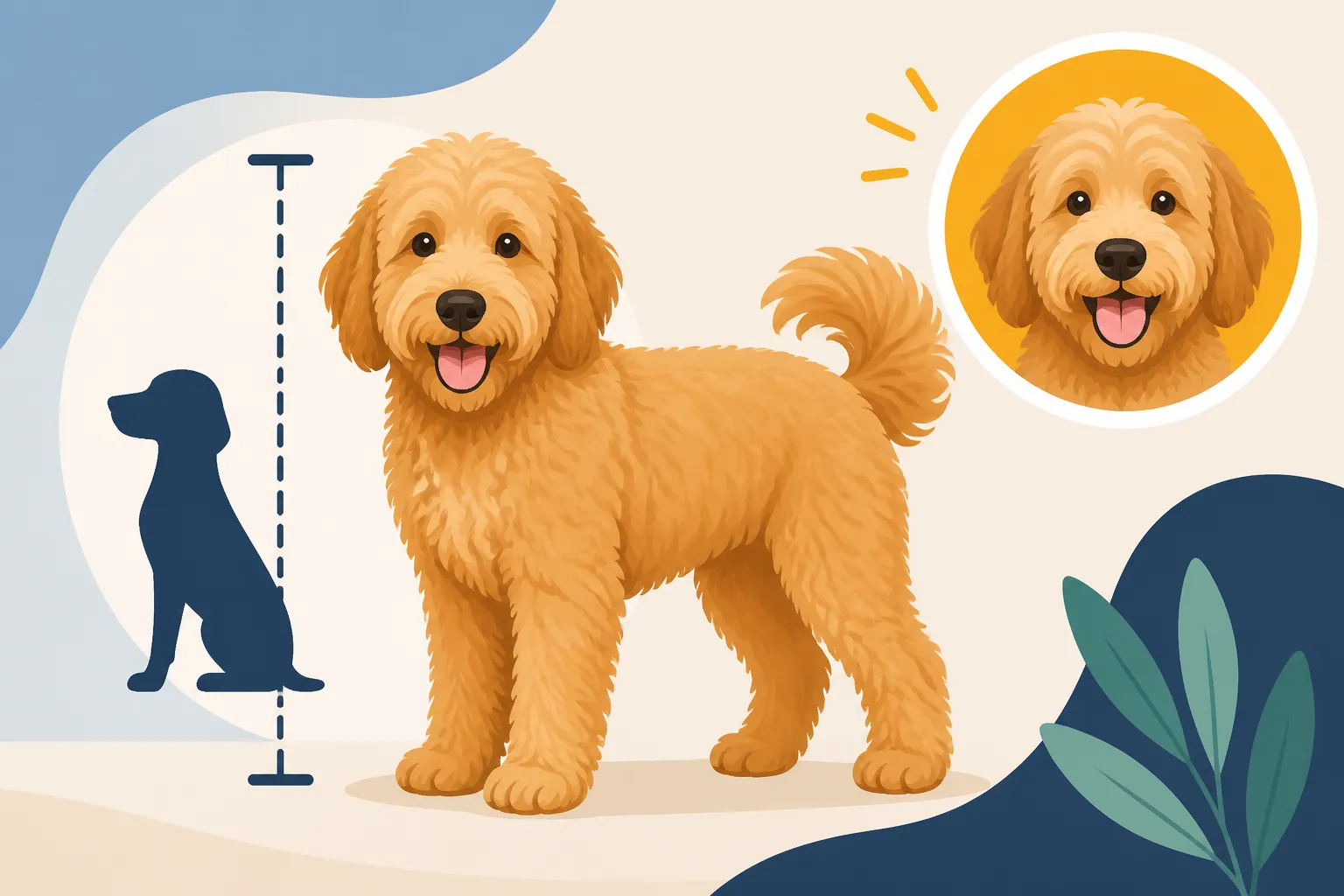
The Medium Goldendoodle Between Seventeen and Twenty-One Inches
It’s a common scenario: you’re dreaming of bringing a Goldendoodle home, but you’re completely overwhelmed by all the different sizes. "Standard," "mini," "toy"—and then there's this "medium" category that feels a bit like Goldilocks' third bowl of porridge: just right, but what does it really mean? This guide will demystify the medium Goldendoodle, explaining exactly what to expect from a dog in the seventeen to twenty-one-inch height range.
Defining the Medium Goldendoodle Size
When you hear "medium Goldendoodle," it's not always as clear-cut as you might hope. Unlike established purebreds with strict breed standards, Goldendoodles, being a crossbreed, have size categories that can sometimes feel a little fluid from breeder to breeder. However, the general consensus for a medium-sized Goldendoodle is based on their height at the shoulder, which is a crucial measurement to understand if you're trying to figure out if this is the right fit for your home and lifestyle.
The Range of Seventeen to Twenty-One Inches
The defining characteristic of a medium Goldendoodle is its height, typically falling between 17 and 21 inches at the withers (the highest point of the shoulder blades). This measurement is taken when the dog is standing squarely on all four paws. This isn't just a random number; it places them squarely between the smaller mini Goldendoodles and the much larger standard ones. Imagine your kitchen counter – a medium Goldendoodle might just be able to peek over it with a bit of a stretch, or at least get their nose quite close to whatever deliciousness you're preparing. Their weight usually accompanies this height, often ranging from around 30 to 45 pounds, though this can vary quite a bit based on build and parentage.
It's important to realize that even within this specific height range, there can be noticeable differences. A Goldendoodle at the lower end of 17 inches will feel distinctly smaller and lighter than one pushing 21 inches. This difference can impact everything from how easily they fit into a travel crate to how much space they take up on your sofa. Think about the physical presence of the dog in your home – a 17-inch, 30-pound Goldendoodle might feel like a large lap dog, while a 21-inch, 45-pound Goldendoodle is definitely a solid, robust companion that demands a bit more room. Don't underestimate how much four inches in height can change the daily reality of living with a dog.
How "Medium" Differs from Standard and Mini
Understanding the "medium" category becomes clearer when you compare it to its Goldendoodle siblings: the "mini" and the "standard." Mini Goldendoodles typically stand under 17 inches, often in the 13 to 16-inch range, and weigh considerably less, usually 15 to 30 pounds. They are the go-to for apartment dwellers or those who prefer a smaller, more easily transportable companion. Mini Goldendoodle Height and Weight delves into these specifics. On the other end of the spectrum, standard Goldendoodles are giants in comparison, usually 21 inches and taller, often topping 50 pounds and easily reaching 70 or even 90 pounds. These are substantial dogs that require more space, more food (you'll be buying those big bags of kibble from Chewy often!), and a family prepared for a large canine presence.
The medium Goldendoodle truly offers a middle ground. They're big enough to feel like a proper, sturdy dog, capable of keeping up on longer walks or hikes, yet often small enough to be less intimidating to children or elderly family members than a full standard. They might fit into a slightly smaller car or be easier to handle on a leash for someone without a lot of upper body strength. This intermediate size means they avoid some of the specific challenges associated with the very smallest dogs (like delicate bones or needing a special eye kept on them in crowds) and the very largest (like the increased risk of bloat or shorter lifespans often seen in giant breeds). It's a sweet spot for many families seeking that quintessential Goldendoodle charm without committing to a massive dog.
Parent Breed Influence on Medium Goldendoodle Size
The Goldendoodle, as a crossbreed, inherits its traits directly from its Golden Retriever and Poodle parents. When it comes to size, this is particularly evident. Understanding the genetic contributions from each side can help you better predict not just the adult size, but also the overall build and proportions of your future medium Goldendoodle. It’s not just about the numbers on a scale; it’s about the underlying blueprint.
The Poodle Parent's Role in Size Inheritance
The Poodle parent plays a significant role in determining the Goldendoodle's final size, especially for the medium category. There are three main sizes of Poodles: Toy (under 10 inches), Miniature (10-15 inches), and Standard (over 15 inches). To produce a medium Goldendoodle, breeders often use a Miniature Poodle or a smaller Standard Poodle as one of the parents. A Miniature Poodle, typically weighing 10-15 pounds, when crossed with a Golden Retriever (often a smaller female Golden), can result in offspring that fall into the medium Goldendoodle range. How the Poodle Parent Sets Goldendoodle Size explains this in more detail.
However, it's not always a straightforward average. Genetics are tricky. A Miniature Poodle, for example, might carry genes for slightly larger size than its current stature suggests, especially if there were Standards further back in its lineage. The careful selection of the Poodle parent by a reputable breeder is paramount here. They'll be looking at the Poodle's height, weight, and the size of its parents to best predict the likely outcome for the Goldendoodle puppies. This careful consideration means that while your medium Goldendoodle will likely take on the Poodle's characteristic lean build and active intelligence, its final height is a direct inheritance that needs a good Poodle foundation.
Golden Retriever Contribution to Overall Build
While the Poodle often dictates the potential for smaller stature in a Goldendoodle, the Golden Retriever parent contributes immensely to the overall bone structure, substance, and sometimes the broader, more robust appearance. Golden Retrievers are typically solid dogs, ranging from 21.5 to 24 inches tall and weighing 55 to 75 pounds. Even if a breeder uses a smaller female Golden Retriever to aim for a medium Goldendoodle, that Golden Retriever genetic code still brings a certain amount of "heft" to the cross. This means a medium Goldendoodle, even at 18 inches, might have a more substantial chest or heavier bone structure than a comparably sized purebred Miniature Poodle.
This Golden Retriever influence can be a wonderful thing, giving the medium Goldendoodle a balanced, athletic build that is neither too dainty nor overly bulky. They tend to have that classic "Golden" friendly face, a sturdy frame for play, and the biddable temperament that makes them such beloved family dogs. The blend of the Poodle's leaner elegance with the Golden's substance often results in a dog that feels just right in terms of physical presence. It's truly a testament to What a Goldendoodle Inherits From Each Parent Breed. When you're feeding them, you'll still want to ensure they get a good quality food, perhaps a reputable brand from Chewy, to support that healthy growth and frame, particularly as they mature.
Growth and Development of a Medium Goldendoodle
Watching a Goldendoodle puppy grow is an absolute joy, but it also comes with a lot of "are they going to get bigger?" questions. For a medium Goldendoodle, understanding their growth trajectory is important for everything from choosing the right-sized crate to knowing when to switch from puppy food to adult formula. They don't just magically appear at their adult size; it's a journey with distinct stages.
Puppy Growth Spurts and Milestones
Like all puppies, medium Goldendoodles experience rapid growth spurts in their first few months. You'll literally feel like they're growing before your eyes! During the first six months, they can pack on pounds and inches at an incredible rate. Their bones are elongating, muscles are developing, and they're often gangly and awkward as their bodies try to keep up with their growth plates. It's during this time that providing a high-quality, age-appropriate puppy food is critical to support their development. You might find yourself checking their height against doorframes or measuring their progress with a tape measure to track their growth. Goldendoodle Puppy Growth Chart by Size can be a useful resource during this period, offering a general roadmap of what to expect.
Typically, by around six to eight months of age, a medium Goldendoodle will have achieved a significant portion of their adult height, often 75-80%. While they'll continue to fill out and gain muscle mass over the next few months, the most dramatic upward growth usually slows down. During these rapid growth phases, it’s important to be mindful of exercise intensity to protect their developing joints. Too much strenuous activity like intense jumping or long-distance running on hard surfaces can be detrimental. Think about gentle play, short walks, and plenty of rest instead.
When a Medium Goldendoodle Reaches Full Size
Most medium Goldendoodles will reach their full adult height between 9 and 12 months of age. While they might not grow any taller after this point, they will continue to mature and "fill out" for another 6 to 12 months, gaining muscle and reaching their adult weight. This means a Goldendoodle who is 18 inches tall at 10 months might still gain an extra 5-10 pounds over the next year, giving them a more robust and mature appearance. It's a process of solidifying their structure rather than growing upward.
This continued "filling out" phase is often where you'll notice their puppy fluff giving way to their adult coat, which can also make them appear more substantial. It's also a good time to start transitioning them to an adult dog food, as their caloric and nutritional needs shift from rapid growth to maintenance. Always consult your veterinarian for the best advice on diet and when to make these transitions. During this period, consistent exercise, good nutrition, and continued socialization are key to developing a well-adjusted adult dog.
Living with a Medium Goldendoodle
Bringing any dog into your life is a big decision, and a medium Goldendoodle is no exception. While their size is often considered "just right," it still comes with specific considerations regarding space, exercise, and the ever-present Goldendoodle grooming needs. These dogs are active, intelligent, and social, meaning they thrive in environments where their needs are met thoughtfully.
Space Requirements and Activity Levels
A medium Goldendoodle, while not a giant breed, is still a substantial dog that needs adequate space to stretch out, play, and feel comfortable. They might fit better into an apartment than a standard Goldendoodle, but they're not really "small" apartment dogs in the same way a Toy Poodle might be. They appreciate having room to zoom around indoors, especially during those bursts of energy known as "zoomies." Ideally, a home with a fenced yard is fantastic for them, allowing them to burn off steam with some off-leash play. If a yard isn't an option, then a commitment to regular, robust walks and trips to a secure dog park is absolutely essential. Goldendoodle Exercise for Body and Mind highlights the importance of keeping these dogs active.
Beyond physical space, consider their activity levels. Goldendoodles, regardless of size, are intelligent and active dogs. They need more than just a quick stroll around the block. A medium Goldendoodle typically requires at least 30-60 minutes of dedicated exercise daily, ideally broken into a couple of sessions. This could be a brisk walk, a game of fetch in the park, or even some mental enrichment games. Without adequate physical and mental stimulation, these clever dogs can become bored, and a bored Goldendoodle can quickly become a destructive Goldendoodle. Think of it as investing in their happiness and your furniture's longevity!
Grooming Considerations for Their Size
Grooming is a non-negotiable aspect of Goldendoodle ownership, and the medium size is no exception. Their wonderful, low-shedding (but not non-shedding!) coats come in various textures—wavy, curly, or even straight—all of which are prone to matting without diligent care. A medium Goldendoodle's coat, spanning a moderate surface area, still requires significant attention. You'll need a good quality slicker brush and a metal comb (many good options available from Chewy) to line brush them several times a week, down to the skin, to prevent painful mats from forming. Brushing a Goldendoodle Often Enough to Stop Matting is a must-read for any Goldendoodle owner.
Professional grooming appointments are also a regular and essential part of their care. For a medium Goldendoodle, expect to book a full groom every 6-8 weeks. At these appointments, the groomer will bathe, dry, trim, and style their coat, paying special attention to areas prone to matting like behind the ears, armpits, and under the collar. Neglecting these professional trims will lead to severe matting, which can only be resolved by shaving the dog down, often uncomfortably close to the skin. It's an ongoing commitment, but one that ensures your medium Goldendoodle stays comfortable, healthy, and looking their best.
Health Considerations Unique to Medium Goldendoodles
While Goldendoodles are generally considered robust, being a crossbreed doesn't make them immune to health issues. The "hybrid vigor" claim often falls short, especially after the F1 generation, and many common health problems are carried down from their parent breeds. For a medium Goldendoodle, there are specific health considerations related to their size and genetic background that every owner should be aware of.
Joint Health and Weight Management
Medium Goldendoodles, like their larger relatives, can be prone to orthopedic issues such as hip and elbow dysplasia. These conditions are hereditary and affect the proper development of the joints, leading to arthritis and pain later in life. While they might have a slightly lower risk than very large standard Goldendoodles or purebred Golden Retrievers, they are by no means immune. Responsible breeders will conduct OFA Clearances on a Goldendoodle Sire and Dam to minimize the risk, but vigilance from owners is still key. Maintaining a healthy weight is paramount for joint health in any dog, but especially for those predisposed to dysplasia. Every extra pound puts additional strain on their joints.
Regular exercise tailored to their age and physical condition is important, but so is careful monitoring of their diet. It can be surprisingly difficult to assess a Goldendoodle's body condition under all that glorious coat! You need to regularly feel for their ribs – you should be able to feel them easily with light pressure, but not see them. If you can't feel them without pressing hard, your dog is likely overweight. Goldendoodle Weight and the Load on Its Joints underscores the importance of this. Work with your vet to establish a proper feeding plan and consider a slow feeder bowl from Chewy if your Goldendoodle eats too quickly, which can sometimes contribute to digestive issues.
Common Health Concerns by Size Category
Beyond joint issues, medium Goldendoodles can inherit a range of health concerns from their Poodle and Golden Retriever ancestry. Poodles are known for conditions like Addison's Disease, Progressive Retinal Atrophy (PRA), and bloat (more common in Standards, but still a risk for larger mediums). Golden Retrievers, on the other hand, contribute a predisposition to certain cancers, thyroid issues, and some heart conditions. What a Goldendoodle Inherits From Each Parent Breed highlights this blend of potential genetic predispositions.
It's crucial for prospective owners to ask breeders about the health testing performed on both parent dogs. A good breeder will be transparent about genetic screenings for conditions like PRA, Von Willebrand disease, and clearances for hips, elbows, and eyes. Even with health-tested parents, it’s wise to be proactive about your medium Goldendoodle's health. Regular veterinary check-ups, a balanced diet, consistent exercise, and attentive observation for any changes in behavior or physical condition are your best defenses. Catching potential issues early can make a significant difference in management and outcome, ensuring your "just right" Goldendoodle lives a long, happy, and healthy life.
| Goldendoodle Size Category | Typical Height (at shoulder) | Typical Weight | General Considerations |
|---|---|---|---|
| Toy | Under 15 inches | 10-25 lbs | Best for small spaces, easier to travel with, may have more delicate bones. Potential for dental crowding. |
| Mini | 15-17 inches | 25-35 lbs | Good apartment dog, still energetic. A nice mid-size option for many families. |
| Medium | 17-21 inches | 30-45 lbs | The sweet spot for many families. Sturdy but not massive, needs moderate exercise, fits well in average homes. Balance of Poodle elegance and Golden Retriever substance. Requires diligent grooming. |
| Standard | Over 21 inches | 45-90+ lbs | Requires significant space and exercise. More prone to certain large-breed health issues like bloat. A big, powerful dog that needs experienced handling. |
Disclaimer
This article is for general informational purposes only and does not constitute professional advice. Laws, prices and regulations vary by location and change over time. Consult a qualified professional for guidance on your specific situation.