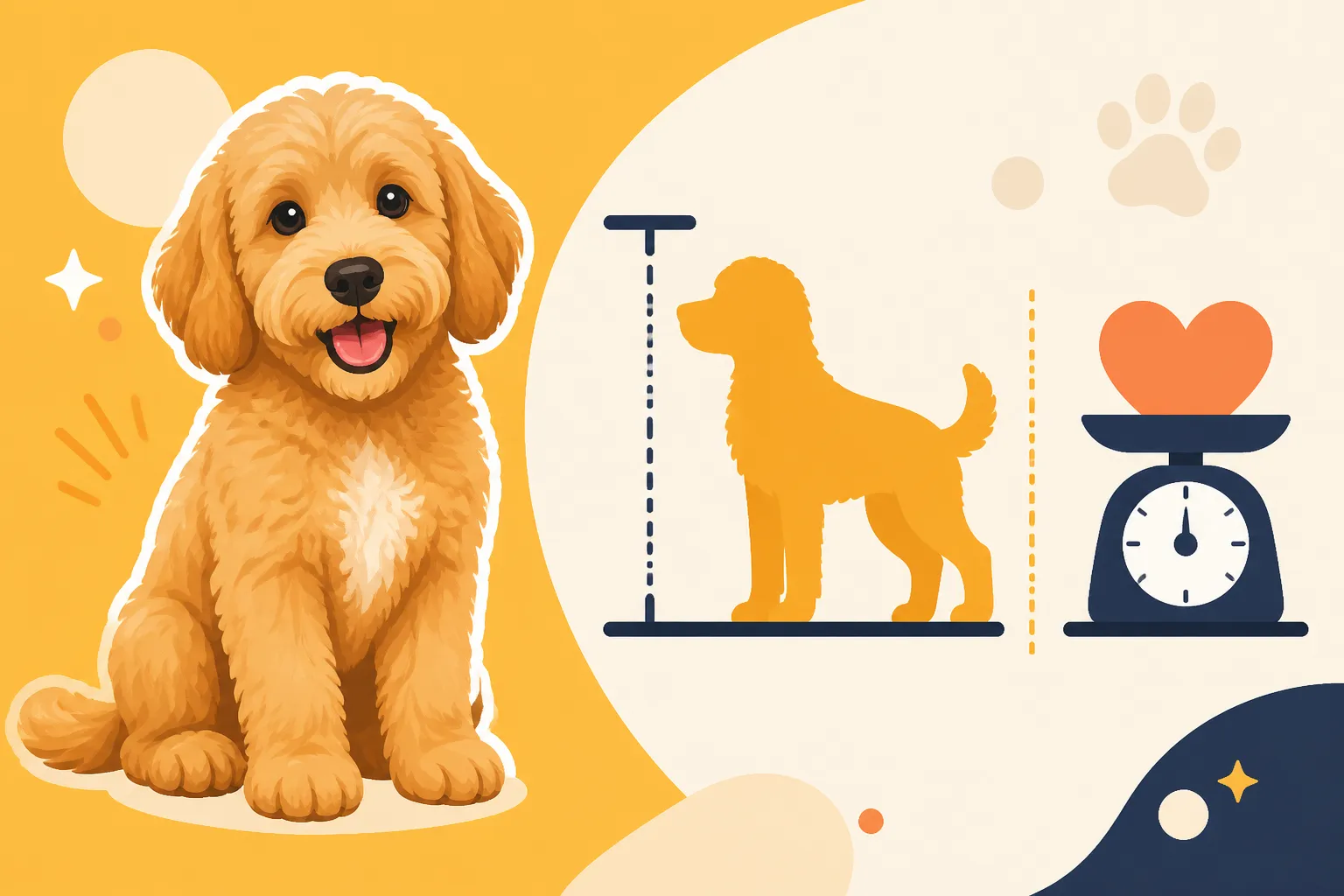
Toy Goldendoodle Height and Weight
Bringing home a Goldendoodle puppy is one of life's true joys, but if you’re setting your heart on a Toy Goldendoodle, you might find yourself swimming in a sea of conflicting information about just how tiny they’ll stay. Many prospective owners get frustrated by breeders throwing around terms like "teacup" or "micro" without clear, consistent size expectations. This guide is here to cut through the confusion, helping you understand the real height and weight ranges for Toy Goldendoodles, what actually influences their ultimate size, and how you can make an educated guess about your own furry friend's adult stature.
Demystifying the "Toy" Label for Goldendoodles
When you hear "Toy Goldendoodle," it conjures up images of a tiny, portable companion, right? And for the most part, that image is correct! However, the lack of official breed standards for Goldendoodles means that the term "Toy" isn't strictly defined across the board, leading to a lot of variation and sometimes, disappointment. Understanding what this label usually implies in the Goldendoodle world is the first step in setting realistic expectations.
What Defines a Toy Goldendoodle
Unlike purebred dogs with established breed clubs that dictate exact height and weight ranges, the "Toy" designation for a Goldendoodle is generally a breeder-defined category. It's meant to describe the smallest end of the Goldendoodle size spectrum, significantly smaller than their Mini, Medium, or Standard cousins. Typically, a Toy Goldendoodle is bred from a miniature or even toy-sized Poodle parent, ensuring a dramatically reduced stature compared to the Golden Retriever side of their ancestry. The goal is a truly small dog that can be easily carried and fits comfortably in smaller living spaces, offering all the charm of a Goldendoodle in a petite package.
You’ll often find these little guys weighing in at a fraction of a Standard Goldendoodle's bulk, making them ideal for folks who adore the Goldendoodle personality but need a more compact canine. This size differentiation is what helps them stand out from the other size categories that Goldendoodles come in, giving owners a better idea of what to expect when they ask, The Four Goldendoodle Sizes and How They Are Set.
Typical Height Range for Toy Goldendoodles
When we talk about height in dogs, we're measuring from the ground to the top of their shoulder (called the withers), not to the top of their head. For a true Toy Goldendoodle, you're generally looking at an adult height that's under 15 inches. Many will fall closer to the 10 to 12-inch mark, making them quite small indeed. Imagine a dog that barely comes up to your knee when you're sitting down – that's the kind of scale we're talking about.
This petite stature is often a huge draw for people living in apartments or those who travel frequently and want a dog that's easy to manage in various environments. It’s important to remember that even within this "Toy" category, there can be a couple of inches difference. One Toy Goldendoodle might be a dainty 10 inches, while another could stretch a bit taller to 14 inches. These variations are a natural part of crossbreeding, where genetics can always throw a curveball, even if subtle.
Typical Weight Range for Toy Goldendoodles
Weight is often the first thing people ask about, and for Toy Goldendoodles, their adult weight generally settles in the range of 8 to 20 pounds. This is a pretty significant spread, I know! An 8-pound dog feels very different from a 20-pound dog, so it’s crucial to delve deeper into the factors that influence where your puppy will land on this scale. The key is that they remain consistently under the typical Mini Goldendoodle weight, which usually starts around 20-25 pounds.
This lightweight nature is what truly gives them the "toy" designation. They're lap dogs, easy to scoop up, and can often fit into airline-approved carriers for travel. Keep in mind that a dog's build can also affect their perceived weight. A lean, lanky 15-pound Goldendoodle might look different from a stockier 15-pound Goldendoodle, even if their numbers are the same. It's also vital to ensure that your little Goldendoodle maintains a healthy weight throughout their life, as even a few extra pounds can be a big burden on their small frames. Daily Calories for a Toy Goldendoodle Small Meals provides further insight into managing their diet.
What Influences a Toy Goldendoodle's Final Size
Understanding the "typical" ranges is a great starting point, but why do some Toy Goldendoodles lean towards the smaller end of that 8-20 pound scale, while others push the upper limit? The answer lies deep in their genetics and the specific breeding choices made by their parents. It's a fascinating blend of Poodle precision and Golden Retriever charm that ultimately determines their stature.
The Poodle Parent's Role
The size of the Poodle parent is, without a doubt, the single most significant factor in determining a Toy Goldendoodle's final size. To produce a true Toy Goldendoodle, breeders must use a Toy Poodle or a very small Miniature Poodle. If a breeder uses a larger Miniature Poodle, the offspring are more likely to fall into the "Mini" Goldendoodle category, not "Toy." This is where asking detailed questions about the parent dogs comes into play.
A reputable breeder will be able to show you the Poodle parent, not just a photo, and provide documentation of its size and lineage. The smaller the Poodle parent, the higher the likelihood of consistently tiny offspring. This careful selection of the Poodle parent is foundational for achieving that desired petite Goldendoodle. Without a genuinely small Poodle on one side of the equation, the "Toy" designation is more of a wish than a guarantee.
The Golden Retriever Influence
While a Toy Goldendoodle is primarily a Poodle cross at heart (especially in later generations), the Golden Retriever ancestry still plays a subtle, often surprising, role. Even if the Golden Retriever parent is many generations back, or only a small percentage of the dog's genetic makeup, there's always a chance for ancestral genes to express themselves. This is part of the unpredictability of hybrid breeds, sometimes making it challenging for Goldendoodle owners to accurately predict a puppy's adult size.
In F1 (first generation, 50% Golden Retriever, 50% Poodle) Toy Goldendoodles, the Golden Retriever's genetic contribution is more direct. If a small Golden Retriever (which are rare, to be fair) is crossed with a Toy Poodle, the F1 puppies could still carry a stronger predisposition to a slightly larger size than if an F1b (75% Poodle, 25% Golden Retriever) was bred from a Mini Goldendoodle and a Toy Poodle. This is why many breeders aiming for consistency in size and coat will move towards F1b or even Multigen Goldendoodles, as discussed in What the Letter F Means in a Goldendoodle Pedigree and How an F1b Goldendoodle Is Bred Back. The further removed from the purebred Golden Retriever, the more predictable the smaller size tends to be.
Generational Impact on Size
The Goldendoodle generation (F1, F1b, F2, Multigen) also significantly impacts the predictability of size, especially when aiming for the "Toy" category.
- F1 Goldendoodles: These are a direct cross between a purebred Golden Retriever and a purebred Poodle. For a Toy F1, a very small Golden Retriever would need to be bred with a Toy Poodle, which is extremely rare. More often, F1s are larger (Standard or Mini). Due to the 50/50 genetic split, there can be more variation in size within a single litter, making it harder to guarantee a tiny outcome unless both parents are exceptionally small.
- F1b Goldendoodles: This generation is the result of breeding an F1 Goldendoodle back to a purebred Poodle. This results in approximately 75% Poodle and 25% Golden Retriever genetics. For Toy F1bs, an F1 Mini Goldendoodle (even if it's on the smaller side) is often bred with a Toy Poodle. This higher percentage of Poodle genetics usually leads to more consistent smaller sizes and is a popular choice for those seeking a genuinely tiny Goldendoodle.
- Multigen Goldendoodles: These are Goldendoodles bred to other Goldendoodles for several generations. When breeders are intentionally working towards a Toy size over multiple generations, they can often achieve more consistent results. They select the smallest dogs within their lines to continue breeding, refining the size and other desirable traits like coat type. This is Why Goldendoodle Size Charts Disagree because there's no fixed standard, and each generation adds another layer of complexity.
Predicting Your Toy Goldendoodle Puppy's Adult Size
It’s completely normal to want to know, as precisely as possible, how big your adorable fluffball will get. While no one has a crystal ball, there are several indicators and methods that can help you make a more educated guess about your Toy Goldendoodle puppy's adult height and weight. It still won't be an exact science, but it will get you much closer to an accurate projection.
Early Growth and Puppy Charts
One common method for estimating adult size involves tracking a puppy's early growth. While not foolproof for crossbreeds like Goldendoodles (especially with their wide genetic variation), some general rules of thumb exist. Many suggest that a puppy's weight at four months old can be roughly doubled to get an estimate of their adult weight. Another popular trick is to note their weight at eight weeks and multiply it by three or four, though this often works better for purebreds.
However, these are very rough estimates. Goldendoodles, particularly in the Toy and Mini sizes, can have varying growth spurts. Some might grow quickly and then plateau, while others might have a slower, more consistent growth pattern. It's often most useful to compare your puppy's growth trajectory to A Goldendoodle Puppy Growth Chart by Size that has been specifically developed for Goldendoodles, keeping in mind that even these charts provide a broad range.
Observing Parent Sizes and Lineage
The most reliable indicator of your Toy Goldendoodle puppy's adult size will always be the size of its parents. If both the dam and the sire are true Toy Goldendoodles themselves (or a Toy Poodle and a small Mini Goldendoodle), your puppy has an excellent chance of reaching a similar petite stature. This is why a reputable breeder will be transparent about the parents’ exact heights and weights, and ideally, show you photos or allow you to meet them.
Beyond the immediate parents, looking at the grandparents and previous litters from those same parents can offer further clues. If a breeder consistently produces puppies in the 8-12 pound range, it's a good sign. If previous litters have sometimes thrown puppies up to 25 pounds, then your puppy might have that potential too. Don't be shy about asking your breeder for this lineage information; it's vital for setting accurate expectations. This also feeds into Predicting a Goldendoodle Puppy's Adult Size with more accuracy.
Breeder Insights and Guarantees
A knowledgeable and ethical Goldendoodle breeder will be your best resource for estimating your puppy's adult size. They have years of experience with their lines and understand the genetic patterns at play. They can often give you a pretty accurate estimation based on the puppy's parents, its current growth, and their history with similar pairings.
However, be wary of breeders who offer "guarantees" of exact adult size. Nature is unpredictable, and even the most seasoned breeder can have a puppy that grows a little bigger or smaller than expected. Instead, look for a breeder who provides a range and explains the potential for variation. They might also share insights from their The DNA Panel a Goldendoodle Breeder Should Run, which can sometimes offer clues about genetic markers related to size, though this is still an evolving science for crossbreeds. What they should guarantee is their commitment to health and transparency, not an arbitrary weight.
Navigating Size Surprises and Variations
Even with all the careful research and breeder communication, you might still encounter a size surprise. It's not uncommon for Goldendoodles, especially Toy sizes, to grow a little differently than initially predicted. Understanding why this happens and how to manage your expectations can save you from disappointment and help you love your Goldendoodle, no matter their final dimensions.
"Teacup" or "Micro" Goldendoodles
You might have seen terms like "teacup" or "micro" Goldendoodle advertised, often with a premium price tag. While these labels sound incredibly appealing for those desiring the smallest possible companion, they are largely marketing terms rather than recognized size categories. There's no breed standard to define a "teacup" dog, and often, these puppies are simply the runts of the litter or are bred from excessively small parents, which can sometimes come with health risks.
Breeding for extremely small sizes can sometimes lead to issues such as fragile bones, hypoglycemia, or other genetic predispositions that are exacerbated by their diminutive stature. While a genuinely small and healthy Toy Goldendoodle is a delight, it's crucial to approach "teacup" claims with caution and prioritize health over an arbitrary size. If a breeder uses these terms, dig deeper into their practices and the health history of their breeding stock.
Growth Plate Closure and Late Development
One common reason for size surprises is the timing of growth plate closure. Dogs don't just magically stop growing on a specific day; their bones develop, and the "growth plates" at the ends of the long bones gradually fuse. This process can vary by individual and breed, and it’s not always a perfectly linear trajectory. Smaller breeds and smaller Goldendoodles tend to finish growing earlier than larger ones, but there can still be variations. Goldendoodle Growth Plates by Size Category delves deeper into this topic.
Some Toy Goldendoodles might experience a final growth spurt a little later than expected, reaching their full adult height and weight around 9-12 months, or even slightly beyond. Others might grow quickly in the first few months and then slow down significantly. So, if your four-month-old Toy Goldendoodle puppy seems a little larger than you anticipated, don't panic. Give them time; their growth pattern might simply be unique.
The Importance of a Healthy Weight
Regardless of whether your Toy Goldendoodle ends up being 8 pounds or 20 pounds, the most important thing is that they maintain a healthy body weight for their individual frame. It's incredibly easy for small dogs to become overweight, and even an extra pound or two can put significant strain on their joints, heart, and other organs. This is especially true if your Goldendoodle puppy is prone to issues like Retained Puppy Teeth in a Mini Goldendoodle, which can make chewing difficult and lead to poor nutrition absorption if not addressed.
Regular vet check-ups are essential to monitor their weight and overall health. Your vet can help you assess their body condition score, which is a better indicator of health than a number on the scale alone. When choosing food, look for high-quality small-breed formulas, and be mindful of portion sizes. Even small treats can add up quickly for a tiny dog. Many excellent small-breed foods are available at retailers like Chewy, making it easy to find appropriate nutrition for your petite pup.
| Goldendoodle Size Category | Typical Adult Height (at withers) | Typical Adult Weight Range |
|---|---|---|
| Toy Goldendoodle | 10 – 15 inches | 8 – 20 pounds |
| Mini Goldendoodle | 13 – 18 inches | 20 – 35 pounds |
| Medium Goldendoodle | 17 – 21 inches | 36 – 50 pounds |
| Standard Goldendoodle | 20 – 24+ inches | 50 – 90+ pounds |
Ultimately, while understanding the typical height and weight of a Toy Goldendoodle is helpful for planning, the true joy of these dogs comes from their vibrant personalities and loving companionship. Whether your little friend is at the smaller or larger end of the Toy spectrum, they'll undoubtedly bring immense happiness to your home. Just focus on providing them with excellent care, proper nutrition (maybe even some fun small-dog toys from Chewy!), and plenty of love.
Disclaimer
This article is for general informational purposes only and does not constitute professional advice. Laws, prices and regulations vary by location and change over time. Consult a qualified professional for guidance on your specific situation.