How an F1b Goldendoodle Is Bred Back
One of the most common questions I get from folks diving into the wonderful world of Goldendoodles is about those confusing 'F' numbers, especially what an F1b Goldendoodle actually means. It’s easy to feel lost in the alphabet soup of generations, wondering what difference a little 'b' can make. This guide is here to demystify the "bred back" process of the F1b Goldendoodle, explaining exactly how this particular generation comes to be and what you can generally expect if you welcome one into your home.
Understanding Goldendoodle Generations: A Quick Refresher
Before we jump into the specifics of the F1b, it helps to lay the groundwork with the very first Goldendoodle generation. Think of these letters and numbers as a family tree that tells you about a dog's immediate parents and, by extension, a bit about what traits they might carry. It's not a perfect science, mind you, but it gives us a roadmap.
What an F1 Goldendoodle Represents: Golden Retriever + Poodle
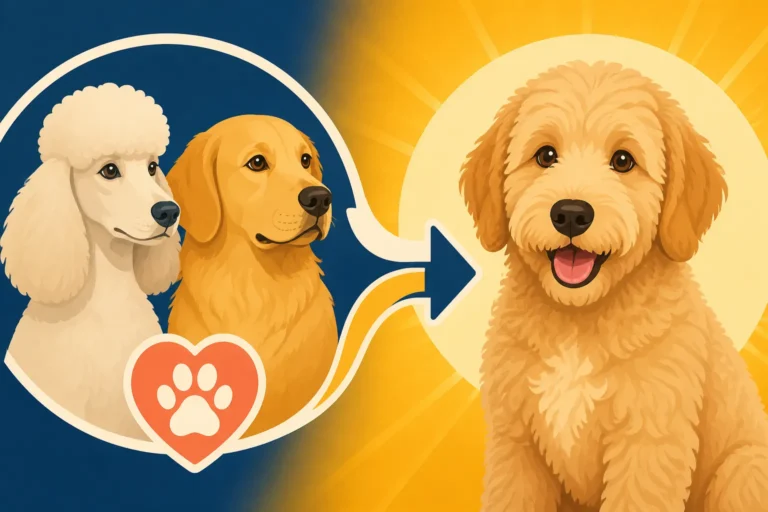
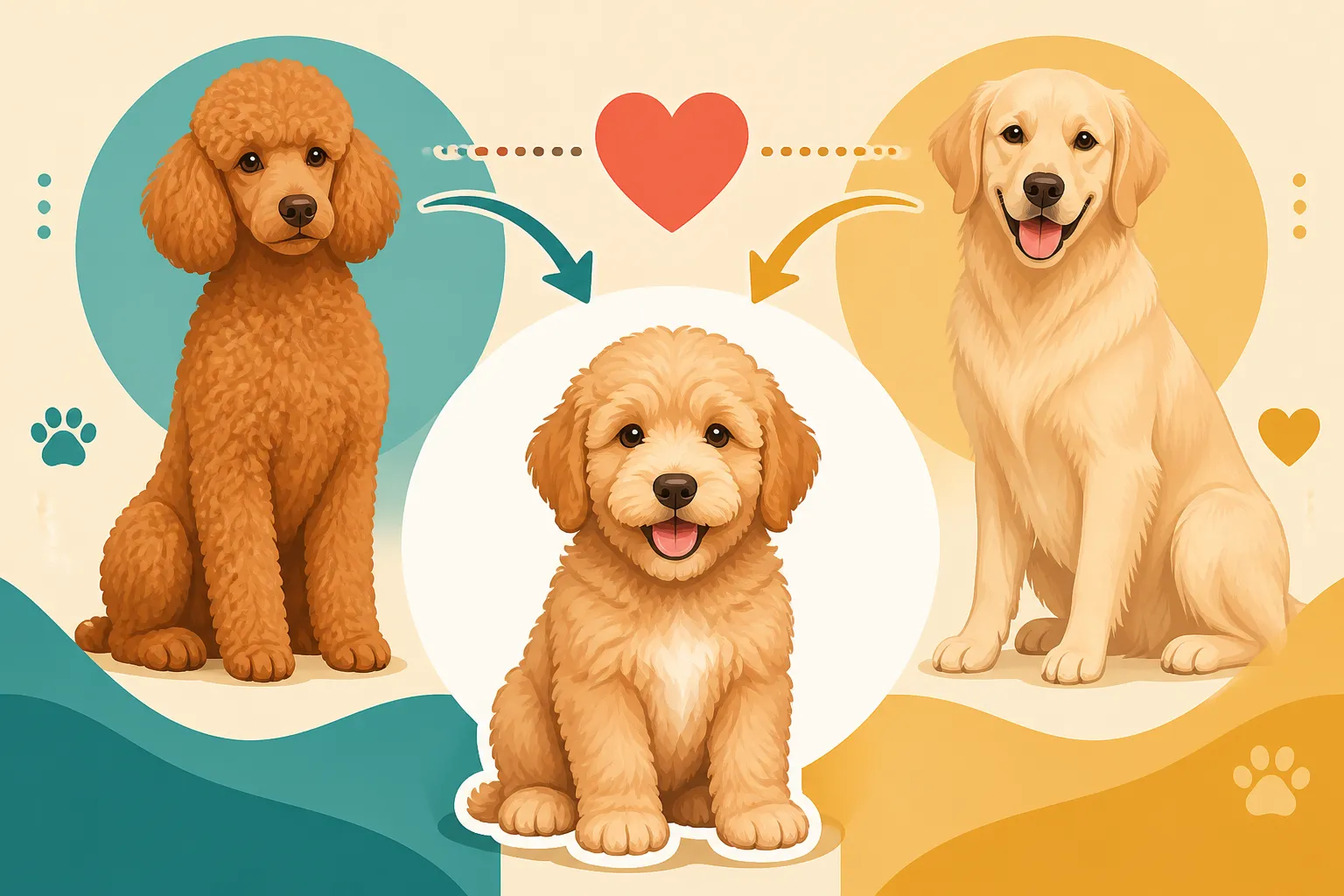
At its heart, the Goldendoodle is a crossbreed, a magnificent blend of two beloved purebreds: the Golden Retriever and the Poodle. When you hear "F1 Goldendoodle," you're looking at the very first generation of this cross. The 'F' stands for "Filial Hybrid," which essentially means "first generation cross." The '1' means it's the first such cross.
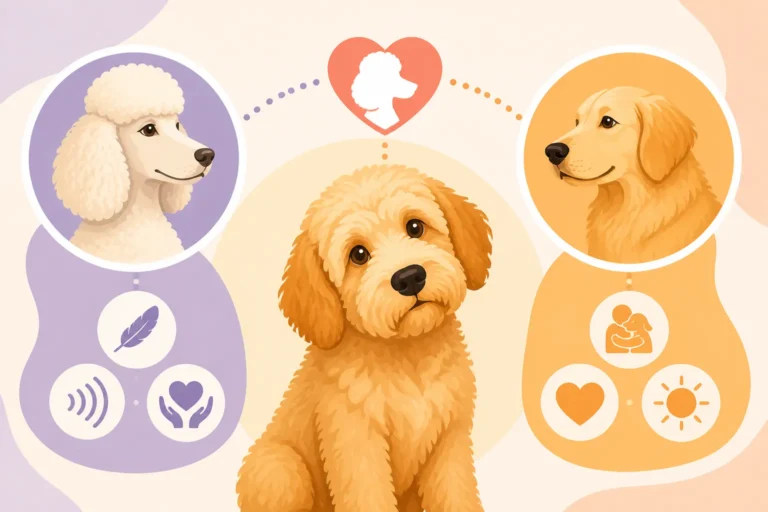
So, an F1 Goldendoodle is the direct offspring of a purebred Golden Retriever and a purebred Poodle. They’re a 50/50 mix, genetically speaking. This generation is often lauded for its potential What Hybrid Vigor Means for a Goldendoodle, bringing together the best of both worlds. The Golden Retriever contributes its famously sweet, biddable nature and that gorgeous, flowing coat, while the Poodle offers its intelligence, playful spirit, and its signature curly, low-shedding hair. However, because it's a 50/50 split, the F1 generation can be quite unpredictable in terms of coat type and shedding. Some F1s might lean more towards the Golden's straight, shedding coat, while others will have a wavy, lower-shedding coat closer to the Poodle. This variability is a big reason why breeders started looking at other generations. If you're curious about the general concept, you might want to read more about What a Goldendoodle Actually Is and Is Not.
Why Early Generations are Important for Context
Understanding the F1 generation is crucial because it sets the baseline for all subsequent generations, including the F1b. Each step in the breeding process is an attempt to either stabilize certain desired traits or to introduce more of a specific parent breed's characteristics. Without knowing where the F1 comes from, it's hard to grasp the intention behind an F1b or any other generation.
The early generations were all about exploring the potential of this new cross. Breeders were trying to see if they could reliably produce dogs with a friendly temperament and a lower-shedding coat suitable for families with allergies. It was an exciting time of experimentation, and each generation built upon the last, sometimes with surprising results. The genetic lottery is always at play, but breeders try to stack the odds in their favor by carefully selecting parent dogs.
The F1b Goldendoodle: Breeding Back to the Poodle Parent
Now for the star of our show: the F1b Goldendoodle. This is where things get a little more specific, and the "bred back" concept comes into full view. The 'b' in F1b stands for "backcross," which literally means one of the F1 Goldendoodle parents was bred back to one of the original purebred parent lines.
The Specific Breeding Pair for an F1b
For an F1b Goldendoodle, the specific breeding pair is an F1 Goldendoodle (which, as we just discussed, is 50% Golden Retriever and 50% Poodle) and a purebred Poodle. That's the key distinction. The F1 Goldendoodle contributes its combined genetics, while the purebred Poodle parent brings a strong, undiluted Poodle genetic influence back into the mix.
Why a Poodle, and not a Golden Retriever? The primary driver behind breeding back to a Poodle is almost always the desire for a more predictable, lower-shedding, and often curlier coat. Poodles are renowned for their hair-like coat that continuously grows rather than sheds seasonally, and this trait is highly sought after in the Goldendoodle community, particularly for allergy sufferers.
Imagine an F1 Goldendoodle parent who might have inherited a wavier, slightly shedding coat from their Golden side. By breeding them with a purebred Poodle, the breeder is trying to "double down" on those Poodle coat genes, hoping to produce puppies with more of that characteristic Poodle curl and less shedding. This intentional choice helps move the puppies further away from the Golden Retriever's shedding coat.
Genetic Contributions: How the 75/25 Split Happens
When an F1 Goldendoodle (50% Golden, 50% Poodle) is bred with a purebred Poodle (100% Poodle), the resulting F1b puppies typically inherit a genetic makeup that is approximately 75% Poodle and 25% Golden Retriever.
Here's a simple way to visualize it:
- The F1 Goldendoodle parent contributes half of its genes, which means roughly 25% Golden Retriever and 25% Poodle.
- The purebred Poodle parent contributes all of its genes, which means 50% Poodle.
Add those together, and you get:
(25% Golden Retriever + 25% Poodle) + (50% Poodle) = 25% Golden Retriever, 75% Poodle.
This 75/25 ratio is what makes the F1b generation so distinctive. It's a deliberate shift in the genetic balance, favoring the Poodle's traits. While no breeder can guarantee exact percentages for every single puppy in a litter (genetics are a fascinating mosaic, after all!), this 75/25 split is the general expectation for an F1b. This particular genetic makeup is explored further in The F1b Goldendoodle at Three Quarters Poodle.
The "Backcross" Explained
The term "backcross" means exactly what it sounds like: breeding back to a purebred parent of one of the original lines. In the case of the F1b Goldendoodle, the F1 generation is bred back to a purebred Poodle. This isn't just a random pairing; it's a strategic move by breeders.
Think of it like this: if you have a paint mixture that's 50% red and 50% blue, and you want it to be more blue, you add more blue paint. The "backcross" is the genetic equivalent. By introducing more purebred Poodle genetics, breeders aim to enhance the Poodle's desirable traits – primarily the non-shedding, curly coat, but also sometimes the Poodle's elegant structure or intense intelligence.
This intentional breeding strategy helps to increase the likelihood of certain outcomes in the puppies. While an F1 litter can have a wide range of coat types, from straight to wavy to curly, an F1b litter tends to be much more consistent, usually producing wavy or curly coats. This consistency is a huge draw for families seeking a predictable experience, especially concerning allergies.
Why Breeders Choose the F1b Approach
The decision to breed an F1b Goldendoodle isn't arbitrary. It's a calculated choice driven by specific goals, mostly centered around making the Goldendoodle more accessible and manageable for certain families.
Maximizing the Hypoallergenic Potential
Let's be clear: no dog is 100% hypoallergenic. The term itself is often misunderstood. Dogs produce allergens in their dander, saliva, and urine. However, Poodles are often considered "allergy-friendly" because they shed very little hair. Their coat type tends to trap dander, rather than releasing it into the environment like a shedding dog would.
For families with mild to moderate allergies, the F1b Goldendoodle is often recommended precisely because of this enhanced Poodle influence. By breeding an F1 Goldendoodle back to a purebred Poodle, breeders are aiming to produce puppies that have inherited more of that Poodle-like coat. This means a curlier coat, less shedding, and potentially less dander circulating in the home.
The hope is that by increasing the Poodle genetics to roughly 75%, the chances of getting a low-shedding or non-shedding puppy are significantly higher than with an F1. This is often the primary reason why families with allergies specifically seek out F1b Goldendoodles. For more insights into how generations affect shedding, you might find Which Goldendoodle Generation Sheds Least helpful.
Predictability of Coat Type and Shedding
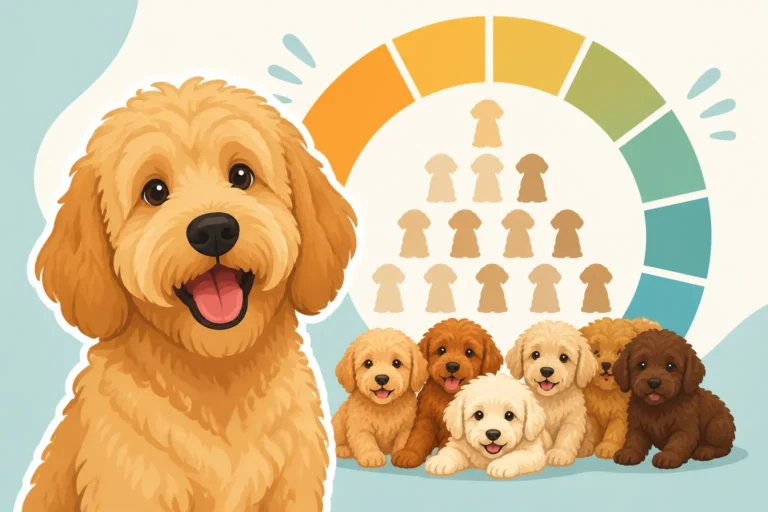
The F1 generation, while wonderful, can be a bit of a gamble when it comes to coat type. You might get a "flat coat" that looks more like a Golden Retriever and sheds, a "fleece coat" that's wavy and low-shedding, or a "wool coat" that's very curly and non-shedding. This unpredictability can be frustrating for prospective owners with specific preferences or allergy concerns.
The F1b generation largely solves this issue. With the increased Poodle genetics, F1b Goldendoodles are much more likely to have a wavy or curly coat. Straight-coated F1bs are quite rare. This predictability is a huge advantage for breeders and buyers alike.
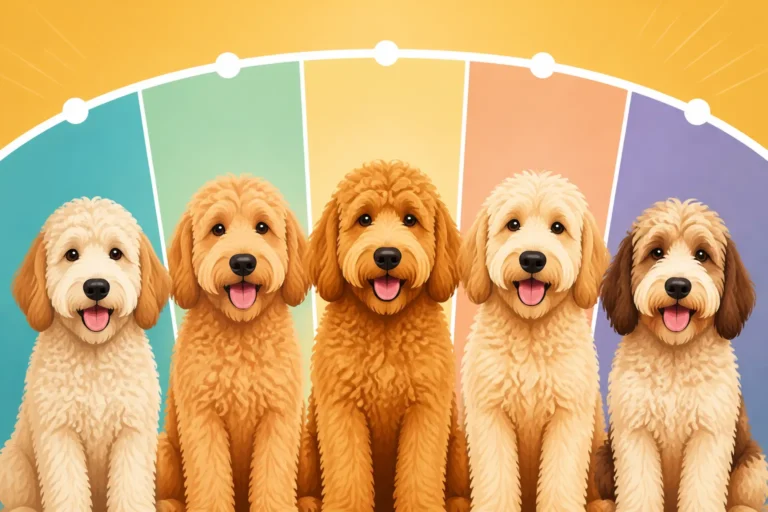
- Wavy/Fleece Coats: Many F1b Goldendoodles will have a soft, wavy "fleece" coat that is low-shedding. This is often described as the classic "doodle" look.
- Curly/Wool Coats: A significant portion of F1b Goldendoodles will inherit a tighter, curlier "wool" coat, which is typically considered non-shedding. This coat type requires diligent grooming, as it's prone to matting.
This greater consistency in coat type means that breeders can more reliably market F1b puppies to families looking for a specific type of coat, especially those prioritizing low-shedding properties. Remember, even with an F1b, diligent brushing is still a must to prevent matting, especially on a longer coat. You can find excellent brushes and grooming tools on platforms like Chewy to keep those gorgeous coats in tip-top shape.
Addressing Specific Temperament or Structure Goals
While coat type is the most common reason for the F1b backcross, breeders may also have subtle goals related to temperament or physical structure. Poodles are highly intelligent, agile, and often possess a certain elegance. By increasing the Poodle genetics, a breeder might be subtly aiming for:
- Enhanced Intelligence and Trainability: Poodles are known for their sharp minds and eagerness to please, traits that are often amplified in an F1b. This can make them incredibly responsive to training. For more on their smarts, check out Why a Goldendoodle Learns Faster Than Most Crosses.
- More Athletic Build: While Golden Retrievers are active, Poodles can be incredibly athletic and light-footed. An F1b might lean towards a slightly more refined, athletic build, especially if the Poodle parent was from working lines.
- Reduced Shedding-Related Anxiety: For breeders who want to ensure their puppies go to homes where shedding won't be an issue, the F1b offers a higher degree of confidence than an F1.
It's important to note that temperament is always a complex mix of genetics, early socialization, and environment. While an F1b might inherit more of the Poodle's drive and smarts, early training and socialization are still paramount to developing a well-adjusted dog.
Characteristics of an F1b Goldendoodle
So, what does all this breeding back actually mean for the dog you bring home? An F1b Goldendoodle often embodies a fantastic blend, but with a definite lean towards their Poodle heritage in several key areas.
Common Coat Types and Shedding Levels
The most defining characteristic of an F1b Goldendoodle is often its coat. As we discussed, the 75% Poodle genetics usually result in a more uniform coat type compared to the F1.
- Wavy/Fleece Coats: This is a very common F1b coat, characterized by soft, flowing waves. It's usually very low-shedding, making it a popular choice for families with mild allergies. These coats still need regular brushing, typically 2-3 times a week, to prevent tangles and mats.
- Curly/Wool Coats: Many F1b Goldendoodles will have a tighter, springier curl, much like a purebred Poodle. This "wool" coat is considered non-shedding and is often the best option for severe allergy sufferers. However, it requires the most intensive grooming, often daily brushing and professional grooming every 6-8 weeks, to prevent severe matting that can lead to skin problems.
- Minimal Shedding: Regardless of whether it's wavy or curly, an F1b Goldendoodle is generally known for its minimal to non-shedding qualities. This is a huge relief for many owners who simply can't handle dog hair all over their home.
It's crucial to understand that even "non-shedding" dogs still lose dead hair, just like humans. This hair gets trapped in their coat rather than falling out, which is why diligent brushing is so vital. Without it, the trapped hair forms painful mats that can only be removed by shaving. If you're managing a Goldendoodle's coat at home, resources like Chewy offer a fantastic selection of brushes, combs, and detangling sprays to help you keep up with their grooming needs. You can learn more about specific coat types in The Three Goldendoodle Coat Types and How to Tell Them.
Temperament Traits: A Strong Poodle Influence
While Goldendoodles generally inherit the friendly, eager-to-please nature of both parent breeds, the F1b often shows a stronger inclination towards Poodle characteristics.
- Intelligence and Trainability: Poodles are highly intelligent and often ranked among the smartest dog breeds. An F1b Goldendoodle typically inherits a significant portion of this brainpower, making them very quick learners. They thrive on mental stimulation and excel in obedience training, trick training, and even canine sports like agility. This intelligence, however, also means they can get bored easily and may develop undesirable behaviors if not given enough to do.
- Energy Levels: Both Golden Retrievers and Poodles are active breeds, so an F1b Goldendoodle will generally have moderate to high energy levels. They need daily exercise, including walks, playtime, and mental enrichment. A bored Goldendoodle is often a mischievous Goldendoodle!
- Affectionate and Social: F1bs tend to be very affectionate and thrive on human companionship. They are often described as "Velcro dogs" who love to be involved in family activities. This strong bond can sometimes lead to Goldendoodle Separation Anxiety From Both Parent Lines if not managed with proper alone-time training from a young age.
- Sensitivity: Some F1bs may inherit the Poodle's sensitivity. They can be quite attuned to their owner's emotions and respond best to positive reinforcement training methods. Harsh corrections can be counterproductive and damage their trusting nature. For an in-depth look at their Poodle-derived traits, consider What a Goldendoodle Takes From the Poodle.
Health Considerations in an F1b Generation
When it comes to health, an F1b Goldendoodle benefits from the continued genetic diversity of a crossbreed, but they are still susceptible to health conditions found in both parent lines, especially the Poodle side, given their higher Poodle percentage.
Here's a breakdown of common concerns:
| Health Category | Common F1b Concerns (Poodle-dominant) | Common F1b Concerns (Shared/Golden influence) | Prevention/Management |
|---|---|---|---|
| Joint Health | Patellar Luxation (more common in smaller Poodles, thus smaller F1bs) | Hip and Elbow Dysplasia (from both Golden and Poodle lines) | Health testing of parents, maintaining healthy weight, proper exercise. |
| Eye Health | Progressive Retinal Atrophy (PRA), Cataracts | PRA (from Poodle), Cataracts (from both) | DNA testing parents for PRA, regular eye exams. |
| Endocrine Issues | Addison's Disease, Hypothyroidism | Hypothyroidism (from both), sometimes bloat risk in larger sizes | Regular vet check-ups, early detection of symptoms. |
| Skin/Allergies | Sebaceous Adenitis (Poodle), environmental/food allergies | Environmental/food allergies (from both), hot spots (Golden) | Good grooming, appropriate diet, vet consultation for allergies. |
Because F1bs are 75% Poodle, they carry a higher statistical chance of inheriting Poodle-specific conditions compared to F1s. However, they still have that 25% Golden Retriever influence, meaning Golden Retriever health issues like certain cancers are not entirely absent. This is why responsible breeders are so crucial. They will perform comprehensive health screenings on both parent dogs – the F1 Goldendoodle and the purebred Poodle – to minimize the risk of passing on genetic diseases. Always ask to see Health Testing Both Goldendoodle Parents Should Have records for hips, elbows, eyes, and any relevant DNA panels.
While the F1b generation offers many benefits, it's not a magical bullet against all health problems. It's about increasing the likelihood of certain traits (like a low-shedding coat) and carefully managing known risks through responsible breeding practices. Be prepared for regular vet visits and to discuss any concerning symptoms with your vet right away.
The F1b Goldendoodle is a fantastic option for many families, especially those seeking a more predictable, lower-shedding coat. By understanding the "bred back" process and the genetic shift it entails, you can make an informed decision when choosing your new furry family member. Just remember that responsible breeding, early socialization, and consistent training are paramount for any Goldendoodle, regardless of their generation.
Disclaimer
This article is for general informational purposes only and does not constitute professional advice. Laws, prices and regulations vary by location and change over time. Consult a qualified professional for guidance on your specific situation.