Why Two Goldendoodle Litter Mates Finish Different Sizes
It's a common scene: you meet a Goldendoodle from the same litter as yours, only to find they're vastly different in size, perhaps much larger or smaller than you expected for your pup. This can be genuinely surprising and even a little confusing, especially when you're trying to anticipate your own Goldendoodle's adult stature. This comprehensive guide is here to unravel the fascinating genetic and environmental reasons why two Goldendoodle littermates can grow up to be such different sizes, helping you understand your unique companion's development.
The Unpredictable Genetic Tapestry of Goldendoodle Size
When you bring home a Goldendoodle, you're not just getting a cute, fluffy face; you're also bringing home a wonderfully complex genetic blueprint. Unlike purebred dogs, where generations of selective breeding have largely standardized size within a certain range, Goldendoodles are a crossbreed. This means their genetic makeup is a delightful, sometimes unpredictable, blend of two distinct purebred lines: the Golden Retriever and the Poodle. It's this beautiful genetic mashup that often explains why littermates, despite sharing the same parents and birthdate, can chart very different growth paths.
The Mix-and-Match of Parent Breed Genes
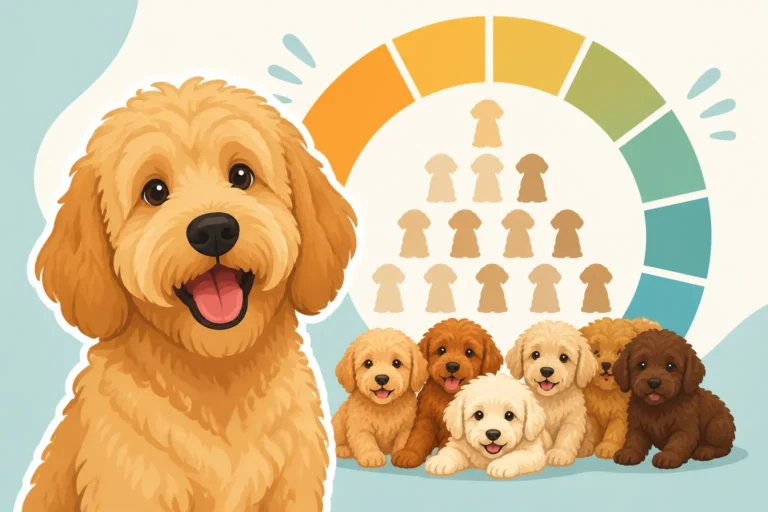
Imagine a deck of cards, half from the Golden Retriever parent and half from the Poodle parent. Each puppy in the litter draws a unique hand. While they all get cards from both parents, the specific combination can vary wildly. Some puppies might inherit more genes that express "Poodle size" – which, depending on the Poodle parent's size (Standard, Miniature, or Toy), could mean smaller adult stature. Others might pull more "Golden Retriever size" cards, leading to a larger, more robust build. It’s not a 50/50 split of characteristics in every puppy, even in an F1 generation. Think of it like human siblings; you might have one child who takes after a tall parent and another who is more like a shorter parent, even though they share the same gene pool. This genetic lottery is one of the primary drivers behind the size discrepancies you see among Goldendoodle littermates.
Understanding the Role of Different Generations
The generation of your Goldendoodle (F1, F1b, F2, Multigen) also plays a significant role in this genetic variability, particularly concerning size. An F1 Goldendoodle is a direct cross between a purebred Golden Retriever and a purebred Poodle. Here, the genetic blend is quite literal, 50% from each. However, even within an F1 litter, individual puppies can inherit a wider spectrum of size-determining genes from either side. When you move to an F1b Goldendoodle, which is an F1 bred back to a Poodle, the genetic influence shifts to approximately 75% Poodle and 25% Golden Retriever. You might expect these pups to be more consistently Poodle-sized, and often they are, but even here, the specific gene combinations each puppy receives can lead to surprising variations. Two F1b littermates could still have noticeable size differences if one puppy pulls more of those lingering Golden Retriever size genes. For more on this, consider reading What the Letter F Means in a Goldendoodle Pedigree. This genetic mosaic is why you can see such fascinating variations, even among puppies from the same Goldendoodle generation.
How Parent Size and Breed Lines Dictate Potential
The size of the parent dogs is, of course, a critical factor in determining the potential adult size of their offspring. This might seem obvious, but the nuances are important for Goldendoodles. A breeder might use a Standard Poodle sire with a Golden Retriever dam, resulting in a litter with a wide potential size range. If a Miniature Poodle is used, the expected size range shifts downwards, leading to Mini Goldendoodles. But it's not always a straightforward average.
The Spectrum of Poodle Sizes
Poodles come in three main sizes: Standard, Miniature, and Toy. Each of these size varieties has distinct weight and height ranges. A Golden Retriever, on the other hand, is a relatively consistent size, typically falling within the 55-75 pound range for females and 65-75 pounds for males, with heights around 21-24 inches. So, when a Golden Retriever is bred with a Standard Poodle, the resulting Goldendoodle puppies will usually fall into the "Standard" size category, typically weighing between 50 to 90 pounds. However, within that litter, some puppies might lean more towards the Poodle's lean, athletic build, while others might inherit the Golden Retriever's more robust bone structure and broader frame.
Now, if the same Golden Retriever is bred with a Miniature Poodle, you're looking at "Mini Goldendoodles," usually in the 26-35 pound range. Even within this smaller spectrum, some pups could still be closer to the larger end of the Mini scale, perhaps inheriting more of the Golden's substance, while others might be daintier, reflecting the Miniature Poodle's build. This is where the true beauty – and occasional bewilderment – of Goldendoodle genetics lies. It's not a strict average; it's a dynamic range of possibilities. How the Poodle Parent Sets Goldendoodle Size explains this in more detail. The final adult size of Goldendoodles, whether standard, mini, or toy, is fundamentally rooted in the size of their Poodle parent, which is then blended with the Golden Retriever's genetic contribution. This explains a lot of the differences we see in The Four Goldendoodle Sizes and How They Are Set.
The Influence of Grandparents and Beyond
While the immediate parents are the most influential, the genetic influence doesn't stop there. Grandparents and even great-grandparents can contribute "outlier" genes that might manifest in a litter. If a Standard Poodle parent has Miniature Poodle lineage further back, or a Golden Retriever parent has some unusually large or small ancestors, those genes can occasionally resurface. This phenomenon, often called "throwback genes," can sometimes explain why one puppy in a litter might be significantly larger or smaller than its siblings and even its parents. Reputable breeders try to minimize this by carefully selecting breeding pairs based on several generations of consistent size and health, but genetics are never 100% predictable, especially in crossbreeds. This is why a Goldendoodle puppy's adult size can sometimes defy initial predictions. Understanding this helps manage expectations about Predicting a Goldendoodle Puppy's Adult Size. While many aim for specific Goldendoodle sizes, these ancestral genes are often the unsung heroes—or culprits—behind those surprising variations.
Environmental Factors and Early Development's Role
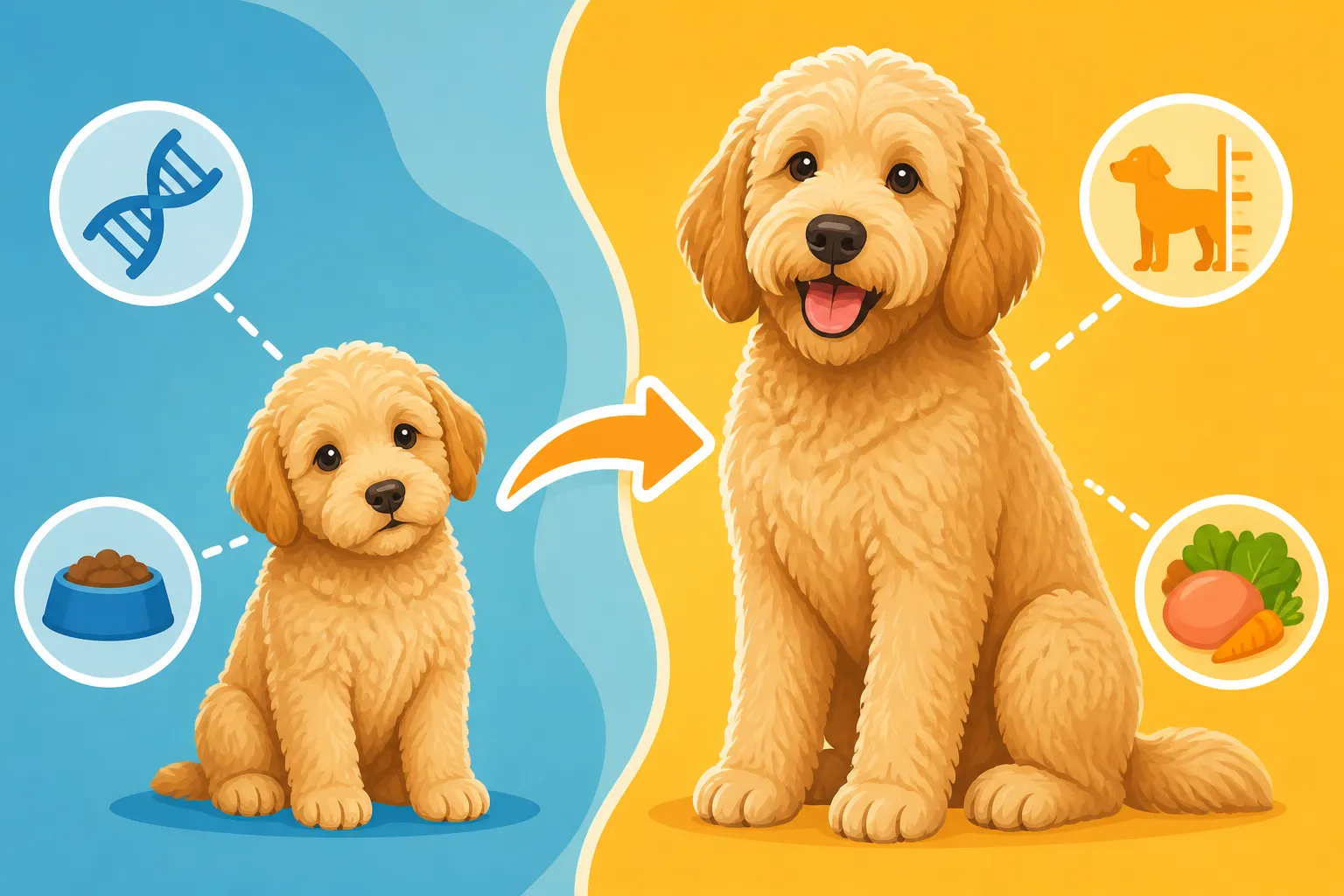
Beyond the genetic lottery, a Goldendoodle puppy's early environment and experiences play a crucial, often underestimated, role in how they develop and ultimately, their final size. It’s not just about what genes they inherit, but how those genes are expressed and nurtured from the moment they are conceived. Even with identical genetic potential, differences in nutrition, health, and early care within a litter can lead to noticeable size variations.
Nutrition from Womb to Weaning
The journey of growth begins in the womb. The health and nutrition of the pregnant dam are paramount. If the mother dog is undernourished, stressed, or sick, it can impact the development of her unborn puppies. Within the womb, even subtle differences in placental attachment or position can mean one fetus receives slightly more nutrients than another, leading to size variations even at birth. This initial disparity, though often minor, can set the stage for later differences.
Once born, competition at the milk bar is real. In larger litters, or if a particular puppy is less assertive, they might not get as much access to their mother's milk as their stronger, more dominant siblings. This early nutritional disparity, even if corrected later, can set a puppy on a slightly different growth trajectory. While a good breeder will monitor puppies closely and intervene if necessary to ensure all pups are thriving, it’s a natural part of litter dynamics. Consistent, high-quality puppy food once they are weaned is vital for all Goldendoodles. Reputable online retailers like Chewy offer a fantastic selection of breed-appropriate puppy foods that can help ensure your growing Goldendoodle gets all the nutrients they need for healthy development. For instance, Large Breed Puppy Food for a Standard Goldendoodle is essential for those larger pups.
Health and Stress During Crucial Growth Periods
A puppy's health during its critical growth phases directly impacts its ability to reach its full genetic potential. Illnesses, even minor ones like intestinal parasites or recurrent infections, can divert vital energy and nutrients away from growth and towards recovery. A puppy that experiences a significant illness during its rapid growth spurts (typically the first 4-6 months) might not grow as quickly or as large as its healthier littermates, even if it has the genetic predisposition to do so. These health setbacks, though temporary, can have lasting impacts on their physical development.
Stress, too, can impact development. While less direct than severe illness, chronic stress in very young puppies can sometimes impact hormone production and overall well-being, potentially having a subtle effect on growth. A stable, nurturing environment with proper veterinary care is essential for all puppies to thrive and develop according to their individual genetic potential. This is why good breeders are so meticulous about parasite prevention, vaccination, and ensuring a calm environment for their litters. For example, ensuring your Goldendoodle receives proper Goldendoodle Vaccination and Puppy Health Checks can prevent many common setbacks that might hinder their growth.
Setting Realistic Expectations and Monitoring Growth
It’s completely natural to have an idea in your head about how big your Goldendoodle will be. Perhaps you've seen pictures of the parents, or a sibling from a previous litter. However, given the genetic complexity of Goldendoodles, it’s best to approach their growth with a mindset of realistic expectations and consistent monitoring, rather than rigid predictions.
Why Size Charts Are More of a Guide Than a Guarantee
You'll find many Goldendoodle puppy growth charts online, often breaking down expected weights by age and size category (Standard, Medium, Mini, Toy). These charts are incredibly helpful as general guidelines, giving you a ballpark idea of where your puppy should be. But here’s the rub: they are just that – guides. Because of the genetic variability discussed earlier, two puppies from the same litter, or even two puppies of the same expected "size," might track differently on these charts. One might have a growth spurt earlier, then level off, while another might have a more consistent, slower growth curve.
Don't panic if your Goldendoodle isn't hitting every mark on a chart precisely. What's more important is consistent, healthy growth. Your veterinarian will be your best resource here, assessing your puppy's overall body condition, energy levels, and general health, rather than just a number on a scale. They can help interpret if your pup's growth is appropriate for them, regardless of what a generic chart might suggest. In fact, Why Goldendoodle Size Charts Disagree is a topic in itself, highlighting the inherent variability. These charts provide a broad range, but the individual Goldendoodle, even within the same litter, can surprise you. Keeping a record of your Goldendoodle's growth against a chart, perhaps using a notebook you ordered from Chewy, can be an interesting personal project, but always prioritize vet advice.
The Importance of Regular Vet Checks and Body Condition Scoring
Regular veterinary check-ups are essential for monitoring your Goldendoodle's growth. Your vet will not only weigh your puppy but also perform a thorough physical examination and assess their body condition score (BCS). BCS is a more holistic measure than just weight, as it considers how much fat cover your dog has over their ribs, spine, and waist. A puppy can be a healthy weight but still be too lean or too chubby, depending on their individual frame.
Maintaining an ideal body condition is crucial, especially for Goldendoodles, as both parent breeds can be prone to joint issues like hip and elbow dysplasia. Keeping your Goldendoodle lean during their growth phase reduces stress on developing joints. This is a topic thoroughly explored in Goldendoodle Joint Health by Size Category. Your vet can advise you on appropriate feeding amounts and exercise levels to support healthy growth without overstressing their system. Remember, a slightly smaller but lean and healthy Goldendoodle is always preferable to an overweight one struggling under extra pounds. Many owners find it helpful to track their puppy's weight and food intake using apps or journals, and for supplies like reliable puppy scales or specific dietary foods, stores like Chewy are easily accessible.
Managing Expectations for a Lifetime
Ultimately, embracing the individuality of your Goldendoodle is key. While littermates might start on the same day, their journeys are uniquely their own. Some might finish as petite and graceful, others as robust and stocky, even within the same Goldendoodle size category. The beauty of a crossbreed like the Goldendoodle lies in this diversity. Rather than aiming for a specific weight or height based on a sibling, focus on providing optimal nutrition, regular veterinary care, appropriate exercise, and plenty of love to help your Goldendoodle thrive as the magnificent individual they are. Their unique size, whatever it may be, is just one more wonderful characteristic that makes them your Goldendoodle. Goldendoodle Growth Plates by Size Category can also provide insights into bone development and when their growth truly slows down, typically indicating when they've reached their full adult height.
| Factor | Genetic Influence | Environmental Influence | Notes on Variability |
|---|---|---|---|
| Parent Size & Breed | Primary | Minor (dam's prenatal health) | Direct link to expected range; Poodle vs. Golden Retriever traits. |
| Goldendoodle Generation | High | None | F1 vs. F1b vs. Multigen impacts genetic percentage mix and consistency. |
| Ancestral "Throwback" Genes | Moderate | None | Can cause unexpected size outliers. |
| Puppy Nutrition (Post-Weaning) | Moderate | High | Crucial for optimal growth expression, but won't alter genetic ceiling. |
| Health During Growth | Moderate | High | Illnesses or parasites can stunt growth; good health supports it. |
| Litter Dynamics & Birth Order | Minor | Moderate | Access to milk, competition can create early disparities. |
Disclaimer
This article is for general informational purposes only and does not constitute professional advice. Laws, prices and regulations vary by location and change over time. Consult a qualified professional for guidance on your specific situation.