Whether a Standard Goldendoodle Fits an Apartment
So, you're dreaming of bringing a fluffy, friendly Standard Goldendoodle into your life, but you live in an apartment. It's a common dilemma, and one that sparks a lot of debate. The image of a big, bouncy dog in a small space can feel daunting, leading to worries about whether it's fair to the dog, or even sustainable for your sanity. This guide is here to walk you through the honest realities of apartment living with a full-sized Goldendoodle, exploring the challenges and offering practical, realistic solutions to help you decide if it's truly a good fit for your lifestyle.
Understanding the Standard Goldendoodle's Needs
Before we even talk about apartment specifics, it's crucial to understand what a "Standard" Goldendoodle truly entails. Many people hear "Goldendoodle" and picture a medium-sized, perpetually happy dog. While the happy part is usually true, the "standard" designation means we're talking about a significant canine presence.
Size and Physical Footprint
A Standard Goldendoodle isn't just a slightly larger dog; they are genuinely big dogs, typically weighing between 50 and 90 pounds, and sometimes even more. They stand quite tall at the shoulder, often 21 to 24 inches or even higher. Imagine that size when they're stretching out for a nap, doing a full-body shake that sends hair (even minimal) flying, or doing a happy dance when you walk in the door. They're not just a weight, they're a volume.
In an apartment, this means everything feels smaller. A hallway becomes a tight squeeze when a Goldendoodle decides to lie down in the middle. Your small living room will be entirely dominated by a large dog bed. Turning around in a kitchen while your Goldendoodle is trying to supervise your cooking becomes a logistical challenge. It's not just about fitting into the apartment, but about having enough clear floor space for them to move comfortably, stretch, and change positions without constantly bumping into furniture or walls. Their wagging tail alone can clear a coffee table in seconds if you're not careful! This isn't to say it's impossible, but it demands a different level of conscious space management than you might be used to.
Exercise Requirements Beyond a Walk
This is perhaps the single biggest hurdle for apartment dwellers considering a Standard Goldendoodle. These dogs are a blend of two highly intelligent and active breeds: the Golden Retriever and the Poodle. Both were bred for work – retrieving, hunting, performance. This isn't a breed content with a quick trot around the block twice a day. They need significant physical exercise, yes, but equally important is mental stimulation.
Think about it: the Golden Retriever brings that eager-to-please, tireless retrieving drive, while the Poodle contributes incredible intelligence and a need for engagement. Combined, you get a dog that needs to run, play, and think. If a Standard Goldendoodle doesn't get enough outlets for their energy and brainpower, that pent-up drive will manifest itself in ways you definitely don't want in an apartment: destructive chewing on furniture legs, incessant barking, or hyperactive "zoomies" that send them crashing into everything. A bored Goldendoodle is a creative, and often destructive, Goldendoodle. Their need for exercise isn't just about physical health; it's about their mental well-being and preventing problem behaviors. You'll need to be committed to providing opportunities for them to burn off steam. We're talking more than just short potty breaks; they need active playtime, walks, and mental games. Goldendoodle Exercise and Mental Work Every Day
The "Velcro Dog" Tendency
Goldendoodles are famously affectionate, often described as "Velcro dogs" because they love to be right by your side. This trait, while endearing, takes on a new dimension in smaller living spaces. In an apartment, "by your side" often means "underfoot," "on your lap (even if they're 70 pounds)," or "blocking the doorway to the bathroom."
You might find your Goldendoodle following you from room to room, settling down immediately wherever you stop, only to get up and follow you again when you move. This isn't necessarily a bad thing – many owners cherish this closeness. However, it means that personal space can become a luxury. If you envision your dog calmly lounging in another room while you work or relax, a Goldendoodle's natural inclination might challenge that. They crave companionship and interaction, and an apartment's layout often means they're never far from you. It’s part of their charm, but also a constant presence. A Goldendoodle That Follows You Room to Room
Apartment Living Realities with a Large Dog
Bringing a large, active dog into an apartment introduces a unique set of daily challenges that go beyond simply fitting them through the door. These are the practical considerations that often catch new owners off guard.
Noise, Neighbors, and Nuisance Barking
Apartment walls, floors, and ceilings are rarely soundproof. What might be a minor bark in a detached house can become a major nuisance for your neighbors in an apartment building. Standard Goldendoodles can be vocal. They might bark at sounds in the hallway, at people walking past the window, or out of boredom or frustration if under-exercised. They are also prone to separation anxiety, a common Goldendoodle trait inherited from both parent lines, which can manifest as persistent barking or howling when left alone.
Managing barking is paramount for harmonious apartment living. This means proactive training from day one to teach them what's okay to bark at (like a knock at the door, briefly) and what isn't (every leaf blowing past the window). Ignoring barking will not make it go away; in fact, it can reinforce it. You'll need strategies to minimize triggers and provide enrichment to keep them from getting bored and resorting to noise. Neighbor complaints can quickly escalate, leading to stress for you and potential issues with your landlord or HOA. Goldendoodle Barking and What Sets It Off
Managing Potty Breaks and Outdoor Access
Without a private fenced yard, you become the sole provider of outdoor access for potty breaks, regardless of weather or time of day. This means being prepared for frequent trips outside, even in the pouring rain, freezing snow, or the middle of the night for a puppy or a senior dog. For a Goldendoodle puppy, you could be taking them out every hour or two. As adults, they'll need at least three to five dedicated potty breaks daily, combined with their longer exercise sessions.
Consider the logistics: Do you live on a high floor? How long does it take you to get dressed, get the dog on a leash, and get downstairs and outside? Is there a designated dog run or green space nearby? Are you comfortable picking up after a large dog multiple times a day in public spaces? These aren't trivial questions. The ease of outdoor access directly impacts your routine and your dog's comfort. Having readily accessible, safe outdoor spaces for your dog to relieve themselves and exercise is non-negotiable.
Grooming and Shedding in a Confined Space
The Goldendoodle coat, while often marketed as "low-shedding" or "hypoallergenic," still requires significant grooming and maintenance, especially the curlier types. Even low-shedding dogs still shed some hair, and all Goldendoodles produce dander. In an apartment, this means dander and hair can concentrate more easily, which can be an issue for allergy sufferers or simply for keeping your living space clean.
Grooming a Standard Goldendoodle is a big job. They need regular brushing, often daily, to prevent mats. Brushing a Goldendoodle Often Enough to Stop Matting Where will you do this? On the floor in your living room, potentially sending loose hair and dirt everywhere? Do you have space for a dedicated grooming area, even if it's just a corner? Bathing a large Goldendoodle in a small apartment bathtub can be a challenge, requiring special equipment and careful cleanup. Even drying them takes time and space. Keeping up with their coat is not just for aesthetics; matted coats can be painful and lead to skin infections. You'll likely need professional grooming every 6-8 weeks, but daily home care is still essential. Fortunately, online retailers like Chewy offer a wide array of brushes, combs, and detangling sprays to help you keep up with their coat between professional appointments.
| Aspect | Standard Goldendoodle Need | Apartment Living Challenge | Solution/Strategy |
|---|---|---|---|
| Size | Large, active dog (50-90+ lbs, 21-24+ inches tall) | Limited floor space, potential for bumping into furniture/people | Smart furniture layout, designated dog zones, clear pathways. |
| Exercise | High physical & mental stimulation daily | No private yard, reliance on public spaces, weather dependency | Multiple structured walks, dog parks, doggy daycare, indoor enrichment. |
| Companionship | "Velcro dog," craves constant presence | Limited personal space, constant presence can be overwhelming | Designated "place" training, crate training for quiet time. |
| Noise | Can be vocal (alert barking, demand barking, anxiety) | Thin walls, close neighbors, potential for complaints | Proactive bark training, desensitization, adequate exercise/mental stimulation. |
| Potty Breaks | Frequent outdoor access, regardless of weather | No direct outdoor access, inconvenient trips, especially high-rise | Strict schedule, quick access to outdoor areas, patience. |
| Grooming | Daily brushing, professional grooms every 6-8 weeks | Hair/dander concentration, messy home grooming, limited space | Dedicated grooming tools, regular brushing, professional grooms, air purifiers. |
Strategies for Successful Apartment Living with a Standard Goldendoodle
If you're still determined to make it work, it's absolutely possible with the right mindset, commitment, and strategies. It's less about the square footage and more about how cleverly and consistently you manage your dog's needs.
Maximizing Space and Minimizing Clutter
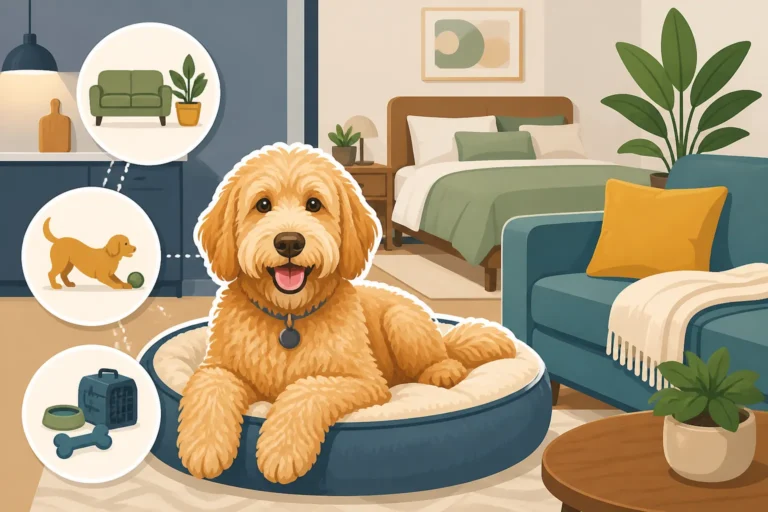
Living in an apartment with a large dog requires a minimalist mindset and smart spatial planning. Every inch counts. Opt for multi-functional furniture, like an ottoman that doubles as storage for dog toys or a crate that can serve as an end table. Consider vertical storage to keep clutter off the floor, freeing up valuable space for your Goldendoodle to move.
Designate specific "zones" for your dog. Their crate should be a comfortable, quiet den, not just a cage tucked away. Have a spot for their food and water bowls that is out of the main traffic flow but still accessible. Keep their toys organized in a basket they can easily access (and you can easily put away). The goal is to create an environment where both you and your Goldendoodle feel comfortable and un-cramped. Think about their natural pathways and try to keep those clear.
Prioritizing Daily Exercise and Mental Stimulation
This cannot be stressed enough: a well-exercised and mentally stimulated Goldendoodle is a well-behaved Goldendoodle. For apartment dwellers, this means dedicating serious time and effort every single day to their physical and mental needs.
- Structured Walks: These aren't just potty breaks. Aim for long, brisk walks, at least 45-60 minutes twice a day, if not more, for an adult. Let them sniff around; "sniff walks" are incredibly mentally tiring.
- Dog Parks/Green Spaces: If your Goldendoodle is well-socialized and enjoys other dogs, a dog park can be a fantastic outlet. However, ensure it's a safe environment and that your dog's play style is appropriate. Alternatively, large grassy areas where they can play fetch on a long line are excellent. Goldendoodle Dog Park Manners
- Doggy Daycare: For owners who work long hours, doggy daycare can be a lifesaver, providing supervised play and socialization.
- Indoor Enrichment: When outdoor access is limited by weather or time, turn to indoor activities. Puzzle toys, KONGs stuffed with treats, and regular training sessions are great ways to engage their intelligent minds. The Thinking Work That Actually Tires a Goldendoodle Even just practicing tricks or basic obedience commands for 10-15 minutes can be surprisingly tiring for them. Look for these types of enrichment items on Chewy for easy delivery right to your door.
Proactive Training and Socialization
Consistent training and socialization are non-negotiable for any dog, but especially for a large dog in an apartment. You need a Goldendoodle that is polite, calm, and responsive.
- Obedience Training: Start early with puppy classes and continue with advanced obedience. Focus on impulse control exercises ("leave it," "stay," "wait") which are critical in a small space. Teach them a solid "place" command, so they can settle on their bed when guests arrive or you need them out of the way. Training a Goldendoodle That Wants to Please You
- Noise Desensitization: Gradually expose your puppy to common apartment noises – vacuums, doorbells, talking in the hallway – to help them learn to ignore them.
- Socialization: Ensure your Goldendoodle is well-socialized with people, other dogs, and different environments. This helps them remain calm and confident in shared spaces like hallways, elevators, and dog parks. Socializing a Goldendoodle Beyond Hyper-Friendliness A well-adjusted Goldendoodle is less likely to react negatively to the unexpected sounds and sights of apartment life. Many dog trainers offer in-home consultations, which can be invaluable for addressing specific apartment-related behaviors.
The Bottom Line: Can It Really Work?
So, after considering all of this, can a Standard Goldendoodle truly fit into an apartment? The answer, unequivocally, is "yes, but…" It's not a simple yes or no.
Owner Commitment is Key
Ultimately, whether a Standard Goldendoodle thrives in an apartment comes down to the owner's commitment. Square footage is far less important than the amount of time, energy, and resources you are willing to invest. If you are prepared to:
- Dedicate 1-2 hours daily to active physical exercise.
- Provide regular mental stimulation through training, puzzle toys, and enrichment games.
- Maintain a rigorous grooming schedule.
- Consistently train for good manners and impulse control.
- Be proactive about managing noise and neighbor relations.
- Sacrifice some of your own personal space and convenience.
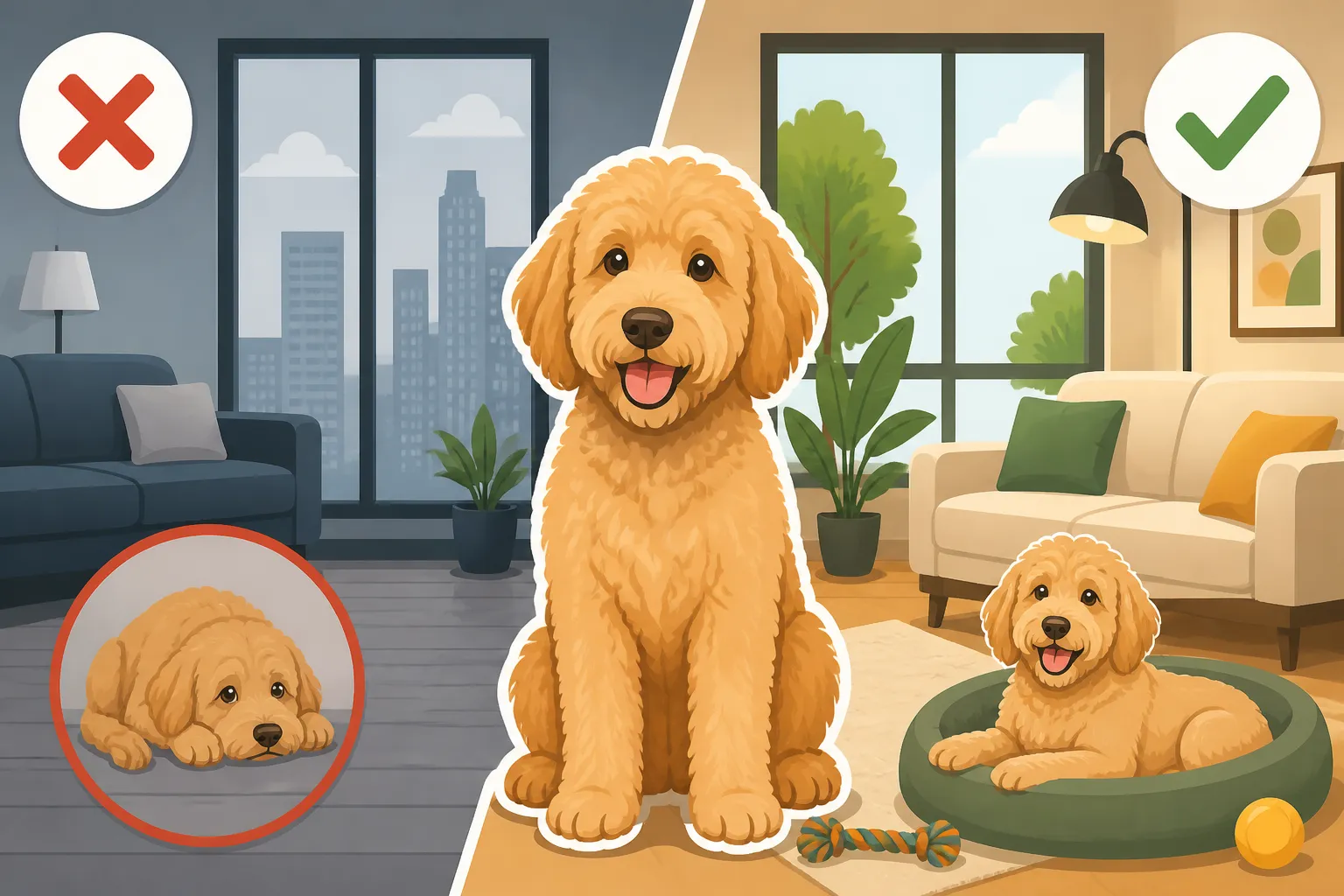
…then a Standard Goldendoodle can absolutely be happy and well-adjusted in an apartment. Your lifestyle needs to align with the dog's needs, not the other way around. It requires a lot of intentional effort and dedication. It's not for the faint of heart, or for someone looking for a low-maintenance companion.
Considering Alternatives
If reading through these realities makes you feel overwhelmed, that's okay. It's important to be honest with yourself about what you can realistically provide. Perhaps a Standard Goldendoodle isn't the best fit for your current apartment lifestyle, and there are other fantastic options:
- Smaller Goldendoodles: A Mini or Toy Goldendoodle might offer a similar temperament in a more apartment-friendly package. They still have energy and grooming needs, but their physical footprint is significantly smaller, and their exercise requirements are often more manageable for smaller spaces. Mini Goldendoodle Height and Weight
- Other Breeds: There are many wonderful dog breeds that are naturally better suited for apartment living due to their smaller size or lower energy levels.
- Adopting an Older Dog: A senior Goldendoodle, often from a rescue organization, might be a perfect fit. Older dogs tend to have lower energy levels, are often already house-trained, and their personalities are fully developed. This can eliminate many of the unpredictable challenges of puppyhood in an apartment setting. Senior Goldendoodle Adoption
The Goldendoodle is a wonderful companion, full of joy and affection. If you have your heart set on a Standard size in an apartment, go into it with your eyes wide open, understand the full commitment required, and be ready to put in the work. Your Goldendoodle will reward you with boundless love and companionship, no matter the size of your home.
Disclaimer
This article is for general informational purposes only and does not constitute professional advice. Laws, prices and regulations vary by location and change over time. Consult a qualified professional for guidance on your specific situation.