A Goldendoodle That Follows You Room to Room
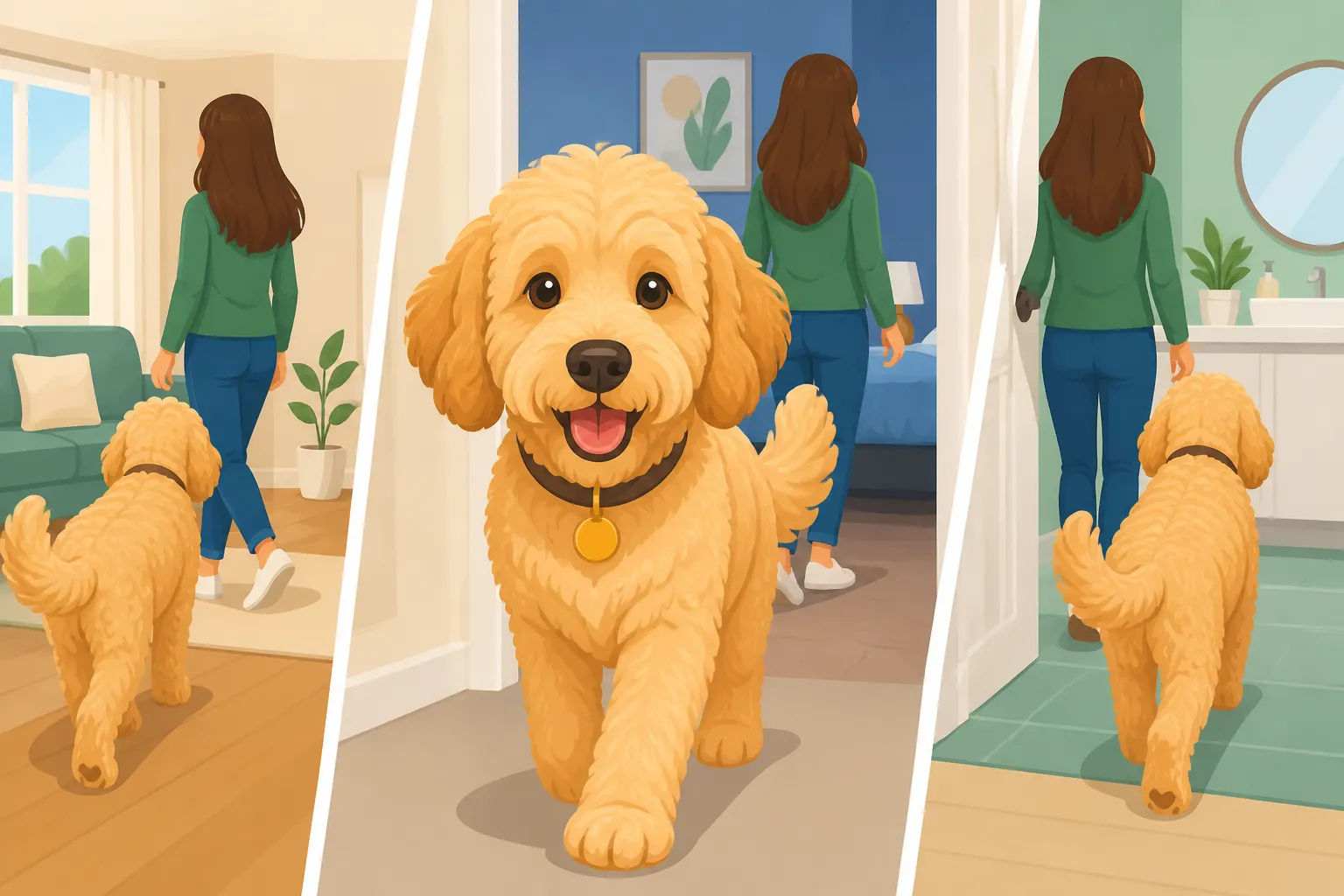
Does your Goldendoodle follow you from room to room, even to the bathroom, making you wonder if you've accidentally acquired a furry shadow that somehow managed to pay rent? This constant companionship, while often endearing, can sometimes become overwhelming or even signal an underlying issue that needs a closer look. If your Goldendoodle is your devoted, ever-present sidekick, this guide will help you understand the roots of this "Velcro dog" behavior and offer practical, empathetic strategies to foster a healthy sense of independence without sacrificing those cherished cuddles.
Understanding Why Your Goldendoodle Becomes a Shadow
It's easy to write off a Goldendoodle's constant presence as just part of their charming personality, and often, it is! However, there's a fascinating blend of inherited traits and learned behaviors that contribute to why your furry friend might insist on being your perpetual shadow. It's rarely about being naughty; it's usually about their intrinsic needs and how they've learned to interact with their favorite human.
The Golden Retriever's 'Velcro Dog' Tendencies
One of the most defining characteristics of the Golden Retriever, a cornerstone of the Goldendoodle lineage, is their profound desire to be near their people. They are often affectionately dubbed "Velcro dogs" because they stick so closely. This isn't just a cute quirk; it's deeply ingrained in their history and temperament. Golden Retrievers were originally bred to work in close partnership with hunters, retrieving game and always remaining attentive to their human companions.
This strong drive for companionship means that Goldens are inherently tuned into their owners' movements and emotions. They thrive on interaction and often feel most secure and content when they are within sight or touch of their beloved family members. Imagine a Golden Retriever in the field, constantly checking in with their handler – that same instinct translates to them wanting to be part of every mundane activity in your home.
When this trait blends into the Goldendoodle, it means they often inherit that powerful inclination to participate in everything you do. Whether you're moving from the living room to the kitchen, folding laundry, or simply getting up to grab a glass of water, their instinct is to accompany you. They don't necessarily need to do anything; their presence alone is their way of being involved and connected, fulfilling that deep-seated companion drive.
The Poodle's Sensitivity and Need for Proximity
The Poodle half of your Goldendoodle's heritage also plays a significant role in this desire for closeness, albeit with a slightly different flavor. Poodles are renowned for their intelligence, sensitivity, and often form incredibly strong, almost intuitive, bonds with their primary caregivers. They are highly attuned to human emotions and body language, often seeming to anticipate your next move before you even make it.
This inherent sensitivity means that Poodles, and by extension Goldendoodles, often seek reassurance and comfort from their humans. They thrive on connection and can become quite dependent on their person's presence for their emotional well-being. A Poodle's intelligence allows them to quickly learn patterns and understand that being near you often leads to positive interactions, be it a gentle pet, a kind word, or just the comforting rhythm of your presence.
So, when you combine the Golden Retriever's biddable, companion-seeking nature with the Poodle's intelligent and sensitive desire for deep connection, you often get a Goldendoodle who sees no reason not to be by your side at all times. They aren't trying to be intrusive; they are simply acting on a powerful, dual-rooted instinct to remain connected to the center of their world – you! This double dose of "Velcro" can make the Goldendoodle an exceptionally devoted, if sometimes overly present, companion.
Early Learning and Reinforcement
Beyond genetics, a significant factor in your Goldendoodle's shadow behavior is what they've learned from you, often without you even realizing it. From the moment they come home as puppies, we naturally tend to reinforce their following behavior. When a tiny Goldendoodle puppy trots after you, it’s adorable, right? You might pick them up, give them a cuddle, or offer a sweet word. Each of these reactions, however small, tells your puppy that following you is a rewarding activity.
As they grow, this pattern continues. Every time your Goldendoodle follows you into a room, and you acknowledge them—even with just a quick glance, a sigh, or a soft "hey there"—you are providing a form of attention. For a dog that thrives on connection, any attention is good attention. They quickly learn that if they stick to you like glue, they’re more likely to receive pets, praise, or even just eye contact, which reinforces their behavior and solidifies the habit of being your constant companion.
Think about the subtle ways we might inadvertently encourage this. Perhaps you talk to your Goldendoodle as you move around the house, or you gently nudge them with your foot when they’re underfoot. These small interactions, while seemingly insignificant to us, are highly valuable social cues for your dog. They interpret these as invitations to stay close and continue their shadowing, further cementing the belief that being your shadow is exactly what you want them to do, even if it’s starting to feel a bit much for you!
Is This Normal Goldendoodle Behavior or Something More?
While a Goldendoodle's natural inclination to follow you is usually harmless and even charming, it's really important to distinguish between normal, "Velcro dog" behavior and something that might be more concerning. Sometimes, what looks like just clinginess can actually be a symptom of deeper anxiety or even an underlying health issue.
When 'Velcro' Turns into Separation Anxiety
Normal Goldendoodle clinginess typically means they follow you from room to room, settling calmly near you once you stop moving. They might lie at your feet in the kitchen, watch you from the doorway of the bathroom, or curl up on their bed in your home office. They're content as long as they know you're around, even if you're not directly interacting. The critical difference here is their emotional state: they might prefer your presence, but they aren't distressed by a temporary separation.
However, if your Goldendoodle exhibits extreme distress when you prepare to leave the house, or even when you simply close a door between you, this could be a sign of Goldendoodle Separation Anxiety From Both Parent Lines. This condition goes beyond mere preference for company. Signs of true separation anxiety often include frantic efforts to escape when left alone, destructive chewing on doorframes or furniture, inappropriate urination or defecation indoors, excessive barking or howling, and self-harm such as chewing at their paws until they bleed. They might pace obsessively, pant heavily, or refuse to eat their favorite treats once they realize you’re gone. Cameras That Show What a Goldendoodle Does Alone can be incredibly helpful here.
It's crucial to understand that separation anxiety isn't about your dog being "mad" at you for leaving. It's a genuine panic disorder where the dog feels intense fear and distress when isolated from their primary attachment figure. If you suspect your Goldendoodle is suffering from separation anxiety, the approach will be different from simply managing normal clinginess. It often requires a multi-faceted plan involving desensitization, counter-conditioning, and sometimes even medication prescribed by a vet or veterinary behaviorist.
Health Concerns Masked by Clinginess
Sometimes, a sudden or marked increase in your Goldendoodle's clinginess can be a subtle indicator that something isn't quite right with their health. Dogs, being masters of masking pain or discomfort, often communicate their needs through behavioral changes. If your normally independent Goldendoodle suddenly starts shadowing your every move more intensely than usual, or if their clinginess is accompanied by other subtle shifts, it's definitely worth paying attention to.
For instance, an older Goldendoodle might become more attached as their senses decline or if they are experiencing Cognitive Decline in a Goldendoodle Past Ten. They might feel disoriented or anxious, leading them to seek constant reassurance from you. Similarly, a dog experiencing chronic pain from conditions like arthritis or even an injury might become more clingy, looking for comfort and proximity to their trusted human. Even something as seemingly minor as a persistent ear infection or dental discomfort can make a dog feel vulnerable and seek extra closeness.
Other subtle health cues could be changes in appetite, increased lethargy, limping, changes in urination habits, or unusual whining or restlessness. If your Goldendoodle's shadowing behavior feels different or new, and especially if it's coupled with any other concerning symptoms, a visit to your veterinarian is highly recommended. They can rule out any underlying medical conditions and provide peace of mind or suggest appropriate treatment, ensuring that your Goldendoodle's change in behavior isn't a silent plea for help.
Practical Steps to Foster Independence (And Still Get Cuddles!)
The good news is that you don't have to choose between a "Velcro dog" and an aloof companion. You can absolutely encourage a healthy sense of independence in your Goldendoodle while still enjoying all the wonderful, cuddly moments that make them such beloved family members. The key is consistent, gentle training that builds their confidence and provides them with clear expectations.
Building "Alone Time" Gradually
One of the most effective ways to encourage independence is to gradually introduce short periods of "alone time," even when you're still in the house. This isn't about punishment; it's about teaching your Goldendoodle that your absence is temporary and that they can be safe and calm on their own. Start incredibly small, even just closing a door between you for 30 seconds. The trick is to do it without any fanfare – no sad goodbyes, no excited hellos when you return. Building Alone Time for a Goldendoodle in Minutes offers a fantastic framework for this.
Use baby gates to create physical boundaries in your home. This allows your Goldendoodle to still see and hear you, providing some comfort, but prevents them from literally walking under your feet. For example, gate them into the kitchen while you're in the living room, or keep them in the living room while you dart into the bathroom. This teaches them to exist independently in a separate space without feeling completely cut off or punished.
To make these short periods positive, always provide a high-value, long-lasting distraction just before you create the distance. A stuffed KONG with peanut butter, a bully stick, or a challenging puzzle feeder (many great options are available on Amazon) can occupy their minds and associate your "absence" with a rewarding activity. The goal is for them to be so engrossed in their treat that they barely notice you've stepped away, thus building a positive association with brief solitude.
Creating a Safe Space for Your Goldendoodle
Every dog, especially one prone to clinginess, benefits immensely from having their own designated safe space where they can retreat and feel secure. This isn't just a bed; it's a sanctuary. For many Goldendoodles, a properly introduced crate serves this purpose beautifully. When introduced positively, a crate becomes their den, a comfortable, quiet place where they can relax undisturbed. Make it inviting with soft bedding, a favorite blanket, and perhaps a special chew toy they only get in their crate.
If a crate isn't feasible or preferred, a comfortable dog bed in a quiet corner of a family room, or even a specific mat that's exclusively theirs, can work. The key is to make this space consistently positive. Encourage your Goldendoodle to go to their bed voluntarily and reward them with treats and praise when they settle there. Never use this space as a punishment. It should be a place they want to be, associated with calm and comfort. You might find our guide on Crate Training a Goldendoodle That Screams helpful if your dog isn't keen on their crate yet.
Having a dedicated spot gives your Goldendoodle an alternative to constantly being at your heels. When you sit down to work, you can gently direct them to their "place." When they settle there, reward them. Over time, they'll learn that their independent space is just as rewarding, if not more so, than being glued to your side. This empowers them to choose relaxation and comfort in their own area, even when you're nearby.
Engaging Mental Stimulation and Exercise
A Goldendoodle that is physically tired and, more importantly, mentally stimulated is a much more relaxed and independent dog. These breeds are smart, and without enough to do, their minds can become restless, often leading them to focus all their attention (and energy) on you. Think of it this way: a bored dog is an inventive dog, and sometimes that invention involves becoming your superglue.
Ensure your Goldendoodle receives adequate physical exercise for their size and age. This isn't just a quick trip to the backyard; it means a brisk walk, a good game of fetch, or active playtime in a secure area. For a standard Goldendoodle, this could mean Goldendoodle Exercise at Thirty to Sixty Minutes of activity daily. However, physical exercise alone often isn't enough for their intelligent minds.
Mental stimulation is equally, if not more, crucial. Engage their brains with puzzle toys, scent work, or even learning new tricks. Hide treats around the house and let them sniff them out, or use puzzle feeders for their meals. Resources like BAXTER & Bella offer excellent online training courses and ideas for mental enrichment that can keep your Goldendoodle's mind happily occupied. Our article on The Thinking Work That Actually Tires a Goldendoodle has more fantastic ideas. A Goldendoodle whose brain has been given a good workout is more likely to settle down independently rather than feeling the constant need to track your every move.
Teaching a "Place" or "Stay" Command
Direct training can be incredibly empowering for both you and your Goldendoodle. Teaching a solid "Place" or "Stay" command gives you a tool to manage their shadowing behavior in a gentle yet effective way. "Place" training teaches your dog to go to a designated spot (like their bed or mat) and remain there until you release them. This is different from just "staying" anywhere; it's about holding a position in a specific location.
Start by luring your Goldendoodle onto their mat or bed with a treat. As soon as all four paws are on the mat, mark the behavior (with a clicker or a verbal "yes!") and reward them generously. Repeat this several times. Once they readily go to their mat, start adding a duration. Ask them to "Place," reward for being on the mat, then take one step back, wait a second, return, mark, and reward. Gradually increase the distance you move away and the time they stay on the mat. You can learn more with our guide to Goldendoodle Place Training on a Bed or Mat.
This command gives you the ability to send your Goldendoodle to their spot when you need a moment, like when you’re cooking dinner or need to focus on a task without them underfoot. It empowers them to settle independently in a designated area while still feeling connected to you. It also helps reinforce the idea that they don't always need to be physically touching you to be a good dog or to receive your love and attention. Remember, practice often in short, positive sessions to build a strong, reliable command.
What Not to Do When Your Goldendoodle Follows You
Just as important as knowing what to do, is understanding what actions can actually make the clinginess worse or damage your relationship with your Goldendoodle. Our reactions, even when frustrated, can send unintended messages that deepen their need for proximity rather than fostering independence.
Punishing Clinginess
When your Goldendoodle is constantly underfoot, tripping you, or preventing you from moving freely, it's natural to feel a surge of frustration. However, reacting with anger, scolding, yelling, or physically pushing your dog away for following you is counterproductive and harmful. Your Goldendoodle isn't trying to annoy you; they're acting on instinct, a need for connection, or even a touch of insecurity. They simply don't understand why they're being punished for being near you.
Punishing clinginess can severely damage the trust and bond you share with your dog. Instead of teaching them independence, it teaches them that seeking comfort or proximity to you can result in unpredictable and unpleasant reactions. This can heighten their anxiety, making them more insecure and more likely to stick to you, paradoxically, as they try to figure out what they did wrong or seek reassurance after being reprimanded. It creates a cycle where their anxiety increases, leading to more clinginess, which leads to more frustration and punishment.
The goal is to build your Goldendoodle's confidence and teach them appropriate boundaries, not to make them fearful of your presence or reactions. Imagine if your best friend scolded you for trying to spend time with them; you'd likely feel hurt and confused. Your Goldendoodle feels similarly. Focus on redirecting their behavior and reinforcing desired actions, rather than punishing their deeply ingrained instincts.
Inadvertently Reinforcing the Behavior
One of the sneakiest ways we reinforce clingy behavior is by inadvertently giving our Goldendoodles attention when they are being shadows. While we might not be actively petting or praising them, even a quick glance, a gentle "move it, please," a sigh, or making eye contact can be perceived by your Goldendoodle as a form of attention. For a dog who craves your interaction, any acknowledgment, even negative, is often better than being ignored.
Think about it: you're trying to walk through the kitchen, and your Goldendoodle is right under your feet. You gently tap them with your foot and say, "Scoot over." From your dog's perspective, they just got a touch and a sound from you – reinforcement for being in that spot. Or perhaps you sigh loudly as they trip you for the tenth time – that emotional response registers as attention. They learn that being constantly present eventually yields some kind of interaction, however brief or exasperated.
To break this cycle, practice the art of "ignoring" the unwanted behavior. When your Goldendoodle follows you from room to room, make yourself boring. Don't make eye contact, don't speak to them, and don't touch them. Only engage with them when they are not shadowing you, or when they are calmly settled in their designated spot (like their bed). The moment they choose a moment of independence, even for a few seconds, that's when you can offer a quiet praise or a gentle scratch behind the ears. This teaches them that calm, independent behavior is what earns your positive attention, shifting the dynamic slowly but surely. It also helps to consider Whether a Goldendoodle Should Sleep in Your Room if their proximity is becoming an issue.
Comparison of Normal Clinginess vs. Separation Anxiety
| Feature | Normal Goldendoodle Clinginess | Separation Anxiety |
|---|---|---|
| Primary Motivation | Desire for companionship, security, involvement, genetic predisposition | Intense fear/panic of being left alone, perceived abandonment |
| Behavior When You're Home | Follows from room to room, settles calmly nearby, may solicit pets | Still follows, but may show heightened watchfulness, restlessness |
| Behavior When You Leave a Room (Temporarily) | Waits by door, may whine briefly, then settles or finds a new spot | May paw at door, whine/bark persistently, pace, immediate distress |
| Behavior When Left Alone (House) | May whine briefly, then settles to sleep or chew a toy | Destructive chewing, frantic escape attempts, excessive barking/howling, inappropriate elimination, self-harm |
| Physical Signs | Relaxed body language, happy tail wags | Pacing, panting, drooling, trembling, dilated pupils, wide eyes |
| Reactivity to Your Return | Happy, excited greeting | Over-the-top, prolonged, frantic greeting; may ignore you briefly due to stress |
| Appetite When Alone | Will usually eat food/treats | May refuse food/treats, even high-value ones |
Disclaimer
This article is for general informational purposes only and does not constitute professional advice. Laws, prices and regulations vary by location and change over time. Consult a qualified professional for guidance on your specific situation.