Where the Goldendoodle Hip Figure Comes From
It’s truly disheartening to see your beloved Goldendoodle, a dog known for its boundless energy and joyful spirit, start showing signs of discomfort or limping. Many Goldendoodle owners worry about the breed's susceptibility to hip dysplasia, a concern that’s often highlighted by a statistic suggesting that 15-20% of Goldendoodles may be affected. But where exactly does this figure come from? It's not always clear, and the lack of official breed registries for Goldendoodles can make finding reliable information incredibly frustrating. This comprehensive guide aims to peel back the layers on this common statistic, exploring its origins, the methods used to assess hip health, and what it truly means for you and your furry family member.
Understanding Canine Hip Dysplasia in Goldendoodles
Hip dysplasia is a significant orthopedic condition that affects a wide range of dog breeds, particularly larger ones, and unfortunately, Goldendoodles are no exception. It's a developmental disorder that impacts the hip joints, leading to varying degrees of discomfort and mobility issues.
What is Hip Dysplasia?
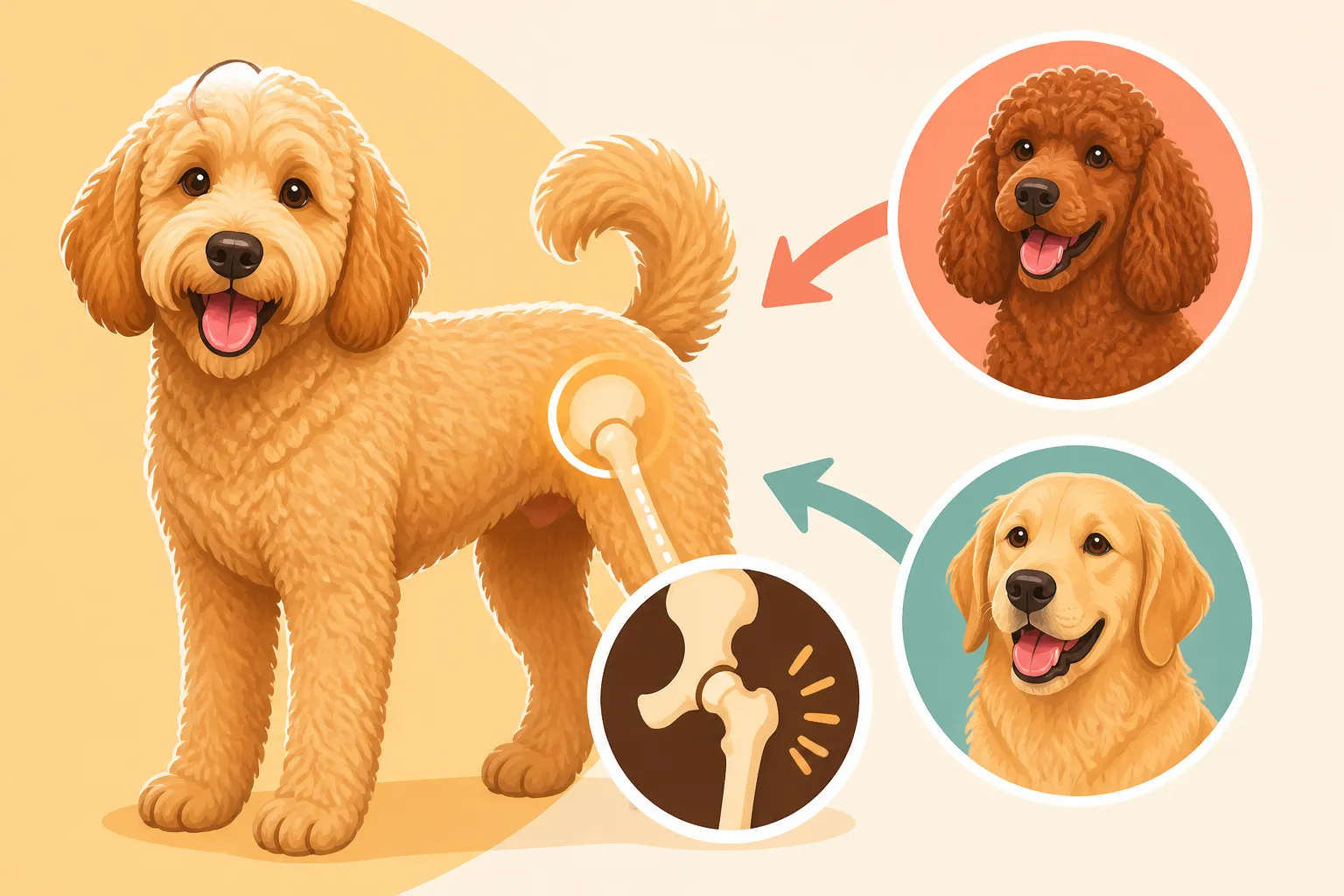
At its core, hip dysplasia is a condition where the hip joint doesn't form properly. In a healthy hip, the ball (femoral head) at the top of the thigh bone fits snugly into a deep socket (acetabulum) in the pelvis. This allows for smooth, pain-free movement. However, with hip dysplasia, this ball-and-socket joint becomes loose, shallow, or malformed. Instead of a tight fit, the ball rattles around in the socket, leading to instability. Over time, this constant friction and abnormal movement cause wear and tear, eventually leading to painful degenerative joint disease, often known as osteoarthritis.
The symptoms can vary widely. A young Goldendoodle might show a "bunny hop" gait, reluctance to run or jump, difficulty standing up, or a decrease in overall activity. An older dog might exhibit stiffness, lameness in one or both hind legs, pain when touched around the hips, or even muscle atrophy in the hindquarters. Diagnosing hip dysplasia typically involves physical examination and X-rays, often performed under sedation to get the best positioning. The severity can range from mild laxity, which might only cause discomfort later in life, to severe malformation, leading to significant pain and disability even in young dogs.
Why Goldendoodles Are Prone
The genetic predisposition to hip dysplasia in Goldendoodles stems directly from their parent breeds: the Golden Retriever and the Poodle. Both of these breeds are known to carry a risk of hip dysplasia. Golden Retrievers, in particular, have a well-documented history with this condition, with prevalence rates that are concerning. Standard Poodles, while generally having a lower incidence than Golden Retrievers, are not immune to it either. When you combine the genetic pools of these two breeds, the potential for inheriting the genes responsible for poor hip conformation naturally exists.
It's not just a simple 50/50 inheritance, though. The complexities of genetics mean that even if both parents have good hips, there’s still a small chance their offspring could develop the condition. This is partly why we discuss the concept of What a Goldendoodle Inherits From Each Parent Breed. The interplay of multiple genes, along with environmental factors like rapid growth, excessive exercise in puppyhood, and nutrition, all contribute to whether a Goldendoodle develops hip dysplasia. For example, a study might reveal that the prevalence of hip dysplasia in Golden Retrievers is significantly higher than in Standard Poodles. Therefore, a Goldendoodle, particularly an F1 generation (50% Golden, 50% Poodle), carries a substantial portion of that Golden Retriever genetic legacy.
The Frustration of Unpredictability
One of the biggest frustrations for Goldendoodle owners, and even for diligent breeders, is the inherent unpredictability of a crossbreed when it comes to inherited health conditions like hip dysplasia. Unlike purebred dogs, which have decades of documented health data and breed-specific health schemes managed by kennel clubs, Goldendoodles lack a unified breed club. This means there's no central database or standardized breeding protocol that breeders are legally obligated to follow. The claims of "hybrid vigor" are often touted, suggesting that crossbreeds are inherently healthier, but it's crucial to understand that The Goldendoodle Hybrid Vigor Claim and Where It Breaks when both parent lines carry common genetic predispositions.
This lack of standardized data makes it incredibly difficult to pinpoint an exact, universally accepted "Goldendoodle hip figure" with the same scientific rigor as you might find for a purebred Golden Retriever or Poodle. Many statistics, including the 15-20% figure, are often extrapolations or estimates based on anecdotal evidence, limited veterinary surveys, or the known prevalence in the parent breeds. For prospective owners, this uncertainty is daunting. You want to do everything right, choose a healthy puppy, and give it the best start, but without clear breed-wide health data, it feels like navigating a minefield. This is why a breeder's commitment to rigorous health testing of both parent dogs becomes absolutely paramount.
The Role of OFA and PennHIP in Assessing Goldendoodle Hips
Given the genetic predisposition to hip dysplasia, responsible breeders rely on standardized screening methods to assess the hip health of their breeding dogs. The two most widely recognized methods in North America are the Orthopedic Foundation for Animals (OFA) and the University of Pennsylvania Hip Improvement Program (PennHIP).
OFA Certification and Grading
The Orthopedic Foundation for Animals (OFA) has been a cornerstone of canine orthopedic health assessment for decades. For hip evaluations, OFA requires X-rays of a dog's hips to be taken after they reach 24 months of age, as this is when the hip joints are considered fully developed. These X-rays are then submitted to OFA, where three independent, board-certified veterinary radiologists review them. They look for specific indicators of hip dysplasia, such as femoral head coverage, acetabular depth, and evidence of degenerative joint disease.
The hips are graded on a scale ranging from Excellent, Good, Fair (all considered "passing" or "normal" for breeding purposes) to Borderline, Mild, Moderate, and Severe (all indicating some degree of dysplasia). Breeders aim for "Good" or "Excellent" ratings for their breeding dogs. While OFA has been instrumental in reducing the incidence of hip dysplasia in many purebred lines, it's important to understand Goldendoodle Hip Dysplasia and the OFA Numbers are typically collected on a breed-specific basis. For Goldendoodles, since they aren't a recognized breed by the AKC, their OFA results aren't aggregated into a Goldendoodle-specific database in the same way. This means breeders must individually provide the OFA certificates for both parents. Understanding Reading an OFA Hip Result on a Goldendoodle Parent is crucial for any potential puppy buyer.
PennHIP Evaluation for Joint Laxity
PennHIP offers an alternative, and some argue, a more accurate, assessment of hip health, especially for predicting future hip dysplasia risk. Unlike OFA, PennHIP can be performed on dogs as young as 16 weeks, although it's typically done between 4 months and 4 years of age. The key difference lies in its methodology: PennHIP uses three distinct X-ray views (vs. OFA's single view) to quantify hip joint laxity, which is considered the primary risk factor for hip dysplasia. The distraction view, in particular, measures how much the femoral head can be distracted or moved out of the acetabulum.
This measurement, known as the Distraction Index (DI), is a numerical value ranging from 0 to 1. A DI closer to 0 indicates very tight hips (less laxity), while a DI closer to 1 indicates very loose hips (more laxity). Dogs with a DI of 0.30 or less are generally considered to have tight hips, while those with a DI above 0.50 are at a significantly higher risk of developing hip dysplasia. PennHIP also provides a percentile ranking, showing how a dog's hips compare to others of the same breed (or in this case, similar breeds like Golden Retrievers and Poodles). Many proponents believe PennHIP offers a more objective and predictive assessment, allowing breeders to make more informed decisions about breeding potential.
Comparing OFA and PennHIP for Goldendoodle Parents
Both OFA and PennHIP are valuable tools, but they provide different types of information and have different implications for Goldendoodle breeding. OFA offers a qualitative assessment of hip conformation and the presence of degenerative joint disease at 2 years of age, giving a snapshot of the hip's current health status. PennHIP, on the other hand, quantifies hip laxity, providing a more predictive measure of the risk of developing hip dysplasia throughout a dog's life, and can be done much earlier.
For Goldendoodles, where transparency and thoroughness are key due to the lack of a breed registry, many discerning buyers and responsible breeders prefer to see both. PennHIP Against OFA for a Goldendoodle is often a topic of discussion among breeders. While OFA gives a pass/fail at maturity, PennHIP can guide selection by identifying dogs with tighter hips, theoretically lowering the genetic risk in subsequent generations. Ultimately, a breeder committed to health should be able to provide clear documentation for either or both of these certifications for both parent dogs, demonstrating a genuine effort to breed away from hip dysplasia.
Here's a quick comparison of the two methods:
| Feature | OFA (Orthopedic Foundation for Animals) | PennHIP (University of Pennsylvania Hip Improvement Program) |
|---|---|---|
| Primary Focus | Evaluation of hip conformation and presence of degenerative joint disease. | Quantitative measurement of hip joint laxity. |
| Age of Dog | Minimum 24 months for final certification. | As early as 16 weeks, typically 4 months to 4 years. |
| X-ray Views | One standard ventrodorsal view. | Three views: distraction, compression, and hip extended. |
| Results | Grades: Excellent, Good, Fair (passing); Borderline, Mild, Moderate, Severe (dysplastic). | Distraction Index (DI) and percentile ranking relative to breed. |
| Predictive Value | Shows current hip status; somewhat predictive of future health. | Highly predictive of a dog's susceptibility to hip dysplasia. |
| Cost | Generally lower per evaluation. | Generally higher per evaluation. |
Deciphering the "15-20 Percent" Goldendoodle Hip Dysplasia Claim
That widely circulated figure, the 15-20% chance of a Goldendoodle developing hip dysplasia, is something that pops up frequently in conversations and online searches. It certainly sounds official, but understanding its true origin and validity is crucial for any potential or current Goldendoodle owner.
Tracing the Origin of the Statistic
It's tempting to think that a figure like "15-20 percent" comes from a large, peer-reviewed study specifically on Goldendoodles. The reality is more nuanced. Because Goldendoodles are not a recognized breed by organizations like the American Kennel Club (AKC), there is no official breed-wide health registry or centralized data collection that rigorously tracks the incidence of diseases like hip dysplasia across the entire Goldendoodle population. This is a significant challenge, as Why a Goldendoodle Has No Breed Club Health Scheme. Consequently, the "15-20%" figure is not typically derived from a formal, breed-specific epidemiological study on Goldendoodles themselves.
Instead, this number is often an estimate or an extrapolation based on the known prevalence of hip dysplasia in the parent breeds, particularly the Golden Retriever. Golden Retrievers have a documented incidence of hip dysplasia, with various studies and OFA statistics showing percentages that can range from 10-20% or even higher in some lines. Given that the Golden Retriever contributes a substantial portion of the Goldendoodle's genetic makeup, it's reasonable, though not scientifically precise, to infer a similar risk profile for the crossbreed. The figure also likely incorporates anecdotal reports from veterinarians who treat a high volume of Goldendoodles, as well as data gathered by dedicated doodle rescue organizations. These rescues often see a disproportionate number of dogs surrendered due to costly health issues, including orthopedic problems.
The Impact of Parentage and Breeding Practices
The actual risk for an individual Goldendoodle puppy developing hip dysplasia is far more dependent on the specific parentage and the breeding practices of the kennel from which it came. If a breeder diligently screens both parent dogs using OFA and/or PennHIP and only breeds dogs with excellent hip scores, the chances of their puppies developing hip dysplasia are significantly reduced, though never entirely eliminated due to the polygenic nature of the disease. This is why it's so important to prioritize Health Testing Both Goldendoodle Parents Should Have.
Conversely, if a breeder cuts corners, doesn't perform proper health screenings, or breeds dogs with questionable hip health, the likelihood of their puppies inheriting and developing hip dysplasia increases dramatically. The 15-20% figure often represents an average or a broad estimate across the entire Goldendoodle population, which includes both puppies from highly responsible breeders and those from less scrupulous operations. This highlights a critical point: while a general statistic might give you a baseline, the individual risk for your Goldendoodle is largely shaped by the health lineage of its parents. A responsible breeder will be transparent about OFA Clearances on a Goldendoodle Sire and Dam and often show you the actual certificates.
Real-World Implications for Goldendoodle Owners
For you, as a Goldendoodle owner or prospective owner, what does this 15-20% figure really mean? It means you should be aware of the risk, but not necessarily panic. It serves as a strong reminder that hip dysplasia is a genuine concern in the breed, and taking proactive steps to mitigate that risk is essential. Firstly, it underscores the importance of choosing a breeder who is completely transparent about the health testing of their breeding stock. Any breeder who dismisses hip dysplasia concerns or claims their dogs are "naturally healthy" without providing verifiable test results should be a red flag.
Secondly, it means being prepared for the possibility of managing this condition down the line. Even with the best breeding, genetics are complex, and environmental factors play a role. Maintaining your Goldendoodle at a healthy weight is critical, as Goldendoodle Weight and the Load on Its Joints directly impacts hip health. Ensuring proper nutrition and avoiding excessive, high-impact exercise during their rapid growth phases can also help. Should your Goldendoodle develop hip dysplasia, treatments can range from pain management and physical therapy to costly surgeries like total hip replacement. Having a robust pet insurance policy, such as one from Healthy Paws, can be an absolute lifesaver in these scenarios, covering a significant portion of unexpected veterinary bills. Discussing the potential for this condition with your vet from puppyhood can help you establish a preventative care plan.
Proactive Steps for Goldendoodle Hip Health
While the risk of hip dysplasia is a reality for Goldendoodles, there's a lot you can do as an owner to minimize that risk and support your dog's joint health throughout its life. It starts even before you bring your puppy home and continues through their senior years.
Choosing a Reputable Breeder
This is arguably the single most important step in mitigating the risk of hip dysplasia. A reputable Goldendoodle breeder will prioritize health over profit and will be entirely transparent about the health testing performed on both the sire and dam of your puppy. They will willingly provide documentation for hip evaluations (OFA or PennHIP), elbow evaluations, and other genetic screenings relevant to the parent breeds. Don't be shy about asking to see these certificates and verifying them. Look for breeders who openly discuss The DNA Panel a Goldendoodle Breeder Should Run for all their breeding dogs.
A good breeder will not just breed dogs with "clear" parents; they will understand the genetic history of their lines and strive to improve health outcomes with each generation. They should also be able to explain why they chose a particular pairing. Avoid breeders who make vague claims about "healthy lines" without providing proof, or those who seem reluctant to share full health clearances. Remember, the investment in a well-bred puppy from health-tested parents is a small price to pay compared to the emotional and financial cost of managing a chronic condition like severe hip dysplasia.
Early Life Care and Prevention
Once you bring your Goldendoodle puppy home, the way you manage its growth and development plays a crucial role in its long-term joint health. Rapid growth, especially in larger Goldendoodles, can put undue stress on developing joints. Feed a high-quality, large-breed puppy food specifically formulated to support controlled growth, avoiding formulas that encourage excessively fast weight gain. Overfeeding can lead to obesity, which significantly exacerbates hip problems. Goldendoodle Joint Health by Size Category is an important consideration. For a standard Goldendoodle, controlled growth is even more critical.
Equally important is managing exercise. While Goldendoodle puppies are bundles of energy, it's vital to avoid high-impact activities like excessive jumping, long runs on hard surfaces, or repetitive stair climbing during their first year to 18 months. Their growth plates are still open and vulnerable. Focus instead on short, gentle walks, playtime on soft surfaces, and controlled bursts of activity. Allowing a puppy to jump off furniture or play aggressively with much larger dogs can cause damage to developing joints that may contribute to hip dysplasia later on. Regular, moderate exercise is good, but "too much, too soon" can be detrimental.
Ongoing Support for Adult Goldendoodles
Even if your Goldendoodle passes its early years without incident, joint health remains a lifelong consideration. Continue to prioritize maintaining a lean body weight, as every extra pound adds stress to the hips. Your veterinarian can help you determine an ideal weight and feeding plan. Regular, moderate exercise is still key to keeping muscles strong around the joints, which provides natural support. Activities like swimming can be particularly beneficial as they offer non-weight-bearing exercise.
Consider adding joint supplements containing ingredients like glucosamine, chondroitin, and MSM, especially as your Goldendoodle approaches middle age or if they show any early signs of stiffness. Brands like Cosequin or Dasuquin are commonly recommended. Always consult your vet before starting any new supplements. Regular veterinary check-ups are also vital to monitor for any subtle changes in gait or mobility. For Senior Goldendoodle Mobility and Arthritis, early intervention can significantly improve their quality of life. If signs of hip discomfort do arise, prompt veterinary attention allows for early diagnosis and management, which might include anti-inflammatory medications, physical therapy, or even advanced treatments. Planning for these potential veterinary needs is wise, and pet insurance from providers like Healthy Paws can ease the financial burden if treatments become necessary.
Hip dysplasia is a significant concern for Goldendoodle owners, and while the "15-20%" figure often cited is an estimate rather than a precise scientific statistic for the crossbreed, it highlights a real risk. By understanding the condition, prioritizing responsible breeding practices, and implementing proactive care throughout your Goldendoodle's life, you can significantly improve their chances of enjoying a long, comfortable, and active life. Always partner with a trustworthy veterinarian and a reputable breeder to make informed decisions for your cherished companion.
Disclaimer
The information provided in this article is for general informational purposes only and is not intended as a substitute for professional veterinary advice. Always consult with a qualified veterinarian regarding any medical concerns or before making any decisions about your pet's health and treatment.