Finding a Mast Cell Tumor in a Goldendoodle Coat
One of the most concerning things a Goldendoodle owner can face is discovering an unexplained lump on their beloved companion. With their gorgeous, often dense and curly coats, these lumps can be incredibly difficult to find until they've grown quite large, leaving you worried and wondering what steps to take. This guide will walk you through understanding mast cell tumors, the specific challenges of detecting them in Goldendoodles, and a practical approach to performing thorough home examinations, so you can catch any issues as early as possible.
Understanding Mast Cell Tumors in Goldendoodles
It’s truly a frightening moment when you feel an unexpected bump under your dog's skin. Among the various types of growths dogs can develop, mast cell tumors are particularly notorious, and unfortunately, Goldendoodles carry a higher risk, largely due to their Golden Retriever lineage. Knowing what these tumors are and why your Goldendoodle might be prone to them is the first step in proactive care.
What Exactly is a Mast Cell Tumor?
Think of mast cells as tiny little immune system defenders, living in various tissues throughout your dog's body, including the skin, respiratory tract, and gastrointestinal tract. Their main job is to react to allergens and inflammation, releasing histamine and other chemicals to protect the body. A mast cell tumor is essentially an uncontrolled proliferation of these mast cells. They can be tricky because they don't all look or feel the same, and their behavior can be highly unpredictable. Some are benign and slow-growing, while others are aggressive and can spread rapidly to other organs, such as the lymph nodes, spleen, and liver. This variability is precisely what makes them so concerning and warrants prompt veterinary attention upon discovery.
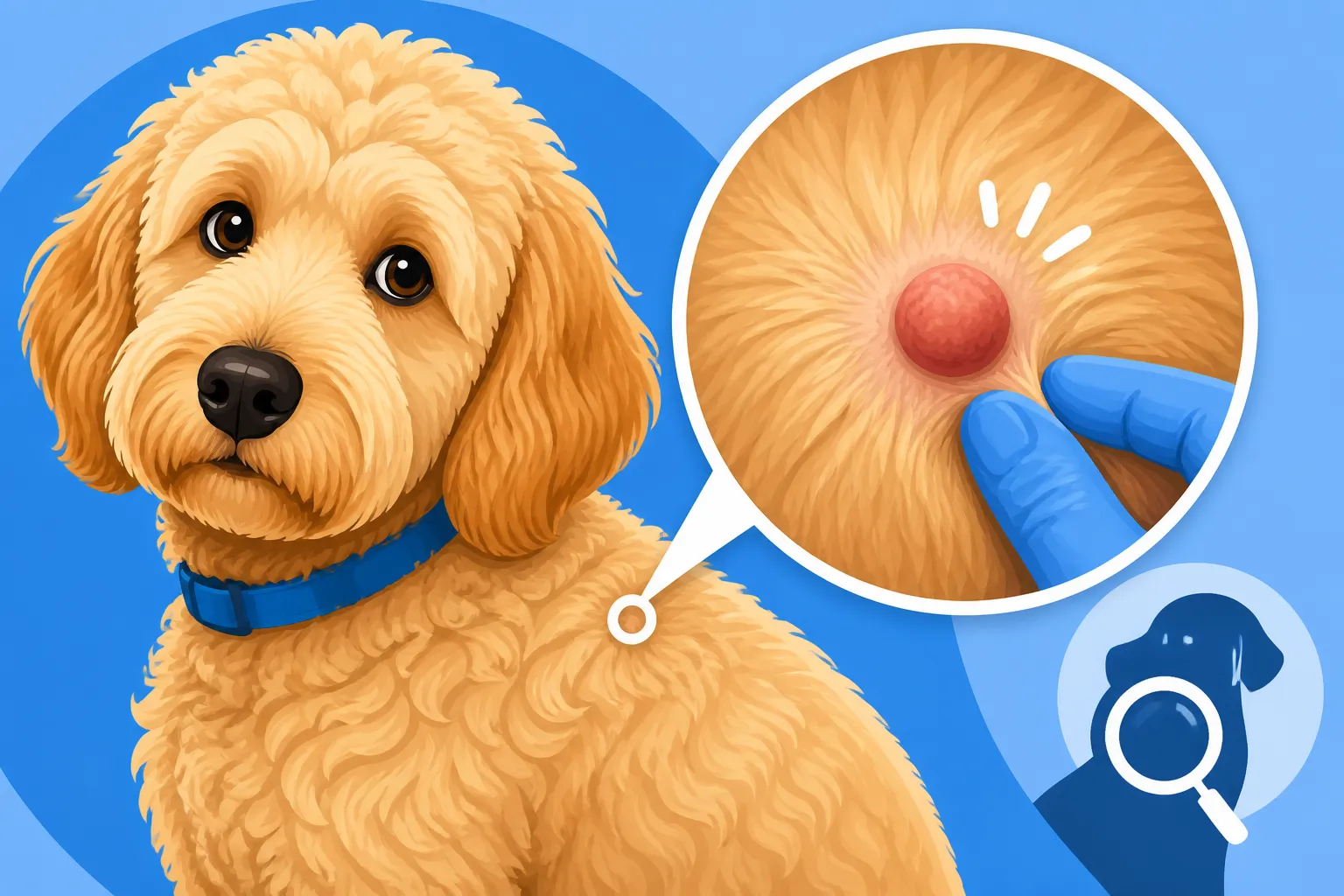
The appearance can range widely, from a soft, mobile lump under the skin to a firm, raised, ulcerated mass on the surface. Sometimes they can even change in size or appearance suddenly, becoming red and swollen, only to shrink again a day later, a phenomenon known as Darier's sign. This "waxing and waning" can make owners second-guess whether it's truly something serious, but it's often a tell-tale sign of a mast cell tumor. The important takeaway is that any new lump, regardless of its characteristics, needs to be evaluated.
Why Goldendoodles Are at Risk
Goldendoodles inherit traits from both their Golden Retriever and Poodle parents, and unfortunately, this can include genetic predispositions to certain health issues. When it comes to tumors, the Golden Retriever side of their family tree is a significant factor. Golden Retrievers are known to have one of the highest incidences of cancer among all breeds, and mast cell tumors are one of the types they are particularly susceptible to. While Goldendoodles are often touted for "hybrid vigor," it's crucial to understand that they can still inherit the predispositions of their parent breeds. You can read more about the specific risks they carry from the Golden side in our article on Cancer Risk a Goldendoodle Carries From the Golden Side.
The Poodle lineage also contributes to some tumor risks, though mast cell tumors are more strongly linked to Golden Retrievers. This combined genetic background means that a Goldendoodle can potentially be predisposed to a range of cancers. It’s not about fear-mongering, but rather about being informed and vigilant. Knowing your dog's genetic background makes you a more effective advocate for their health. Regular vet check-ups are always vital, but knowing the specific risks for your breed makes you more likely to spot something concerning during your daily interactions.
The Challenge of Finding Lumps Under a Goldendoodle Coat
If you've ever tried to find a lost earring in a shag carpet, you have a tiny glimpse into the challenge of finding a small lump under a Goldendoodle's coat. Their beautiful, often dense, and curly fur, while lovely to cuddle, can act as a perfect camouflage for developing tumors, making early detection a significant hurdle.
The Goldendoodle's Dense, Furnished Coat
Goldendoodles are known for their luxurious coats, which can range from wavy to tightly curled, and are typically "furnished," meaning they have that characteristic beard, eyebrows, and leg feathering. This furnishing, combined with the density of the coat, creates a thick barrier that makes visual inspection nearly impossible and tactile examination quite challenging. You can't just glance over your Goldendoodle and easily spot a quarter-sized lump hiding beneath inches of fluffy hair.
Imagine a small growth, say, the size of a pea, forming deep in the undercoat around their armpit or groin. Unless you are intentionally parting the fur and running your fingers systematically over their skin, you might miss it for weeks or even months. During this time, a rapidly growing mast cell tumor could be progressing significantly. This reality means that Goldendoodle owners need to be far more hands-on and systematic in their health checks than owners of short-haired breeds. Understanding The Three Goldendoodle Coat Types and How to Tell Them can help you tailor your grooming and examination routine to your dog's specific coat challenges.
Common Locations for Mast Cell Tumors
While mast cell tumors can technically appear anywhere on the body, there are certain "hot spots" where they are more commonly found. For Goldendoodles, these areas often coincide with places where their fur might be thicker, or simply where any lump is harder to see or feel casually.
These common sites include:
- Trunk and Limbs: Many mast cell tumors appear on the body, including the chest, sides, and legs. This is a vast area to cover, and the coat can be particularly dense here.
- Armpits and Groin: These are areas where skin folds and thicker fur can easily conceal lumps. They are also high-movement areas, meaning a lump here could become irritated more quickly.
- Genitalia/Perianal Area: Tumors can occur in these sensitive areas, which often go unexamined unless there's a specific concern.
- Paws and Digits: Tumors can develop between the toes or on the paw pads. These can be particularly painful and prone to ulceration due to constant pressure and movement.
- Head and Neck: While less common than on the trunk, they can certainly appear on the face, under the chin (where the beard often hides things), or on the neck.
Because these tumors are so good at hiding, the burden of early detection often falls to the diligent owner. This means turning grooming time into health check time, making sure you don't just brush the surface but really get down to the skin.
A Step-by-Step Guide to Home Examination and Early Detection
Finding lumps under a Goldendoodle's coat can feel like searching for a needle in a haystack, but with a consistent, systematic approach, you significantly increase your chances of early detection. This isn't just about looking; it's about feeling, learning what’s normal for your dog, and knowing when to act.
Your Weekly Full-Body "Spa Day"
Turn your Goldendoodle's regular grooming session into a thorough health check. This isn't just for preventing mats, it's a critical opportunity to perform a head-to-tail examination. Aim for at least once a week, but more frequently if your dog is older or has a history of skin issues. You should already be Brushing a Goldendoodle Often Enough to Stop Matting, so integrate this check into that routine.
Here’s how to do it:
- Preparation: Find a quiet, well-lit space where your Goldendoodle is comfortable. A grooming table can be helpful, especially for larger dogs, to save your back. Have your slicker brush, comb, and maybe a few favorite treats ready.
- Systematic Approach: Don't just randomly pet. Start at your dog's nose and work your way back to the tail, section by section.
- Head and Face: Gently feel around their muzzle, under their chin (where that lovely beard grows), behind and inside their ears, and around their eyes. Pay attention to any swelling or bumps.
- Neck and Chest: Feel along the throat, down the chest, and into the armpits. These are common spots, and the coat can be thick here.
- Forelegs and Paws: Run your hands down each leg, feeling for bumps. Examine their paw pads and between their toes carefully. Check for any lumps, cuts, or foreign objects.
- Back and Sides: Systematically run your hands over their entire back and sides, parting the fur as you go to get direct skin contact. Pay attention to their rib cage and spine.
- Abdomen and Groin: This area can be particularly sensitive, but it's crucial. Feel along the belly, especially in the groin folds.
- Hindlegs and Tail: Move down the hind legs, again checking pads and between toes. Follow the tail to its tip.
- Use Your Fingertips: While brushing, use the pads of your fingers to gently but firmly palpate the skin. You're feeling for any changes in texture, shape, or firmness that shouldn't be there. Feel for both surface irregularities and deeper masses.
- Observe Behavior: Pay attention if your dog flinches, pulls away, or shows any discomfort in a specific area. This could indicate pain or tenderness associated with a hidden lump.
This dedicated “spa day” helps you become intimately familiar with your dog's normal skin topography, making any new lump stand out more obviously. It's much harder to detect Lumps Under a Goldendoodle Coat You Cannot See if you're not routinely feeling for them.
What a Suspicious Lump Feels Like
When you're feeling your Goldendoodle, you'll inevitably encounter normal fatty deposits (lipomas), skin tags, or even benign cysts. So, how do you differentiate a suspicious lump from something harmless? It's not always straightforward, but here are characteristics that should raise a red flag and prompt a vet visit:
- Texture: Mast cell tumors can feel soft and fatty, but they can also be firm or rubbery. Don't assume soft means benign.
- Mobility: Some lumps are freely movable under the skin, while others are fixed and firmly attached to deeper tissues. Neither characteristic alone rules out a mast cell tumor.
- Growth: Any lump that is rapidly growing, or seems to change in size (even shrinking and then reappearing, known as "waxing and waning"), is highly suspicious.
- Appearance on the Surface: If the skin over the lump is red, inflamed, hairless, or ulcerated, it's definitely cause for concern.
- Location: While they can appear anywhere, certain locations (like the trunk, limbs, and paw pads) are more common for mast cell tumors.
- Size: Don't wait for a lump to be large. Even a small bump, especially if it's new or changing, needs checking.
Remember, even experienced veterinarians cannot diagnose a mast cell tumor just by feeling it. Definitive diagnosis requires further testing.
When to Consult Your Vet Immediately
The moment you find a new lump, or notice any change in an existing one, it's time to call your veterinarian. Do not delay. Early detection and intervention are absolutely critical for successful treatment of mast cell tumors.
Here’s why urgency matters:
- Grading: Mast cell tumors are graded based on their aggressiveness. Lower-grade tumors are often easier to treat and have a better prognosis. Waiting allows a tumor to potentially grow larger or progress to a higher, more aggressive grade.
- Metastasis: Aggressive mast cell tumors can spread (metastasize) quickly to other organs. The smaller the tumor, the less likely it has had a chance to spread.
- Treatment Options: Small, localized tumors can often be removed with wide surgical margins, which is often curative. If the tumor is large or has spread, treatment becomes more complex, potentially involving radiation or chemotherapy, which can be more invasive and costly.
When you call your vet, describe the lump’s location, size, and any changes you've observed. They might want to see your Goldendoodle quickly. Don't be shy about advocating for a prompt appointment. Catching The Cancer Types a Goldendoodle Can Inherit early makes all the difference in outcomes.
Veterinary Diagnosis and Treatment Options
Once you've found a suspicious lump and brought your Goldendoodle to the vet, the next steps involve definitive diagnosis and, if necessary, treatment planning. This stage can be stressful, but understanding the process can help you feel more prepared.
The Fine Needle Aspirate (FNA) and Biopsy
The first thing your vet will likely do is a fine needle aspirate (FNA). This is a quick and relatively non-invasive procedure where a small needle is inserted into the lump, and cells are withdrawn into a syringe. These cells are then spread onto a slide and examined under a microscope by a pathologist. Often, mast cells are quite distinct and can be identified this way, providing a preliminary diagnosis. The beauty of an FNA is that it can often be done during your initial visit, sometimes without sedation, and it gives valuable information quickly.
However, an FNA isn't always definitive. Sometimes, not enough cells are collected, or the cells aren't clearly identifiable. More importantly, an FNA typically cannot accurately determine the grade of the tumor, which is crucial for prognosis and treatment planning. For a definitive diagnosis and grading, a biopsy is required. A biopsy involves surgically removing a small piece of the tumor (incisional biopsy) or the entire tumor (excisional biopsy) and sending it to a specialized lab for histological examination. This provides a clearer picture of the tumor type, its grade (from I to III, with I being the least aggressive), and whether it has clean margins (if it was an excisional biopsy). This information is paramount for deciding the best course of action.
Treatment Approaches: Surgery, Radiation, and Chemotherapy
The primary treatment for most mast cell tumors, particularly those that are localized and haven't spread, is surgical removal. The goal is to remove the entire tumor with wide, clean margins, meaning a significant amount of healthy tissue around the tumor is also removed to ensure all cancerous cells are gone. This can sometimes result in a larger incision and recovery than anticipated, especially if the tumor is on an area like a limb where extra skin isn't abundant.
If surgical removal is not feasible (due to location or size), or if the margins are not clean, or if the tumor is high-grade and aggressive, your vet might recommend additional therapies:
- Radiation Therapy: This uses high-energy rays to kill cancer cells and can be very effective, especially for tumors that are hard to remove surgically or when surgical margins are narrow. It usually involves multiple sessions.
- Chemotherapy: This uses drugs to kill cancer cells throughout the body. It’s often recommended for high-grade tumors, tumors that have spread to lymph nodes or other organs, or to prevent recurrence. Chemotherapy protocols vary widely, and while it sounds scary, modern veterinary chemotherapy is often well-tolerated with fewer side effects than human chemotherapy.
- Targeted Therapies: Newer oral medications, like receptor tyrosine kinase inhibitors (e.g., Palladia, Kinavet), specifically target the signaling pathways that drive mast cell tumor growth. These can be used for advanced or recurrent tumors.
The choice of treatment will depend on the tumor's grade, location, whether it has spread, and your Goldendoodle's overall health. Your vet will work with you to develop a comprehensive plan. It's a challenging time, and the costs associated with diagnosis and treatment can add up quickly. This is where pet insurance, like policies from providers such as Healthy Paws, can be an absolute lifesaver. Having coverage can significantly alleviate the financial stress, allowing you to focus on getting your Goldendoodle the best possible care without having to make decisions based solely on cost. It's always a good idea to consider Goldendoodle Pet Insurance for a Dog With No Breed Papers to help cover unexpected health issues like this.
Understanding Tumor Grades and Prognosis
Knowing the grade of the mast cell tumor is critical for understanding your Goldendoodle's prognosis. Vets typically use a two-tier (low vs. high grade) or three-tier (Grade I, II, III) system:
- Low-Grade (or Grade I/II): These tumors are generally less aggressive, slower-growing, and have a lower chance of spreading. With complete surgical removal, the prognosis is often very good, with many dogs experiencing a full recovery and long-term survival.
- High-Grade (or Grade III): These are aggressive tumors with a high potential for local recurrence and metastasis. They require more intensive treatment, often involving a combination of surgery, radiation, and chemotherapy. The prognosis is generally more guarded, but with aggressive treatment, quality of life can still be maintained for extended periods.
Your veterinarian, and potentially a veterinary oncologist, will discuss the specific grade of your Goldendoodle's tumor and what that means for their individual case, offering personalized recommendations.
| Lump Characteristic | Possible Benign Indications | Possible Suspicious Indications (Vet Consult Recommended) |
|---|---|---|
| Feel/Texture | Soft, fatty, easily movable (lipoma) | Firm, rubbery, attached to underlying tissue, or soft but new/changing |
| Growth Pattern | Stays the same size, grows very slowly over years | Rapid growth, changes size quickly (waxing/waning), new appearance |
| Skin Over Lump | Normal skin, healthy hair growing over it | Red, inflamed, hairless, ulcerated, scabby, itchy, or painful |
| Location | Often on trunk, but can be anywhere | Anywhere, but especially common on trunk, limbs, armpits, groin, paws |
| Pain/Discomfort | No reaction from dog during palpation | Dog flinches, pulls away, or shows sensitivity when touched |
| Mobility | Freely movable under the skin | Fixed to underlying tissue, but can also be mobile |
This table is a general guide. Any new or changing lump should always be examined by a veterinarian, as even a seemingly benign characteristic doesn't rule out a more serious issue. For significant veterinary expenses, especially if treatment is ongoing, services like Healthy Paws can provide crucial support throughout your Goldendoodle's life, helping with the financial aspects of managing conditions like these. Understanding the potential for significant costs, as detailed in articles like Goldendoodle Surgery and Emergency Vet Costs, highlights the value of proactive financial planning.
In conclusion, finding a mast cell tumor in a Goldendoodle's often-fluffy coat is a challenge, but it's a critical one to overcome for their health. Regular, thorough home examinations, coupled with prompt veterinary attention for any suspicious findings, are your best tools for early detection and ensuring the best possible outcome for your cherished companion.
Disclaimer
This article is intended for informational purposes only and is not a substitute for professional veterinary advice, diagnosis, or treatment. Always seek the advice of your veterinarian or other qualified animal health provider with any questions you may have regarding a medical condition.