Slicker Brushes and Combs a Goldendoodle Needs
Bringing home a Goldendoodle is an absolute joy, but many new owners quickly discover the sheer challenge of maintaining that gorgeous, fluffy coat. Without the right tools and a solid routine, mats can develop seemingly overnight, turning your sweet pup into a tangled mess and making grooming a frustrating, even painful, experience for both of you. This guide is all about equipping you with the knowledge to choose and use the essential slicker brushes and combs your Goldendoodle absolutely needs to keep their coat healthy, happy, and mat-free.
Understanding Your Goldendoodle's Coat and Why Tools Matter
Before we even talk about specific brushes, it's crucial to understand the unique characteristics of a Goldendoodle's coat. Unlike many breeds with a single coat type, Goldendoodles can vary wildly, even within the same litter, inheriting different traits from their Golden Retriever and Poodle parents. This variability is why a one-size-fits-all approach to grooming tools just doesn't work.
The Different Goldendoodle Coat Types
You might have heard terms like "wavy," "curly," or "straight" when describing Goldendoodle coats. These aren't just cosmetic differences; they dictate how prone your dog is to matting and which tools will be most effective. A straight or flat coat, inherited more heavily from the Golden Retriever side, might shed more, but often mats less severely. A wavy fleece coat, which is quite common, is soft and flowy but can still easily felt if neglected. Then there's the curly wool coat, very much like a Poodle's, which is often dense and resistant to shedding but an absolute magnet for mats if not brushed diligently. Each type needs consistent attention, and the wrong tools can either be ineffective or even damage the coat. It's a journey of discovery for every Goldendoodle owner to figure out what their specific pup's coat is like. You might find it helpful to read about The Three Goldendoodle Coat Types and How to Tell Them to get a clearer picture of what you're working with.
The Problem with Matting and Why Proper Tools are Key
Matting isn't just an unsightly cosmetic issue; it's a serious welfare concern for your Goldendoodle. Mats pull on the skin, causing discomfort and pain, and can hide skin infections, parasites, or other issues. They prevent air circulation, leading to hot spots, and can make even simple movements painful. When mats become severe, the only humane solution is often to shave them down to the skin, which can be traumatic for your dog and leave them vulnerable to sunburn or cold. Many Goldendoodle owners have faced this heartbreak, realizing too late that what seemed like a minor tangle had become a solid pelt. Investing in the right tools and committing to a routine of Brushing a Goldendoodle Often Enough to Stop Matting is the first line of defense. Without tools that can reach deep into the coat and detangle effectively, you're fighting a losing battle against these frustrating tangles.
The Essential Slicker Brush for Goldendoodle Grooming
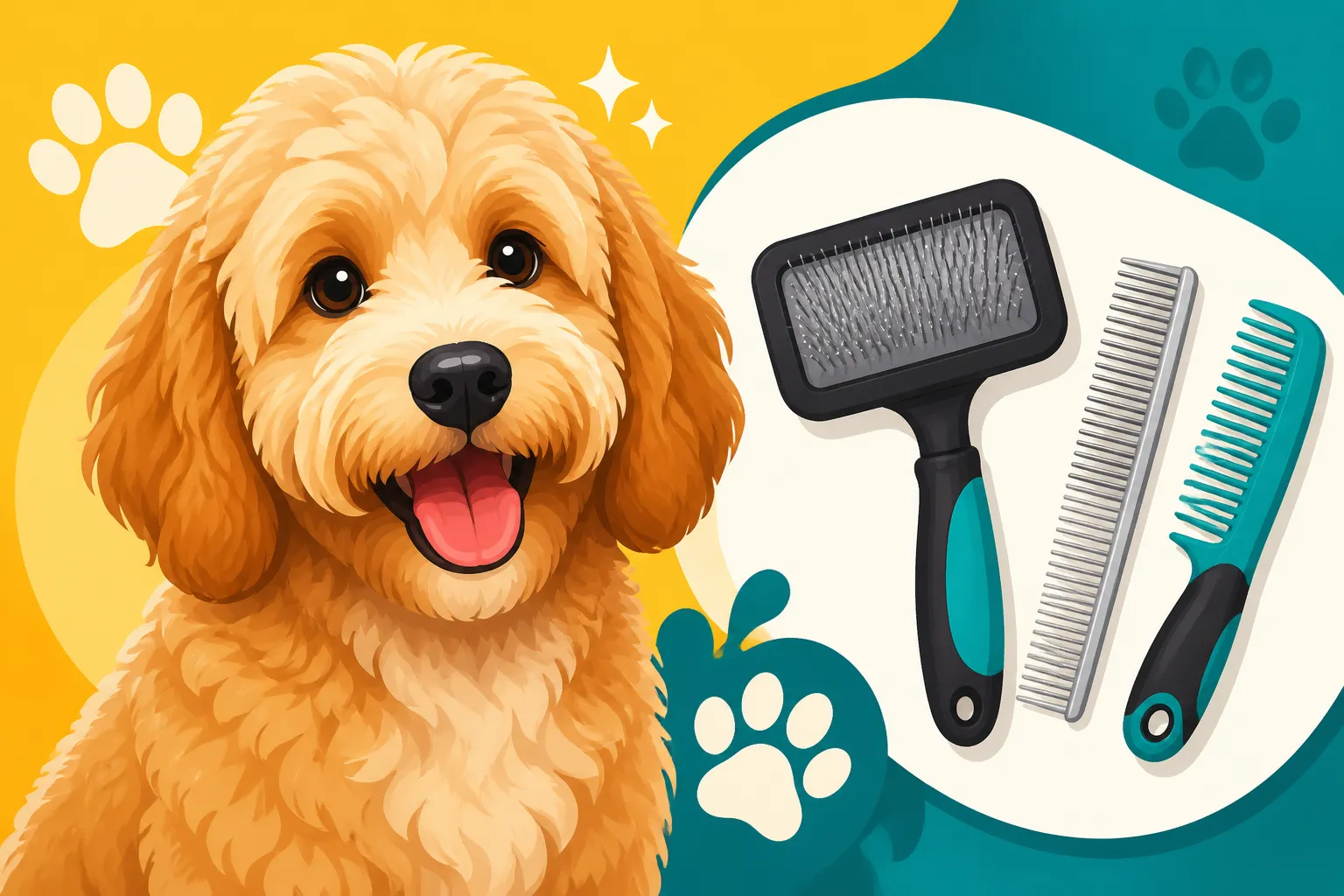
If there's one tool every Goldendoodle owner absolutely must have, it's a good slicker brush. This isn't just any brush; it's specifically designed to tackle the dense, often wavy or curly coats that Goldendoodles sport. It's your workhorse for daily or every-other-day brushing to prevent those insidious mats from forming.
Choosing the Right Slicker Brush
Not all slicker brushes are created equal, and for a Goldendoodle, you'll want to be particular. Look for one with fine, bent wire pins that are densely packed. The pins should be long enough to reach through your dog's thick coat, right down to the skin. Some slickers have a flexible head, which can be more comfortable for both you and your dog, as it conforms better to their body shape and reduces pressure. Others have a sturdy, ergonomic handle that makes long brushing sessions less tiring. When shopping online at places like Chewy, you'll see many brands offering different sizes and pin configurations. For a standard or medium Goldendoodle, a larger head will cover more ground, while a mini or toy Goldendoodle might benefit from a smaller, more precise brush. Consider the density of the pins; for very curly coats, a slicker with slightly stiffer, more widely spaced pins might initially work better to separate the curl, followed by a finer-pin slicker.
How to Use Your Slicker Brush Effectively
Using a slicker brush isn't just about dragging it over the top of the coat. That's a common mistake that leaves mats forming underneath, unseen until they're severe. The key technique is called "line brushing" or "section brushing." You'll want to part your dog's coat, hold back the top layer, and then brush in small sections, working from the skin outwards. Imagine you're painting a stripe on their skin – you want to see that stripe as you brush.
Here's a step-by-step approach:
- Start at the bottom: Begin with a paw or a leg, and brush upwards or outwards, always making sure you're reaching the skin.
- Part the coat: Use your free hand to hold up a section of hair, exposing the skin underneath.
- Brush in small strokes: With the slicker, use short, gentle, outward strokes on the exposed section. Don't press too hard; let the pins do the work.
- Work in lines: Once that section is mat-free, drop a little more hair from the held-up section and repeat the process, working your way across the body or limb. This meticulous process ensures you're clearing any tangles right from the root. This method is crucial and ties directly into Line Brushing a Goldendoodle Section by Section.
- Be gentle around sensitive areas: Pay extra attention to areas like behind the ears, armpits, and groin, where mats love to hide. These are often the first spots where The Spots Where a Goldendoodle Mats First will appear. Your Goldendoodle might be sensitive here, so go slowly and use lots of praise and treats.
Remember, consistency is far more important than intensity. Short, frequent sessions (even 10-15 minutes daily) are much better than one long, painful session once a week.
Combs: The Unsung Heroes for Goldendoodle Mat Prevention
While the slicker brush does the heavy lifting, a good metal comb is your ultimate secret weapon for ensuring no mat goes undetected. It's the tool that confirms your slicker brush has done its job, or alerts you to an impending mat before it becomes a full-blown crisis.
Selecting the Right Combs for Your Goldendoodle
You'll ideally want at least two types of metal combs: a wide-toothed comb and a fine-toothed comb (often found together in a "greyhound" style comb with teeth of varying widths).
- Wide-toothed side: This is perfect for initial detangling, gently working through any minor snags your slicker brush might have loosened but not fully removed. It’s also great for fluffing up the coat.
- Fine-toothed side: This is your mat detector. After you've brushed a section with your slicker, run the fine-toothed side of the comb through it. If the comb glides smoothly from root to tip, you're golden! If it snags, you've found a spot that needs more attention with the slicker or a detangler. This crucial step is why Why a Comb Finds Goldendoodle Mats a Brush Misses is such an important read.
- Long-tined combs: For dense, curly coats, look for combs with longer tines to ensure they can penetrate deep into the coat. Plastic combs generally aren't sturdy enough for a Goldendoodle's coat and can generate static, so always opt for metal. You can find excellent quality combs at pet supply stores or online at Chewy.
Using Combs to Confirm a Mat-Free Coat
The comb check is non-negotiable for a Goldendoodle. After you've line-brushed a section with your slicker, take your metal comb and carefully run it through the same section, starting from the skin and moving outwards.
- Be meticulous: Don't just skim the surface. You need to feel the comb's teeth touching the skin as you pull it through. If you hit resistance, stop. Do not pull.
- Work out tangles: If you find a snag, switch back to your slicker brush and work on that specific area again. You might need to use a detangler spray to help loosen the mat. There are many effective Detangler Sprays That Help a Goldendoodle which can make this process much easier and less painful for your dog.
- Section by section: Just like with the slicker brush, perform this comb-check section by section across your dog's entire body, including those tricky spots like the tail, behind the ears, and armpits. Only when the comb glides freely through the entire coat can you truly consider your Goldendoodle mat-free.
This diligent process is what prevents those expensive and often stressful trips to the groomer for a full shave-down due to severe matting.
Beyond Brushes and Combs: Other Grooming Essentials
While slicker brushes and combs are your primary weapons against matting, a few other tools are invaluable for maintaining your Goldendoodle's overall coat health and appearance. Think of these as your specialized support staff, making the grooming process smoother and more effective.
Dematting Tools and Detangler Sprays
Sometimes, despite your best efforts, a small mat might form. That's where specific dematting tools and detangler sprays come in handy.
- Dematting Rakes/Combs: These tools have sharp, inwardly curved blades that can carefully cut through small mats. They should be used with extreme caution and only on small, superficial mats, as improper use can cut your dog's skin. If you're unsure, it's always best to consult a professional groomer. The goal is prevention, not correction, when it comes to severe mats.
- Detangler Sprays: These are a lifesaver! A good detangler spray lubricates the hair, making it easier for your brush or comb to glide through tangles without pulling. Spray directly onto a matted area, let it sit for a minute, and then gently work the mat out with your slicker brush or wide-toothed comb. Many high-quality detanglers are available at pet stores and online at Chewy, some even specifically formulated for curly or long-coated breeds.
Grooming Scissors and Nail Clippers
These aren't for styling your Goldendoodle's entire coat, but they are essential for keeping certain areas tidy and healthy between professional grooms.
- Blunt-nosed Scissors: These are incredibly useful for carefully trimming hair around your Goldendoodle's eyes to prevent it from irritating their vision or collecting debris. You can also use them for neatening up the hair around their paw pads, which helps prevent slipping on hard floors and reduces the chance of snowballs or burrs getting stuck. Always use blunt-nosed scissors for safety and work slowly and carefully.
- Nail Clippers or Grinders: Keeping your Goldendoodle's nails trimmed is crucial for their comfort and joint health. Overgrown nails can cause pain, change their gait, and even lead to long-term orthopedic issues. Many Goldendoodles don't love having their nails done, so start practicing early and make it a positive experience with lots of treats. If you're nervous about cutting too short, a nail grinder can be a gentler alternative. You can learn more about specific care in articles like Trimming Goldendoodle Nails Between Salon Visits.
Grooming Table and High-Velocity Dryer
While not strictly "brushes and combs," these two items can transform your home grooming experience, especially if you plan to do more than just maintenance brushing.
- Grooming Table: Having a dedicated, sturdy grooming table with a non-slip surface and a grooming arm (to attach a loop to keep your dog safely on the table) elevates your dog to a comfortable working height. This saves your back and signals to your dog that it's grooming time, encouraging them to stand still. This can significantly improve the efficiency of your Home Grooming Tools a Goldendoodle Actually Needs and make the process more enjoyable for both of you.
- High-Velocity Dryer: If you plan on bathing your Goldendoodle at home, a high-velocity dryer is a game-changer. It blasts water out of the coat quickly, preventing matting that can occur if the coat is left to air dry, especially in curly-coated Goldendoodles. It also helps straighten the coat slightly, making brushing easier after a bath. This is a significant investment but can save you a lot of time and money on professional grooming in the long run. Whether Home Grooming Saves a Goldendoodle Owner Money is a worthwhile pursuit often hinges on having these more specialized tools.
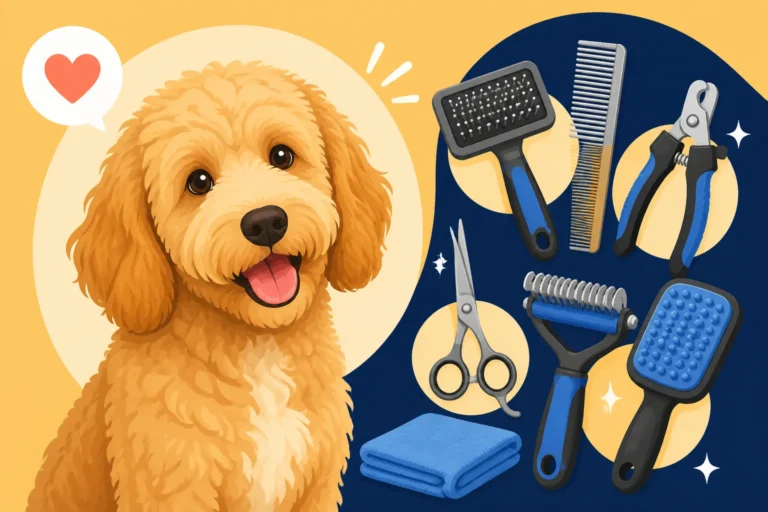
Here’s a quick overview of essential Goldendoodle grooming tools:
| Tool Type | Primary Function | Best For | Key Feature to Look For |
|---|---|---|---|
| Slicker Brush | Daily detangling & mat prevention | All Goldendoodle coat types, especially wavy/curly | Densely packed, fine, bent wire pins; flexible head optional |
| Metal Comb | Mat detection & thorough detangling | All Goldendoodle coat types | Dual-sided (wide & fine teeth); long, sturdy metal tines |
| Dematting Rake | Cutting through small, superficial mats | Occasional use on minor tangles | Sharp, inwardly curved blades (use with extreme caution!) |
| Detangler Spray | Loosening tangles for easier brushing | Any coat, particularly matted areas | Lubricating formula; suitable for canine use; easy spray nozzle |
| Blunt-nosed Scissors | Trimming sensitive areas | Face, paw pads, sanitary areas | Rounded tips for safety; sharp blades for clean cuts |
| Nail Clippers/Grinder | Keeping nails short & healthy | All Goldendoodles | Sharp clippers appropriate for dog size or quiet grinder |
Remember, your Goldendoodle's coat will undergo significant changes, especially around 8 to 12 months, during what's often called the "coat change." Understanding Why a Goldendoodle Coat Turns at Nine Months will help you prepare for an increased need for diligent brushing during this period. Keeping these tools handy and knowing how to use them will be your best defense against dreaded mats.
Disclaimer
This article is for general informational purposes only and does not constitute professional advice. Laws, prices and regulations vary by location and change over time. Consult a qualified professional for guidance on your specific situation.