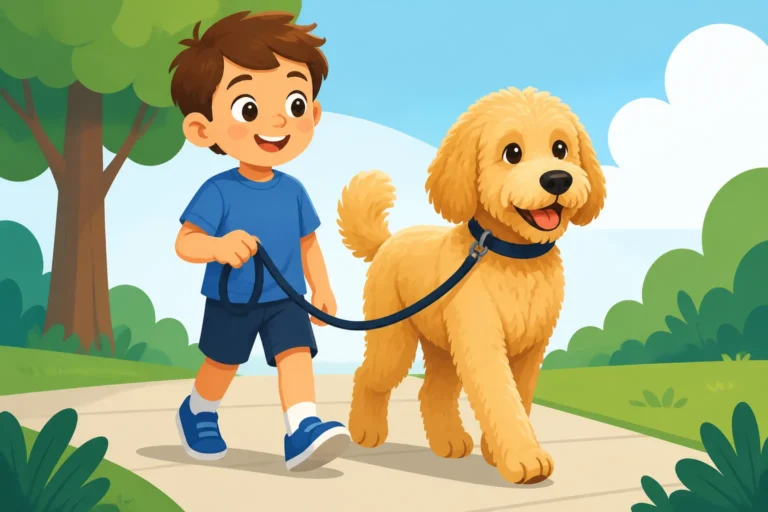
Socializing a Goldendoodle Beyond Hyper-Friendliness
Oh, the Goldendoodle! They are such loving, joyful creatures, often bounding with an infectious enthusiasm that makes everyone smile. But sometimes, that boundless energy and desire to greet everyone can be mistaken for true socialization, leading to some real frustrations for both owner and dog. If you've ever had your sweet Goldendoodle knock over a small child in a fit of excited greetings or drag you halfway across the park to say hello to another dog, you know exactly what I'm talking about. This guide is all about helping your Goldendoodle move beyond just being "hyper-friendly" to becoming a truly well-adjusted, politely socialized companion who can navigate the world with confidence and calm.
Understanding the Goldendoodle's Natural Inclination
Goldendoodles are a delightful mix, inheriting traits from two incredibly popular breeds: the Golden Retriever and the Poodle. Both bring wonderful qualities to the table, but also certain predispositions that shape how your Goldendoodle approaches the world and interacts with others. Understanding these roots is the first step to guiding them towards excellent social manners.
The Golden Retriever's Affectionate Heart
From their Golden Retriever lineage, Goldendoodles often inherit an immense desire to please and an overflowing reservoir of affection for pretty much everyone they meet. Goldens are, after all, renowned for their friendly, outgoing nature, often earning them the title of "America's Sweetheart." This translates into a Goldendoodle that genuinely loves people and other animals, wanting nothing more than to be their best friend the moment they see them.
This inherent friendliness is a beautiful trait, but it's crucial to distinguish it from genuine, polite socialization. A Goldendoodle's natural inclination might be to launch themselves at a new acquaintance, tail wagging furiously, perhaps with a happy bark or two. While often well-intentioned, this can be overwhelming for young children, elderly individuals, or even other dogs who prefer a more sedate introduction. Imagine your Goldendoodle, eyes bright with excitement, spotting a small child across the park and charging over, only to inadvertently bowl them over in their zeal to lick their face. This isn't malice; it's just pure, unbridled Golden enthusiasm that needs gentle direction.
Many owners find themselves struggling to control their Goldendoodle on walks because their dog must greet every single person and dog they encounter. The pulling on the leash, the frantic whining, the jumping up – these are all manifestations of that deep-seated desire to connect, but without the learned skills to do so politely. It's not enough for a dog to want to be friendly; they need to know how to be friendly in a way that is welcomed and safe for everyone involved.
The Poodle's Intelligence and Sensitivity
Then there's the Poodle side, contributing intelligence, a quick mind, and often a more sensitive disposition. Poodles are incredibly smart and eager to learn, which makes Goldendoodles highly trainable. They pick up cues quickly and thrive on mental stimulation, which is fantastic for teaching complex social behaviors. However, this intelligence also means they can be highly observant and reactive to their environment if not properly introduced to novel stimuli.
A Poodle's sensitivity, if not nurtured correctly, can sometimes manifest as shyness or an inclination to be overstimulated in busy, chaotic environments. While your Goldendoodle might have the Golden's drive to greet, the Poodle's influence might make them more prone to barking defensively at a strange sound, or cowering slightly when a new person approaches too quickly. This isn't about being unfriendly; it's about being overwhelmed or unsure. If a Goldendoodle feels unsure or threatened, that initial friendly urge can quickly morph into a reactive display as a coping mechanism.
Consider a scenario where your Goldendoodle is at an outdoor cafe. The Golden side might make them want to investigate every passing patron, but the Poodle sensitivity could lead them to bark at a skateboarder or flinch dramatically when a dropped tray clatters loudly. It highlights that socialization isn't just about exposing them to things; it's about ensuring those exposures are positive, building confidence and resilience rather than fear or over-excitement. Goldendoodles are complex, wonderfully intelligent dogs, and their social skills, much like any other aspect of their training, benefit greatly from thoughtful and consistent guidance.
Why Hyper-Friendliness Isn't True Socialization
It’s a common misunderstanding: because a Goldendoodle loves everyone and wants to be friends with every dog, they are considered "well-socialized." While their inherent friendliness is a fantastic foundation, it's far from the complete picture of true socialization. In fact, sometimes that unchecked exuberance can actually hinder their ability to form truly positive, calm interactions.
The Difference Between Greet-All and Calm Interaction
Think about it this way: a truly well-socialized dog isn't necessarily the one who rushes up to every person and dog they see, demanding attention. Instead, it's the dog who can comfortably exist in various environments, observe politely, and choose to engage in calm, appropriate interactions when permitted. This means they can walk past a group of children without jumping, share a park bench with another dog-walker without pulling frantically, or settle quietly at your feet while guests are over.
When a Goldendoodle feels compelled to greet everyone with high-energy enthusiasm, it can lead to a host of problems. They might jump on guests, leaving muddy paw prints or even knocking someone off balance. They might whine or bark incessantly for attention from strangers or other dogs, creating a nuisance. This "greet-all" mentality, while adorable when they are tiny puppies, quickly becomes problematic when your Goldendoodle reaches 40, 60, or even 80 pounds. That playful nudge from a puppy becomes a full-body slam from a full-grown dog. This isn't just an inconvenience; it can be genuinely frightening or dangerous for vulnerable individuals like small children or the elderly. You might adore your Goldendoodle's friendly nature, but a visitor who gets a muddy paw print on their clean clothes or a child who is knocked over might not share your enthusiasm.
True socialization teaches your Goldendoodle that they don't need to interact with every single person or dog they encounter. It's about teaching them patience, neutrality, and the ability to calmly assess a situation. They learn that polite greetings are invited, not demanded, and that sometimes the best way to be friendly is to simply exist peacefully in the presence of others without making a fuss. It's a huge difference from the dog who is constantly pulling you towards new people and animals, unable to contain their excitement.
Over-Excitement and Lack of Impulse Control
The sheer joy and boundless energy of a Goldendoodle can be a double-edged sword when it comes to socialization. Their tendency towards over-excitement can easily override any attempts at polite manners if not properly managed. This lack of impulse control is a significant hurdle that many Goldendoodle owners face. They want to be good, but that excitement just takes over!
Imagine trying to have a conversation with a friend at the dog park while your Goldendoodle is frantically trying to lick their face, jumping up, and pawing for attention. This isn't a calm, controlled interaction; it's an overwhelming display of unmanaged excitement. Other dog owners might steer clear, perceiving your dog as rude or undisciplined, even if your Goldendoodle just wants to play. This can lead to fewer positive interactions because other dogs (and their owners) may become hesitant to engage. We dive deeper into managing this specifically in our guide on Goldendoodle Jumping and the Impulse Control Problem.
Teaching your Goldendoodle impulse control is paramount to moving beyond mere hyper-friendliness. This means teaching them "four paws on the floor" at greetings, patiently waiting for a "release" cue before interacting, and understanding that not every exciting thing requires an immediate, full-throttle response. It’s about building their capacity to pause, think, and make appropriate choices even when their instincts are screaming "GO! GREET! PLAY!" Without this crucial skill, their inherent friendliness, while well-intentioned, can unfortunately become a liability, making them difficult to manage in public and potentially creating negative experiences for those they encounter.
The Critical Period: Puppy Socialization
When you first bring home that adorable, fluffy Goldendoodle puppy, the world is a blank canvas. This early period, often called the "critical socialization window," is the single most important time to lay the groundwork for a confident, well-adjusted adult dog. What happens (or doesn't happen) during these weeks will profoundly shape how your Goldendoodle perceives and reacts to the world for the rest of their life.
The "Rule of 12s" and Early Exposure
The critical socialization window for puppies typically runs from about 3 weeks to 16 weeks of age. During this time, puppies are like little sponges, soaking up every experience and forming associations. The "Rule of 12s" is a popular guideline to help owners ensure broad, positive exposure during this crucial period. It suggests exposing your puppy to at least 12 different people, 12 different places, 12 different sounds, 12 different surfaces, and so on, all before they are 12 weeks old. The key here isn't just exposure, but positive exposure. Every new experience should be paired with treats, praise, and a calm demeanor from you.
This isn't about overwhelming your puppy with sensory overload; it's about controlled, gentle introductions. For example, introduce them to people of different ages, sizes, and appearances (hats, glasses, beards). Take them to various safe places like quiet parks, friends' houses, or even just sitting in your car in a parking lot, watching the world go by. Expose them to sounds like vacuums, sirens, and children's laughter. Let them walk on different surfaces like grass, concrete, carpet, and even gentle puddles. Each new experience, if positive, builds a little more confidence and broadens their understanding of what's "normal" and safe in the world. For a deeper dive into these early experiences, check out our article What a Goldendoodle Puppy Must Meet Before Sixteen Weeks.
Without this early, diverse, and positive exposure, puppies can develop fears or anxieties about novel situations. An adult Goldendoodle who wasn't properly socialized to men in hats as a puppy might bark defensively every time they see one, simply because it's an unfamiliar sight that triggers alarm. Proactive, gentle socialization now prevents a lifetime of potential behavioral challenges later on, making your Goldendoodle more resilient and adaptable in all kinds of situations.
Safe Environments for Puppy Socialization
While early exposure is vital, it must be done safely, especially before your Goldendoodle puppy has completed their full series of vaccinations. You want to avoid places where unvaccinated dogs might frequent or where disease transmission is high, such as dog parks or communal grass areas. This means being strategic about where and how you socialize your puppy.
Puppy classes are an absolute godsend for Goldendoodle owners. These classes are typically held in sanitized indoor environments, ensuring a lower risk of illness. More importantly, they provide a structured, supervised setting for puppies to interact with each other in a controlled manner. They learn bite inhibition, how to read other dogs' body language, and practice polite play. Many puppy classes also introduce puppies to different people, sounds, and handling, all while teaching basic obedience cues. These structured environments are invaluable for teaching your Goldendoodle that other puppies can be fun and that humans are great sources of treats and guidance. If you're looking for structured guidance, platforms like BAXTER & Bella offer comprehensive online puppy training programs that cover crucial socialization techniques you can implement safely at home and in controlled environments.
Beyond puppy classes, focus on one-on-one introductions with known, vaccinated, calm adult dogs. These "mentor" dogs can teach your puppy appropriate play and boundaries far better than a free-for-all at a dog park. Invite friends with well-behaved dogs over to your sanitized yard, or visit their homes. The goal is to create positive experiences in a safe, low-stress manner, building your Goldendoodle's confidence without putting their health at risk. Remember, quality of interaction and safety always trump sheer quantity of exposure during these precious early weeks.
Continuing Socialization Through Adolescence and Adulthood
Just because your Goldendoodle survived puppyhood doesn't mean socialization stops. In fact, many owners are surprised when their once-confident puppy seems to "regress" during adolescence. Continuing thoughtful, positive socialization throughout their lives is crucial for a truly well-adjusted companion.
Navigating the Teenage Months and Fear Periods
Goldendoodle adolescence can feel a lot like living with a human teenager – full of bursts of energy, selective hearing, and sometimes, a sudden fear of things they used to take in stride. This "teenage" phase typically spans from around 6 months up to 2 years of age, depending on the individual dog and their size. During this time, hormonal changes are in full swing, and their brains are still developing. It's not uncommon for a Goldendoodle who was perfectly fine with children or bicycles as a puppy to suddenly become wary or bark at them during adolescence. We cover more on this challenging phase in Goldendoodle Adolescence and Selective Hearing.
They also go through various "fear periods" during adolescence, which are distinct developmental stages where they might suddenly become fearful of new people, places, sounds, or objects that they previously accepted without issue. If your Goldendoodle suddenly seems spooked by the trash cans on your usual walk route or barks at the mail carrier more aggressively, don't punish the fear. Instead, approach these new anxieties with patience and positive reinforcement. Reintroduce the scary object from a distance, pairing its sight with high-value treats and praise, gradually moving closer as your Goldendoodle remains calm. The key is to help them overcome these new fears through positive experiences, rather than allowing the fear to solidify.
Consistency in training and continued exposure to a variety of safe, positive experiences are critical during these "teenage" months. Don't assume that because they did something as a puppy, they'll automatically be fine with it as an adolescent. Revisit basic obedience, keep up with positive reinforcement for calm behavior in new situations, and be their rock when the world suddenly seems a bit scarier.
Beyond the Dog Park: Diverse Experiences
While dog parks can be a source of exercise and interaction for some Goldendoodles, they shouldn't be the only source of socialization. In fact, for many dogs, the chaotic, uncontrolled environment of a dog park can be overwhelming, leading to bad habits or even negative experiences that set back socialization efforts. True adult socialization is about diverse experiences in various settings, focusing on calm presence rather than constant, high-energy interaction.
Take your Goldendoodle to a variety of places: different neighborhoods for walks, pet-friendly hardware stores or garden centers, quiet nature trails, or even just a busy city street where they can sit and observe from a distance. The goal isn't always for them to greet every single person or dog they see. Often, it's simply about exposing them to new sights, sounds, smells, and people, and teaching them to remain calm, focused on you, and neutral. Practice "sit" or "stay" as people or dogs pass by, rewarding them generously for their calm focus. This teaches them that exciting things can happen without them needing to react wildly.
Consider a trip to a local farmer's market. Instead of letting your Goldendoodle strain on the leash to greet every vendor, practice walking politely, stopping to observe, and treating them for ignoring distractions. This broadens their understanding of the world, building resilience and confidence in various public settings without relying solely on frenetic dog-on-dog play. It makes them a more versatile and enjoyable companion in all aspects of your life.
Mentally Stimulating Social Outings
Socialization isn't just about physical encounters; it's also about mental engagement in new environments. Incorporating mentally stimulating activities into your social outings can provide a powerful double-whammy: enriching their minds while exposing them to new surroundings in a controlled, positive way. This is particularly effective for Goldendoodles, given their inherent intelligence and love for "working" their brains.
Instead of just walking around a new park, try scattering some kibble or treats in the grass for a sniffari, allowing your Goldendoodle to engage their powerful nose in a new environment. This activity, also known as nose work, is incredibly calming and confidence-building. We have a great article on Nose Games to Play With a Goldendoodle Indoors that you can adapt for outdoor adventures. Or, bring a puzzle toy or a long-lasting chew to a quiet park bench. As your Goldendoodle works on their treat, they are also passively observing the world around them, associating the new sights and sounds with a positive, rewarding activity.
These types of outings encourage your Goldendoodle to focus and engage their cognitive abilities while still being exposed to social stimuli. They learn to be comfortable in new places without feeling the pressure to constantly interact or be "on." This builds a deeper, more resilient kind of confidence than simply having them meet a dozen strangers. A dog who can calmly work on a puzzle toy in a bustling environment is a truly well-socialized dog, demonstrating focus, contentment, and adaptability, all essential traits for a great companion.
Teaching Polite Greetings and Manners
The cornerstone of true socialization, moving beyond hyper-friendliness, lies in teaching your Goldendoodle polite manners, especially when interacting with people and other dogs. This requires consistent training, patience, and positive reinforcement to reshape their enthusiastic impulses into graceful interactions.
The "Look at That" Game and Counter Conditioning
For many Goldendoodles, the sight of another dog or person triggers an immediate, excited response: pulling, whining, sometimes even barking. The "Look at That" (LAT) game is a fantastic tool for redirecting this over-arousal and teaching them to calmly observe instead of react. The premise is simple: when your Goldendoodle spots a "trigger" (another dog, person, cyclist), before they react, say "Look at that!" and immediately reward them with a high-value treat for looking. The goal is to change their emotional association from "Oh boy, time to react wildly!" to "Oh, a distraction! That means good things come from my human!"
The key is timing and distance. Start far enough away from the trigger that your Goldendoodle notices it but isn't yet over threshold (i.e., not yet barking, lunging, or frantic). As soon as they look at the trigger, mark the moment (with a "yes!" or a clicker) and give the treat. Repeat this many times. Eventually, your Goldendoodle will start to look at you after seeing the trigger, anticipating the treat, rather than reacting to the distraction. This is called counter-conditioning – changing their emotional response from negative/over-aroused to positive/calm. We also have a resource on Teaching Leave It to a Goldendoodle which complements this skill perfectly by teaching them to disengage from tempting distractions.
This game empowers your Goldendoodle to make a better choice. Instead of feeling compelled to react to everything, they learn that engaging with you when a distraction appears is far more rewarding. It transforms a potentially stressful or embarrassing situation into a positive training opportunity, gradually building their ability to be calm and focused in the presence of distractions.
Four Paws on the Floor and Waiting Patiently
Jumping up is perhaps one of the most common complaints about Goldendoodles, a direct manifestation of their hyper-friendliness and lack of impulse control. The phrase "four paws on the floor" should become your mantra. The rule is simple: if all four paws aren't on the ground, no attention (good or bad) is given.
To train this, start with low-excitement scenarios. When you walk through the door, if your Goldendoodle jumps, turn your back and ignore them completely. The moment all four paws are on the floor, even for a split second, turn around, praise calmly, and offer a treat. Repeat this every single time. Gradually, as they understand this, introduce slightly more exciting scenarios, like a friend coming to the door. Instruct your friend to ignore your Goldendoodle until they have all four paws on the ground, then they can calmly greet and offer a small pet. For comprehensive guidance on this specific challenge, refer to Four Paws on the Floor for a Goldendoodle.
This teaches your Goldendoodle that calm, polite behavior earns them what they want (attention, treats, greetings), while jumping achieves nothing. Consistency from everyone who interacts with your dog is vital. If one person allows jumping, it undoes weeks of progress. It takes time and commitment, but teaching them to wait patiently for a greeting instead of launching themselves at people transforms public interactions and makes them a much more welcome presence in any home.
Appropriate Play with Other Dogs
For a Goldendoodle, dog-on-dog play can be a huge source of joy, but it's essential to ensure that play is appropriate, fair, and safe. Not all play is good play, and sometimes a Goldendoodle's enthusiasm can be misinterpreted or even overwhelming to other dogs. Recognizing healthy play is a crucial part of responsible socialization.
Healthy play typically involves reciprocal chasing, play bows, self-handicapping (a larger dog lowering itself to a smaller dog's level), and frequent breaks. It's fluid and bouncy, with both dogs taking turns being the chaser and the chased. If you notice your Goldendoodle consistently "bullying" another dog, pinning them down, body-slamming, or ignoring appeasement signals (like the other dog trying to disengage or yelping), it's time to intervene. These behaviors can stem from an inability to read subtle dog body language or simply over-arousal.
When play becomes too intense or one-sided, step in calmly, call your Goldendoodle away, and give them a short "time out" to de-escalate. You can attach a long line to your dog in a controlled environment like a park for easy intervention without needing to physically grab them. The goal is to teach your Goldendoodle that if play gets too rough, it stops. This helps them learn self-regulation and respect for other dogs' boundaries. Always prioritize quality over quantity: one good, balanced play session with a known, appropriate playmate is far more beneficial than a chaotic free-for-all that leaves either dog stressed or defensive.
| Behavior Type | Signs of Healthy Play | Signs of Unhealthy Play |
|---|---|---|
| Energy Level | Bouncy, fluid, intermittent bursts and breaks | Constant high-intensity, frantic, no breaks |
| Vocalization | Happy yips, occasional growls (playful), quiet | Constant loud barking, fearful yelps, aggressive growls |
| Body Language | Play bows, loose wagging tail, relaxed mouth, shifting weight | Stiff body, tucked tail, prolonged staring, hackles raised |
| Interaction | Reciprocal chasing, taking turns, self-handicapping | One-sided chasing, pinning, bullying, ignoring signals |
| Response to Others | Disengages easily, respects "no" signals | Persistent, invasive, ignores attempts to disengage |
Managing Challenges: Over-Arousal and Reactivity
Even with the best intentions and early socialization, Goldendoodles can sometimes face challenges with over-arousal or develop reactive behaviors. This isn't a failure on your part, but rather an indication that your dog needs a more tailored approach to help them navigate situations they find overwhelming or frustrating.
Recognizing Signs of Stress and Over-Stimulation
A common mistake is thinking a dog is "happy" when they are actually over-stimulated and stressed. Goldendoodles, with their naturally exuberant dispositions, can be masters of masking stress with what looks like extreme excitement. Learning to read their subtle body language is crucial for intervening before a situation escalates. Look for signs like repeated yawning (when not tired), lip licking, turning their head away, avoiding eye contact, sniffing the ground excessively, a stiff body posture, whale eye (where the whites of their eyes are visible), tail tucked low or wagging stiffly, or even refusal to take treats.
These signals indicate that your Goldendoodle is uncomfortable, anxious, or becoming over-aroused and needs a break. Imagine your Goldendoodle on a walk, and they start doing quick, repetitive yawns every time a new person walks by. This isn't because they're sleepy; it's often a calming signal, indicating stress. If you continue to push them into more interaction, they might escalate to barking or lunging because their subtle signals were ignored.
The moment you observe these stress signals, your primary goal should be to create distance and reduce the stimulation. Move to a quieter area, step behind a car, or simply turn around and go home. Giving your Goldendoodle a safe "out" teaches them that you understand their needs and will protect them from overwhelming situations. This builds trust and helps them learn that they don't always have to cope by escalating their behavior.
Tools and Techniques for Leash Manners in Public
Managing a Goldendoodle's enthusiasm on a leash is a common struggle, especially when their "greet-all" instinct kicks in. Traditional flat collars can put strain on their neck and offer little control for a strong, pulling Goldendoodle. Luckily, there are tools and techniques that can make a significant difference in fostering polite leash manners. We cover the ins and outs of this in our guide on Goldendoodle Leash Pulling by Size Category.
Front-clip harnesses are often a game-changer for Goldendoodles who pull. Instead of attaching the leash to their back, it clips to a ring on their chest. When your Goldendoodle pulls, the harness gently redirects their body towards you, making it uncomfortable for them to pull forward with their full weight. This discourages pulling without causing pain or discomfort. Brands like the Easy Walk harness or Freedom No-Pull harness (which you can find readily on Amazon) are popular choices. Ensure the harness fits properly to prevent chafing and allow for full range of motion.
In addition to the right equipment, consistent positive reinforcement training is key. Practice walking in a quiet area first, rewarding your Goldendoodle for walking on a loose leash. Every step they take without pulling, mark it with praise and a treat. If they start to pull, simply stop moving until the leash loosens, then reward and continue. For more freedom in a controlled, safe environment, a long line (a 15-30 foot lightweight leash) can be invaluable. It allows your Goldendoodle to explore a bit further in a park while still giving you the ability to intervene and practice recall without the pressure of a short leash. These tools, combined with patience and positive training, empower you to teach your Goldendoodle how to enjoy public outings calmly and politely.
When to Seek Professional Help
There are times when a Goldendoodle's challenges with socialization, over-arousal, or reactivity extend beyond what you can comfortably manage with basic training techniques. If your Goldendoodle is consistently lunging, barking, growling, or showing signs of fear or aggression towards specific triggers (people, dogs, objects), it's a clear signal that it's time to seek professional help. These behaviors are not just "naughty" but often deeply rooted in fear, anxiety, or learned reactivity, and they require expertise to address safely and effectively.
A certified professional dog trainer or a veterinary behaviorist can provide invaluable guidance. Unlike general obedience classes, these professionals specialize in behavior modification and can assess your Goldendoodle's specific triggers and emotional state. They will help you develop a tailored training plan that focuses on positive reinforcement, counter-conditioning, and desensitization, all aimed at changing your Goldendoodle's underlying emotional response to the things they struggle with. We have a dedicated guide on Finding a Trainer Who Works With Goldendoodles to help you identify qualified professionals.
It's crucial to choose a professional who uses force-free, positive reinforcement methods. Aversive tools or harsh corrections can actually worsen fear and reactivity in a sensitive Goldendoodle, damaging your bond and potentially leading to more dangerous behaviors. Don't feel ashamed or defeated if you need to bring in an expert. It's a sign of a responsible owner who wants the best for their dog. Early intervention for reactivity is always best, as these behaviors can become more entrenched and harder to modify the longer they are practiced.
Building a Resilient, Confident Goldendoodle
The ultimate goal of socialization isn't just a dog that tolerates the world, but one that confidently and calmly engages with it on their own terms. Building a resilient, confident Goldendoodle goes beyond simply exposure; it's about fostering an internal sense of security and trust in their environment and in you.
Prioritizing Quality Over Quantity in Social Interactions
When we think about socialization, we often think quantity: how many dogs have they met? How many people have they greeted? But for Goldendoodles, especially those prone to over-excitement, the quality of interaction far outweighs the sheer number. One calm, polite, and positive interaction is infinitely more valuable than ten frantic, uncontrolled greetings.
Instead of rushing your Goldendoodle to meet every dog at the park, focus on moments where they can observe calmly from a distance, or engage in a brief, polite sniff-and-move-on with a friendly, well-matched dog. Reward them lavishly for choosing to make eye contact with you when another dog passes by, or for settling quietly at your feet while a stranger walks past. These moments teach them self-control and reinforce that you are the most interesting and rewarding presence in their world, even amidst distractions.
The goal is not to have a dog that has to greet everyone, but one that can greet politely when appropriate, and also can ignore distractions and focus on you when needed. This approach builds true confidence, not just a surface-level friendliness. A Goldendoodle who feels secure in their environment and in their relationship with you will be much more resilient to new or challenging situations, knowing they don't have to tackle everything with overwhelming enthusiasm.
Consistency is Key
Just like any other aspect of training, consistency is the bedrock of successful socialization for a Goldendoodle. You can't expect your Goldendoodle to be a polite greeter one day and then allow them to jump all over a guest the next. Every interaction, every walk, every encounter is a learning opportunity, and sending mixed signals will only confuse your dog and slow down their progress.
This means that everyone in the household needs to be on the same page. If one person allows jumping and another enforces "four paws on the floor," your Goldendoodle won't understand the rules. Establish clear boundaries and commands, and ensure every family member uses them consistently. For instance, if the rule is no jumping, then no one gives attention until all four paws are on the floor, no exceptions. If you want your Goldendoodle to sit before going out the door, then every time they go out the door, they must sit first. Short, frequent training sessions are more effective than sporadic, long ones, as discussed in Goldendoodle Training Sessions and How Long to Run Them.
Consistency also applies to managing their environment. If you know your Goldendoodle struggles with over-excitement around children, consistently manage those interactions by keeping them on a leash, practicing "look at that," and rewarding calm behavior, rather than letting them self-manage and potentially rehearse unwanted behaviors. This unwavering consistency provides clarity for your Goldendoodle, allowing them to truly learn and internalize polite social manners, making them a more predictable and enjoyable companion.
The Payoff: A Well-Adjusted Companion
Investing the time and effort into comprehensive socialization, moving beyond your Goldendoodle's initial hyper-friendliness, offers an incredible payoff: a truly well-adjusted, confident, and enjoyable companion. This isn't just about good manners; it's about fostering a dog who is comfortable in their own skin, secure in their bond with you, and capable of navigating the complexities of the human world with grace.
A Goldendoodle who has received thoughtful, positive socialization is a joy to live with. They can accompany you to pet-friendly cafes, on bustling walks through the neighborhood, or to visit friends and family, without causing undue stress or embarrassment. They can settle calmly when guests arrive, interact politely with other dogs, and respond to your cues even in distracting environments. This freedom and flexibility greatly enhance your life together, allowing you to share more experiences with your beloved dog.
Ultimately, a truly well-socialized Goldendoodle is a happier dog. They are less prone to anxiety, fear, and reactivity because they've learned to process new experiences positively and trust your guidance. This foundational confidence can even pave the way for more specialized roles, such as becoming a therapy dog, which we explore in Whether a Goldendoodle Makes a Good Therapy Dog. They become a reliable, trustworthy member of your family and a welcome presence in the wider community, reflecting all the love and effort you poured into their upbringing.
Disclaimer
This article is for general informational purposes only and does not constitute professional advice. Laws, prices and regulations vary by location and change over time. Consult a qualified professional for guidance on your specific situation.