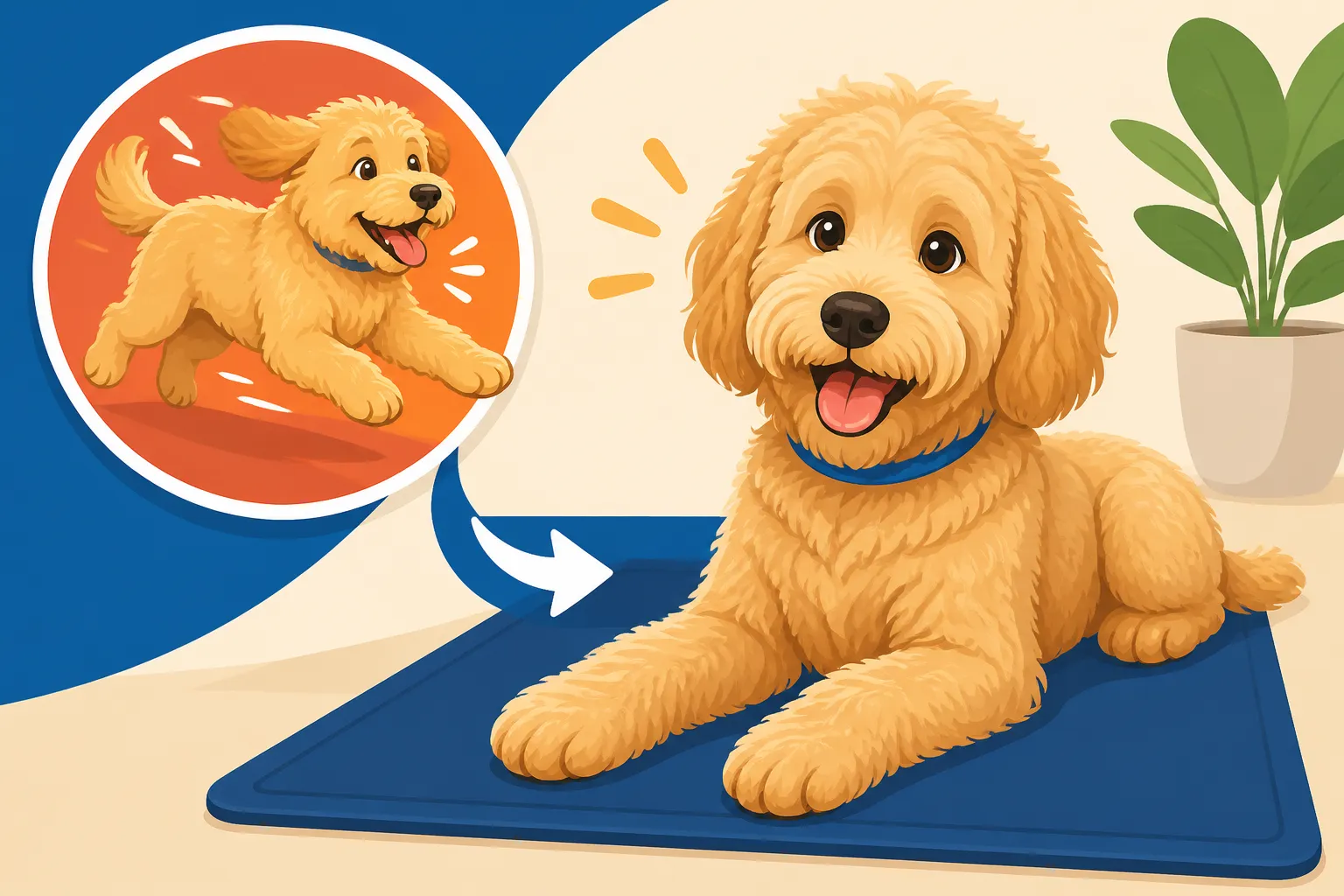
Mat Settle Training for a Restless Goldendoodle
It’s a scenario so many Goldendoodle parents know all too well: you’ve had a long day, you finally sit down to relax, and your otherwise wonderful Goldendoodle just can't settle. They're pacing, nudging, sighing, or bringing you every toy in the house, making it impossible for anyone to find a moment of calm. This guide is here to walk you through mat settle training, a fantastic tool to teach your restless Goldendoodle how to truly relax and find their "off switch" in any situation.
Understanding Why Your Goldendoodle Can't Settle
Before we dive into the nuts and bolts of training, let's take a moment to really understand why your Goldendoodle might be struggling to settle. It's often not about defiance or a lack of love, but rather a combination of their unique breed traits and how their daily needs are being met. Knowing the "why" can make all the difference in approaching their training with empathy and effectiveness.
The Goldendoodle's Inherited Energy Levels
Goldendoodles are a marvelous mix, combining the intelligent, athletic Poodle with the eager-to-please, energetic Golden Retriever. Both parent breeds are known for their high energy levels and a drive to be engaged, whether it's retrieving, learning tricks, or just being with their people. This means your Goldendoodle likely comes hardwired with a significant amount of stamina and a desire to be active. If that energy isn't channeled appropriately, it doesn't just disappear; it often manifests as restlessness, pacing, or an inability to simply chill out. They're not being "naughty"; they're simply responding to their inherent programming. Think of it like trying to ask a marathon runner to sit still after just a short jog – their body is craving more output. This isn't just physical, either; both parent breeds are highly intelligent, meaning they also need mental stimulation.
Overstimulation and Lack of an "Off Switch"
Another common reason for restlessness in Goldendoodles is overstimulation. Modern homes are bustling places, full of sounds, sights, and activities. Even seemingly small things like the doorbell ringing, a delivery truck passing, or family members moving between rooms can constantly engage a Goldendoodle’s senses. Without being taught how to disengage, they can get stuck in a state of hyper-alertness, constantly scanning for the next exciting thing. They literally might not know how to turn off that internal "on" switch. This is especially true for Goldendoodles who are naturally very social and want to be involved in everything you do. They see you get up, and their brain instantly thinks, "Oh, something's happening! What can I do to help or join in?" We often inadvertently reward this constant engagement by giving them attention when they're restless, reinforcing the idea that being active is the best way to get our love.
The Impact of Insufficient Mental Exercise
While physical exercise is crucial for a Goldendoodle, it's often not enough on its own to create a truly calm and settled dog. Many owners find that a long walk or a session of fetch only makes their Goldendoodle physically tired, but their minds are still buzzing. This is where mental exercise comes in. Goldendoodles, with their Poodle brains and Retriever biddability, thrive on challenges that make them think. If they're not getting enough mental work, they might be physically exhausted but mentally bored, leading to that restless energy. This could look like incessant demand barking, destructive chewing, or that classic pacing you're trying to resolve. Engaging their minds with activities like puzzle toys, scent work, or trick training can be just as tiring, if not more so, than a long run, and it encourages a more relaxed state afterward. The Thinking Work That Actually Tires a Goldendoodle delves deeper into how to achieve this balance.
The Basics of Mat Settle Training
Mat settle training, often called "place" training, is a fantastic way to give your Goldendoodle a designated spot where they can learn to relax. It’s more than just a bed; it becomes a sanctuary, a cue for calm, and a powerful tool for impulse control. The beauty of it is that it's highly portable and can be generalized to almost any situation, offering a consistent "safe space" for your dog.
What is Mat Settle Training and Why It Works
At its core, mat settle training teaches your Goldendoodle to go to a specific mat or bed and stay there calmly until released. It works because it provides clear boundaries and expectations in a way that simply telling a dog "lie down" often doesn't. When your Goldendoodle is on their mat, they're learning to suppress their urges to jump, greet, or demand attention, developing crucial self-control. This isn't about punishment or confinement; it's about empowerment. You're giving them a job ("stay on your mat") that allows them to earn rewards for being calm. This translates into less stress for both of you, especially during chaotic times like dinner preparation, when guests arrive, or when you simply need a moment of peace. It's a proactive approach to managing your Goldendoodle's natural energy and enthusiasm, guiding them towards a more settled demeanor. Goldendoodle Impulse Control Exercises is a great companion read for this topic.
Choosing the Right Mat or Bed
Selecting the right "mat" is more important than you might think. It needs to be distinct from their other beds or resting spots to clearly differentiate its purpose as a training tool. It should be comfortable enough for them to relax on, but also durable and easy to clean.
- Size Matters: The mat should be large enough for your Goldendoodle to lie down comfortably in various positions (on their side, stretched out) without any part of their body spilling off. For a standard Goldendoodle, this means a fairly sizable mat. For a mini Goldendoodle, you still want ample room.
- Material and Portability: Opt for something that's relatively thin and portable, so you can easily move it around the house or even take it with you to different locations (a friend's house, a cafe, etc.). A bath mat, a small rug, or a designated dog bed that isn't their main sleeping spot works well. Many trainers recommend simple, non-slip rubber-backed mats or even just a thick towel initially. The point is to create a clear visual boundary.
- Consistency: Once you choose a mat, stick with it, at least for the initial training phases. This consistency helps your Goldendoodle quickly associate that specific item with the "settle" behavior. You might find great options for durable, easy-to-clean training mats on Amazon, which can withstand repeated use and washing.
Essential Tools and Supplies
You don't need a massive amount of gear to start mat settle training, but a few key items will make the process much smoother and more successful.
- High-Value Treats: These are non-negotiable! Your Goldendoodle needs a strong incentive to learn this new, potentially challenging skill. Think soft, small, smelly treats that they absolutely adore—tiny pieces of cooked chicken, cheese, or specialized training treats work wonders. The higher the value, the more motivated your Goldendoodle will be.
- Clicker (Optional but Recommended): A clicker is a fantastic tool for marking the exact moment your Goldendoodle does something right. It's a precise way to communicate "yes, that!" immediately before they get their treat. If you're new to clicker training, don't worry, you can still use a verbal marker like "yes!" or "good!" but a clicker offers unparalleled consistency.
- Leash (for initial guidance): In the early stages, having your Goldendoodle on a light leash can help guide them onto the mat without physically pushing them. It's not for correction, but for gentle direction.
- Patience and Positive Attitude: This is truly the most important tool. Learning takes time, especially for a skill that requires a lot of impulse control. Frustration from your end will only make your Goldendoodle anxious and less willing to participate. Keep sessions short, fun, and always end on a positive note. Remember, Positive Reinforcement and Why It Suits a Goldendoodle is the most effective approach for these sensitive and eager-to-please dogs.
Step-by-Step Guide to Teaching "Go to Mat"
Now that you've got your supplies and understand the "why," let's get down to the practical steps of teaching your Goldendoodle to go to their mat. Consistency and clear communication are key here.
Introducing the Mat Positively
The very first step is to create a super positive association with the mat. We want your Goldendoodle to love their mat, seeing it as a place where good things happen.
- Place the Mat: Lay the mat down in a quiet area with minimal distractions.
- Lure and Treat: Hold a high-value treat in your hand and gently lure your Goldendoodle towards the mat. As soon as even a single paw touches the mat, say "yes!" or click, and immediately drop the treat onto the mat.
- Repeat, Repeat, Repeat: Do this several times in quick succession. Don't worry about them lying down yet, just getting on the mat. If they step off, simply reset and lure them back on. The goal is to make the mat a magnet for good things.
- No Pressure: Avoid pushing or dragging your Goldendoodle onto the mat. We want them to choose to go there. Keep your tone cheerful and light.
- Short Sessions: Keep these initial sessions very brief, just 2-5 minutes, several times a day. You want to stop before your Goldendoodle loses interest. Goldendoodle Training Sessions and How Long to Run Them offers more guidance on session length.
Luring and Rewarding Initial Interactions
Once your Goldendoodle is willingly stepping onto the mat, it's time to encourage them to lie down.
- Lure into a Down: With your Goldendoodle on the mat, hold a treat close to their nose and slowly move it towards the mat between their front paws, then back towards their chest. This motion naturally encourages them to lower their body into a down position.
- Mark and Reward the Down: The instant their elbows touch the mat in a down, say "yes!" or click, and place the treat on the mat right between their paws.
- Release and Reset: After a few seconds of them being in the down position, use a release word like "okay!" or "free!" and let them get off the mat. Then, reset and repeat. The release cue is incredibly important as it tells them when the "work" is over.
- Build Duration Slowly: Initially, you're just rewarding the act of going down. As they get it, start to wait a tiny bit longer (just one or two seconds) before marking and treating. This is the very beginning of building duration.
- Scatter Treats: Sometimes, it helps to scatter a few treats directly onto the mat as they're lying down. This encourages them to keep their nose on the mat and reinforces that good things happen there.
Fading the Lure and Adding the Verbal Cue
Your Goldendoodle is now happily going to the mat and lying down with a lure. Excellent! Now it's time to introduce the verbal cue and make the lure less prominent.
- Introduce the Cue: As you're luring them onto the mat, just before their paws hit the mat, say your chosen cue, such as "Mat!" or "Place!"
- Gradually Fade the Lure: Over several repetitions, make your luring motion smaller and smaller. Instead of tracing a big arc, maybe just a finger point towards the mat. Eventually, you should be able to just say "Mat!" and your Goldendoodle will head towards it.
- Reward for Anticipation: When you give the verbal cue "Mat!" and your Goldendoodle starts to move towards it before you even offer a lure, that's a huge win! Mark and reward that initiative.
- Reward the Down: Always reward them for lying down calmly on the mat after going to it.
- Don't Rush: If your Goldendoodle isn't responding to the verbal cue without a strong lure, go back a step. It's better to reinforce the behavior reliably with a lure than to confuse them by removing it too quickly.
- Practice Different Distances: Start with the mat right next to you, then gradually increase the distance you ask them to go to the mat. This builds their understanding that "Mat!" means go to that specific item, no matter where it is.
Building Duration and Distraction on the Mat
Once your Goldendoodle understands "Go to Mat" and lies down reliably, the next big step is to teach them to stay there for longer periods and through various distractions. This is where the real "settle" comes into play.
Gradually Increasing Stay Time
This phase requires immense patience and small, incremental steps. Rushing it will only lead to frustration for both of you.
- Start Small: Ask your Goldendoodle to go to their mat and lie down. Mark and treat. Release. Repeat. Now, ask them to go to their mat, lie down, mark, and treat. Wait one second before marking and treating again. Then release.
- One Second at a Time: Slowly increase the time between treats. Go from 1 second, to 2 seconds, to 3 seconds, then 5, 10, 15, 20 seconds, and so on. If your Goldendoodle gets up before you mark and treat, simply reset without scolding and try a shorter duration.
- Randomize Reinforcement: Once they're staying for longer, start varying when you deliver the treats. Don't always treat every 10 seconds. Sometimes treat at 5, then 15, then 8. This keeps them guessing and more engaged, hoping for the next reward.
- Physical Distance: As they get better at duration, start taking a small step away from the mat, then back to treat. Then two steps. Then a full circle around the mat. Always return to the mat to deliver the treat, reinforcing that the mat is the place of good things.
- Use a Release Word: Always use your release word ("Okay!" or "Free!") to tell them when they can get off the mat. This teaches them to wait for your permission. This focus on clear communication and waiting is a fantastic way to develop overall self-control.
Introducing Mild Distractions
Once your Goldendoodle can stay on their mat for a minute or two with you nearby, it's time to introduce some mild distractions. Remember to start very easy!
- Small Movements: While your Goldendoodle is on the mat, make a small movement, like shifting your weight, taking a sip of coffee, or adjusting a cushion. If they stay, mark and treat heavily.
- Sound Distractions: Play a quiet podcast or some background music. Jingle your keys softly across the room. The goal is for them to ignore these things and remain settled.
- Walk Past: Have another family member (or you, if you're comfortable) walk casually past the mat, then retreat. Gradually increase the closeness and speed of the pass.
- "Leave It" Practice: Place a low-value toy a little distance from the mat. If your Goldendoodle notices it but stays on the mat, mark and treat for ignoring it. You're essentially teaching them Goldendoodle Impulse Control Exercises on a new level.
- Manage Success: If your Goldendoodle breaks their stay due to a distraction, it means the distraction was too intense. Make it easier next time. For example, if jingling keys was too much, try just touching the keys. The idea is to set them up for success.
Practicing in Different Environments
A common challenge is that dogs learn behaviors in one context but struggle to apply them elsewhere. To make mat settle truly functional, you need to generalize it.
- Different Rooms: Start by practicing in different rooms of your house. The living room, kitchen, bedroom—each new location is a new learning opportunity. The kitchen, with its exciting smells and potential for dropped food, is an excellent place to practice after they're solid in quieter areas.
- Outdoor Practice (Secure Area): Once solid indoors, try practicing in a securely fenced yard or a very quiet park. The smells, sounds, and sights of the outdoors are huge distractions, so you'll need to drop your expectations and start back at very short durations, heavily rewarding for staying on the mat.
- Public Places (if appropriate): For a truly advanced skill, you might eventually take your mat training to a dog-friendly cafe patio or a low-traffic park. Always ensure your Goldendoodle is comfortable and that you're not setting them up for failure. Remember, a Goldendoodle can be super friendly, but we want them to learn to control that impulse.
- Consistency Across Environments: Use the same mat, the same cues, and the same positive reinforcement methods in every new environment. This helps your Goldendoodle understand that the rules of "Mat!" apply everywhere.
- Bring the Mat: The portable nature of the mat is key here. Make sure to always bring their designated mat so they have a consistent visual cue for the behavior.
Troubleshooting Common Mat Settle Challenges
Even with the best intentions and consistent training, you might run into some bumps along the road. It's completely normal! Here are some common issues Goldendoodle owners face with mat settle training and how to address them.
Your Goldendoodle Won't Stay on the Mat
This is perhaps the most frequent challenge, especially with active, social Goldendoodles. They get on, they lie down, and then poof, they're off again before you can even blink.
- You're Asking Too Much, Too Soon: The number one reason dogs break a stay is that the duration or distraction level is too high for their current skill level. Go back to basics. Can they stay for 3 seconds? Then only ask for 3 seconds, or even 2. Build up very slowly. If they fail, your cue is to make it easier next time.
- Insufficient Reinforcement: Are your treats high-value enough? Are you delivering them frequently enough for the stage of training you're in? When starting out, think of it like a slot machine: hit that jackpot often to keep them playing! As they get better, you can gradually space out the treats. Sometimes, using a food puzzle or a snuffle mat directly on their designated place can keep them engaged and rewarded for staying put for longer periods. You can find many interactive puzzle toys on Amazon that can serve this purpose.
- Lack of Clear Release Cue: Are you consistently using a clear release word? If you're not telling them when the work is over, they might be guessing and releasing themselves. Make your "Okay!" or "Free!" clear and distinct.
- Anxiety or Discomfort: Is the mat comfortable? Is the location too noisy or stimulating? Some Goldendoodles might feel anxious being "confined" on a mat, especially if they have even a hint of Goldendoodle Separation Anxiety From Both Parent Lines. Ensure the environment is calm and the mat itself is appealing.
- Energy Level: Has your Goldendoodle had adequate physical and mental exercise before the training session? A dog with pent-up energy will struggle immensely to settle. Make sure they've had a chance to burn off some steam first. Goldendoodle Exercise at Thirty to Sixty Minutes should be a daily priority.
The "Mat Is a Toy" Problem
Some Goldendoodles, especially puppies or those with a strong play drive, might decide that the mat itself is a fantastic new chew toy or something to wrestle with. This isn't what we want!
- Redirection is Key: The moment they start mouthing, pawing, or attempting to play with the mat, immediately interrupt with a sharp, neutral "Ah-ah!" or "No!" and then redirect them onto an appropriate chew toy. As soon as they engage with the toy, praise them.
- Manage the Environment: If this is a persistent problem, don't leave the mat out unsupervised until they reliably understand its purpose. Put it away between training sessions.
- Choose a Durable Mat: If your Goldendoodle is a particularly strong chewer, choose a mat that isn't easily destroyed. Some rubber-backed mats or sturdy canvas options might be better than a plush bed initially.
- More Reinforcement for Staying On: Overwhelm them with positive reinforcement for simply being on the mat, not interacting with it inappropriately. Every time they lie calmly, mark and treat.
- Consider a Different Mat Material: If one type of mat is consistently turning into a toy, try a different texture or material. A thin bath mat is less likely to be perceived as a toy than a soft, plush dog bed.
Generalizing the Skill to Real-Life Situations
You've got mat settle down perfectly in your quiet living room, but the moment the doorbell rings or guests arrive, your Goldendoodle forgets everything. This is a generalization problem, and it's very common.
- Gradual Increase in Distraction: You must re-introduce distractions slowly and systematically. Don't go from zero to a house party. Start with a quiet knock on the door, then a gentle ring, then someone quietly entering and leaving, before moving to actual guests.
- Practice with Real-Life Triggers: Identify the specific triggers that cause your Goldendoodle to break their stay (doorbell, approaching people, food prep). Then, practice with simulated versions of those triggers at a low intensity. For instance, have a family member ring the doorbell, but don't open the door. Have your Goldendoodle on their mat, reward for staying calm, then release.
- Start Easy in New Environments: When you take the mat to a new environment (like a friend's house), treat it like a brand new skill. Start with very short durations and frequent treats, even if they're a pro at home.
- Consistency from Everyone: Ensure everyone in the household is on board with the training and uses the same cues and expectations. If one person lets the Goldendoodle off the mat without a release cue, it undermines the training.
- Use the Mat Proactively: Don't just pull out the mat when your Goldendoodle is already hyped up. Use it before a high-excitement event. For example, if you know a visitor is coming, put your Goldendoodle on their mat 5-10 minutes beforehand, giving them time to settle before the distraction even begins. This is an excellent way to practice Building Alone Time for a Goldendoodle in Minutes even when you are present.
Integrating Mat Settle into Daily Life
The true power of mat settle training isn't just in mastering the steps; it's in making it a functional, everyday tool that enhances your Goldendoodle's ability to be a calm and well-mannered companion. This transition from training exercise to integrated life skill is where the magic truly happens.
Using the Mat During Meals and Guest Visits
These are two of the most common scenarios where a restless Goldendoodle can be, well, a handful. Mat settle training offers a clear, positive solution.
- Mealtime Manners: If your Goldendoodle is constantly underfoot while you're cooking or eating, use the mat! Before you start preparing dinner, or as soon as you sit down to eat, cue your Goldendoodle to their mat. Give them a durable chew or a Kong filled with something delicious (you can find plenty of options for these on Amazon) to enjoy on their mat while you eat. Reward them periodically for staying calm. The goal is that they learn to associate your mealtimes with their calm time on the mat. This prevents counter-surfing, begging, and general chaos in the kitchen. For Goldendoodles prone to gulping their food, a slow feeder on their mat can also promote calm eating.
- Calm Greetings for Guests: This is a big one for many Goldendoodle owners. Their exuberant greetings, while well-intentioned, can be overwhelming for visitors. When you know guests are arriving, proactively send your Goldendoodle to their mat before the doorbell even rings. Have a special, high-value chew or toy ready for them. When the guests arrive, instruct them to ignore your Goldendoodle until they are settled on their mat. Once your Goldendoodle is truly calm on the mat, you can allow guests to offer a calm, gentle greeting while the dog is still on the mat. If your Goldendoodle breaks their stay, calmly guide them back to the mat. The folks at BAXTER & Bella, for example, often emphasize structured greetings as part of a well-behaved dog's repertoire. This teaches your Goldendoodle that polite, calm greetings get attention, while frantic jumping does not.
The Mat as a Calm Down Tool
Beyond specific scenarios, the mat can become your Goldendoodle's personal "chill out" zone whenever they seem overstimulated or need a moment to decompress.
- Over-Excitement Management: If your Goldendoodle is experiencing "zoomies," getting mouthy, or just seems generally over-amped, send them to their mat. It provides a structured break and a clear signal that it's time to bring their energy levels down. Give them a calming chew or a Puzzle Toys That Occupy a Goldendoodle for an Hour to work on. This is much more effective than simply telling them "no" or trying to physically restrain them, which can often heighten their excitement.
- After Play or Walks: After an intense play session or a stimulating walk, your Goldendoodle might still be a bit buzzy. Sending them to their mat for a few minutes of quiet chewing or napping can help them transition from high energy to a more relaxed state. It's like teaching a child to have "quiet time" after recess.
- Vet Visits and Grooming: With advanced training, the mat can even be used at the vet's office or during grooming appointments. If your Goldendoodle has learned that their mat equals comfort and calm, having it with them in a potentially stressful environment can be incredibly reassuring. This can make experiences like waiting in a busy vet lobby much less anxiety-inducing for them.
Maintaining and Reinforcing the Behavior Long-Term
Mat settle isn't a "one and done" training exercise. It's a skill that needs to be maintained and reinforced throughout your Goldendoodle's life to remain effective.
- Random Reinforcement: Even after your Goldendoodle is a pro, occasionally reward them with a treat or calm praise for staying on their mat without being asked, especially during times when you know they might be tempted to get up. This keeps the behavior strong and valuable to them.
- Continue Practice: Don't stop practicing just because they're good at it. Integrate mat settle into your daily routine a few times a week, even if it's just for a few minutes. Asking them to go to their mat while you make coffee, check emails, or watch TV keeps the skill sharp.
- Vary Duration and Location: Keep challenging them slightly by varying how long you ask them to stay and practicing in different areas or with different levels of mild distraction. This helps prevent the skill from becoming stale or context-dependent.
- Be a Calm Leader: Your own demeanor plays a huge role. If you're consistently calm and clear with your cues, your Goldendoodle will be more likely to mirror that calmness. Remember, A Goldendoodle That Cannot Settle in the Evening often mirrors the energy levels of the household.
- Address Underlying Issues: If your Goldendoodle starts regressing significantly, revisit the root causes of restlessness. Are they getting enough physical and mental exercise? Is there a new source of stress or overstimulation? Sometimes, what looks like a training problem is actually a symptom of an unmet need.
Mat settle training is truly a gift you can give your Goldendoodle, offering them structure, security, and the invaluable skill of self-control. It creates a calmer home environment for everyone, turning those restless moments into opportunities for peace and quiet enjoyment.
| Training Stage | Goal for Goldendoodle | Key Actions for Owner | Rewards & Release |
|---|---|---|---|
| Introduction | Touch mat willingly | Lure to mat, mark (click/yes) for touching, treat on mat | High-value treat on mat; no release word needed initially |
| Luring Down | Lie down on mat with lure | Lure to mat, then lure into down, mark, treat on mat | High-value treat on mat; use "Okay!" to release |
| Adding Cue/Fading | Go to mat and lie down on verbal cue ("Mat!") | Say "Mat!", then lure (decreasingly), mark down, treat | High-value treat on mat; "Okay!" to release |
| Building Duration | Stay on mat for increasing time (seconds to minutes) | Mark & treat every few seconds, gradually increase interval | Frequent treats on mat; "Okay!" to release |
| Adding Distractions | Stay on mat with minor household disturbances | Introduce small movements, quiet sounds; mark & treat for staying | Treats for staying; "Okay!" to release |
| Generalization | Stay on mat in different rooms/environments | Practice in various locations, starting with low distraction | Treats for staying; "Okay!" to release |
| Real-Life Use | Use mat calmly during meals, guest visits, high energy | Proactively send to mat, provide chew, reward calm | Praise, chew, occasional treats; "Okay!" to release |
Disclaimer
This article is for general informational purposes only and does not constitute professional advice. Laws, prices and regulations vary by location and change over time. Consult a qualified professional for guidance on your specific situation.