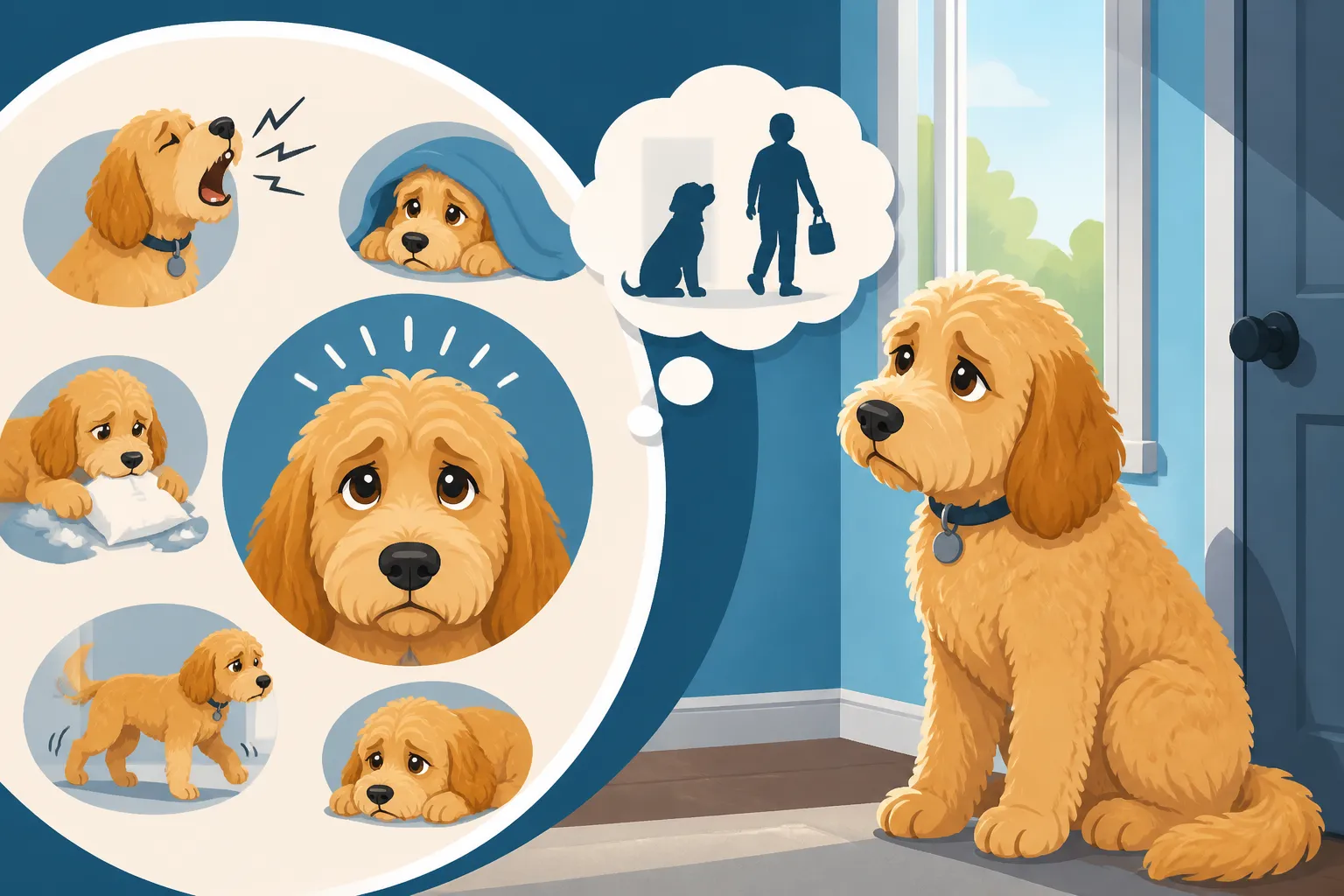
The Signs a Goldendoodle Cannot Cope Alone
It can be heartbreaking to watch your beloved Goldendoodle struggle when you leave, or worse, come home to evidence of their distress. Many Goldendoodle owners face the challenge of their "Velcro dog" developing separation anxiety, leaving them wondering if their dog is just bored or truly panicking. This guide will help you decipher the signs, from subtle cues to overt behaviors and even physical symptoms, so you can understand when your Goldendoodle cannot cope alone.
Understanding Goldendoodle Separation Anxiety: More Than Just Missing You
When we talk about separation anxiety in Goldendoodles, we're not just talking about a dog who misses you a little. This is a genuine distress disorder, a panic attack that happens when they're left alone. It's not a sign of spite or a lack of training; it's an overwhelming fear that they've been abandoned or that something terrible will happen when their human isn't there. For Goldendoodles, with their inherent desire to be near their people from both the Golden Retriever and Poodle sides, this can be an especially prevalent issue.
The Deep Roots of Goldendoodle "Velcro" Tendencies
Goldendoodles are often described as "Velcro dogs" because of their intense attachment to their families. This isn't just a cute quirk; it's a deep-seated trait inherited from both parent breeds. Golden Retrievers are known for their unwavering devotion and desire to be involved in every family activity. Poodles, intelligent and sensitive, also form strong bonds and can become quite dependent on their human companions. When these traits combine, you get a dog that thrives on companionship and can find solitude genuinely distressing. This is why Goldendoodle Separation Anxiety From Both Parent Lines is such a common topic among owners.
Think about it: your Goldendoodle sees you as the center of their universe, their protector, their playmate, and their source of comfort. When you suddenly vanish from their world, even if it's just for an hour, it can trigger a primal fear of being alone and vulnerable. This isn't about being "naughty"; it's about a deep emotional need that isn't being met, spiraling into genuine panic.
Why Some Goldendoodles Develop It More Severely
While many Goldendoodles are "Velcro dogs," not all of them develop full-blown separation anxiety. Several factors can contribute to a more severe manifestation. Dogs that had inconsistent early experiences with alone time, those rescued from situations where they experienced abandonment, or even puppies who were never properly acclimated to being left by themselves are more susceptible. Genetics can also play a role; some lines may be predisposed to anxiety.
A Goldendoodle who is suddenly left alone for much longer periods than they're used to, perhaps due to a change in your work schedule, might suddenly develop symptoms. A move to a new home, the loss of another pet, or any significant household change can also be triggers. It's often a perfect storm of temperament, past experiences, and current environmental factors that pushes a Goldendoodle from simply missing you to experiencing true separation anxiety.
The Subtle Early Warning Signs
Sometimes, the initial signs of separation anxiety are so subtle that we might miss them or dismiss them as minor behavioral quirks. But catching these early cues can make a huge difference in preventing the anxiety from escalating into more destructive or severe behaviors. It’s about paying close attention to your Goldendoodle's routine and behavior before you even walk out the door.
Pre-Departure Anxiety Cues
Your Goldendoodle often starts showing signs of distress long before you actually leave. This is known as anticipatory anxiety. They're picking up on your "departure cues" – the little things you do that signal you're about to go. Do you grab your keys? Put on your shoes? Pick up your bag? Your Goldendoodle is watching, learning, and starting to feel that familiar knot of dread in their stomach.
You might notice them becoming clingy, shadowing your every move. They might pace nervously, whine softly, or even try to block your path to the door. Their tail might be low, their ears back, or they might lick their lips excessively. Some Goldendoodles will refuse food or treats right before you leave, even if they're usually food motivated. These aren't just polite goodbyes; these are indicators that their anxiety is already building before you've even opened the door.
Restlessness and Inability to Settle When Alone
Once you're gone, the real test begins. For a Goldendoodle with budding separation anxiety, the inability to simply settle down and rest is a major red flag. A well-adjusted dog might wander for a few minutes after you leave, check things out, and then find a cozy spot to nap until you return. A Goldendoodle struggling with alone time, however, will often remain in a heightened state of alert.
You might come home to find them still pacing, even if you were only gone for a short while. They might have moved from room to room, looking out windows, or sitting by the door constantly. This restlessness isn't just boredom; it's an inability to relax because their primary source of security (you!) is absent. A pet camera, like those available on Amazon, can be incredibly insightful here, allowing you to observe their behavior when you're not there. You might be surprised at how little they actually settle. If you want to build up their tolerance, consider strategies like those discussed in Building Alone Time for a Goldendoodle in Minutes.
Obvious Behavioral Indicators
When separation anxiety really takes hold, the signs become much harder to ignore. These are the behaviors that often lead owners to realize something serious is going on, as they can be destructive, disruptive, and even harmful to the dog.
Destructive Chewing and Digging
One of the most common and frustrating signs of severe separation anxiety is destructive behavior. Your Goldendoodle isn't chewing your sofa because they're mad at you; they're chewing it because they're terrified and trying to cope. Chewing can be a self-soothing mechanism, releasing endorphins that help alleviate stress. However, in their panic, they'll often direct this behavior at exits – doors, window sills, crates – in an attempt to get to you.
You might come home to gouged doorframes, scratched floors, or even bent crate bars. Some Goldendoodles will dig at carpets or furniture. This isn't normal "puppy chewing" that's easily redirected with a toy. This is frantic, targeted destruction, often focused on points of egress. The damage can be extensive and costly, and it’s a clear cry for help from your stressed dog.
Excessive Vocalization: Barking, Howling, Whining
The neighbors probably told you about this one first, right? Persistent barking, howling, or whining when left alone is a classic symptom of separation anxiety. This isn't just an occasional "I hear a squirrel" bark; it's continuous, often high-pitched vocalization that can last for the entire duration of your absence.
Your Goldendoodle is essentially calling for you. They might start barking as soon as the door closes and not stop until they hear your car pull up. This vocalization is driven by fear and panic, not defiance. If you've tried all the usual "stop barking" methods to no avail, and the barking only happens when they're alone, separation anxiety is a very strong suspect. This kind of distress indicates they really cannot manage their emotions when you're not around.
Inappropriate Urination or Defecation (House Soiling)
Finding pee or poop inside when your Goldendoodle is fully house-trained and had ample opportunity to go outside before you left is another powerful indicator of separation anxiety. Again, this isn't a "protest" or a sign they're mad. When a dog is in a state of extreme stress and panic, they can lose control of their bladder and bowels. It's an involuntary physical response, similar to a human having an accident when terrified.
This house soiling often happens shortly after you leave and might be in unusual spots, not just near the door. For instance, they might relieve themselves on your bed or clothes – places that strongly smell like you, perhaps seeking comfort in their distress. If your Goldendoodle reliably goes outside when you're home but consistently has accidents when alone, even after being properly relieved, it's a significant sign of emotional distress.
Physical Symptoms and Health Concerns
Beyond the visible behaviors, separation anxiety can also manifest in physical symptoms, some of which can be quite concerning for your Goldendoodle's health. These are often direct results of prolonged stress and panic.
Drooling, Panting, and Trembling
Imagine being in a state of constant fear; your body reacts physically, right? The same goes for your Goldendoodle. Excessive drooling, even if they're not excited or thirsty, is a common stress response. You might come home to puddles of drool or find their fur on their chest and paws to be soaked. Panting heavily without physical exertion or heat is another sign of anxiety-induced stress.
Trembling or shaking, even when the room temperature is comfortable, can also indicate a dog who is experiencing severe panic. These are physiological responses to the rush of adrenaline and cortisol that floods their system during an anxiety attack. If you notice these symptoms consistently when you arrive home after leaving them alone, it’s not just a behavioral problem; it’s a clear sign of significant physiological distress.
Vomiting or Diarrhea
In more severe cases, the sheer stress of separation anxiety can lead to gastrointestinal upset. Just like humans experiencing extreme stress, dogs can throw up or develop diarrhea. This isn't due to eating something bad; it's a direct result of their body's "fight or flight" response being constantly activated.
If you find vomit or loose stools, especially if it happens reliably when you're gone and not at other times, it's a serious indicator that your Goldendoodle is experiencing intense distress. Chronic stress can also weaken their immune system, making them more susceptible to other illnesses. Goldendoodle Vomiting and When It Matters further discusses when to be concerned about these symptoms, but when combined with other signs of alone-time distress, it points strongly to separation anxiety.
Differentiating from Normal Puppy Behavior
It’s easy to confuse separation anxiety with normal puppy antics or even boredom, especially with a breed as active and playful as a Goldendoodle. However, understanding the distinctions is crucial for addressing the root cause correctly.
"I'm Bored" vs. "I'm Panicked"
A bored Goldendoodle might chew on a shoe, knock over a trash can, or even bark at the mailman. These are often opportunistic behaviors driven by a lack of mental and physical stimulation. They might be looking for something to do, and if they find something "fun" (like shredding your toilet paper), they'll do it. They often calm down quickly if you provide appropriate toys or enrichment. Goldendoodle Puzzle Feeders and Scent Games can be great for preventing boredom.
A panicked Goldendoodle, however, exhibits behaviors that are intense, frantic, and often accompanied by physical signs of stress like drooling or panting. The destruction is often aimed at escaping, and the vocalization is prolonged and distressing. They aren't seeking entertainment; they are seeking reunion. The key difference lies in the intensity and motivation behind the behavior. A bored dog might eventually settle; an anxious dog remains agitated.
The Role of Age and Training
Puppies are naturally more prone to accidents, vocalization, and chewing because they are still learning the rules of the house. A young Goldendoodle puppy might cry in their crate for a bit, chew on something inappropriate, or have an accident, especially if Crate Training a Velcro Goldendoodle is new to them or they haven't learned Goldendoodle House Training Week by Week yet. This is usually part of the normal developmental process and can be addressed with consistent training, positive reinforcement, and management.
Separation anxiety, while sometimes developing in puppyhood, is characterized by its specific trigger: being left alone. The behaviors happen only when the owner is absent, and they often persist despite consistent house-training and redirection efforts. If your adult Goldendoodle, who was previously reliable, suddenly starts having accidents or destroying things when you leave, it's much more likely to be anxiety than a lapse in training.
To help distinguish, here's a quick comparison:
| Symptom | Normal Alone-Time Behavior (Boredom/Puppy) | Separation Anxiety (Panic) |
|---|---|---|
| Vocalization | Occasional barks at sounds, settles quickly | Persistent, frantic barking/howling/whining, doesn't stop |
| Destruction | Opportunistic (chewing a shoe), can be redirected | Targeted at exits (doors/windows), frantic, often ignored toys |
| Elimination | Accidents due to lack of training/opportunity | House-soiling by trained dog only when alone, often on owner's items |
| Pre-Departure | Normal greetings, happy for walk | Clinginess, pacing, lip-licking, refusal of treats |
| Physical Signs | None | Pacing, drooling, panting, trembling, vomiting, diarrhea |
| Motivation | Seeking entertainment/relief, normal puppy exploration | Overwhelming fear/panic, desperately seeking reunion |
| Response to Toys | Engages with toys/chews | Often ignores toys, focuses on escape or vocalization |
Observing Your Goldendoodle with a Camera
Honestly, one of the best tools you can invest in if you suspect separation anxiety is a pet camera. You can find many affordable options on Amazon. It allows you to see exactly what your Goldendoodle does the moment you walk out the door and for the entire duration you're away. Cameras That Show What a Goldendoodle Does Alone will give you an unbiased look into their behavior, and you might be surprised by what you discover. Are they napping peacefully after 15 minutes, or are they pacing and panting for an hour straight? This objective data is invaluable for accurately diagnosing the problem.
When to Seek Professional Help
Recognizing the signs is the first step, but knowing when to call in the cavalry is equally important. Separation anxiety is a complex issue, and while some mild cases can be managed with owner intervention, severe cases almost always require professional guidance.
The Limitations of DIY Solutions
Many well-meaning owners try various DIY solutions, from leaving the TV on to giving their dog special treats before leaving. While these can sometimes help with mild boredom or simple discontent, they often fall short for true separation anxiety. In fact, some methods, like prolonged crating for an anxious dog, can actually worsen the problem, turning the crate into a source of fear rather than a safe haven.
If you've tried basic desensitization techniques (like pretending to leave and coming right back) for a few weeks without improvement, or if the behaviors are destructive and potentially harmful to your dog, it's time to realize that this is beyond simple training. Separation anxiety requires a systematic, often lengthy, behavior modification plan that's best overseen by an expert.
Consulting a Certified Professional Dog Trainer or Behaviorist
For genuine separation anxiety, your best course of action is to seek help from a certified professional dog trainer with experience in anxiety, or, even better, a veterinary behaviorist. These professionals have specialized knowledge in animal behavior and can differentiate between various anxiety disorders. They can create a tailored plan that addresses your Goldendoodle's specific triggers and symptoms. Finding a Trainer for a Goldendoodle with the right expertise is crucial.
A qualified professional will guide you through a desensitization and counter-conditioning protocol, gradually helping your Goldendoodle build tolerance for alone time. This often involves very short absences, slowly increasing duration, paired with positive associations. They can also advise on environmental management, calming aids, and in some cases, medication.
The Role of Medication in Severe Cases
For severe separation anxiety, medication can be a game-changer. It's not a "cure-all" and should always be used in conjunction with a behavior modification plan, but it can help reduce your Goldendoodle's panic to a level where they are receptive to training. Think of it like a human with severe anxiety: medication helps to take the edge off so therapy can be effective.
Your veterinarian or a veterinary behaviorist can discuss options, such as anti-anxiety medications that can help regulate your Goldendoodle's emotional responses. It's not about "sedating" your dog; it's about helping their brain cope more calmly. This is especially true for dogs exhibiting extreme physical symptoms or those at risk of self-harm due to their attempts to escape. For more insights on this approach, look into resources like Anxiety Medication for a Goldendoodle.
Remember, your Goldendoodle's anxiety isn't a reflection of your failure as an owner. It's a complex emotional issue that requires patience, understanding, and often, professional guidance. By recognizing the signs and taking proactive steps, you can help your beloved companion find peace when you're not by their side. Many online training programs, such as BAXTER & Bella, also offer structured guidance and support for owners dealing with various behavioral challenges, including alone-time issues, which can be a great starting point for understanding and implementing some early intervention strategies under professional guidance.
Disclaimer
This article is for general informational purposes only and does not constitute professional advice. Laws, prices and regulations vary by location and change over time. Consult a qualified professional for guidance on your specific situation.