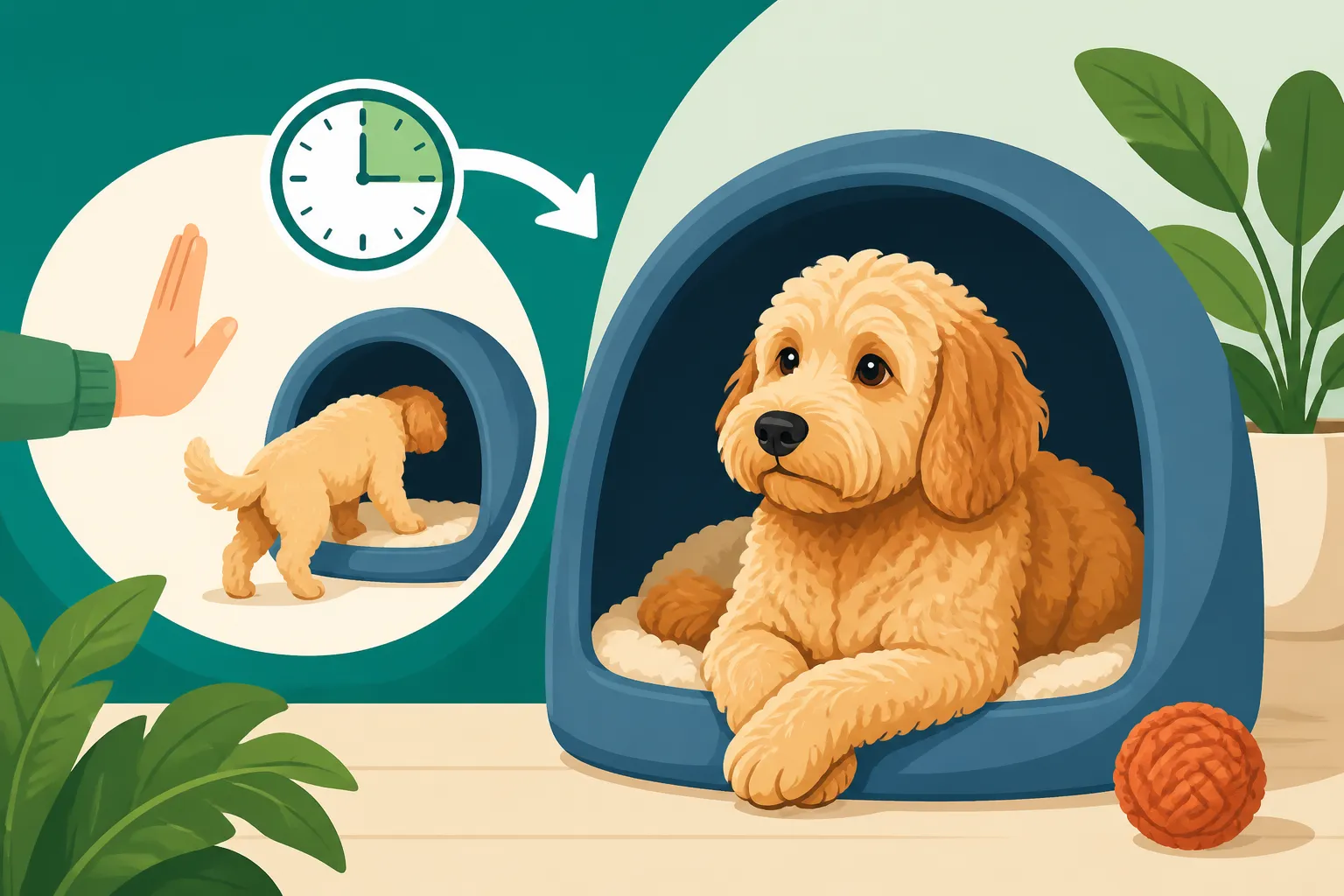
Building Alone Time for a Goldendoodle in Minutes
It can be incredibly disheartening, and frankly, a bit exhausting, when your sweet Goldendoodle turns into a shadow, following your every move, and melting down the moment you step out the door. The idea of leaving them alone, even for a short errand, can fill you with dread, worrying about their distress, or even worse, destructive behaviors born out of anxiety. This comprehensive guide is here to walk you through a gentle, step-by-step approach to slowly but surely build your Goldendoodle's comfort and confidence in being by themselves, starting with just minutes at a time.
Understanding Why Alone Time is So Hard for Goldendoodles
Before we even think about training, it's essential to understand why Goldendoodles often struggle with being alone. It’s not about being "bad" or disobedient; it’s usually rooted in their natural instincts and sometimes, past experiences. Empathy for their perspective is your first and most powerful tool.
The "Velcro Dog" Tendency
Goldendoodles, as a cross between two highly social and people-oriented breeds—the Golden Retriever and the Poodle—are practically engineered to be "Velcro dogs." Golden Retrievers are renowned for their desire to be near their families and participate in all activities, while Poodles, especially Standard Poodles, are intelligent, sensitive, and form deep bonds with their humans. When you combine these traits, you get a dog that thrives on companionship and often struggles with isolation.
This isn't a flaw; it's a testament to their loving nature. They want to be with you, to know what you're doing, and to be involved. This intense bond, while wonderful for companionship, can become a real challenge when daily life requires you to be apart. You might notice your Goldendoodle literally A Goldendoodle That Follows You Room to Room, even just from the couch to the kitchen, indicating how tuned in they are to your presence. For these dogs, even short periods of perceived abandonment can be stressful, triggering what many owners mistake for clinginess but is actually a deep-seated need for connection.
Early Experiences and Separation Sensitivity
A Goldendoodle's early life experiences, both with their breeder and in their first weeks in your home, play a huge role in their ability to cope with alone time. Puppies who are constantly surrounded by littermates and human interaction, then suddenly thrust into a new environment where they might be left alone for extended periods, can quickly develop separation sensitivity.
For example, if a Goldendoodle puppy isn't gradually introduced to alone time from a young age, they might panic when you're simply in another room or if you leave for work. This isn't just a puppy phase; without proper intervention, it can escalate into full-blown separation anxiety. Factors like being rehomed, spending time in a shelter, or simply not learning to self-soothe as a young pup can all contribute to an adult Goldendoodle's inability to relax when you're not physically present. It’s important to recognize The Signs a Goldendoodle Cannot Cope Alone early on, so you can address the root cause rather than just the symptoms.
Setting the Stage for Successful Alone Time Training
Before you even attempt to leave your Goldendoodle alone, you need to create an environment and adjust your own habits to set them up for success. This foundational work is non-negotiable and often overlooked.
Creating a Safe and Inviting "Alone Zone"
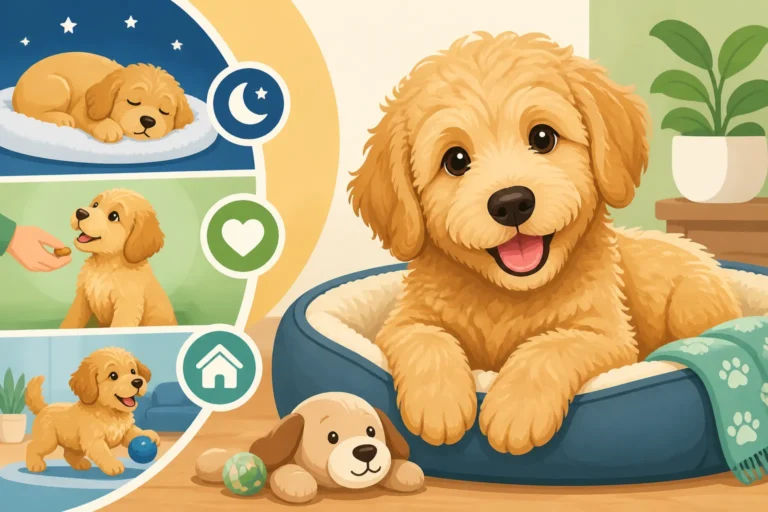
Your Goldendoodle needs a dedicated, safe, and comfortable space where they can feel secure when you're not around. This isn't a place of punishment; it's their personal den, a sanctuary. For many Goldendoodles, a crate works wonderfully. It taps into their natural denning instincts, providing a secure, enclosed space where they can relax. Ensure the crate is appropriately sized – just big enough for them to stand up, turn around, and lie down comfortably. If it’s too large, they might use one end as a potty area, which defeats the purpose.
Furnish this space with soft bedding, a comforting blanket, and maybe an old t-shirt with your scent. Crucially, this area should be associated with positive experiences. Feed them meals in their crate, offer high-value chews only when they’re in there, and never use it for time-outs or punishment. You want them to want to be there. For some Goldendoodles, a small, enclosed room like a laundry room or a puppy-proofed bathroom might work if they're not comfortable with a crate, but the principle of a defined, safe space remains the same. Make sure they have a water bowl that won't easily tip over.
Managing Your Own Behavior (The Human Factor)
This is often the hardest part for us humans! We unintentionally reinforce our Goldendoodle's dependency. Do you give your Goldendoodle a huge, tearful goodbye every time you leave? Do you instantly greet them with effusive joy the moment you return? These actions, while well-intentioned, can inadvertently heighten their anxiety surrounding your departures and arrivals. Your Goldendoodle picks up on your emotional state, and if you’re anxious about leaving them, they will be too.
The key is to make departures and arrivals as low-key and uneventful as possible. Practice "ignoring" your dog for the first few minutes after you get home, letting them settle before offering calm praise and attention. Similarly, don't make a big deal about leaving. Just go. It sounds counter-intuitive, but it helps normalize your absence. It’s also crucial to ensure your Goldendoodle is adequately exercised and mentally stimulated before you even think about alone time training. A tired Goldendoodle is a calm Goldendoodle. Incorporate plenty of Goldendoodle Exercise and Mental Work Every Day into their routine.
The Step-by-Step "Minutes" Method for Building Tolerance
This method is all about gradual exposure and positive association, moving at your Goldendoodle's pace. The goal is to build their confidence one tiny step at a time, proving to them that your absence is temporary and not a cause for alarm.
Starting with Micro-Departures
The absolute first step is to practice very, very short absences. We’re talking seconds. The idea is to leave before your Goldendoodle has a chance to get distressed, so they associate your absence with calm, not panic.
- Prep Your Dog: Make sure they’ve gone to the bathroom, had some physical exercise, and received a bit of mental stimulation. Give them a high-value, long-lasting chew or a puzzle toy stuffed with treats. A Kong, for instance, filled with frozen peanut butter or a bit of their kibble, can keep them occupied for a good while. Many options are available easily on platforms like Amazon.
- Step Out, Step In: With your dog happily engaged, walk out of the room. Close the door behind you. Count to five. Then, calmly walk back in. Don't make eye contact, don't talk to your dog, don't praise them. If they are still quietly working on their chew, great. If they got up or started to whine, that’s okay, but it means you went too long. Next time, try counting to three.
- Repeat and Vary: Do this several times a day. Vary the duration slightly (3 seconds, 7 seconds, 5 seconds). The goal is for your Goldendoodle to barely notice you left before you’re back. This teaches them that you always return. You might find this strategy also helps with scenarios like A Goldendoodle That Panics When You Shower, as it practices your temporary disappearance within the home.
Gradually Increasing Duration and Distance
Once your Goldendoodle is consistently calm for those micro-departures, you can slowly start to increase the time and distance. The key word here is gradually. If you push too fast, you risk setting back all your progress.
- Extend the Time: Continue with your high-value chew. Step out of the room, close the door, and this time, try for 10 seconds. If calm, try 15, then 20, then 30. Only increase if your Goldendoodle remains relaxed. If they show any signs of anxiety (pacing, whining, barking), you’ve gone too far. Go back to the last duration they were successful at and stick with it for a few more repetitions before trying to increase again.
- Increase Distance: Once they are comfortable with you being out of sight in another room for a few minutes, start to add distance. Can you step out the front door, close it, and then immediately open it and step back in? Again, no fanfare. Just a calm exit and entry. Gradually increase this to 30 seconds, a minute, two minutes.
- Practice Departure Cues: Your dog learns to associate certain actions with your departure – picking up keys, putting on shoes, grabbing your bag. Practice these actions randomly throughout the day without actually leaving. Pick up your keys, jingle them, put them back down. Put on your coat, take it off. This helps desensitize your Goldendoodle to these cues, so they don’t automatically trigger anxiety. This is a crucial aspect of Goldendoodle Impulse Control Exercises.
- Use Technology: A pet camera can be an invaluable tool at this stage. Devices available on Amazon allow you to monitor your Goldendoodle’s behavior while you’re gone. Some even let you speak to them or dispense treats remotely, which can be useful for positive reinforcement during longer absences. Seeing their actual behavior helps you know if you're progressing appropriately or if you need to scale back. For more on this, check out Cameras That Show What a Goldendoodle Does Alone.
Troubleshooting Common Setbacks
It's inevitable to hit a few bumps in the road. Don't get discouraged!
- Whining/Barking: If your Goldendoodle starts to vocalize, you've likely left for too long, or you haven't given them enough prior exercise and mental stimulation. Reassess the duration and go back to a shorter time where they were successful. Ensure they have a truly engaging chew or toy.
- Destructive Chewing: This is often a sign of anxiety or boredom. Ensure their "alone zone" is truly puppy-proofed and that they have appropriate chew toys. If they're destroying their crate bedding, consider a harder-to-destroy mat or a bare crate with a sturdy, safe chew toy for a while.
- Potty Accidents: If your Goldendoodle is otherwise house-trained but has accidents when left alone, it's often anxiety-related. This indicates you've pushed too fast or they're not fully comfortable yet. Clean thoroughly to remove scent, and go back to shorter alone times.
- Plateauing: If you get stuck at a certain duration, consider trying a different high-value treat or a new type of puzzle toy. Sometimes a change of enrichment can rekindle their interest. Also, ensure you’re not rushing your Goldendoodle's progress. Every dog is different; some might take weeks to get to 15 minutes, others days. Patience is key.
Remember, the goal is not just silence, but calm. Your Goldendoodle should be relaxed, maybe even napping, not just quiet out of exhaustion or fear.
Tools and Strategies to Support Alone Time
Beyond the step-by-step training, several tools and strategies can provide extra support, making the transition to independent living smoother for your Goldendoodle.
Enrichment Toys and Chews
These are your best friends in alone time training. A truly engaging toy can shift your Goldendoodle's focus from your absence to a rewarding activity.
- Long-Lasting Chews: Think bully sticks, durable dental chews, or even safe, natural bones (ensure they are appropriate for your dog’s size and chewing style). These provide a primal satisfaction and keep their mouths busy.
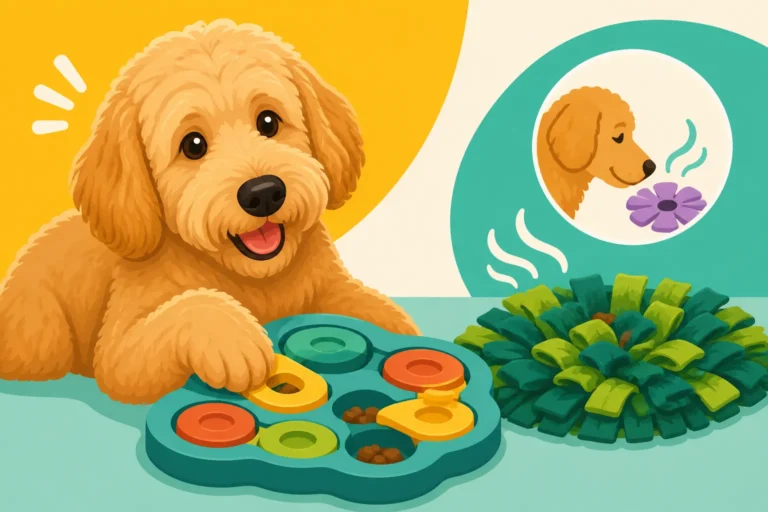
- Interactive Puzzle Toys: These challenge your Goldendoodle mentally, making them work for their food or treats. A simple snuffle mat, a treat-dispensing ball, or more complex wooden puzzles can be fantastic. Brands offer a variety of options, and you can find a wide selection of these Puzzle Toys That Occupy a Goldendoodle for an Hour.
- DIY Options: Don't underestimate the power of a frozen wet towel, a sturdy cardboard box filled with shredded paper and treats, or even just scattering their kibble in their alone zone for them to "hunt." These mental games are crucial for tiring out their intelligent Poodle side.
| Type of Enrichment | Description | Ideal For | Caution |
|---|---|---|---|
| Kongs/Stuffable Toys | Rubber toys filled with treats, often frozen to last longer. | All dogs, especially strong chewers. | Ensure appropriate size; monitor first few uses. |
| Bully Sticks/Chews | Edible, long-lasting chews. | Good for stress relief and occupying mouths. | Supervise to ensure they don't break off large pieces. |
| Puzzle Feeders | Require dog to manipulate toy to get food/treats. | Mental stimulation, slow eating. | Choose durable materials, appropriate difficulty. |
| Snuffle Mats | Fabric mats with hidden pockets for treats. | Scent work, calming, mental engagement. | May be destroyed by heavy chewers if unsupervised. |
Monitoring and Calming Aids
Sometimes, a little extra help is needed, especially if your Goldendoodle shows significant distress.
- Pet Cameras: As mentioned, a camera is excellent for monitoring. Some allow two-way audio, but use this judiciously. Hearing your voice might comfort them initially, but can also reinforce the idea that you're always "there" and make real alone time harder. Focus on observing their behavior.
- Calming Music/White Noise: Classical music designed for dogs or even just a white noise machine can help mask outside sounds that might trigger barking or anxiety.
- DAP Diffusers/Collars: Dog Appeasing Pheromones (DAP) mimic the natural pheromone a mother dog emits to calm her puppies. These are available as diffusers for their alone zone or as collars for continuous effect. While not a magic bullet, they can take the edge off anxiety for some dogs.
- Online Training Programs: For a structured approach, consider online programs like those offered by BAXTER & Bella. They often provide step-by-step guidance, video tutorials, and community support for various training challenges, including alone time. A comprehensive program can ensure you're addressing all aspects of your Goldendoodle's behavior.
- Professional Help: If, despite your consistent efforts, your Goldendoodle continues to exhibit severe distress, destructiveness, or self-harm when left alone, it's time to consult a professional. A certified professional dog trainer or a veterinary behaviorist can assess for clinical separation anxiety and develop a tailored treatment plan, which might include Anxiety Medication for a Goldendoodle in severe cases. Remember, sometimes Whether Doggy Daycare Fixes Goldendoodle Anxiety can be a temporary solution or a complementary strategy, but it usually doesn't address the underlying issue of being alone at home.
Building alone time for your Goldendoodle is a marathon, not a sprint. It requires immense patience, consistency, and a deep understanding of your dog's individual needs. By setting up a positive environment, managing your own habits, and gradually exposing them to your absence in tiny, manageable steps, you can help your beloved companion develop the confidence to relax and be comfortable even when you're not right by their side. It's a gift of independence you give them, fostering a more balanced and secure relationship for years to come.
Disclaimer
This article is for general informational purposes only and does not constitute professional advice. Laws, prices and regulations vary by location and change over time. Consult a qualified professional for guidance on your specific situation.