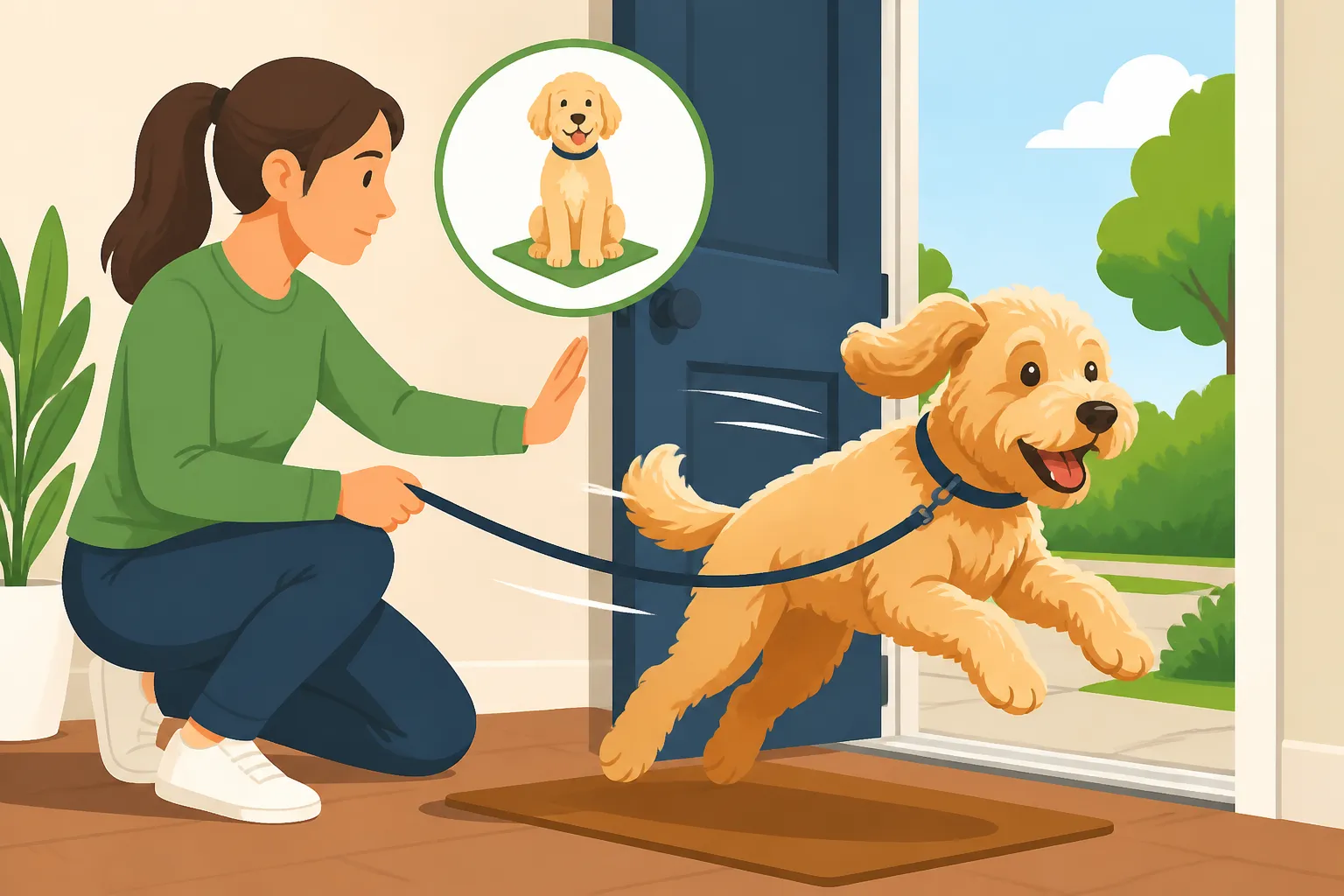
Door Manners for a Goldendoodle That Bolts
There are few things more anxiety-inducing than a Goldendoodle who thinks every opening door is an invitation to bolt. You're trying to grab the mail, greet a neighbor, or simply bring in groceries, and suddenly your beloved companion is a furry projectile heading for freedom, with no regard for traffic or their own safety. It's a frustrating, often dangerous, habit that many Goldendoodle owners face, but it's entirely solvable with consistent training and a little patience. This guide will walk you through understanding why your Goldendoodle acts this way and how to implement effective strategies to teach them impeccable door manners, ensuring peace of mind for you and safety for your adventurous pup.
Understanding Why Your Goldendoodle Bolts
It’s easy to feel like your Goldendoodle is being disobedient or purposefully rebellious when they dash out the door, but usually, it stems from a combination of natural instincts and a lack of clear boundaries. Understanding the root causes can help you approach the training with empathy and effectiveness.
The Blend of Breeds: Curiosity Meets Drive
Think about the two parent breeds that make up your Goldendoodle: the Golden Retriever and the Poodle. Golden Retrievers are known for their friendly, outgoing nature and their strong retrieving drive. They love to explore, meet new people, and investigate interesting scents. Poodles, on the other hand, are highly intelligent, agile, and often possess a keen awareness of their surroundings. Put these together, and you have a dog that is not only smart enough to quickly learn what gets them out the door but also inherently driven by curiosity and the desire to be part of whatever exciting thing is happening outside.
For a Goldendoodle, an open door isn't just an exit; it's a portal to a world of smells, sights, and potential adventures. They aren't trying to escape you; they're trying to join the party! This inherent eagerness, while charming in many contexts, becomes a problem when safety is at stake. They learn quickly that pushing past you, or even just rushing ahead, often leads to the desired outcome: being outside. This makes door bolting a self-rewarding behavior, making it harder to extinguish without proper intervention.
Impulse Control: The Missing Link
At its core, door bolting is an impulse control issue. Your Goldendoodle sees the door open, the scent of the outdoors hits them, and their brain says "GO!" before they can even process an alternative command from you. They haven't learned to pause, to wait for permission, or to override that immediate urge. This isn't unique to Goldendoodles; many dogs struggle with impulse control, especially when young or highly excitable.
Training good door manners is essentially teaching your dog that patience and waiting politely will always get them what they want (to go outside or greet someone), whereas rushing will not. It's about changing that automatic "go" response to a "wait for my cue" response. This takes repetition, consistency, and a calm, clear approach. It also taps into their natural biddability – both parent breeds are keen to please, so once they understand the rules, they're typically eager to follow them. For a deeper dive into teaching your pup to manage their excitement, check out Goldendoodle Impulse Control Exercises.
Strategies for Door Manners Training
Teaching your Goldendoodle not to bolt through doors is a foundational piece of safety training. It’s about building a consistent routine that teaches patience and control, turning a potential hazard into a calm, structured activity.
The "Sit and Stay" Foundation at the Door
Before you even think about opening a door, your Goldendoodle needs a rock-solid "sit" and "stay" command, especially in distracting environments. Start practicing these commands far away from any doors, in quiet parts of your home, and gradually increase the distractions and proximity to the door.
Once your Goldendoodle can reliably sit and stay in a calm room, move your practice to a door. Stand at the door, ask for a "sit," then a "stay." Put your hand on the doorknob. If they break the stay, calmly close the door (without opening it) and reset, asking for "sit" and "stay" again. Only when they hold the stay while you touch the knob do you proceed. Then, turn the knob. If they break, close the door, reset. This isn't about punishment; it's about clearly communicating that the door won't open until they comply. This step-by-step progression is crucial for building trust and understanding. The aim is to make the door a cue for calm behavior, not a trigger for excitement. Many online training platforms, such as those from BAXTER & Bella, offer excellent video tutorials that break down this process into easy-to-follow steps, often using positive reinforcement techniques that Goldendoodles thrive on.
Teaching the "Wait" Command
The "wait" command is your absolute best friend for door manners, differentiating from "stay" by implying a temporary pause before release. "Stay" means don't move until I say so, no matter what. "Wait" means pause right here, and I'll give you a release cue (like "okay" or "free") to proceed. This is vital because you often do want your dog to go out, but only when it's safe and you've given permission.
Here's how to teach "wait" at the door:
- Leash Up: Always have your Goldendoodle on a leash, even indoors, when practicing this. It provides a safety net and helps you manage their movement.
- Position: Approach the door, ask your Goldendoodle to "sit."
- The Wait: Hold the leash short, open the door just a crack, and say "wait." Use your body to block them if they try to push through. If they lunge, immediately close the door.
- Repeat and Reward: Once they hold the "wait" for a second, even with the door ajar, give them a high-value treat and praise. Close the door, reset, and repeat.
- Increase Duration and Opening: Gradually increase how wide you open the door and how long they have to "wait." Eventually, you should be able to open the door fully while they remain in a "wait."
- Release: Once they've waited patiently, give your release cue ("okay," "free," "let's go!") and allow them to calmly walk through the door. This teaches them that good things happen when they wait.
This process can be slow, but it builds a rock-solid understanding. Remember to keep training sessions short, fun, and always end on a success. For comprehensive training advice, you might find valuable techniques in resources like Sit Before Every Door With a Goldendoodle.
Practicing With Distractions
A well-behaved Goldendoodle at an empty door is one thing; one that holds their composure when the mail carrier arrives or a friend knocks is another. You need to simulate these real-life scenarios to proof their training.
- Knocking: Start by having a family member knock gently on the door. Ask for "sit" and "wait." Reward calm behavior. Gradually increase the intensity of the knock and eventually have the person ring the doorbell.
- Opening the Door to an Empty Space: Practice opening the door to an empty porch or yard, making sure your Goldendoodle understands that waiting applies even when there's "nothing" out there.
- Greeting People: Enlist a friend or family member to play the role of a visitor. Keep your Goldendoodle on a leash. When the visitor approaches, ask for "sit" and "wait." If your dog remains calm, the visitor can briefly say hello (no petting yet), and then you release your dog. Slowly build up to actual greetings, always maintaining control and rewarding calm behavior. If your Goldendoodle tends to jump on guests, this is also a great time to practice A Goldendoodle That Jumps on Every Guest.
- Simulating Other Dogs: If your Goldendoodle gets overly excited by other dogs, practice with a friend's dog at a distance, slowly decreasing the space as your dog's control improves.
Consistency is key here. Every single interaction with the door is a training opportunity. If you let them bolt "just this once," you undo hours of training.
Essential Tools for Door Control
While training is paramount, having the right tools can make a significant difference in managing your Goldendoodle's door manners, especially during the learning phase and in high-risk situations.
Gates and Playpens
One of the simplest and most effective ways to prevent door dashing is to physically block access to the door. A sturdy baby gate or a pet playpen placed a few feet in front of your entry doors can create a safe buffer zone. When the doorbell rings or you need to open the door, your Goldendoodle is safely contained, preventing the opportunity to bolt.
This allows you to answer the door calmly, without the frantic struggle of restraining your dog. It also teaches them that door access is not automatic. They're waiting behind a barrier, reinforcing the idea of controlled access. You can find excellent, durable gates on Amazon that can withstand a Goldendoodle's enthusiasm and fit various doorway sizes. These tools are especially helpful when you have guests or packages arriving frequently, or if you live on a busy street.
Leashes and Harnesses for Safe Exits
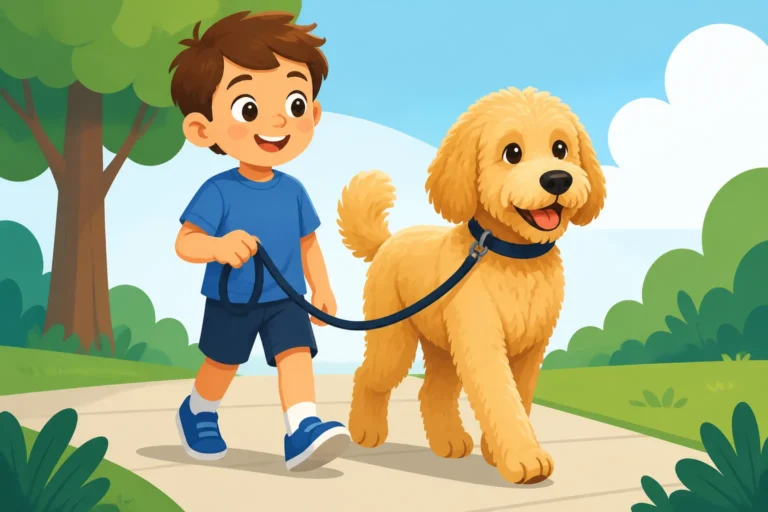
Even with the best training, it's always wise to use a leash, especially when first teaching door manners or in unpredictable environments. A leash provides immediate control and a physical barrier against bolting.
For Goldendoodles, a well-fitting harness can be more effective than a collar for door control, as it distributes pressure more evenly across their chest and shoulders, preventing tracheal damage that can occur with collar pulling. While front-clip harnesses are often recommended for leash pulling on walks, for door control, a standard back-clip harness combined with a short leash can provide enough immediate restraint. Make sure the harness fits snugly enough that your Goldendoodle can't back out of it if they panic or pull hard. Consider investing in a good quality, comfortable harness that you can quickly clip on for any door excursions. For more information on different harness types, you can look up Harnesses That Suit a Goldendoodle Coat.
The Role of a Long Line
For practicing "wait" in an open, but still contained, outdoor space (like a fenced yard), a long line can be invaluable. A long line (typically 15-30 feet) allows your Goldendoodle a sense of freedom while still giving you control if they try to bolt.
You can practice opening the back door and asking for "wait" while they are on the long line in the yard. If they rush, you can calmly step on the line to prevent them from getting too far, then redirect them back to the door to try again. This helps them understand the boundaries of the "wait" command even when they're technically "outside." It's a great intermediate step before trusting them completely off-leash in an unfenced area. Just be sure the long line is made of a comfortable material and won't cause rope burns if it slides through your hands.
Maintaining Consistency for Long-Term Success
Training is never a one-and-done deal, especially with highly intelligent and enthusiastic breeds like Goldendoodles. Consistency is the magic ingredient that turns learned behaviors into reliable habits.
Involve the Whole Family
It’s absolutely critical that every single person in your household is on the same page regarding door manners. If one family member lets the Goldendoodle bolt through the door, even occasionally, it undermines all the hard work everyone else is putting in. Dogs don't generalize well; they learn specific behaviors in specific contexts. If "sometimes I can bolt through this door" becomes part of the rule set, then you'll struggle to achieve consistent behavior.
Hold a family meeting and establish clear rules and cues. Everyone should use the same commands ("sit," "wait," "okay") and follow the same routine before opening any door. This might mean practicing together, reminding each other, and gently correcting inconsistencies. Children, in particular, need supervision and clear instructions, as they might not grasp the safety implications as readily as adults. Make it a team effort, and your Goldendoodle will learn much faster and more reliably.
Practicing in Different Environments
Once your Goldendoodle has solid door manners at your main entry points, it's time to generalize that training to other doors. Think about the car door, the gate to your backyard, or even the door to a friend’s house. Each new doorway is a new context for your dog, and they might need a refresher on the "wait" command in that specific location.
- Car Doors: Before letting your Goldendoodle jump out of the car, practice "wait." This prevents them from dashing into a parking lot or street.
- Backyard Gates: Even in a fenced yard, practice waiting at the gate before you open it. This is a crucial safety measure if a gate is accidentally left ajar or if you need to manage them while you enter or exit.
- Other Homes: When visiting friends or family, bring a leash and practice your door routine. Explain to your hosts that you're working on manners and ask for their cooperation.
The more diverse environments you practice in, the more your Goldendoodle will understand that "wait" at a threshold is a universal rule, not just a house rule.
Addressing Visitors and Deliveries
Visitors and delivery personnel are often the biggest triggers for Goldendoodle door dashing. The excitement of a new person, combined with the opening door, can be an irresistible temptation. This is where your consistent training truly shines.
When you anticipate a delivery or a guest, have a plan:
- Leash Up: Always put your Goldendoodle on a leash before the doorbell rings or before you open the door.
- Assign a "Place": Teach your Goldendoodle to go to a designated "place" (a mat, bed, or crate) when the doorbell rings. Reward them heavily for staying there. This creates distance from the door and gives them an alternative, calm behavior. Many Goldendoodles benefit from learning Goldendoodle Place Training on a Bed or Mat.
- Use a Gate: As mentioned earlier, a baby gate can provide an invaluable barrier.
- Calm Greetings: When greeting guests, keep your Goldendoodle on the leash and have them "sit" and "wait" a few feet away. Once the initial excitement has passed, and only if they are calm, you can allow a brief, controlled greeting. If they jump or get overly boisterous, calmly redirect them back to their "place" or a sit. Remember, A Goldendoodle That Rushes the Door for Packages needs extra practice!
By consistently reinforcing good behavior and preventing opportunities for mistakes, you’ll teach your Goldendoodle that polite manners at the door lead to good things, while chaotic rushing leads to no access at all. This patient, consistent approach will ensure your Goldendoodle becomes a well-behaved and safe companion around all entryways.
Troubleshooting Common Door Bolting Challenges
Even with the best intentions and consistent training, you might encounter specific hurdles when teaching your Goldendoodle door manners. Their intelligence and enthusiasm can sometimes create unique challenges, but with a nuanced approach, most can be overcome.
The Overly Excited Goldendoodle
Some Goldendoodles, especially younger ones, simply have an abundance of energy and excitement that can overwhelm their ability to control impulses. They might know the "sit" and "wait" commands, but the sheer thrill of an open door makes them forget everything.
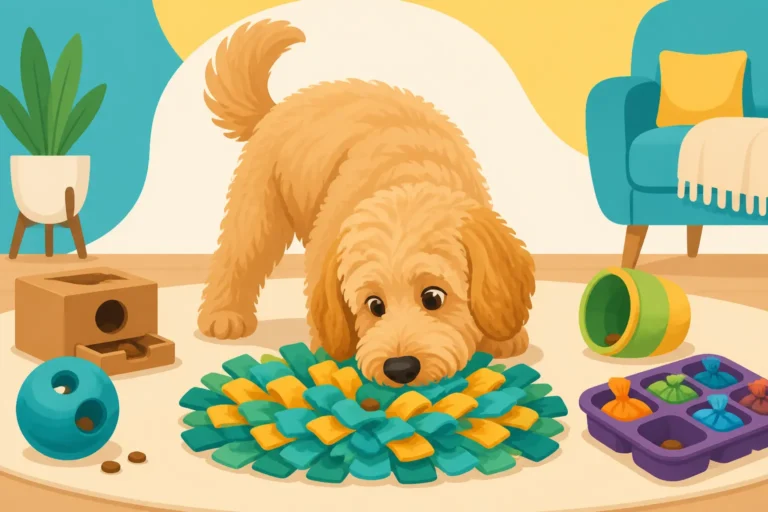
- Pre-Door Exercise: Before attempting door training or expecting polite greetings, ensure your Goldendoodle has had ample physical and mental exercise. A tired Goldendoodle is a better-behaved Goldendoodle. This could mean a vigorous walk, a game of fetch, or a challenging puzzle toy. A Goldendoodle's mind is just as active as their body, so mental work, like scent games or trick training, can be incredibly tiring. For ideas, consider Goldendoodle Exercise and Mental Work Every Day.
- Lowering Arousal: Practice moments of calm throughout the day. Teach a "settle" cue, where your Goldendoodle lies down and relaxes. Reward them for simply existing calmly near you. When approaching the door, try to keep your own energy low and calm. Dogs often mirror our emotions, so if you’re stressed about them bolting, they’ll pick up on that tension.
- Duration of Wait: Start with extremely short "waits" – literally a second or two – and generously reward them. Gradually build the duration, ensuring success at each tiny step. If they consistently fail at a certain duration, you’ve asked for too much too soon.
When Your Goldendoodle Learns to 'Beat the System'
Goldendoodles are smart cookies. They might figure out that you only enforce door manners when you have the leash in hand, or when you explicitly say "wait." They might try to sneak out when you're distracted, or simply try to be faster than you.
- Random Practice: Don't just practice when you're actually going out. Practice door manners randomly throughout the day. Walk to the door, ask for "sit" and "wait," open it, then close it and walk away without ever going outside. This teaches them that the door opening doesn't always mean an outing, and it makes the "wait" command less predictable and more of a general rule.
- Surprise Tests: Occasionally, have a family member or friend walk up to the door and ring the doorbell when your Goldendoodle isn't expecting it. This allows you to practice in a more real-world, unprompted scenario.
- Invisible Barriers: Even without a physical gate, act as if there's an invisible barrier. Use your body language – stand tall, face the door, and use your presence to block them. This reinforces that you control the threshold.
Addressing Setbacks and Regressions
Even a well-trained Goldendoodle can have an off day or revert to old habits, especially during adolescence (the Goldendoodle teenage months, where selective hearing often kicks in!). Don't get discouraged; it's a normal part of the learning process.
- Go Back to Basics: If your Goldendoodle starts bolting again, simply go back to the very first steps of training. Re-introduce the leash indoors, use the baby gate, and practice opening the door just a crack with generous rewards for waiting.
- Increase Management: During periods of regression, increase your management. Keep your Goldendoodle on a leash indoors more frequently, or use gates more consistently. This prevents them from practicing the unwanted behavior.
- Seek Professional Help: If you're truly struggling and feel like you've hit a wall, don't hesitate to consult a professional dog trainer who uses positive reinforcement methods. They can offer personalized advice and observe your Goldendoodle's specific behaviors to pinpoint the issue. Finding a trainer who works with Goldendoodles is crucial, as they understand the breed's unique blend of traits.
By being patient, consistent, and adaptable in your training approach, you can successfully teach your Goldendoodle excellent door manners. It's an investment in their safety and your peace of mind that will pay dividends for years to come.
| Training Stage | Goal | Key Actions | Essential Tools |
|---|---|---|---|
| Foundation | Reliable "Sit" and "Stay" commands | Practice in quiet areas, gradually add distractions. Use high-value treats and praise. | Treats, favorite toy |
| Door Introduction | "Sit" and "Stay" at closed door | Approach door, ask for "sit/stay." Touch doorknob. If dog breaks, close door, reset. Only open if stay is held. | Leash, treats |
| "Wait" Command | Pause at open door on cue | Leash on. Open door a crack, say "wait," block with body. Close if dog lunges. Gradually widen door and increase duration. Release with a clear cue. | Leash, treats, door |
| Distraction Proofing | "Wait" with real-life triggers | Have family members knock/ring bell. Practice with visitors (leashed dog). Open door to empty space. Simulate other dogs from a distance. | Leash, treats, helper |
| Generalization | "Wait" at all thresholds | Practice at car doors, backyard gates, other people's homes. Maintain consistency across all family members. | Leash, treats, various doors |
| Troubleshooting | Overcoming specific challenges | Pre-door exercise. Random practice. Use gates/playpens. Go back to basics if regression occurs. Consider professional help for persistent issues. | Gates (e.g., from Amazon), long line, professional trainer |
Disclaimer
This article is for general informational purposes only and does not constitute professional advice. Laws, prices and regulations vary by location and change over time. Consult a qualified professional for guidance on your specific situation.