Goldendoodle Leash Pulling by Size Category
One of the most common frustrations Goldendoodle owners face is the relentless tug-of-war on walks. You step outside, ready for a pleasant stroll, and suddenly your beloved companion transforms into a miniature (or not-so-miniature) sled dog, pulling you down the street with gusto. It’s not just annoying; it can be downright dangerous, leading to falls or injuries for both you and your dog. This comprehensive guide will explore why Goldendoodles pull on the leash, how their size influences this behavior, and, most importantly, provide actionable training strategies and tool recommendations to help you reclaim control and enjoy peaceful walks with your Goldendoodle, no matter their size.
Understanding Why Your Goldendoodle Pulls on Leash
It's easy to get frustrated when your Goldendoodle is pulling, but understanding why they do it is the first step toward finding a solution. It's rarely out of malice; it's usually a combination of instinct and learned behavior.
The Instinct to Pull: What Drives Them
Dogs, by nature, are explorers. Their world is a vibrant tapestry of scents, sights, and sounds, and they're constantly driven to investigate it. When you open that door, every fiber of their being screams, "Let's go!"
Goldendoodles, with their Golden Retriever and Poodle heritage, have a strong genetic predisposition for activity and curiosity. Golden Retrievers were bred to work alongside humans, covering ground and retrieving game, often with boundless energy. Poodles, too, are intelligent, active dogs with a history of being working water retrievers. This means your Goldendoodle likely possesses a powerful desire to move, to sniff every blade of grass, and to get to that interesting bush down the block right now. For them, pulling simply gets them to their desired destination faster. They don't conceptualize "polite leash walking" in the same way we do; they just know that a tight leash means they're moving forward. This innate drive, combined with a lack of proper training, often manifests as persistent pulling.
Learned Behavior: When Pulling Works
Here's the hard truth: most dogs learn to pull because it works. Think about it from their perspective. They pull, you continue to walk (even if you're grumbling), and they get to where they want to go. Every single time you allow them to move forward while the leash is taut, you're inadvertently reinforcing the pulling behavior. It’s a classic case of positive reinforcement for them, even if it’s a negative experience for you.
This learned behavior can start subtly in puppyhood. A tiny Goldendoodle puppy might give a small tug, and you, focused on keeping them moving or avoiding a potty accident, don't correct it. That small tug becomes a stronger pull, and soon, you have a full-grown Goldendoodle who believes the leash is merely a suggestion for direction, not a boundary. The difference in sensation for owners also plays a huge role. A Toy Goldendoodle pulling might be a minor annoyance, easily dismissed. A Standard Goldendoodle, however, can exert significant force, making walks miserable or even dangerous. The perceived "cost" of the pulling affects how diligent we are about training, and unfortunately, bigger dogs often get more consistent training out of sheer necessity, while smaller ones might get a pass because their pulling is "manageable."
Training Strategies for Every Goldendoodle Size
No matter the size of your Goldendoodle, the core principles of training remain the same: consistency, patience, and positive reinforcement. The difference often lies in the tools and the sheer physical effort required from the human end.
Foundation Training: Consistency is Key for All Sizes
Before you even think about fancy harnesses, you need solid foundation training. This isn't just about preventing pulling; it's about building a strong bond and clear communication with your Goldendoodle.
Start with basic obedience cues like "sit," "stay," "wait," and "look at me." These commands become your secret weapons on a walk. For example, if your Goldendoodle starts to pull towards a squirrel, a quick "look at me" followed by a treat can redirect their attention and reward them for not pulling. The key here is to practice these commands in low-distraction environments first, then gradually introduce more distractions as your dog masters them.
One of the most effective techniques for leash pulling is the "stop and go" method. The moment your Goldendoodle pulls and creates tension on the leash, you stop dead in your tracks. Don't say anything, don't yank the leash back – just stop. Only when the leash slackens (even for a second, as they look back at you in confusion) do you start walking again. If they pull again, you stop again. This teaches them that pulling gets them nowhere, but a loose leash keeps the walk moving. This requires immense patience, especially with an enthusiastic Goldendoodle, but its effectiveness lies in its consistency. Remember that Positive Reinforcement and Why It Suits a Goldendoodle is your best friend here; every time they choose a loose leash, reward them!
Tools to Help Manage Pulling: Harnesses and Leashes
While training is paramount, the right equipment can make a world of difference, especially during the learning phase. Forget about choke chains or prong collars; these can cause pain and damage, and they don't teach your Goldendoodle how to walk politely, only how to avoid discomfort.
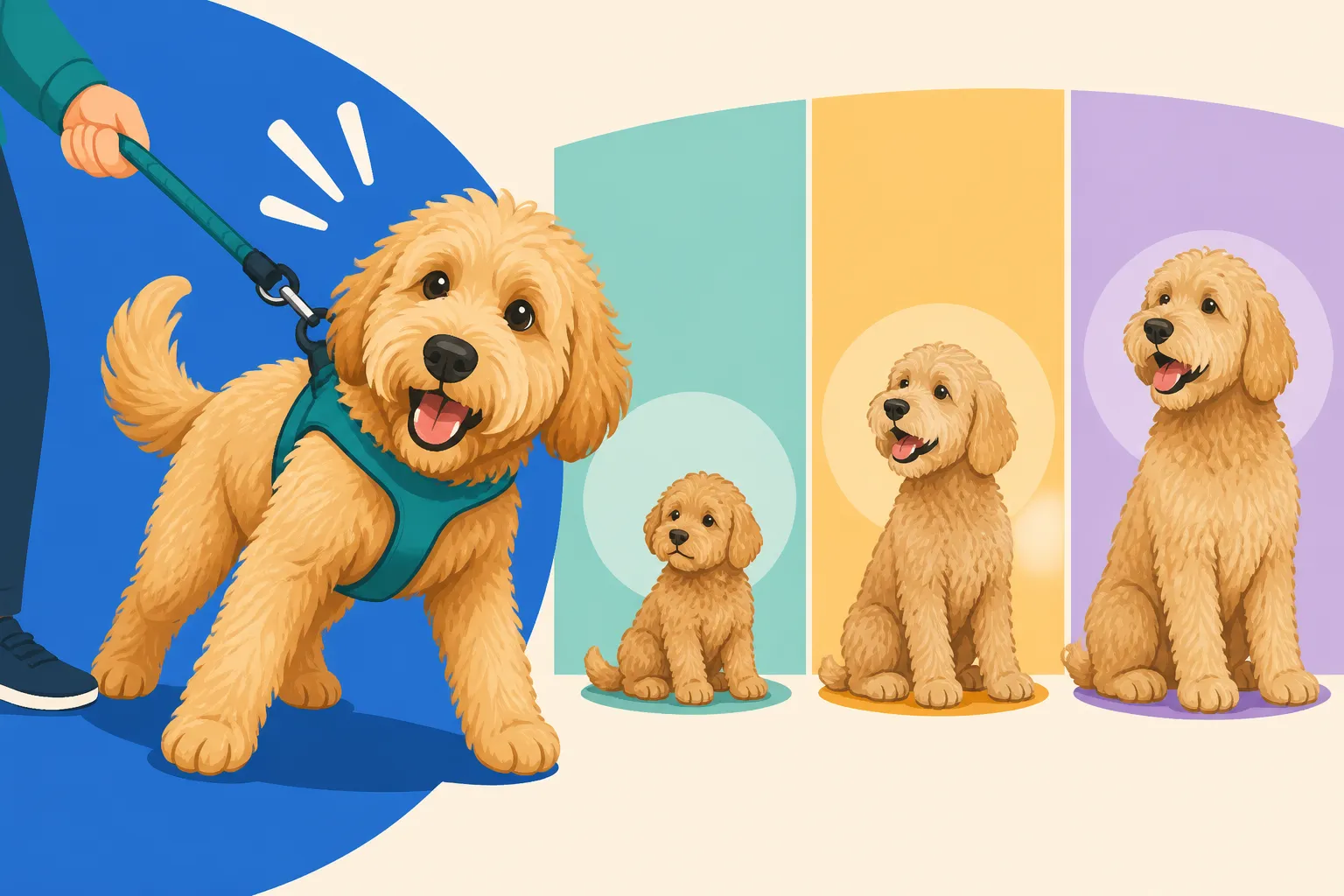
Front-Clip Harnesses: These are often the first recommendation for leash pulling. Unlike traditional back-clip harnesses, which allow a dog to lean into their chest and pull like a sled dog, front-clip harnesses have the leash attachment point on the dog's chest. When your Goldendoodle pulls, they are gently redirected to the side, making it much harder for them to gain traction and pull you forward. They don't hurt your dog, but they make pulling less effective and less rewarding. Brands like Easy Walk and Freedom No-Pull Harness are popular and effective options available on platforms like Amazon. It's crucial to ensure it fits correctly to prevent chafing or discomfort. You might want to check out Harnesses That Suit a Goldendoodle Coat for more detailed information on fit and style.
Head Halters/Gentle Leaders: These tools, often resembling a horse halter, fit over your dog's muzzle and behind their ears. The leash attaches under the chin. When your Goldendoodle pulls, their head is gently turned to the side, making it impossible to pull forward with their full body strength. Since where the head goes, the body follows, this gives you excellent control. They require careful introduction and positive association (lots of treats!) to ensure your dog is comfortable wearing them. Many dogs resist them at first, but with patience, they can be incredibly effective, especially for stronger pullers.
Leash Length and Material: For leash training, a standard 6-foot leash is generally ideal. It provides enough slack for your dog to explore a bit without being too long to manage. Avoid retractable leashes during training, as they constantly teach your dog that pulling extends their range, counteracting all your efforts. A comfortable, durable material like nylon or leather is best.
Specific Challenges and Solutions by Goldendoodle Size Category
While the underlying reasons for pulling are universal, the practicalities of dealing with it vary significantly depending on your Goldendoodle's size.
Toy and Mini Goldendoodles: Small Dog, Big Pull
It’s easy to overlook pulling in a tiny Goldendoodle. After all, a 15-pound dog isn't going to pull you off your feet, right? This seemingly innocuous pulling is often reinforced because it's "cute" or simply not a major physical imposition for the owner. However, constant pulling, even from a small dog, can lead to serious issues.
For one, it puts immense strain on their delicate neck and trachea. Persistent pressure from a collar can lead to tracheal collapse, especially in smaller breeds. This is a painful and serious condition that can be entirely avoided with proper training and equipment. Moreover, a pulling Toy Goldendoodle isn't enjoying their walk; they're stressed, excited, and likely missing out on the opportunity to actually engage with you.
With Toy and Mini Goldendoodles, the "stop and go" method is still highly effective. Use high-value, pea-sized treats to reward a loose leash. Since they're smaller, you might be tempted to pick them up when they pull, but resist this urge unless absolutely necessary. It removes the opportunity for them to learn. A front-clip harness is an excellent choice to protect their neck and give you better control without applying pressure to their throat. When it comes to treats, remember Training Treats Sized for a Mini Goldendoodle will be more appropriate for their smaller mouths. For example, a tiny piece of boiled chicken or small training kibble works wonders.
Medium Goldendoodles: The Mid-Range Mover
Medium Goldendoodles, typically weighing between 30-50 pounds, present a unique challenge. They're often strong enough to pull an adult off balance, yet not always perceived as "powerhouses" like their Standard counterparts. This can lead to owners underestimating their strength and not being as diligent with training from the outset.
The primary issue here is managing their surprising strength and enthusiasm. A brisk walk with a medium Goldendoodle should be enjoyable, but if they're constantly dragging you, it quickly becomes a chore. The stop-and-go method becomes even more critical here, as does consistent reward for slack in the leash. Consider practicing "heel" in a quiet park or your backyard first, using a consistent verbal cue and rewarding them when they walk by your side. If your Goldendoodle is particularly excited by other dogs or people, practice "watch me" or "leave it" commands before you encounter distractions.
For medium Goldendoodles, a well-fitted front-clip harness is often sufficient. If they are particularly strong or you have trouble redirecting them, a head halter might be a good next step. Remember, consistency is key, and every walk is a training opportunity. These dogs thrive on routine and clear expectations.
Standard Goldendoodles: The Powerhouse Pullers
Ah, the Standard Goldendoodle – a magnificent, strong, and often incredibly enthusiastic companion. With weights ranging from 50 to 90+ pounds, a pulling Standard Goldendoodle isn't just a nuisance; it's a genuine safety concern. They can easily pull an adult over, especially on slick surfaces or if you're caught off guard. This is where early and diligent training, coupled with the right tools, is absolutely non-negotiable.
For these larger dogs, waiting for the leash to slacken during the "stop and go" method might mean standing still for quite a while initially. But it’s vital to hold your ground. Your consistency is their teacher. Start training in the house or yard, gradually moving to low-distraction environments, then to busier areas. It’s also important to consider Walking a Standard Goldendoodle Beside a Child; a child absolutely cannot manage a pulling Standard Goldendoodle, making training even more critical for family safety.
A front-clip harness is a must for most Standard Goldendoodles, providing essential leverage without causing harm. For those truly powerful pullers, or if you're struggling to maintain control, a head halter like the Gentle Leader can be a game-changer. It provides the most immediate physical control without force or pain, allowing you to easily guide their head and thus their body. Many owners of Standard Goldendoodles swear by them for transforming their walks. The goal, regardless of the tool, is to teach them that walking politely by your side is the most rewarding way to experience the world. For a deeper dive into adjusting your approach based on size, you might find Goldendoodle Leash Manners by Size particularly helpful.
| Goldendoodle Size | Common Pulling Challenges | Recommended Training Tools | Key Training Focus |
|---|---|---|---|
| Toy/Mini | Perceived as "cute," risk of tracheal damage, owner complacency. | Front-clip harness, thin but sturdy leash. | Consistent "stop & go," high-value small treats, protecting their neck. |
| Medium | Surprising strength, can pull adults off balance, underestimation by owners. | Front-clip harness, potentially head halter, standard 6ft leash. | "Stop & go," "heel" command in varied environments, redirecting excitement. |
| Standard | Significant safety risk, immense strength, requires strong physical management. | Head halter, front-clip harness, heavy-duty 6ft leash. | Early & diligent "stop & go," "heel" command, pre-walk exercise. |
Beyond the Leash: Holistic Approaches to Better Walks
While direct leash training is crucial, addressing the underlying needs of your Goldendoodle can dramatically improve their behavior on walks.
Adequate Exercise and Mental Stimulation
A Goldendoodle with pent-up energy, both physical and mental, is far more likely to pull on the leash. Think of it: they've been cooped up, and now the world is finally open to them! Providing ample exercise before a structured walk can significantly reduce their urge to pull. A quick fetch session in the yard or a game of tug can take the edge off their energy. The Hour or Two a Goldendoodle Needs Each Day often requires more than just a quick trot around the block.
But it’s not just about physical exertion. Goldendoodles are intelligent dogs, inheriting smarts from both the Golden Retriever and Poodle lines. They need mental stimulation to feel truly tired and content. Incorporate puzzle toys, scent games, or short trick training sessions into their daily routine. For instance, scattering their kibble in the yard for them to "hunt" (a scent game) or teaching them a new trick like "spin" can be incredibly tiring for their brains. These activities engage their minds and help burn off excess energy in a constructive way. A mentally stimulated Goldendoodle is a calmer Goldendoodle, and a calmer Goldendoodle is less likely to pull. If you want more ideas for intellectual engagement, The Thinking Work That Actually Tires a Goldendoodle is an excellent resource.
Early Socialization and Exposure
Many Goldendoodles pull because they are overly excited or overwhelmed by the world around them. Every new person, dog, car, or smell becomes an irresistible magnet, causing them to lunge and pull. Early and ongoing socialization is key to helping your Goldendoodle navigate these stimuli calmly.
Exposing your puppy to a variety of sights, sounds, smells, people, and other well-behaved dogs during their critical socialization window (before 16 weeks, ideally) helps them develop into confident, well-adjusted adults. This doesn't mean letting them run up to every dog or person they see. Instead, it means controlled exposure where they learn to observe calmly. For instance, sit on a bench outside a busy park with your puppy, rewarding them for simply watching people and dogs pass by without reacting. The BAXTER & Bella online puppy school is a fantastic resource that guides new owners through this crucial socialization period, providing structured lessons on exposure and confidence building.
Even if you have an adult Goldendoodle who wasn't adequately socialized as a puppy, it's never too late to start. Continue to expose them to new environments gradually and positively, always keeping them safe and within their comfort zone. The goal is to reduce their over-excitement or anxiety, which in turn reduces the frantic pulling to get to or away from things. Understanding What a Goldendoodle Puppy Must Meet Before Sixteen Weeks can really set them up for success.
By combining consistent, positive leash training with a holistic approach to exercise and mental well-being, you can transform those frustrating tug-of-war sessions into enjoyable walks for both you and your cherished Goldendoodle.
Disclaimer
This article is for general informational purposes only and does not constitute professional advice. Laws, prices and regulations vary by location and change over time. Consult a qualified professional for guidance on your specific situation.