Goldendoodle Potty Training by Week
Bringing a new Goldendoodle puppy home is an absolute joy, full of snuggles and boundless energy. But let's be real, that initial excitement often comes with a dose of anxiety about one thing: potty training. It's a huge hurdle for new puppy parents, and the thought of cleaning up accidents for months can feel overwhelming. This comprehensive guide is here to walk you through Goldendoodle potty training week by week, helping you establish a successful routine and avoid common pitfalls so you can focus on building that beautiful bond with your furry family member.
Understanding Your Goldendoodle Puppy's Potty Training Baseline
Potty training isn't just about teaching your Goldendoodle where not to go; it's about teaching them where to go and, crucially, giving them the opportunity to succeed. This means understanding their physical capabilities and mental state, especially in those first few bewildering weeks in a new home.
The First Few Days: Settling In and Observing
Imagine being a tiny puppy, suddenly transplanted from everything familiar – your mom, your littermates, the only home you've ever known – into a brand new place with strange smells, sounds, and giant humans. It’s incredibly stressful! During these first few days, your Goldendoodle puppy isn't trying to spite you with accidents; they're simply overwhelmed and still figuring out their new world. It's a time for patience and relentless observation.
Don't expect perfection immediately. Instead, focus on learning your puppy's cues. When do they wake up? When do they eat? When do they play? These are the prime times for potty breaks. You might notice them sniffing the ground intently, circling, or suddenly walking away from their play area. These are all subtle (and sometimes not-so-subtle) signals that they need to go. Establishing a consistent "potty spot" in your yard from day one is crucial. Take them to the exact same spot every single time. The scent of previous eliminations will encourage them to go there again, reinforcing the idea of "this is my bathroom."
How a Goldendoodle's Age Impacts Bladder Control
This is a big one, and it's where a lot of frustration can come from if expectations aren't realistic. A Goldendoodle puppy, especially one brought home around 8 to 10 weeks old, has the bladder capacity of a thimble. Seriously! Their little bodies simply aren't developed enough to hold it for long periods. Trying to make a 9-week-old puppy hold their bladder for 3-4 hours is like asking a toddler to sit through a full-length opera without a bathroom break – it's just not going to happen.
Generally, a puppy can hold their bladder for roughly one hour for every month of their age, plus one. So, an 8-week-old puppy (2 months) can hold it for about 3 hours during the day. This is a guideline, not a strict rule, and it applies primarily when they are settled or sleeping. When they're awake, playing, and excited, that window shrinks dramatically. Standard Goldendoodle puppies, while larger, don't necessarily have vastly superior bladder control at a young age compared to their mini or toy counterparts. Their bodies are growing rapidly, and while their capacity may be a touch larger, the physiological control is still developing. Be prepared for very frequent outings, especially in the early weeks.
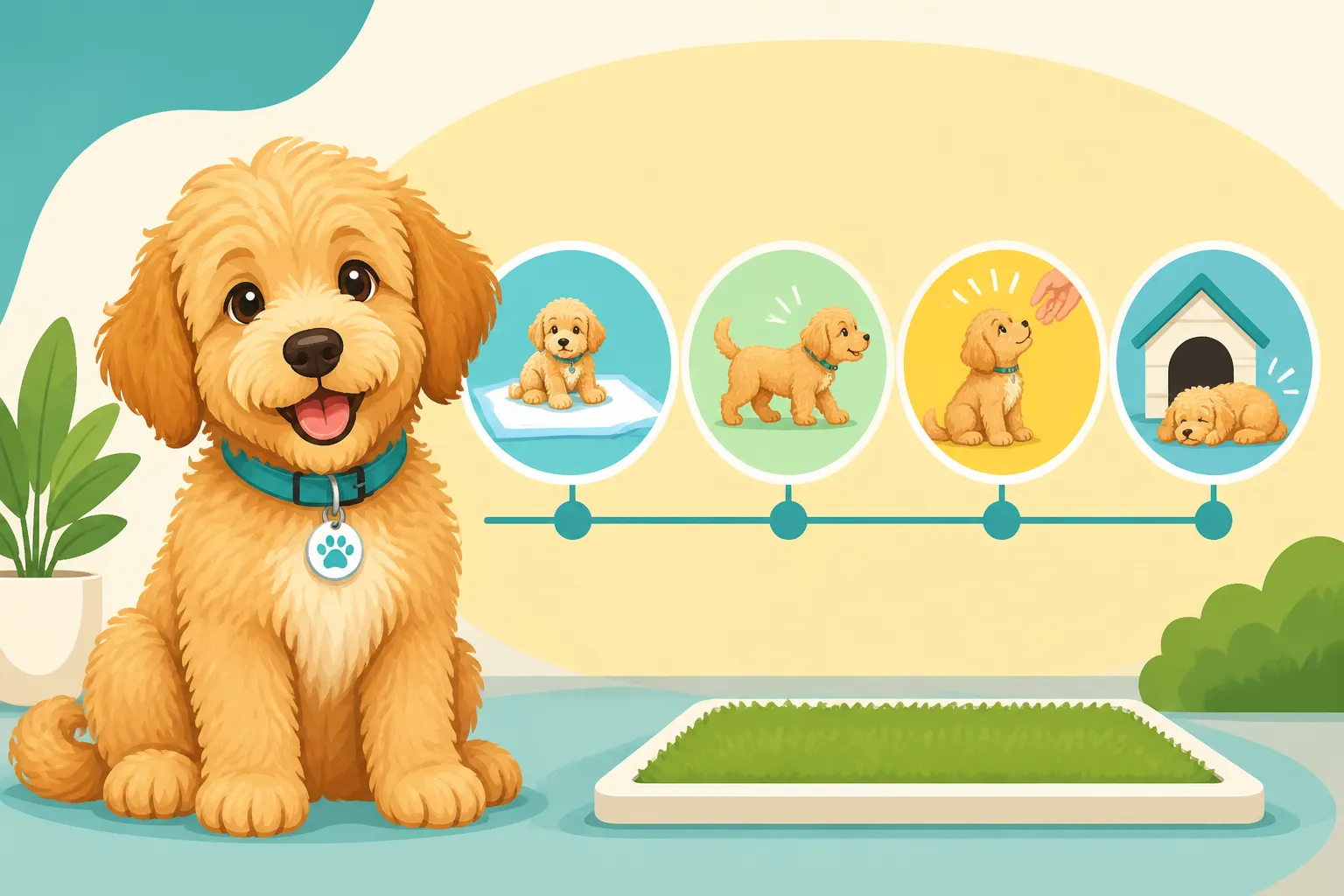
The Week-by-Week Potty Training Journey
Potty training is a marathon, not a sprint, and it truly benefits from a structured, week-by-week approach. It's about building habits and slowly increasing expectations as your Goldendoodle matures.
Weeks 8-10: The Foundation Phase
This is where the real work begins, and it's all about repetition and hyper-vigilance. Your 8-10 week old Goldendoodle puppy needs to go out constantly. We're talking every 30-60 minutes when they are awake and active. Make it a routine: immediately after waking up, within 10-15 minutes of eating or drinking, after every play session, and just before bedtime. Seriously, set a timer on your phone if you need to!
When you take them out, always go to that designated potty spot. Use a consistent phrase like "Potty time!" or "Go peepee!" as they are doing their business. The moment they finish, praise them like they've just won the lottery. Enthusiastic "Good puppy!" with a high-value treat is essential. This positive association is paramount. Don't scold them for accidents inside during this phase; it only teaches them to hide their potty breaks from you. Instead, if you catch them in the act, clap loudly to interrupt, pick them up, and rush them outside to the designated spot. If they finish outside, praise!
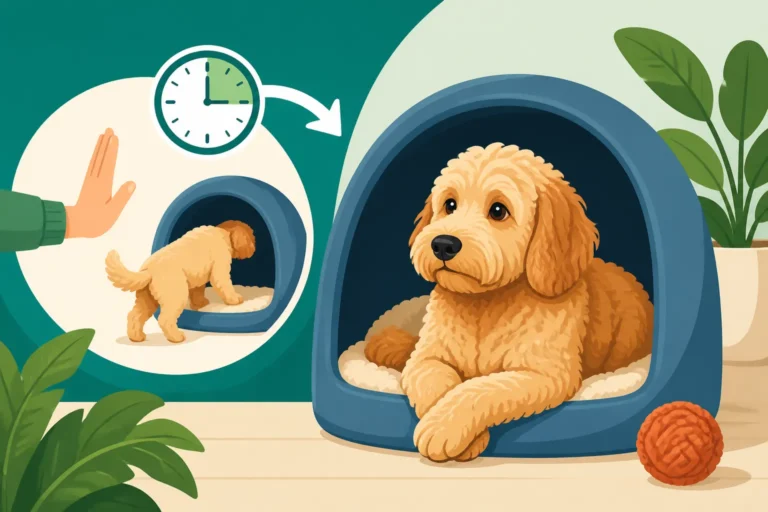
Crate training becomes your secret weapon here. A properly sized crate leverages your Goldendoodle’s natural instinct not to soil their sleeping area. They'll try to hold it in the crate, which helps them develop bladder control. However, remember they can't hold it for long, so take them out immediately before and after crate time. This is also a critical period for their first vet visits and Goldendoodle Puppy Vaccination Timing, so make sure those frequent outdoor trips are to a safe, clean area away from other dogs if they aren't fully vaccinated.
Weeks 11-14: Building Consistency and Extending Time
By now, your Goldendoodle is a little older, and you might start to see them hold it for slightly longer periods, perhaps 1-2 hours during active times, and maybe 3-4 hours when napping. Don't push it too much yet, but recognize their growing control. Continue the frequent trips, using your command and lavishing praise and treats.
This is a great time to start using a leash for all potty trips. Even if you have a fenced yard, the leash helps teach your Goldendoodle that going outside on a leash specifically means potty time, not play time. It helps them focus on the task at hand. You want them to learn to eliminate quickly, especially for future walks in public spaces.
Supervision remains absolutely critical. If your puppy is out of their crate, they should be in the same room as you, or perhaps tethered to you with a leash (often called "umbilical cord training"). This prevents them from wandering off to a quiet corner and having an accident unnoticed. If you can't actively supervise, they should be in their crate or a puppy-proofed confinement area. If you find your puppy vocalizing in their crate, ensure you respond, as it could be a sign they need to go out. Crate Training a Goldendoodle That Screams often involves carefully distinguishing between genuine potty needs and attention-seeking.
Weeks 15-18: Solidifying Habits and Preventing Regression
Around 4-5 months, many Goldendoodles start to become quite reliable with their potty habits. Accidents should be much rarer now. They might be able to hold it for 2-3 hours during the day and possibly sleep through the night without a potty break. However, this isn't a license to get complacent. Continue your routine, even if it feels repetitive.
This age also coincides with their "teenage" months, where they might start testing boundaries and having Goldendoodle Adolescence and Selective Hearing. They might get distracted easily outside or pretend not to hear you. Maintain consistency, reinforce heavily when they do go outside, and don't assume they're perfectly trained just yet. Any slight change in routine, like a new visitor or a longer-than-usual outing, can still lead to a forgotten lesson.
Remember to clean up any indoor accidents thoroughly. Goldendoodles have an incredible sense of smell, and lingering odors, even those undetectable to us, can attract them back to the same spot. Invest in good enzymatic cleaners, available from retailers like Amazon, to truly neutralize the scent.
| Puppy Age | Bladder Control (Awake) | Training Focus | Common Challenges |
|---|---|---|---|
| 8-10 Weeks | 30-60 minutes | Frequent outings, praise for success, crate introduction | Frequent accidents, short attention span |
| 11-14 Weeks | 1-2 hours | Consistency, leash for potty trips, umbilical supervision | Distraction, longer hold times developing |
| 15-18 Weeks | 2-3 hours (day) | Reinforcement, preventing regression, public outings | Testing boundaries, occasional slip-ups |
| 4-6 Months | 3-4 hours (day) | Solidifying reliability, addressing lingering issues | Excitement peeing, outdoor distractions |
| 6 Months+ | 4+ hours (day) | Maintenance, addressing marking, complete independence | Marking, resource guarding, stubbornness |
4 Months and Beyond: Advanced Independence
Once your Goldendoodle is 4-6 months old, they should be largely potty trained, having a good understanding of where to go. They'll likely be able to hold it for several hours during the day and sleep through the night. The focus shifts to maintaining these good habits and addressing any lingering issues.
Continue to praise successful potty breaks, even if it's less exuberant than in the early days. You might find that some Goldendoodles, particularly males, start to lift a leg and engage in Goldendoodle Marking Indoors around this age. This isn't usually a potty training failure but a behavioral one, and it needs to be addressed with consistent redirection, immediate outdoor trips, and thorough cleaning. In some cases, neutering can help reduce marking behavior, but it's not a guarantee.
If accidents persist, it’s always wise to rule out medical issues with a vet visit. A urinary tract infection (UTI) or other health concerns can cause a perfectly trained dog to suddenly have accidents. Once health is cleared, it’s about going back to basics with your routine, as discussed below.
Essential Tools and Strategies for Goldendoodle Potty Training Success
Successful potty training is a holistic process that combines understanding your dog's needs with effective tools and consistent strategies.
Crate Training: Your Best Friend for Potty Training
I cannot stress this enough: a crate is not a cage; it's a den, a safe haven, and an incredibly powerful potty training tool. Goldendoodles, like most dogs, have a natural instinct to keep their sleeping area clean. By providing a crate that's just big enough for them to stand up, turn around, and lie down comfortably (without extra space to potty in one corner and sleep in another), you leverage this instinct. They'll try to hold their bladder and bowels rather than soil their personal space.
The key is proper sizing. You don't want a crate that's too large, or they'll just use one end as a bathroom. Many crates come with dividers, allowing you to expand the space as your Goldendoodle grows. This way, you only need to invest once in Buying One Crate That Fits a Grown Goldendoodle. Introduce the crate positively with treats and toys, never as punishment.
Leash and Designated Potty Spot
Consistency is king in potty training, and that extends to where your Goldendoodle goes to the bathroom. Choose a specific spot in your yard or on your walking route and take them there every single time. The familiar scents will encourage them to go.
Using a leash, even in a fenced yard, ensures focus. A Goldendoodle, with its playful Golden Retriever and intelligent Poodle genes, can easily get distracted by a butterfly, a leaf, or the sound of a distant squirrel. The leash keeps them on task. Don't let them wander and play until they've done their business. Once they've successfully gone, then you can reward them with a little playtime or a walk.
Cleaning Up Accidents Effectively
Accidents will happen. It's part of the process, especially in the early weeks. The most important thing is how you react and how you clean. Never scold or punish your Goldendoodle for an accident, especially if you didn't catch them in the act. They won't connect your anger to the pee on the floor; they'll just learn to fear you or hide when they need to go.
The critical step after an accident is a thorough clean-up with an enzymatic cleaner. These cleaners break down the enzymes in urine and feces, eliminating the odor completely, rather than just masking it. If you don't use an enzymatic cleaner, your Goldendoodle's powerful nose will still detect residual odors, making that spot a tempting repeat bathroom location. You can find excellent enzymatic cleaners readily available at pet stores and online retailers like Amazon.
Rewards, Praise, and Positive Reinforcement
Goldendoodles are typically eager to please, a trait they inherit from both their Golden Retriever and Poodle parents. This makes them highly responsive to positive reinforcement. Every single time your Goldendoodle potties in the correct spot, make a big deal about it!
- Verbal Praise: Enthusiastic "Yes! Good Potty!" in a happy, high-pitched voice.
- Treats: Have high-value treats (tiny pieces of cheese, cooked chicken, or special puppy treats) ready and give one immediately after they finish. Timing is everything – the treat needs to be given within 1-2 seconds of them finishing. This is a core tenet of Marker Training a Goldendoodle From Week One.
- Affection: A quick pat or snuggle (if they like it) can also reinforce the positive behavior.
Some owners also find "potty bells" helpful. You hang bells on the door they use to go outside, and you teach your Goldendoodle to nose or paw them to signal they need to go out. Companies like BAXTER & Bella offer training programs that incorporate such methods, often with step-by-step guidance. It's a fantastic way for your Goldendoodle to communicate their needs without you having to guess.
Troubleshooting Common Potty Training Challenges
Even with the best intentions and a consistent routine, you might hit some bumps in the road. It's normal, and there are ways to address these common Goldendoodle potty training hurdles.
When Your Goldendoodle Regresses on House Training
It’s incredibly frustrating when your Goldendoodle, who was doing so well, suddenly starts having accidents again. First and foremost, schedule a vet visit to rule out any underlying medical conditions like a urinary tract infection (UTI), bladder stones, or other health issues that could cause increased urination or loss of bladder control. These can make even the most diligently trained dog seem like they've forgotten everything. This is crucial for understanding Goldendoodle Vomiting and When It Matters or other sudden changes.
If your vet gives a clean bill of health, then it's time to re-evaluate your routine. Has anything changed? New schedule? New furniture? More stress in the household? Even small changes can throw a sensitive Goldendoodle off. Often, the solution for A Goldendoodle Regressing on House Training is to simply go back to basics. Increase supervision, take them out more frequently (like you did in week 8-10), and reward heavily for outdoor success. Sometimes, we unconsciously slack off on vigilance as they get older, and they take advantage of it.
Managing Nighttime Potty Breaks
Nighttime can be particularly challenging because, well, sleep. For very young Goldendoodle puppies (8-12 weeks), expecting them to sleep through the night without a potty break is unrealistic. You might need to set an alarm to take them out once or twice during the night. The general rule is they can hold it for their age in months + 1 hour. So, a 2-month-old puppy might need a break around 3-4 hours after bedtime.
To help with nighttime success:
- Last Call: Take your Goldendoodle out for a final potty break right before you put them in their crate for the night.
- Limit Water: Remove water access about 1-2 hours before bedtime.
- First Call: Take them out immediately first thing in the morning, before you do anything else.
- Comfort: Ensure their crate is comfortable but not so luxurious that they're happy to potty in one corner.
As they get older, you can gradually extend the time between night-time breaks. Eventually, most Goldendoodles will be able to sleep 6-8 hours without needing to go out.
Excitement Peeing and Submissive Urination
Goldendoodles are known for their exuberance and friendly nature, but sometimes this can manifest as "excitement peeing" or submissive urination. This usually happens during greetings, when guests arrive, or when they're particularly happy or nervous. It's not a sign of a potty training failure; it's an involuntary physical response.
To manage this:
- Calm Greetings: Teach visitors to ignore your Goldendoodle until they are calm. No excited squealing, bending over, or direct eye contact immediately upon entry.
- Outdoor Greetings: Take your Goldendoodle outside to greet guests initially if possible.
- No Punishment: Never punish them for this. It will only make them more anxious and likely to urinate.
- Management: Keep greetings low-key, avoid towering over them, and try to have them on a leash when guests arrive so you can calmly guide them outside if you see signs of impending urination.
They will usually grow out of this as they mature and gain more confidence and bladder control.
What if My Goldendoodle Isn't Getting It?
If you've been consistent, ruled out medical issues, and your Goldendoodle still isn't reliably potty trained after several months, it's okay to ask for help. Don't feel discouraged; every dog is an individual.
- Re-evaluate Your Routine: Go back through everything. Are you truly taking them out often enough? Are you cleaning up perfectly? Is the crate size correct? Are you rewarding immediately and enthusiastically?
- Professional Guidance: Consider consulting a professional dog trainer specializing in positive reinforcement. They can observe your Goldendoodle's behavior and your interactions, identifying subtle cues or inconsistencies you might be missing. They can offer tailored advice and strategies. This is when you might need to start Finding a Trainer Who Works With Goldendoodles.
- Online Resources: Many online training platforms, such as BAXTER & Bella, offer comprehensive puppy programs that cover potty training in depth. These can provide structured guidance and support from experienced trainers, often at your own pace.
Remember, patience, consistency, and a positive attitude are your greatest assets. Your Goldendoodle wants to please you, and with the right guidance, they will absolutely get there!
Disclaimer
This article is for general informational purposes only and does not constitute professional advice. Laws, prices and regulations vary by location and change over time. Consult a qualified professional for guidance on your specific situation.