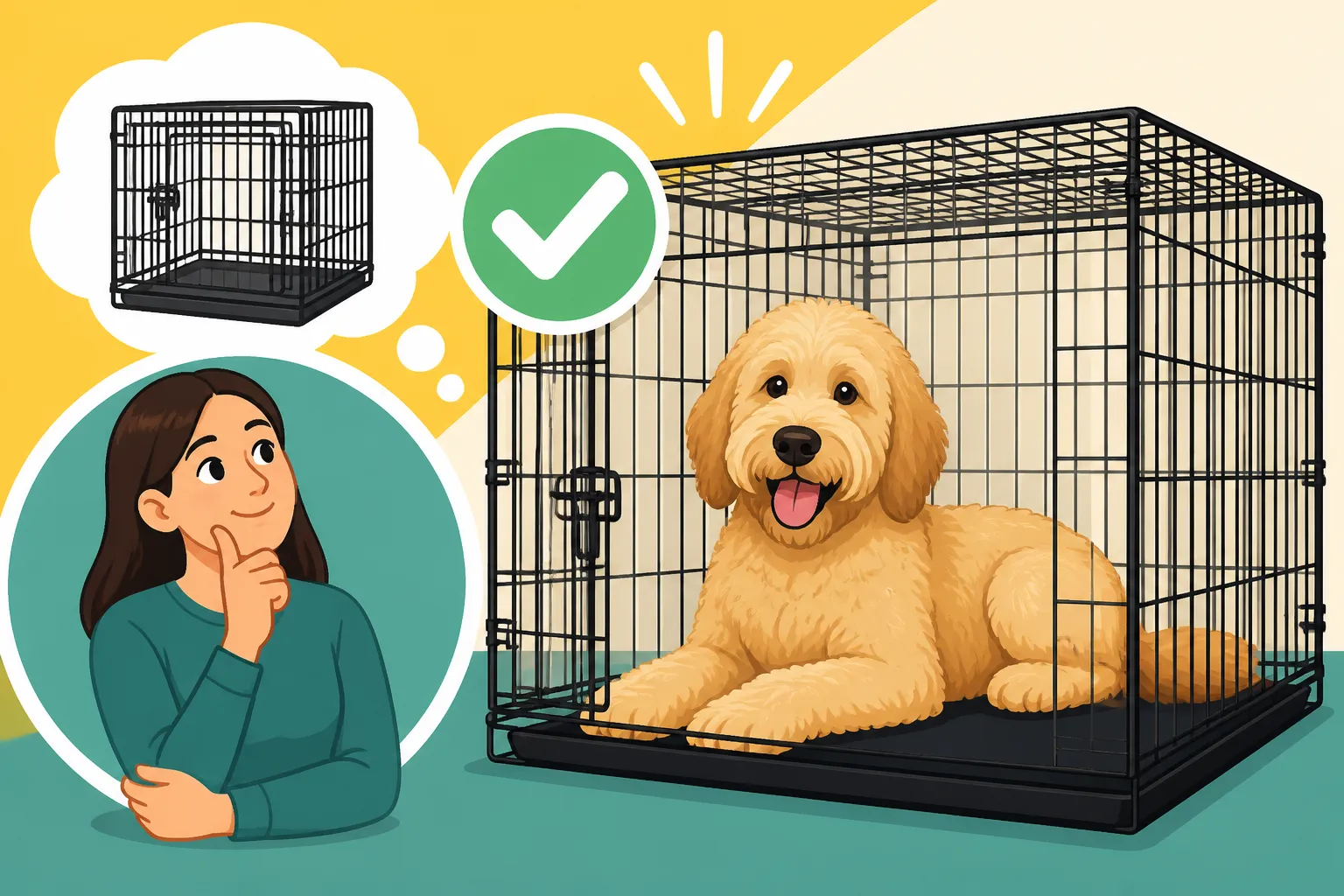
Buying One Crate That Fits a Grown Goldendoodle
One of the trickiest parts of bringing a Goldendoodle puppy home is looking at that tiny, adorable fluffball and trying to envision the full-grown dog it will become. You want to provide a safe, comfortable space, but the idea of buying multiple crates as your puppy grows can feel overwhelming and expensive. Many new owners struggle with how to choose a single crate that will serve their Goldendoodle through all its stages, without sacrificing proper house training or comfort. This guide is here to help you navigate that decision, ensuring you pick the perfect "forever crate" from day one.
Understanding Goldendoodle Sizes and Their Impact on Crate Selection
The Goldendoodle isn't a single-size-fits-all breed, and this is where many people get tripped up when buying a crate. You might see a cute "mini" puppy and think a small crate is all you'll ever need, only to be surprised when they sprout into a much larger dog than anticipated. Understanding the range of Goldendoodle sizes is the first crucial step in making an informed crate purchase.
Standard, Medium, Mini, and Toy Goldendoodles
Goldendoodles come in several size categories, each with its own typical weight and height range, directly influencing the appropriate crate dimensions. It's really important to ask your breeder about the expected adult size of your puppy, looking at both parents for an indication.
- Toy Goldendoodle: These are typically the smallest, often weighing under 15-20 pounds and standing less than 15 inches tall at the shoulder. They need a smaller crate, but still one that allows them to stand, turn around, and lie down comfortably. Don't mistake "toy" for "teacup" and think they can live in a birdcage! Even small dogs need ample personal space.
- Mini Goldendoodle: This is where the term "mini" can sometimes be misleading. While smaller than a standard, Mini Goldendoodles can range from 20 to 35 pounds and stand between 13 to 17 inches. This size variation alone can mean the difference between needing a 30-inch crate and a 36-inch crate. It's not uncommon for a "mini" Goldendoodle puppy to surprise its owners by ending up closer to the medium size. You can learn more about Mini Goldendoodle Height and Weight in another article.
- Medium Goldendoodle: Generally falling between 35-50 pounds and 17-20 inches tall, Medium Goldendoodles need a substantial crate. These dogs have a good amount of body mass and need sufficient room to stretch out without feeling cramped.
- Standard Goldendoodle: The largest of the bunch, Standards usually weigh 50-90 pounds (and sometimes even more!) and stand 20-24 inches or taller. For these magnificent dogs, a truly large to extra-large crate is a necessity. They need plenty of room to avoid feeling confined, especially as they grow into their full adult stature. When considering The Four Goldendoodle Sizes and How They Are Set, remember that even within these categories, there can be significant individual variation.
The Goldendoodle Growth Spurt Dilemma
Puppies grow at an astonishing rate. One day you have a tiny fluffball, the next they're doubling in size seemingly overnight. This rapid growth can lead to the "growth spurt dilemma": do you buy a small crate that fits them perfectly now for optimal house training, or a large one they'll grow into, risking accidents?
The ideal scenario, if you're only buying one crate, is to purchase the crate size appropriate for your Goldendoodle's adult weight and height. This might seem counterintuitive when you have a tiny puppy, but it saves you money and the hassle of upgrading later. The key to making this work for puppy training is the use of a divider panel, which we'll discuss next. Without a properly sized crate or divider, you might find yourself struggling with Goldendoodle House Training Week by Week and wondering why your puppy isn't getting it.
Essential Crate Features for a Goldendoodle's Forever Home
When you're committing to one crate for the lifetime of your Goldendoodle, you need to think beyond just size. Certain features are absolutely non-negotiable for durability, safety, and effective training.
The Importance of a Divider Panel
This is the secret sauce to buying one crate for your Goldendoodle. A divider panel allows you to adjust the internal size of the crate as your puppy grows. For house training, a crate should be just big enough for your puppy to stand up, turn around, and lie down comfortably. If the crate is too large, a puppy might use one end as a potty area and sleep in the other, defeating the purpose of crate training.
Here's how it works:
- Start Small: When your Goldendoodle puppy first comes home, insert the divider panel to create a small, cozy space, preventing them from using a corner as a toilet. This helps leverage their natural instinct not to soil their sleeping area.
- Expand Gradually: As your puppy grows, you incrementally move the divider, giving them more room. This process aligns with their physical growth and increasing bladder control.
- Full Size: Once your Goldendoodle reaches its adult size and is reliably house-trained, you can remove the divider completely, allowing them full access to their spacious "forever" den.
Many reputable crate manufacturers, and certainly many listed on Amazon, offer crates that come standard with a divider panel specifically for this purpose. Look for heavy-duty metal wire crates for versatility.
Material and Construction Considerations
Goldendoodles, especially during their puppy and adolescent phases, can be enthusiastic chewers. The material and construction of your crate are paramount for both safety and longevity.
- Metal Wire Crates: These are often the most practical choice for a growing Goldendoodle. They provide excellent ventilation, are easy to clean, and usually come with a divider panel. Look for heavy-gauge wire construction and secure latches to prevent escape artists. Some puppies can be determined chewers, so opting for a robust model is wise.
- Heavy-Duty Plastic Crates: While good for travel and providing a den-like feel, plastic crates rarely come with adjustable dividers and can be outgrown quickly. They also don't offer the same visibility as wire crates. A determined Goldendoodle might also chew through the plastic if left unattended and bored.
- Furniture-Style Crates: These can look beautiful in your home, but they are often expensive, less portable, and typically do not have divider panels. They are generally best for adult, fully house-trained Goldendoodles who are past their chewing phase. If you choose this route, make sure it's spacious enough for their adult size.
- Soft-Sided Crates: Absolutely not suitable for a growing puppy or any Goldendoodle prone to chewing or separation anxiety. These are best reserved for calm, adult dogs for short-term use in safe, supervised environments like dog shows or hotel stays.
No matter the type, ensure the crate has no sharp edges or pinch points that could injure your dog. Ventilation is also key, especially for a Goldendoodle with a thick coat, to prevent overheating.
Safety and Comfort for Long-Term Use
A crate isn't just a containment tool; it's meant to be a safe, comfortable retreat for your Goldendoodle throughout their life. Investing in quality ensures it serves this purpose.
- Secure Latches: Goldendoodles are intelligent and can figure out simple latches. Look for crates with multiple, secure locking mechanisms to prevent accidental escapes or an opportunistic break-out.
- Rounded Edges: Sharp edges on wire crates can be dangerous. Good quality crates will have smoothed, rounded edges to protect your dog.
- Proper Ventilation: Especially important for Goldendoodles who can have dense coats. Ensure the crate allows for good airflow to keep them cool and comfortable.
- Comfortable Bedding: Once house training is solid, add a soft, washable crate pad or blanket to make it an inviting space. However, avoid putting bedding in with puppies who might chew and ingest it. You can explore a variety of safe bedding options among Goldendoodle Crates, Beds and Everyday Gear.
- Placement: The crate should be in a common area of the house where your Goldendoodle can feel part of the family, but also have some peace. Avoid isolating them, especially during puppyhood, as this can exacerbate Goldendoodle Separation Anxiety From Both Parent Lines.
Sizing Your Goldendoodle's Forever Crate
Getting the dimensions just right is probably the most critical part of this entire process. You need a crate that will accommodate your Goldendoodle not as a puppy, but as a fully grown adult, while still being adjustable for those early training days.
Measuring Your Goldendoodle for the Right Fit
Since you're buying a crate for your Goldendoodle's adult size, you'll need to estimate their mature dimensions. This is where your breeder's input and knowledge of the parent dogs become invaluable. Reputable breeders can give you a good idea of expected adult height and weight. You can also research Predicting a Goldendoodle Puppy's Adult Size to get a better estimate.
Here’s a general rule of thumb for measuring:
- Length: Measure your Goldendoodle from the tip of their nose to the base of their tail. Add 4-6 inches to this measurement to ensure they have enough room to stretch out.
- Height: Measure your Goldendoodle from the top of their head to the floor while they are sitting upright. Add 2-4 inches to this measurement. If your Goldendoodle has "furnishings" (the longer hair around their face), ensure this measurement includes the highest point of their head, even if it's fluffy.
A Goldendoodle should be able to stand up, turn around, and lie down comfortably in their crate. They shouldn't have to duck their head or feel like they're wedged in.
The "Just Right" Principle for Crating
Remember the story of Goldilocks? Your Goldendoodle's crate needs to be "just right."
- Too Small: A crate that's too small is inhumane. It restricts movement, can cause physical discomfort, and turns the crate into a punishment rather than a safe haven. This can lead to your Goldendoodle developing a negative association with the crate, making future training difficult.
- Too Big (Without a Divider): For a puppy, a crate that's too large without a divider panel undermines house training efforts. As mentioned, they might choose a corner to relieve themselves, delaying the process of learning bladder control.
- Just Right (with a Divider for puppies): This is the sweet spot. A full-sized crate with the divider set to the appropriate current puppy size allows for proper house training and provides a comfortable, den-like space for your growing Goldendoodle.
Different Crate Types and Their Sizing Nuances
While metal wire crates are often the go-to for Goldendoodles due to their versatility with dividers, it’s worth noting sizing nuances for other types:
- Heavy-Duty Travel Crates (Plastic): If you plan to fly with your Goldendoodle, an airline-approved plastic crate will be necessary. These have strict sizing requirements based on the dog's height and length. You'd likely need a separate one for travel, or choose a primary crate that doubles as both, though the lack of a divider can be problematic for puppy house training.
- Soft-Sided Crates: As mentioned, these aren't ideal for a primary crate, but if used for calm, adult dogs for very specific situations, ensure they are spacious enough. They compress easily, so the stated dimensions might be less rigid in practice.
Here's a general guide for adult Goldendoodle sizes and recommended crate dimensions. Please note that manufacturers might label their crates differently (e.g., "Large" could mean 36 inches for one brand, 42 for another). Always check the actual dimensions.
| Goldendoodle Size Category | Typical Adult Weight Range | Typical Adult Height Range | Recommended Crate Length (Approx.) | Notes on Divider Use |
|---|---|---|---|---|
| Toy Goldendoodle | 10-20 lbs | < 15 inches | 24-30 inches | Yes, for puppies |
| Mini Goldendoodle | 20-35 lbs | 13-17 inches | 30-36 inches | Yes, for puppies |
| Medium Goldendoodle | 35-50 lbs | 17-20 inches | 36-42 inches | Yes, for puppies |
| Standard Goldendoodle | 50-90+ lbs | 20-24+ inches | 42-54 inches | Yes, for puppies |
Remember, these are guidelines. Always measure your specific dog (or get estimates from your breeder) and add those extra inches for comfort.
Setting Up the Crate for Long-Term Success
Buying the right crate is only half the battle. To ensure your Goldendoodle loves and uses their crate throughout their life, you need to introduce it properly and make it a positive, inviting space.
Making the Crate a Den, Not a Dungeon
Your Goldendoodle's crate should be their personal sanctuary, a place where they feel safe and comfortable, not a place they are banished to. This positive association starts from day one.
- Location, Location, Location: Place the crate in a central area of your home where the family spends a lot of time, like the living room or kitchen. This helps your puppy feel included and prevents isolation, which can lead to negative feelings about the crate. For nighttime, especially in the beginning, it might be beneficial to have the crate in your bedroom so your puppy feels secure and you can hear them if they need to go out. As they get older, the crate can often remain in a main living area.
- Comfort and Security: Once your puppy is reliably house-trained and no longer prone to destructive chewing, add a soft, comfortable bed or blanket. For puppies, a chew-proof mat is safer. You can also cover the crate with a blanket or a specific crate cover to create a cozy, den-like atmosphere, reducing external distractions and promoting relaxation.
- Treats and Toys: Always make the crate a source of good things. Offer special treats or puzzle toys that your Goldendoodle only gets when they go into their crate. A durable chew toy can keep them occupied and happy while crated. This helps build a positive association and encourages them to enter willingly.
Integrating the Crate into Daily Routine
Consistency is key when it comes to crate training. Incorporate the crate into your Goldendoodle's daily routine from the moment they arrive home.
- Short, Positive Periods: Start with very short periods in the crate, even just 5-10 minutes, multiple times a day. Gradually increase the duration as your Goldendoodle becomes more comfortable. Always praise and reward them for calmly going into and staying in the crate.
- Potty Breaks Before Crating: Always take your puppy out to potty right before putting them in the crate. This maximizes their chances of success and prevents accidents inside the crate. Similarly, take them out immediately upon release. This routine is crucial for successful Goldendoodle House Training Week by Week.
- Never for Punishment: The crate should never be used as a place for punishment. This will create negative associations and make your Goldendoodle fear or resent their crate, undermining all your training efforts.
- Alone Time Practice: As your Goldendoodle puppy matures, the crate can be an invaluable tool for teaching them to cope with being alone. Gradually increase periods of alone time in the crate, ensuring they have plenty of exercise and mental stimulation before being crated. This can be particularly helpful if your Goldendoodle shows signs of being a "Velcro dog" and struggles with A Goldendoodle That Cannot Settle in the Evening. Training resources, such as those from BAXTER & Bella, often provide structured plans for positive crate introduction and building alone time tolerance.
- Consider Neuter Timing: For male Goldendoodles, discussing Neuter Timing That Depends on Goldendoodle Size with your vet is important, as hormones can sometimes influence behavior, including crate comfort, though training remains the primary factor.
- Early Training is Key: Starting crate training early, as part of Training a Goldendoodle Puppy Before Its Coat Changes, sets them up for success. Whether it's for short breaks, night-time sleep, or travel, a well-crated Goldendoodle is a happier, safer dog. Even if you're battling Crate Training a Goldendoodle That Screams, persistent, positive methods will eventually lead to a comfortable companion.
Choosing one crate that fits your grown Goldendoodle from the start is absolutely achievable with a little foresight and the right tools, like a divider panel. It saves you money, simplifies training, and provides a consistent, secure space for your beloved companion throughout their life.
Disclaimer
This article is for general informational purposes only and does not constitute professional advice. Laws, prices and regulations vary by location and change over time. Consult a qualified professional for guidance on your specific situation.