How Often a Goldendoodle Actually Needs Brushing
It’s a tale as old as time for Goldendoodle parents: you gave your furry friend a good brush just a few days ago, and suddenly, you’re pulling out a mat the size of a small bird’s nest from behind their ear. The internet is full of conflicting advice, and the sheer volume of hair can feel overwhelming. You’re left wondering, "How often does my Goldendoodle actually need brushing to avoid turning into a giant, adorable felt sculpture?" This guide is here to cut through the confusion and give you a realistic, comprehensive roadmap for keeping your Goldendoodle’s coat healthy, happy, and tangle-free.
Understanding Your Goldendoodle's Unique Coat
One of the biggest sources of confusion around Goldendoodle grooming stems from misunderstanding their unique coat. Unlike many purebreds with predictable shedding patterns and coat textures, Goldendoodles are a blend, and that blend can create quite the grooming adventure! Their coats are a beautiful paradox – often described as "low-shedding" yet prone to matting like nobody's business.
The Genetics Behind the Goldendoodle Coat
A Goldendoodle's coat is a fascinating genetic tapestry woven from its Golden Retriever and Poodle ancestry. From the Golden Retriever, they inherit a double coat that's generally long, dense, and prone to shedding, especially seasonally. On the other hand, the Poodle contributes a single, curly, continuously growing coat that sheds minimally but is incredibly prone to matting if not meticulously cared for. This combination is why Goldendoodles often get touted as "hypoallergenic," but it also means their grooming needs are often far more intensive than owners initially anticipate.
The key genetic player here is often the "furnishings" gene. This gene is responsible for the longer hair on a Goldendoodle’s face, including their characteristic beard and eyebrows, and it also influences the overall texture of their body coat, giving it that soft, often wavy or curly feel. Without furnishings, a Goldendoodle would look more like a Golden Retriever with a wispy coat. Because these furnished coats don't shed in the traditional sense, the loose hairs get trapped within the growing coat, leading to mats if not brushed out regularly. This trapped hair is the root cause of almost every matting problem Goldendoodle owners face.
Identifying Your Goldendoodle's Coat Type
While all Goldendoodles share a Poodle x Golden Retriever heritage, their coats can vary quite a bit, even within the same litter. Understanding your dog's specific coat type is crucial for tailoring your brushing routine. Generally, Goldendoodle coats fall into three main categories: flat, wavy, and curly, though there’s a spectrum within each. You can learn more about these variations in The Three Goldendoodle Coat Types and How to Tell Them.
A flat coat is the least common and looks most like a Golden Retriever's coat. It may have some feathering but lacks the distinct curl or wave. These dogs often shed more than other Goldendoodle types but tend to mat less severely, making brushing a bit easier, though still necessary. A wavy coat, often called a "fleece" coat, is the most common and sought-after. It's soft, shaggy, and tends to fall in loose waves. This coat type is usually low-shedding but is a matting magnet. The waves provide countless opportunities for loose hairs to interlock and form tangles, especially when damp or dirty. Finally, a curly coat, sometimes called a "wool" coat, is the most Poodle-like. It's dense, tightly curled, and sheds the least, making it the most "hypoallergenic" option. However, it also has the highest propensity for matting, requiring the most rigorous brushing routine to prevent painful felted patches.
It’s also important to remember that a Goldendoodle puppy’s coat is often not indicative of their adult coat. Many fluffy, soft puppy coats will undergo a significant "coat change" as they mature, typically between 8 and 12 months of age. This transition period is notorious for extreme matting, as the puppy coat sheds out while the denser adult coat grows in, intertwining and creating a nightmare for unsuspecting owners. What looked like a manageable wave can suddenly turn into a dense, mat-prone curl, catching many new Goldendoodle parents off guard.
Why Daily Brushing Isn't Just a Suggestion, It's a Necessity
Let's be blunt: for most Goldendoodles, especially those with wavy or curly coats, daily brushing isn't an option, it's a fundamental requirement. If you’re not brushing daily, you’re almost certainly fighting mats, rather than preventing them. This often comes as a shock to new owners who are sold on the "low-shedding" promise, but it’s the honest truth of owning these wonderful, high-maintenance coats.
The Silent Threat of Mats and Tangles
Mats don't just appear overnight, and they certainly don't just "brush out" if left for too long. They start as small tangles, often hidden deep within the coat or in hard-to-reach areas. These tangles then tighten and grow with every movement, every rub against furniture, and every happy roll in the grass. Loose hairs get caught, wet fur dries incorrectly, and before you know it, a small knot has become a dense, painful felt pad. These mats pull at the skin, causing discomfort, irritation, and even open sores where air cannot circulate. Think of having your own hair constantly pulled tight – that’s what your Goldendoodle feels.
Beyond the immediate pain, mats are a serious health hazard. They can trap moisture, leading to skin infections and hot spots, especially in warmer weather or after swimming. Parasites like fleas and ticks can hide deep within matted fur, going unnoticed until the infestation is severe. Severe matting can even restrict movement, alter gait, and lead to muscle pain. It’s a vicious cycle where neglect leads to pain, which makes the dog resistant to brushing, further worsening the matting. This is why addressing mats proactively through daily brushing is absolutely critical. In fact, Why Goldendoodle Matting Is Almost Always Preventable explains how much pain these mats can cause.
Line Brushing: The Only Way to Truly Prevent Mats
When we talk about "brushing a Goldendoodle," we're not talking about a quick swipe over the topcoat. That's largely ineffective and will only give you a false sense of security. The only truly effective method for preventing mats in a Goldendoodle is called "line brushing," and it's a non-negotiable technique for keeping their dense, continuous-growth coats healthy.
Line brushing involves systematically working through the coat, section by section, down to the skin. You essentially create a "line" in the fur and brush up from beneath it, ensuring you catch all the loose hairs and tangles closest to the skin, which is where mats originate. This isn't a five-minute job; a thorough line brushing session for an adult Goldendoodle can take 30-60 minutes, depending on their size and coat length. It requires dedication, patience, and the right tools. You’ll need a good quality slicker brush and a sturdy metal comb. You can find excellent options for both on Chewy or Amazon, making it easy to stock up on the essentials. Without this deep, methodical approach, you're merely skimming the surface, and those insidious mats will continue to form underneath, invisible until they've become a significant problem. You can read more in Line Brushing a Goldendoodle Down to the Skin.
Adjusting Brushing Frequency for Different Life Stages and Activities
The "daily brushing" recommendation is a great baseline, but the reality is that your Goldendoodle’s coat care needs will fluctuate throughout their life and depend heavily on their lifestyle. Being adaptable and understanding these shifts will save you a lot of headache (and your dog a lot of discomfort!).
Puppyhood: Building Good Grooming Habits
For Goldendoodle puppies, brushing isn't just about preventing mats right away; it's primarily about desensitization and building positive associations with grooming. Their puppy coats are usually soft and easy to manage, but this is the critical window to teach them that brushing is a pleasant experience. Start with very short, gentle sessions, just 5-10 minutes at a time, making sure to reward heavily with treats and praise after each successful stroke. Handle their paws, ears, and face frequently, even if you’re not brushing, to get them used to being touched all over.
During these early months, focus on making brushing fun. Use a soft slicker brush and a wide-toothed comb to gently introduce the sensation. This foundational training is invaluable because it prepares them for the intense grooming demands they will face during adolescence and beyond. A puppy who learns to tolerate, or even enjoy, brushing will be a much easier adult dog to groom, saving you money on professional dematting fees and sparing your dog unnecessary stress. Don't forget that even puppy cuts need regular attention, as detailed in Goldendoodle Puppy Cuts and What They Cost.
Adolescence and the Infamous Coat Change
This is perhaps the most challenging period for Goldendoodle grooming. Typically occurring between 8 and 12 months of age, the "coat change" is when their soft puppy fur starts to shed out, making way for the denser, often curlier adult coat. The problem is that these two coat types become intertwined, creating an absolute matting nightmare. What might have been an easy 15-minute brush before can suddenly take an hour, with mats appearing seemingly out of nowhere.
During the coat change, daily, meticulous line brushing is not just recommended, it's absolutely essential. If you skip even a day or two, you might find yourself facing severe matting that requires a professional groomer to shave your dog down. Many Goldendoodles end up with their first "strip down" during this period because their owners weren't prepared for the intensity of the coat change. It's a temporary but demanding phase, and diligent care here will preserve their beautiful adult coat. Patience, persistence, and plenty of high-value treats (maybe even some delicious ones from Ollie!) will be your best friends during these months. Understanding this phase is key to Surviving the Goldendoodle Coat Change.
Adult Goldendoodles and Activity Levels
Once your Goldendoodle has navigated the coat change and settled into their adult coat, your brushing frequency can become a bit more nuanced, though still always erring on the side of "more is better." For many adult Goldendoodles, especially those with longer coats or active lifestyles, daily brushing remains the golden standard. If your Goldendoodle is a water lover, a trail hiker, or enjoys rolling around in the yard, expect to increase your brushing efforts. Water, dirt, and friction from harnesses or collars are all major contributors to mat formation.
An active Goldendoodle who swims frequently will need thorough brushing after every swim, ensuring the coat dries completely and any tangles from the wet fur are meticulously worked out. Dogs who run through brush or tall grass might pick up burrs, foxtails, or other debris that can quickly lead to mats if not removed promptly. Even daily walks can cause friction mats under a harness or collar. If your Goldendoodle has a shorter "kennel cut" or spends most of their time indoors with limited activity, you might occasionally get away with brushing every other day, but it’s always a gamble. It's truly a continuous process of checking for tangles, especially in known problem areas like behind the ears, armpits, and under the tail. Keep in mind that outdoor adventures might also introduce issues like Burrs and Foxtails in a Goldendoodle Coat.
Here's a quick reference table for brushing frequency:
| Goldendoodle Coat Type | Activity Level | Coat Length | Brushing Frequency | Notes |
|---|---|---|---|---|
| Flat Coat | Low-Moderate | Any | 2-3 times/week | Still prone to shedding; check friction points. |
| Wavy (Fleece) | Low-Moderate | Short-Medium | Daily | Most common type, matting risk is high. |
| Wavy (Fleece) | High | Medium-Long | Daily, often twice | Mats quickly with water/friction. |
| Curly (Wool) | Low-Moderate | Short-Medium | Daily | Very high matting risk, minimal shedding. |
| Curly (Wool) | High | Medium-Long | Daily, often twice | Mats extremely fast, requires meticulous care. |
| Puppy Coat | Any | Any | Daily | Focus on desensitization & prep for coat change. |
| During Coat Change | Any | Any | Daily, twice if needed | CRITICAL phase for mat prevention. |
Essential Tools and Techniques for Effective Brushing
Having the right tools is half the battle when it comes to Goldendoodle grooming. You wouldn’t try to build a house with a screwdriver, and you shouldn’t try to groom a Goldendoodle with a flimsy brush! Investing in quality tools designed for their unique coat will make your life infinitely easier and be more comfortable for your dog.
The Must-Have Brushing Toolkit
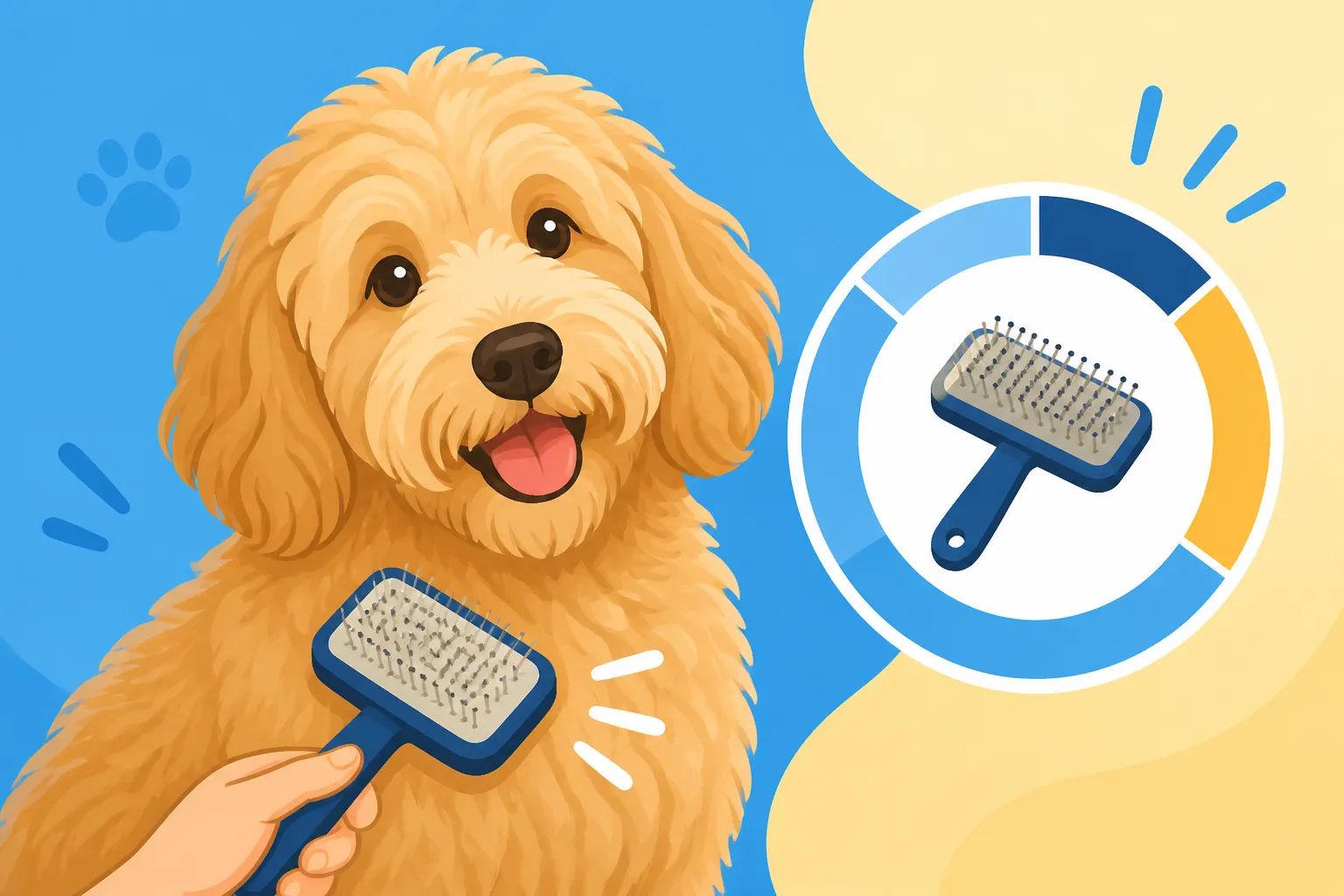
To truly combat mats and keep your Goldendoodle looking their best, you'll need a specific set of tools. First and foremost, a good quality slicker brush is indispensable. Look for one with firm, angled wire bristles that are long enough to reach down to your dog's skin. There are many brands available on Amazon and Chewy. The size of the brush should match your dog – a larger brush for a Standard Goldendoodle, a smaller one for a Mini or Toy. This brush is your primary tool for separating hair and working out tangles.
Next, you need a metal comb. This is often overlooked but is arguably even more important than the slicker brush for mat detection. Choose a comb with both wide and fine teeth. The wide teeth are great for initial detangling, while the fine teeth are used for the all-important "comb check" to ensure no mats were missed. Without a comb, you're just guessing. A good detangling spray is also a fantastic addition. It helps lubricate the hair, making it easier to brush through tangles without causing breakage or discomfort. Brands like Cowboy Magic or Chris Christensen often have good options for detanglers. Finally, a non-slip surface or a grooming table can make a huge difference. Trying to brush a squirming Goldendoodle on the floor is a recipe for frustration for both of you. A dedicated spot helps them understand it's grooming time and keeps them more contained. You can find more detail on tools in The Slicker Brush and Comb a Goldendoodle Needs.
Mastering the Line Brushing Technique
Line brushing, as mentioned before, is the cornerstone of Goldendoodle grooming. It's a methodical process that ensures every inch of your dog's coat is free of tangles. Here’s a step-by-step breakdown:
- Prepare Your Dog: Find a comfortable, non-slip surface. Give your dog a treat and some praise to get them settled. If you use a detangling spray, mist a section of their coat lightly before you start.
- Section the Coat: Start at the bottom of a leg or flank. Use one hand to hold the hair up, exposing a small "line" of skin and hair. You're essentially working against gravity, brushing from the roots outward.
- Brush from the Roots: With your slicker brush, brush downwards, away from the line you’ve created, in small, gentle strokes. Ensure the bristles touch the skin – this is crucial. Work in small sections, always brushing in the direction the hair grows.
- Work Systematically: Once you've brushed that small section thoroughly, move up a little, create a new "line," and repeat. Continue this process over the entire body: legs, chest, belly, back, sides, and tail.
- Address Problem Areas: Pay extra attention to areas prone to matting: behind the ears, armpits, inside the thighs, around the collar, under the harness straps, and the base of the tail. These areas gather friction and moisture, making them prime matting spots. For a more detailed guide, refer to Line Brushing a Goldendoodle Section by Section and The Spots Where a Goldendoodle Mats First.
- The Comb Check: After slicker-brushing a section, take your metal comb and gently run it through the same section, from root to tip. If the comb glides through without snagging, you’ve done a good job. If it catches, go back with the slicker brush and work out any remaining tangles. This comb check is your ultimate mat detector! This thoroughness also helps with applying conditioner, which you can learn about in Conditioner and Why a Goldendoodle Needs It.
Incorporating Professional Grooming
Even with diligent home brushing, professional grooming is a vital part of Goldendoodle care. Most Goldendoodles need to visit a professional groomer every 6 to 8 weeks for a full bath, blow-dry, haircut, and nail trim. Think of it as a reset button for their coat. Professional groomers have high-velocity dryers, specialized tools, and the experience to handle every Goldendoodle coat type, ensuring a thorough job that's difficult to replicate at home.
Regular professional grooms help maintain a consistent coat length, prevent the coat from becoming too heavy or unwieldy, and allow the groomer to spot any developing skin issues or mats that you might have missed. When you drop your Goldendoodle off, always communicate clearly with your groomer about the desired length and style, and importantly, let them know about your home brushing routine. A well-groomed Goldendoodle starts with good communication between owner and groomer, and with consistent home care, you’ll be making their job (and your dog's experience) much more pleasant. More information on this can be found in How Often a Goldendoodle Needs a Professional Groom.
Common Brushing Challenges and Solutions
Let’s face it, grooming a Goldendoodle isn't always sunshine and rainbows. There will be days when you encounter a stubborn mat, or your dog decides they'd rather be doing anything else than standing still for a brush. These challenges are normal, but with the right approach, you can overcome them.
Dealing with a Matted Goldendoodle
Finding a mat can be frustrating, but don't panic. The approach depends on the severity and location of the mat. For small, loose tangles, you can often work them out with a detangling spray, your slicker brush, and then a comb. Hold the hair at the base of the mat with one hand (to prevent pulling on the skin) and gently pick at the mat from the ends with the brush or the fine teeth of your comb. Work slowly, patiently, and in small increments.
However, if you encounter a large, tight, or "felted" mat that is close to the skin, resist the urge to pull or cut it out with scissors. Cutting can be incredibly dangerous, as Goldendoodle skin is often surprisingly close to the surface of the mat, leading to accidental nicks. Pulling at a tight mat is painful and can make your dog terrified of future grooming sessions. For severe mats, the safest and most humane option is usually to have it shaved out by a professional groomer. They have specialized clippers and techniques to remove mats without injuring your dog. While it might mean a much shorter haircut than you wanted, it's a necessary step for your dog's comfort and health. Remember, When a Goldendoodle Mat Has to Be Shaved is often the kindest solution.
My Goldendoodle Hates Being Brushed!
This is a common lament, especially if grooming wasn't introduced positively in puppyhood. The key to turning this around is patience, positive reinforcement, and short, frequent sessions. Don't try to tackle a full body brush if your dog is already agitated. Start small:
- Location: Pick a calm, consistent spot in your home.
- Short Sessions: Begin with just 1-2 minutes of gentle brushing in an area your dog tolerates, like their back or shoulder.
- High-Value Rewards: Immediately after a few successful strokes, give them a super tasty treat (soft, small treats work well, and places like Ollie often have great options) and enthusiastic praise.
- Gradual Increase: Slowly extend the duration and cover more sensitive areas like paws, ears, and belly over days and weeks, always pairing it with positive experiences.
- Break It Up: If your dog gets antsy, take a break. You can do multiple short sessions throughout the day rather than one long, stressful one.
If your Goldendoodle shows any signs of aggression, severe fear, or has learned to associate brushing with pain (perhaps from previous matting), consult with a professional positive-reinforcement dog trainer or a professional groomer who specializes in fearful dogs. They can provide guidance and teach you techniques for cooperative care. The earlier you start, the better, as detailed in Why Goldendoodle Grooming Training Starts Week One.
Beyond Brushing: Other Coat Care Essentials
While brushing is paramount, a healthy Goldendoodle coat relies on a holistic approach to care. Bathing needs to be done correctly. Too frequent bathing can dry out the skin and coat, but infrequent bathing allows dirt and oils to build up, contributing to matting. When you do bathe your Goldendoodle, use a high-quality dog shampoo and conditioner, and most importantly, ensure they are thoroughly brushed out before the bath and completely dry after the bath. A damp, tangled coat is a perfect breeding ground for mats. Drying a Goldendoodle Coat Properly is essential to prevent tangles.
Ear care is another critical component, especially for Goldendoodles with their long, furnished ears that hang down. These ears create a warm, moist environment ripe for ear infections. Regular cleaning and checking for excess hair growth inside the ear canal are crucial. Ask your vet or groomer about the best way to manage ear hair and clean your Goldendoodle’s ears. More guidance can be found in Goldendoodle Ear Care Under All That Hair.
Finally, nail trims are essential for your dog’s comfort and health. Overgrown nails can be painful, affect their gait, and even lead to orthopedic issues. Aim to trim them every 2-4 weeks, or as needed. If you’re uncomfortable doing it yourself, your groomer or vet can easily take care of it during appointments. All these small, consistent efforts contribute to a happy, healthy, and beautifully maintained Goldendoodle.
Disclaimer
This article is for general informational purposes only and does not constitute professional advice. Laws, prices and regulations vary by location and change over time. Consult a qualified professional for guidance on your specific situation.