Trimming Goldendoodle Nails at Home
If you're a Goldendoodle owner, you know the struggle is real when it comes to keeping those paws well-maintained. Just the thought of trimming nails can send shivers down your spine, often leading to a wrestling match with a wriggly, dramatic dog and the ever-present fear of cutting too far. But overgrown nails aren't just an aesthetic issue; they can cause pain, gait problems, and even long-term joint damage. This comprehensive guide will walk you through everything you need to know to make trimming your Goldendoodle's nails at home a calmer, more confident experience for both of you.
Why Goldendoodle Nail Trimming Can Feel Like a Battlefield
Let's be honest, few dogs truly love getting their nails trimmed, but with Goldendoodles, it often feels like you're heading into a full-blown war. Their sensitive nature and intelligent minds mean they remember past unpleasant experiences, and their sheer strength, especially in larger sizes, can make even simple handling a monumental task.
The Anatomy of a Goldendoodle Nail: Understanding the Quick
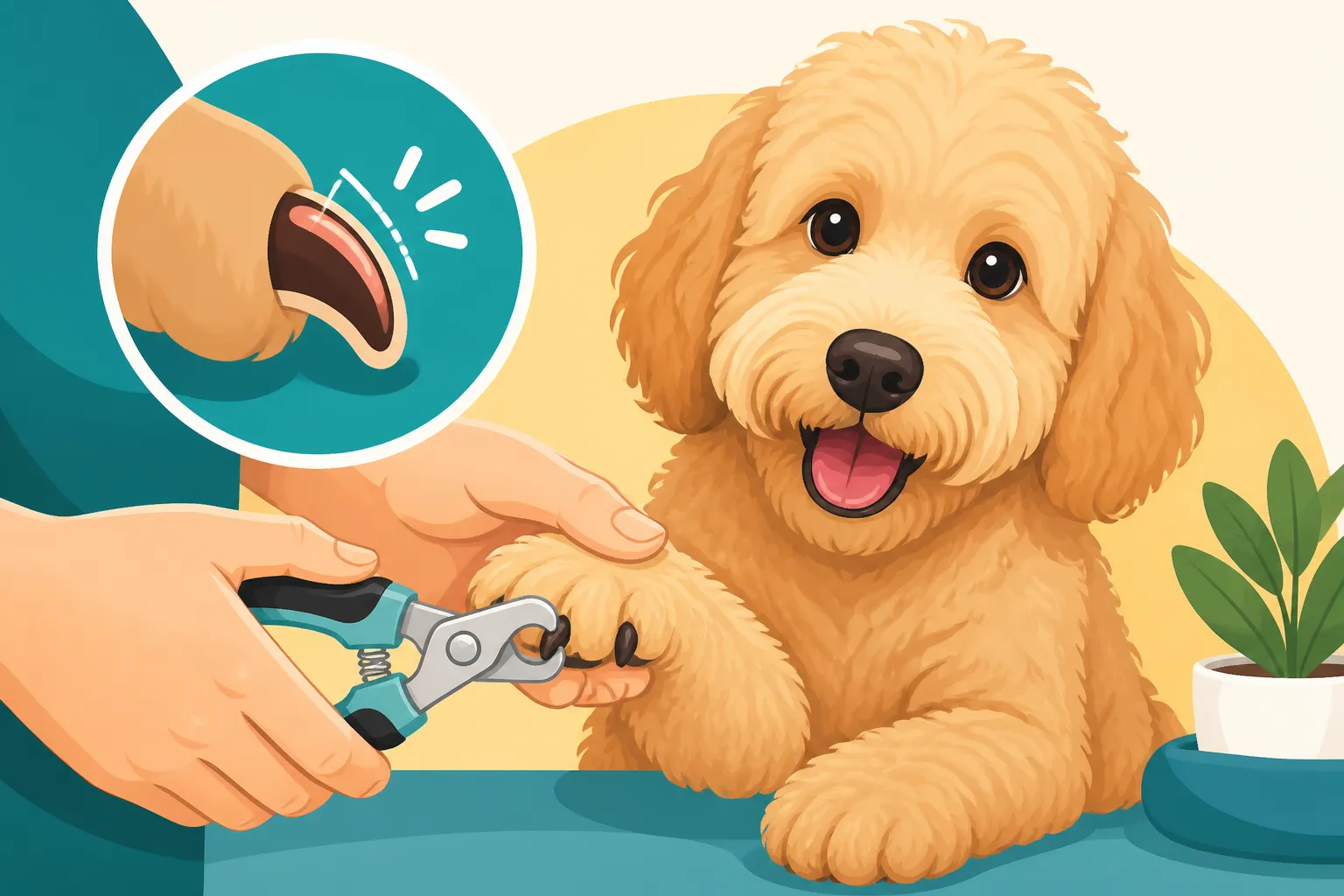
At the heart of every nail trimming anxiety is the dreaded "quick." The quick is a sensitive part of your dog's nail that contains blood vessels and nerves. If you cut into it, it's not only painful for your Goldendoodle, but it also causes bleeding. The problem is, for many Goldendoodles, especially those with dark nails, the quick isn't easily visible. It grows along with the nail, extending further down the longer the nail gets. This means if you've let your Goldendoodle's nails get a bit long, the quick will also be extended, making it incredibly easy to accidentally hit during trimming. That momentary yelp or sudden withdrawal after a quicking incident can set back weeks of positive reinforcement and create a lasting fear in your dog, making future attempts even harder.
The Goldendoodle's Unique Challenges with Nail Care
Goldendoodles, with their delightful mix of Golden Retriever and Poodle traits, bring a few specific challenges to the nail trimming table. First, their activity levels vary, but many are active dogs whose nails might wear down naturally on pavement or rough terrain. However, if they're mostly on soft surfaces like grass or carpet, those nails can grow unchecked. Second, their "furnished" feet—the adorable fluffy hair between their paw pads and around their toes—can actually obscure the nails, making it harder to see exactly where you're cutting. This extra hair also means dirt and debris can get trapped, further complicating visual inspection. Finally, their intelligent and sometimes sensitive Poodle lineage can mean they are highly attuned to your anxiety. If you're nervous about trimming, they'll pick up on it, and that nervousness will translate directly into their own resistance. It’s a vicious cycle that requires patience and the right approach to break.
Essential Tools for Home Goldendoodle Nail Trimming
You wouldn't try to build a house with a butter knife, and you shouldn't try to trim your Goldendoodle's nails with subpar tools. Having the right equipment isn't just about convenience; it's about safety, efficiency, and reducing stress for both you and your furry friend.
Choosing the Right Clippers for Your Goldendoodle's Size and Nail Type
There are two main types of nail clippers you'll encounter: guillotine-style and scissor-style.
- Guillotine Clippers: These have a small hole you insert the nail into, and a blade then "guillotines" the tip off. They're often preferred for smaller to medium-sized dogs because they offer a quick, clean cut. However, if your Goldendoodle has particularly thick nails, a dull guillotine blade can crush the nail rather than cut it, causing pain and splintering.
- Scissor-Style Clippers: These resemble a pair of heavy-duty scissors with curved blades. They tend to be more robust and are often recommended for larger dogs with thicker nails, like many Standard Goldendoodles. They offer more leverage and can handle a wider range of nail thicknesses without crushing.
Regardless of the style, the most crucial factor is sharpness. Dull clippers will pinch and crush the nail, which is uncomfortable and can cause your dog to develop an aversion to the process. Invest in a high-quality pair and replace them regularly. You can often find excellent, sharp clippers on Amazon or Chewy. Consider the size of your Goldendoodle too; a pair designed for a Toy Goldendoodle might feel flimsy and inadequate for a sturdy Standard Goldendoodle's nails.
Beyond Clippers: Styptic Powder, Grinders, and Rewards
While clippers are a primary tool, they're only part of your comprehensive nail care kit.
- Styptic Powder: This is an absolute non-negotiable item. Even the most experienced owners can occasionally quick a dog, especially with dark nails. Styptic powder quickly stops the bleeding, which is vital for preventing panic and discomfort. Keep it within arm's reach every single time you attempt a trim.
- Nail Grinders (Dremels): Many owners find grinders a fantastic alternative, particularly for dogs with dark nails or those who are fearful of clippers. Grinders use a rotating sandpaper head to gradually file down the nail. This slow, controlled method makes it much harder to quick the dog, as you're removing tiny bits at a time. The main downsides can be the noise and vibration, which some dogs find alarming. However, with proper desensitization, many Goldendoodles adapt well to grinders. They're also excellent for smoothing out rough edges after clipping.
- High-Value Treats: Positive reinforcement is your superpower. Seriously, don't underestimate the power of a delicious, irresistible treat. Every single session, whether you trim one nail or ten, should be heavily associated with rewards. Think soft, smelly treats that your Goldendoodle absolutely adores. Brands like Ollie offer fresh, high-quality options that dogs often go wild for.
- Good Lighting and a Comfortable Setup: Trying to trim nails in a dimly lit corner is a recipe for disaster. Find a well-lit area where you can clearly see the nails. A comfortable, non-slip surface for your Goldendoodle to stand or lie on will also make the experience better for them.
Step-by-Step Guide to Stress-Free Goldendoodle Nail Trimming
Making nail trimming a positive experience starts long before you pick up the clippers. It's about preparation, patience, and consistent positive reinforcement.
Preparing Your Goldendoodle and the Environment
The journey to stress-free nail trimming often begins when your Goldendoodle is a puppy. Start early by simply handling their paws frequently and gently. Touch their toes, rub their paw pads, and get them accustomed to you manipulating their feet. Pair this with immediate, high-value treats and praise. Even if you're not clipping, make it a pleasant ritual. You can also introduce the clippers or grinder without actually using them – let them sniff the tool, turn the grinder on briefly (away from them) so they hear the sound, then immediately give a treat. This desensitization process helps them associate the tools with good things. For more on desensitization, check out Getting a Goldendoodle Used to Clipper Noise.
Choose a time when your Goldendoodle is relaxed, ideally after a good walk or playtime when they've burned off some energy. A tired Goldendoodle is often a more cooperative Goldendoodle. Create a calm environment, free from distractions. A quiet room with a comfy mat or blanket can work wonders.
The Trimming Technique: Small Snips and Caution
Once your Goldendoodle is as relaxed as possible and you have your tools ready (including styptic powder!), it's time to begin.
- Positioning: For smaller Goldendoodles, you might be able to hold them in your lap. For larger ones, having them stand or lie on their side can work, depending on what they're comfortable with. Some owners find success with their dog standing, lifting one paw at a time.
- Hold the Paw: Gently but firmly hold one paw. Use your thumb on top of the paw and your fingers underneath to extend the toes and stabilize the nail. Make sure any long fur around the nail is pushed back so you have a clear view. For more on getting them used to paw handling, refer to Handling a Goldendoodle's Paws Every Single Day.
- Identify the Quick (if possible): If your Goldendoodle has lighter nails, you'll see the pink quick inside. Cut only the white tip, staying well away from the pink. For dark nails, this is where extreme caution comes in.
- Small Snips: The golden rule for dark nails is "little by little." Take tiny, conservative snips off the very tip of the nail. After each snip, look at the cut surface. You'll see a dull, chalky white circle. As you get closer to the quick, a small, darker grey or black dot will appear in the center—this is the beginning of the quick. Stop immediately when you see this, or just before.
- Angle the Cut: Cut straight across the bottom, then angle the sides slightly to prevent sharp edges. The goal is to return the nail to its natural, short angle.
- Don't Rush: If you quick your Goldendoodle, stay calm. Apply styptic powder firmly to the bleeding nail and apply pressure until it stops. Don't scold your dog; reassure them and stop the session for a bit if needed. It happens, and your calm reaction is crucial.
Remember, consistency helps keep the quick recessed. Regular trims mean the quick will naturally recede further back, making future trims easier and safer.
Making it a Positive Experience: Reinforcement and Patience
The key to long-term success isn't just about the technique, it's about making nail care a positive ritual.
- Short and Sweet: It's far better to trim one or two nails successfully and end on a good note than to force a full paw trim and create a negative association. Aim for short, frequent sessions. Over time, as your Goldendoodle builds trust, you can gradually increase the number of nails you tackle.
- Treats, Treats, Treats: Pair every snip (or even just touching the clipper to the nail) with a high-value treat. Your Goldendoodle should start seeing the clippers and the process as a signal for delicious things to come.
- Praise and Affection: Lavish your Goldendoodle with verbal praise and gentle petting throughout and after the session.
- Spa Day Approach: Think of nail trimming as part of a larger "spa day" routine that includes brushing, ear cleaning, and general handling. This helps your Goldendoodle tolerate being handled for various grooming tasks. This kind of grooming training should start early, as described in Why Goldendoodle Grooming Training Starts Week One. Building tolerance for handling is essential not just for nails but for a full groom, which can take Building a Goldendoodle's Tolerance for Two Hours.
Common Goldendoodle Nail Trimming Hurdles and Solutions
Even with the best intentions and tools, you might hit some bumps in the road. Knowing how to navigate these common challenges will make you a more confident and effective Goldendoodle owner.
Overcoming Fear and Anxiety in Your Goldendoodle
Many Goldendoodles develop a fear of nail trims due to past negative experiences (like quicking), the sound of the clippers, or simply discomfort with paw handling.
- Counter-Conditioning: This involves changing your dog's emotional response to something they fear. For nail trims, it means pairing the clippers or grinder with something highly positive. For example, show them the clippers, give a treat. Touch the clippers to one nail, give a treat. Don't even cut at first, just make the association.
- Desensitization: Gradually expose your Goldendoodle to the feared stimulus. Start with the clippers visible across the room, then closer, then touching their paw without trimming, all while giving treats. If using a grinder, turn it on in another room first, then closer, then briefly on the nail (without filing much), building up slowly. Patience is paramount here.
- Professional Help: If your Goldendoodle's fear is severe, leading to aggression or extreme panic, don't hesitate to seek help from a professional positive-reinforcement trainer or a veterinary behaviorist. They can provide tailored strategies and, in some cases, discuss anti-anxiety medication to help your dog cope during the retraining process. You might find a trainer who works specifically with Goldendoodles, as discussed in Finding a Trainer Who Works With Goldendoodles.
Dealing with Dark Nails and Hidden Quicks
This is arguably the biggest challenge for Goldendoodle owners. Dark nails completely obscure the quick, making every cut a gamble.
- Backlighting: For some dark nails, using a small flashlight held under the nail can illuminate the quick, making it slightly visible. This doesn't work for all dogs but is worth trying.
- Grinding as a Safer Alternative: As mentioned, grinders are excellent for dark nails. You remove small layers at a time. As you get closer to the quick, the center of the nail will appear moist and dark, almost glassy. This is your cue to stop.
- Tiny Slices: If you're using clippers, take incredibly tiny, thin slices off the nail tip. Instead of one big cut, aim for three or four micro-cuts for each nail. This allows you to check the cut surface for the dark dot of the quick after each tiny trim.
- The Consequence of Overgrown Nails: Neglecting nail trims because of dark nails can lead to splayed paws, discomfort, and altered gait, which puts strain on their joints. Over time, this can contribute to issues like Goldendoodle Arthritis After the Age of Eight or put extra load on their joints, especially if they are also carrying extra weight. For more on weight management, see Goldendoodle Weight Gain and the Strain on Joints. Long nails can also snag on things, causing painful tears or even breaking off, exposing the quick.
Consistency is Key for Healthy Goldendoodle Paws
Nail trimming isn't a "one and done" task; it's an ongoing commitment.
- Establish a Regular Schedule: Most Goldendoodles need their nails trimmed every 2-4 weeks. Weekly might be needed if they have particularly fast-growing nails or if you're trying to gradually shorten overgrown nails to encourage the quick to recede. Setting a reminder on your phone can help maintain consistency.
- Benefits of Short Nails: Keeping nails short prevents them from splaying the toes and putting pressure on the paw pads, which can be uncomfortable and lead to pain. Properly trimmed nails allow your Goldendoodle to walk naturally and comfortably, supporting their overall joint health and mobility. This is also important for preventing issues like Goldendoodle Paw Pad Hair and Slipping on hard floors, as long nails can reduce traction.
- Know When to Seek Help: Even if you do most of the trimming at home, there's no shame in seeking professional help. A groomer or vet can trim nails quickly and efficiently, especially if you're struggling or if your Goldendoodle is particularly anxious. Sometimes, a professional can "reset" the nails, getting them to a good length, and then you can maintain them at home. Remember, your vet can also assist with general paw health, just like they help with The Weekly Goldendoodle Ear Routine Step by Step.
Here's a quick comparison of clippers vs. grinders to help you decide:
| Feature | Nail Clippers | Nail Grinders |
|---|---|---|
| Speed | Fast, quick removal of length | Slower, gradual removal of length |
| Precision | Can be precise, but risk of quicking is higher | Very precise, less risk of quicking for dark nails |
| Noise/Vibration | Silent (scissor-style), click (guillotine) | Creates noise and vibration, can be alarming |
| Result | Clean cut, can leave sharp edges | Smooth, rounded edge, prevents snags |
| Maintenance | Blades dull over time, need replacement | Grinding bits wear down, need replacement |
| Ideal For | Quick trims, lighter nails, dogs tolerant of clipping | Dark nails, fearful dogs (with desensitization), smoothing |
Ultimately, whether you use clippers, a grinder, or a combination of both, consistency, patience, and positive reinforcement are your strongest tools for successful Goldendoodle nail care. It might seem like a daunting task, and it's certainly a bill many owners don't expect when getting a dog, but it's a vital part of their health and comfort. If the thought of doing it yourself still makes you feel like Why a Goldendoodle Is a Poor Fit on a Tight Budget, remember that prevention is always cheaper than treating issues from neglected paws.
Disclaimer
This article is for general informational purposes only and does not constitute professional advice. Laws, prices and regulations vary by location and change over time. Consult a qualified professional for guidance on your specific situation.