Goldendoodle Recall in an Open Field
There’s nothing quite like the panic that seizes your heart when your sweet, goofy Goldendoodle, usually so attentive, suddenly catches a scent or spots another dog in a wide-open field and goes completely deaf to your calls. It’s a common, incredibly frustrating scenario for Goldendoodle owners, leaving you torn between wanting to give them freedom and fearing for their safety. This guide is here to help you navigate the unique challenges of achieving reliable recall with your Goldendoodle in open, distracting environments, turning those moments of panic into confident, joyful romps.
Understanding the Goldendoodle's Drive for Recall in Open Spaces
It’s easy to feel like your Goldendoodle is just being stubborn when they ignore your frantic calls in a wide-open park. But often, it's not defiance; it's a potent cocktail of natural instincts and an overwhelming sensory world that temporarily overrides their training. Understanding what drives them can help you tailor your approach.
The Golden Retriever's Instinct to Roam
The Golden Retriever side of your Goldendoodle brings a lovely biddable nature, but it also carries a strong desire to explore and, well, retrieve. In an open field, this manifests as an urge to investigate every interesting smell, chase after a leaf dancing in the wind, or make a beeline for that person throwing a ball. Their world becomes a treasure trove of exciting opportunities, and their natural inclination is to follow those urges. They're not intentionally ignoring you; they're simply following a very strong, deeply ingrained programming that says, "Go, explore, find!" It's the same drive that makes them excellent at games of fetch, just amplified and redirected by a vast, stimulating environment.
Imagine your Goldendoodle in a sprawling park, nose to the ground, tracing the path of a squirrel that was there an hour ago, or perhaps galloping towards a group of kids playing soccer. In their mind, these are all perfectly valid "retrieving" missions or fascinating puzzles to solve. Your voice, while familiar and loved, might simply not cut through the sheer volume of exciting stimuli bombarding their senses. It's a testament to their enthusiastic, inquisitive nature, but it can be a real challenge when safety is on the line.
The Poodle's Independent Streak
While Poodles are incredibly intelligent and eager to please in structured environments, they also possess a certain independent streak. They were originally water retrievers, working away from their handler in sometimes chaotic hunting situations. This means they can be confident in making their own decisions, especially when something incredibly interesting grabs their attention. Your Goldendoodle might inherit a portion of this "I've got this!" attitude, especially if the distraction is novel or particularly enticing.
This isn't about being disobedient; it's about a dog thinking they know best in that moment, or that what they're pursuing is far more rewarding than coming back to you. Perhaps they've spotted a distant figure that looks like "their person" from afar, or a patch of long grass that simply must be investigated. This independent thought, combined with the Golden's drive to explore, can create a powerful pull that makes your recall word feel like a mere suggestion rather than an urgent command. It's why early, consistent training is so vital, helping them learn that your suggestion is always the best, most rewarding choice.
The "Friendly" Factor: Every Dog is a Friend
Goldendoodles are renowned for their friendly, outgoing personalities. They rarely meet a stranger they don't immediately want to greet with a full-body wag and an exuberant leap. While this is one of their most charming traits, it can be a huge hurdle for recall in an open field, especially when other dogs are present. To your Goldendoodle, every approaching dog is a potential new playmate, an invitation to a game of chase, or simply someone to say "hello" to. This social butterfly tendency often trumps any recall command.
Think about it from their perspective: they see another dog, their ears perk up, their tail starts thumping, and their brain says, "PARTY TIME!" Coming back to you, even for a high-value treat, might not compete with the immediate, visceral joy of a canine interaction. This is why Goldendoodle Play Style With Other Dogs is important to understand. They might be so focused on initiating play or simply getting close to another dog that your voice becomes background noise. It's not a malicious act; it's simply their inherent desire to be social and joyful taking over, which, while endearing, can be dangerous if they run into traffic or a dog that isn't as friendly.
Building a Foundation for Reliable Recall at Home
You wouldn't build a skyscraper on quicksand, and you can't expect a rock-solid recall in a chaotic open field without first establishing an unshakable foundation at home. This means making "come" the best thing ever, in an environment where you have maximum control.
Making Recall the Most Exciting Game
Your Goldendoodle needs to understand that "come!" isn't just a command; it's an invitation to the most fantastic party ever thrown, and they're the guest of honor. Start in a quiet, distraction-free room. Get down on their level, use an incredibly enthusiastic, high-pitched voice, and when they even orient towards you, start praising wildly and backing away, making coming to you a chase. When they reach you, jackpot them with amazing treats – think small pieces of cooked chicken, cheese, or their absolute favorite soft, smelly treats. Don't just give one; give a rapid-fire succession of three or four, followed by a quick game of tug or a thrown toy if they enjoy that. Then, release them with an "okay!"
The key here is consistency and making the reward unpredictable and irresistible. Don't always use the same treat or game. Sometimes it's food, sometimes it's a toy, sometimes it's just exuberant praise and a belly rub. You want your Goldendoodle to think, "What amazing thing will happen this time when I go to Mom/Dad?" Play this game multiple times a day, for just a minute or two each time. Don't overuse the word "come!" only using it when you know they're highly likely to succeed. This builds a positive association and ensures the word always predicts something wonderful. Remember, Marker Training a Goldendoodle From Week One is essential here for clear communication.
Proofing Recall Against Household Distractions
Once your Goldendoodle is reliably rocketing to you in a quiet room, it’s time to gradually introduce minor distractions. This is where you start to build their ability to choose you over other interesting things. Begin with someone else in the room, gently walking by, or a toy casually placed on the floor that isn't actively being played with. Call your Goldendoodle when the distraction is not at its peak interest. Reward heavily for success. Gradually increase the level of distraction.
For instance, maybe another family member walks through the room, or you drop a toy. Don't make it too hard too fast. If they fail, it means you've moved too quickly. Go back a step. Practice when the TV is on, when someone is cooking in the kitchen, or when a squeaky toy is just out of reach. The goal is to teach them that no matter what else is happening, coming to you is always the most rewarding choice. This graduated exposure, always with massive rewards for success, builds resilience and focus. It teaches them to filter out minor environmental noise and maintain their focus on you.
Practicing With a Long Line Indoors
A long line is your best friend for recall training, even indoors initially. It gives you control without having to physically grab your dog. Attach a lightweight, perhaps 10-15 foot long line to a comfortable, well-fitting harness (we'll talk more about these later). Let your Goldendoodle drag it around the house as you go about your day. Periodically, call them. If they hesitate, gently reel in the line while still using your excited voice and body language. The moment they start moving towards you, release the tension on the line and praise.
This teaches them that when you call, they will come, but it's their choice to do so willingly and joyfully, avoiding any negative association with being physically forced. It's a safety net that allows you to ensure success. Use treats they absolutely adore for this exercise. An important note: always attach a long line to a harness, not a collar, to prevent neck injuries if they hit the end of the line suddenly. This step is a critical bridge between distraction-free recall and outdoor success, providing a gentle reminder without punishment.
Taking Recall Training to Controlled Outdoor Environments
Once your Goldendoodle's recall is solid indoors, it’s time to move outside. This step is all about careful, incremental exposure to the real world, ensuring success at each stage before moving on to the next.
Starting in a Fenced Yard with Minimal Distractions
Your own fenced yard is the perfect next step. It's familiar, relatively safe, but introduces new scents, sounds, and sights – the rustling leaves, a bird chirping, the distant sound of traffic. Start with short, fun recall sessions, just like indoors. Have your Goldendoodle drag the long line, even if your yard is fenced, as an extra layer of security. Call them when they are only mildly distracted. Make it a game: run away from them, hide behind a bush, then pop out and call them excitedly.
The key here is to keep the successes coming. If they're too distracted by a squirrel on the fence, wait until the squirrel is gone or they're looking at something less engaging before calling. Your goal is to build their confidence and your confidence in their ability to respond, without letting them fail repeatedly. Each successful recall in the yard reinforces the idea that coming to you is a fantastic idea, even with a bit of outdoor spice in the air. This is also where you can introduce the importance of Goldendoodle Exercise at Thirty to Sixty Minutes to burn off some of their boundless energy before a training session, helping them focus better.
Introducing Leash and Long Line Work in Quiet Parks
Now we're moving closer to the "open field" scenario, but still with safety. Find a quiet park or open space during off-peak hours when there are fewer people and dogs. Keep your Goldendoodle on a long line – a 30-foot or even 50-foot line works wonderfully here. This allows them to explore and feel a sense of freedom while still giving you complete control. Start with short distances. Let them wander a bit, then call them. If they start to drift too far or get overly fixated on something, use the long line to guide them back gently, pairing it with your happy recall cue.
Walk around the park, letting them sniff, then call them back, reward, and release. Don't just call them when you want to leave; call them randomly throughout your walk for a quick "check-in," reward, and then let them go back to sniffing. This prevents them from associating "come" only with the end of fun. Practice Long Line Practice With a Goldendoodle diligently in these environments. The long line allows you to prevent outright failure and ensures that even if they hesitate, they ultimately do come back to you, reinforcing the positive habit.
Using High-Value Rewards and Body Language
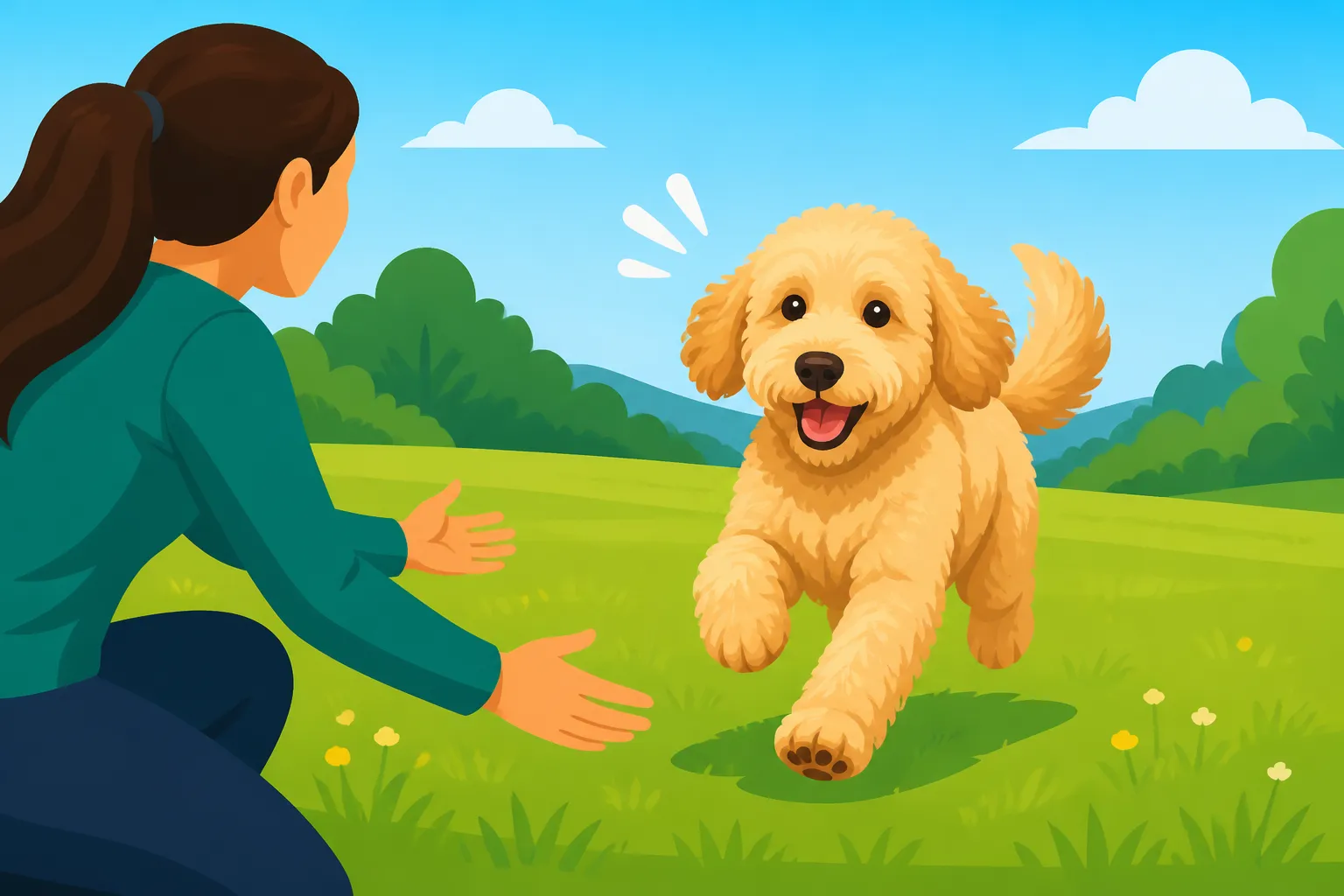
In these outdoor, more distracting environments, your rewards need to be absolutely top-tier. Those plain kibble pieces might not cut it anymore. Bring out the cooked meat, bits of hot dog, or special chewy treats that your Goldendoodle only gets for recall. You can find many options on Amazon for these types of high-value training treats. Your body language is also crucial. Don't stand rigidly and shout "come!" Instead, crouch down, open your arms wide, smile, and sound genuinely delighted. Make yourself visually and audibly appealing. Sometimes, even turning and running away from your Goldendoodle can trigger their chase instinct, making them bound towards you.
Consider incorporating a specific, high-value toy that you only use for recall. Perhaps it's a special squeaky ball or a tug toy that appears only when they come back to you. This creates an extra layer of excitement and incentive. The bigger the reward, the stronger the motivation for your Goldendoodle to disengage from whatever tempting distraction they've found and choose you instead. This is particularly important because the outdoor world offers so many "self-rewards" like interesting smells or other dogs, so your reward needs to be superior.
Mastering Recall in the Open Field: Advanced Strategies
You've built a solid foundation and practiced in controlled outdoor spaces. Now, it's time to tackle the ultimate challenge: the truly open field, bustling with life and potential distractions. This requires careful planning and unwavering commitment.
Managing Environmental Distractions Effectively
The open field is a sensory explosion: children playing, other dogs barking, squirrels darting, tantalizing smells, and vast spaces for running. You can't eliminate these distractions, but you can learn to manage them. First, choose your times wisely. Go during off-peak hours when the park is less crowded. When you arrive, spend a few minutes just letting your Goldendoodle observe on a regular leash. Let them take in the sights and sounds without pressure. Then, when things are calmer, attach the long line.
Only call your Goldendoodle when the distraction level is just below what you know they can handle. If a dog runs past 20 feet away, that's probably too much too soon. Wait until that dog is further away or your Goldendoodle has momentarily disengaged. Reward them lavishly for choosing you over the distraction. If they become overstimulated, gently guide them away with the long line and find a quieter spot to regain their focus. This teaches them to make good choices in increasingly complex environments, while still giving you the safety net to prevent them from practicing ignoring you.
The Emergency Recall: When It Really Counts
Beyond your standard "come" cue, every Goldendoodle owner needs an "emergency recall" – a unique word or sound that means, "Drop everything, come to me now, because something important/dangerous is happening." This cue should never be overused, and it should always be associated with the absolute highest-value rewards possible. Think an entire hot dog, a beloved toy, or a rapid-fire shower of their favorite treats. Choose a distinct word like "TOUCHDOWN!" or "ZAP!" or even a specific whistle.
Practice this emergency recall in incredibly low-distraction environments first, so they understand the urgency and the massive reward associated with it. When you feel ready, introduce it sparingly in outdoor settings, only when you genuinely need an immediate, unquestioning response. The key is that this cue should never be polluted by being used casually. It's for emergencies, and the reward must always be extraordinary, so they truly understand the gravitas and the payoff. The online training platform BAXTER & Bella often discusses this kind of layered recall training, which can be a great resource for developing such a cue.
Integrating Play and Training for Field Success
Goldendoodles thrive on play, and integrating it into your recall training in an open field can make all the difference. Instead of just calling them, try making yourself part of the fun. Run away from them, hide behind a tree, and then call them with immense excitement. When they come, have a brief, super-fun play session with a favorite toy before rewarding with treats and releasing them again. This teaches them that you are the source of all fun, even in a field full of other exciting things.
A great exercise is "ping-pong recall" if you have a partner. Stand far apart, and have one person call the Goldendoodle, reward, then the other person calls them, rewards, and so on. This keeps the game fresh and exciting, and ensures they're always moving towards a reward. Remember, Goldendoodles have that strong The Retriever Biddability Inside a Goldendoodle, so tapping into their natural desire to work with you and retrieve brings great results. This makes recall a collaboration, not just a command, fostering a deeper bond and a more reliable response.
Tools and Aids for Open Field Recall
Having the right equipment can make a world of difference in your success and confidence when working on recall in an open field. These tools aren't replacements for training, but powerful aids.
Choosing the Right Long Line and Harness
For open field recall, a sturdy, comfortable harness and a long line are non-negotiable safety tools.
| Tool Type | Material Considerations | Length Recommendations | Benefits for Goldendoodles |
|---|---|---|---|
| Long Line | Biothane (waterproof, easy to clean), Nylon (lighter, can tangle) | 15-20 feet (initial), 30-50 feet (advanced) | Allows exploration with safety, prevents practicing ignoring you |
| Harness | Padded, breathable nylon or mesh | Snug but not restrictive | Distributes pressure evenly, prevents neck injury, no coat matting |
A biothane long line is fantastic because it doesn't absorb water, mud, or smells, and it's easy to grip even when wet. Nylon lines are lighter but can get tangled more easily and hold onto debris. Start with a shorter line (15-20 feet) to get comfortable, then move up to 30 or 50 feet as your Goldendoodle gains reliability and you need to give them more freedom. Always ensure the long line is attached to a well-fitting, comfortable harness, not their collar. This is crucial for their safety, as a sudden stop on a collar can cause neck injury. Look for a Y-front harness design that doesn't restrict shoulder movement and has padding to prevent rubbing on their luxurious coat.
When choosing a harness, think about your Goldendoodle's coat type. Some harnesses, especially those with narrow straps, can cause matting under the armpits or on the chest if not fitted properly or if left on for extended periods. Brands available on Amazon offer a wide range of options, from lightweight nylon to more robust padded designs, that cater to different dog sizes and coat types. A front-clip harness can also offer a bit more control if your Goldendoodle is prone to pulling, helping to redirect them towards you. This is also relevant when considering Harnesses That Suit a Goldendoodle Coat.
High-Value Treats and Toys for Motivation
As mentioned before, standard kibble won't cut it in a distracting open field. You need "jackpot" rewards that are irresistible. Small, soft, smelly treats are best – think boiled chicken, bits of hot dog, cheese sticks, or commercially prepared soft training treats. These are easy to swallow quickly, allowing your Goldendoodle to get back to playing. Keep a variety on hand to maintain novelty. For toy-motivated Goldendoodles, a special squeaky ball, a bungee tug toy, or even a frisbee can be the ultimate reward.
Keep these high-value rewards only for recall training to maintain their special status. Don't use them for everyday obedience. The goal is for your Goldendoodle to associate your recall cue with something so amazing that it eclipses whatever distraction they're currently focused on. A treat pouch worn on your belt is also incredibly helpful for quick access to rewards, ensuring you can deliver them the instant your Goldendoodle comes back. Rapid delivery reinforces the desired behavior precisely.
Training Collars and Their Proper Use
While I always advocate for positive reinforcement and force-free training, some owners wonder about specific training collars. It's important to understand that no collar is a substitute for consistent, positive-reinforcement based training. Prong collars or electronic collars (e-collars) can be controversial and, if used improperly, can cause physical harm or create fear and anxiety, especially in a sensitive Goldendoodle. For this reason, I generally recommend sticking to harnesses and long lines for recall in open fields.
A good, well-fitted harness gives you directional control without putting pressure on their neck. If you are struggling with a Goldendoodle that pulls excessively on a leash, a front-clip harness can be an excellent tool for redirection and engagement. Ultimately, the most effective "training collar" is a strong, trusting relationship built on positive reinforcement, where your Goldendoodle wants to come back to you because it's always rewarding and safe. Remember that Why Harsh Corrections Backfire on a Goldendoodle is particularly true for this intelligent and sensitive crossbreed.
Common Recall Challenges and Troubleshooting
Even with the best training, Goldendoodles can present unique challenges when it comes to recall in an open field. It's important to understand these hurdles and have strategies to overcome them.
When Your Goldendoodle Ignores You
This is perhaps the most common and frustrating scenario. You call, and your Goldendoodle's ears might twitch, but their nose stays glued to the ground, or their eyes remain fixed on a distant dog. First, take a deep breath. Don't punish them, as this will only teach them that coming to you sometimes results in a bad experience, making them less likely to come next time. Instead, observe why they ignored you. Was the distraction too high? Were your rewards not exciting enough? Did you use the recall word too many times without success?
If they ignore you while on a long line, gently reel them in, using your cheerful recall voice, until they are close enough to receive their high-value reward. The key is to never let them truly get away with ignoring you. If you're in an off-leash park and they ignore you, immediately put them back on the long line for the remainder of the session, or even for the next few sessions. This communicates that off-leash freedom is a privilege earned by reliable recall. Go back to basics: practice in less distracting environments and boost your reward value. It's a continuous process of management and reinforcement.
Dealing with Over-Excitement and Selective Hearing
Goldendoodles are often exuberantly friendly and easily overstimulated, leading to "selective hearing" – they hear you, but the excitement of the environment is just too overwhelming to respond. This is particularly true when they spot other dogs or people. They might bounce, whine, and pull, completely deaf to your voice. This is where Goldendoodle Impulse Control Exercises become vital. Training "leave it," "wait," and "stay" in increasingly distracting environments can help them learn to regulate their impulses.
When you're in an open field, try to intercept their over-excitement before they're completely lost in it. If you see another dog approaching, call your Goldendoodle to you before they've gone full zoomie. Reward them for the early check-in. This helps them practice making the right choice before their brain is completely overwhelmed. If they do get over-excited, try getting their attention with a unique, loud sound (like a whistle or a sharp clap) and then immediately follow up with your recall cue and a super reward. Sometimes, getting their attention back is the first hurdle, followed by directing them.
Preventing "Sniffari" Distractions
Ah, the "sniffari." Every Goldendoodle loves a good sniff, and an open field offers an endless buffet of fascinating odors. While sniffing is enriching, it can also lead them to tune you out completely. To combat this, teach a "look at me" or "focus" cue that means "break eye contact with whatever you're doing and look at my face." Practice this in low-distraction areas first, building up to an open field. Reward heavily when they make eye contact.
In the field, allow dedicated "sniffari" time, but also intersperse it with short, snappy recall games. Call them, reward them, then release them back to sniff. This teaches them that they can have their sniffing time, but they also need to check in with you regularly. If your Goldendoodle is particularly sniff-motivated, you can even use a "go find" game as a reward for coming back – throw a high-value treat into some grass nearby and tell them "go find!" This leverages their natural drive while keeping you in charge. This is also where Nose Games to Play With a Goldendoodle Indoors can build their focus.
Disclaimer
This article is for general informational purposes only and does not constitute professional advice. Laws, prices and regulations vary by location and change over time. Consult a qualified professional for guidance on your specific situation.