Goldendoodle Nail Trimming Between Appointments
Let's be real, managing a Goldendoodle's gorgeous, often fluffy coat is a full-time job in itself, and it’s easy for something like nail trimming to fall by the wayside. But ignoring those rapidly growing claws between professional grooming appointments can lead to painful problems for your beloved companion. This guide is here to walk you through everything you need to know about keeping your Goldendoodle's nails healthy, happy, and at a comfortable length right from home.
Why Goldendoodle Nail Trimming Can't Wait Between Grooms
It's a common scenario: you pick up your Goldendoodle from their groomer, and their nails are perfectly manicured, short, and neat. You breathe a sigh of relief, thinking you're good for another six weeks. But those nails, especially on active Goldendoodles, grow faster than you'd imagine. Neglecting them in between professional visits isn't just about aesthetics; it's a significant health and comfort issue that can lead to long-term problems, often silently. Those beautiful, soft paws are actually quite delicate and bear the brunt of any nail overgrowth.
The Problems of Overgrown Goldendoodle Nails
Imagine trying to walk around all day with shoes that are several sizes too small, forcing your toes into an unnatural position. That's essentially what your Goldendoodle experiences when their nails get too long. Overgrown nails force the paw to splay, putting pressure on the paw pads and toes. This unnatural posture can lead to a host of orthopedic issues over time, affecting their balance and gait. It can exacerbate conditions like arthritis, especially in senior dogs, and contribute to painful joint problems. Long nails are also prone to snagging on carpets, furniture, or rough terrain, which can result in a torn or completely ripped-off nail – a truly excruciating injury that often requires a vet visit and possibly antibiotics. Nobody wants to see their playful Goldendoodle suddenly limping or wincing with pain, but it's a very real risk when nail care isn't consistent.
Moreover, if nails grow too long, they can curl under and actually grow into the paw pad, creating deep, infected wounds. This is particularly common with dewclaws, which don't touch the ground and therefore don't wear down naturally. These hidden nails can be missed until a painful infection sets in, causing your dog distress and requiring veterinary intervention. Even if they don't curl, very long nails can simply make walking uncomfortable, causing your Goldendoodle to shift their weight in odd ways, leading to muscle strain or compensatory pain in other parts of their body. It's a domino effect, all stemming from something as seemingly simple as overgrown nails.
Understanding the Goldendoodle Quick
The "quick" is perhaps the most anxiety-inducing part of at-home nail care for many Goldendoodle owners. It's a sensitive area within each nail that contains blood vessels and nerves. If you cut into the quick, it will bleed, and it will hurt your dog. This is why many dogs develop an aversion to nail trimming after a bad experience. Goldendoodles, like many dogs, have dark nails, making the quick notoriously hard to see. This isn't just a challenge for you; it's also why your Goldendoodle might be wary. They don't know where the safe zone ends, and the quick begins, and a previous painful trim can make them hesitant to let you handle their paws.
The good news is that the quick recedes as the nail is trimmed regularly. If your Goldendoodle's nails are already very long, their quick will have grown out with them. This means you can't just hack off a large section of nail without hitting the quick. Instead, you need to take small, frequent trims over time, gradually encouraging the quick to recede. Think of it as a marathon, not a sprint. This consistent, gentle approach not only makes the process less stressful for your dog but also allows you to slowly shorten those long nails back to a healthy length without causing pain or fear. Regularly handling your Goldendoodle's paws, even when not trimming, helps desensitize them to the process. Handling a Goldendoodle's Feet, Face and Ears can really make a difference here.
Essential Tools for At-Home Goldendoodle Nail Care
You wouldn't try to groom your Goldendoodle's beautiful coat with dull scissors, and the same principle applies to nail trimming. Having the right tools makes a world of difference, both in effectiveness and in making the experience less stressful for your dog. Investing in quality equipment means safer, quicker, and more comfortable trims, which can actually help build a positive association for your Goldendoodle. Skimping on tools often leads to frustration for you and fear for your furry friend.
Choosing the Right Clippers for Your Goldendoodle
There are two main types of nail clippers for dogs: scissor-style (or Miller's Forge style) and guillotine style. For Goldendoodles, especially the larger standard sizes, scissor-style clippers are generally recommended because they offer better leverage and a cleaner cut through thicker nails. Brands like Safari or Millers Forge are often reliable and widely available at pet stores or online retailers like Chewy. Look for clippers with sharp, stainless steel blades to ensure a quick, clean cut without crushing the nail, which can be painful. The size of the clippers should also match your Goldendoodle's size; larger dogs need larger, sturdier clippers.
It's also important to ensure the clippers you choose have a safety guard, which can help prevent you from cutting too much nail at once. While it's not foolproof, it adds an extra layer of reassurance for nervous trimmers. Always keep your clippers clean and sharp. Dull blades are notorious for "catching" or splintering the nail, which is uncomfortable for your Goldendoodle and can lead to resistance during future trims. You might even consider having two pairs on hand so you always have a sharp one ready.
Grinders for a Less Stressful Goldendoodle Nail Trim
Nail grinders, or Dremels as many refer to them (a popular brand name), offer an alternative to traditional clippers that many Goldendoodle owners find less intimidating and more effective, especially for dogs with dark nails or those prone to anxiety with clippers. Grinders use a rotating abrasive bit to file down the nail gradually. This allows for more control, as you can remove tiny bits of nail at a time, minimizing the risk of hitting the quick. It also creates a smoother finish, which can prevent snagging and reduce sharp edges. Brands like Dremel itself, or those found on Amazon like Hertzko or Casfuy, are popular choices.
The key with grinders is desensitization. The vibration and noise can be startling for dogs initially. Start by letting your Goldendoodle get used to the sound of the grinder turned on, offering high-value treats without even touching their paws. Slowly introduce the grinder to their paw, then lightly touch a nail, gradually building up to actual grinding. This patient approach is crucial for success. Many dogs who initially hate clippers will tolerate or even enjoy the grinding process once they've been properly introduced and learned that it doesn't cause pain. Consider a cordless, quieter model if your Goldendoodle is particularly sensitive to noise.
Here's a quick comparison of clippers vs. grinders:
| Feature | Nail Clippers | Nail Grinders (Dremel) |
|---|---|---|
| Speed | Fast, one swift cut per nail | Slower, gradual filing |
| Control | Less precise, higher risk of quicking | Highly precise, less risk of quicking |
| Noise/Vibration | Minimal noise, no vibration | Can be noisy and vibrate |
| Finish | Can leave sharp edges | Smooths and rounds nails |
| Learning Curve | Easier to learn basic technique | Requires desensitization to sound/vibration |
| Best For | Dogs with light nails, tolerant dogs | Dogs with dark nails, fearful dogs, quick-hitters |
Beyond Clippers and Grinders: Styptic Powder and Treats
Regardless of whether you choose clippers or a grinder, there are a couple of other essential items you'll need for a successful Goldendoodle nail trimming session. First and foremost, always have styptic powder on hand. This magical powder (often found under brand names like Kwik Stop or just generic pet styptic powder) is a blood-clotting agent that will quickly stop bleeding if you accidentally nick the quick. Even the most experienced groomers and owners can have an "oops" moment, and having this readily available will save you a lot of panic and stress, minimizing discomfort for your Goldendoodle. Simply apply a pinch of the powder directly to the bleeding nail and apply gentle pressure.
Secondly, high-value treats are your best friend. Positive reinforcement is absolutely crucial when it comes to Goldendoodle nail care. Every step of the process, from simply touching their paws to actually trimming, should be associated with something wonderful. Small, soft, and irresistible treats work best. Think cheese, cooked chicken, or specialized training treats that your Goldendoodle absolutely adores. Make sure you have a generous supply ready before you even start. This makes the experience something your Goldendoodle looks forward to, or at least tolerates, rather than dreads. Patience and positive associations are the bedrock of successful nail trims. Positive Reinforcement and Why It Suits a Goldendoodle is a concept that extends to every aspect of their training and care.
Step-by-Step Guide to Trimming Goldendoodle Nails
Trimming your Goldendoodle's nails doesn't have to be a battle. With the right approach and a calm demeanor, you can make it a routine part of their care that's manageable for both of you. The key is starting small, being patient, and building trust. Remember, your Goldendoodle feeds off your energy, so if you're stressed, they'll likely be stressed too.
Getting Your Goldendoodle Used to Paw Handling
This is arguably the most critical first step, especially for Goldendoodle puppies or dogs new to home nail care. Long before you introduce clippers or a grinder, you need to make paw handling a positive, everyday experience. Start by gently touching your Goldendoodle's paws, one at a time, for just a few seconds. Immediately follow with a super high-value treat and verbal praise. Don't push it. If they pull away, let them. The goal is not to restrain, but to create a positive association. Gradually increase the duration and intensity of the touch. You might gently squeeze each toe, spread their paw pads, or even pretend to trim with your fingers.
Consistency is key. Do this several times a day, every day, in short, pleasant sessions. You can do this while watching TV, during cuddle time, or just hanging out. Make it part of their normal routine. Many owners find it helpful to teach their Goldendoodle to lie on their side for this, which can make accessing the nails easier and feel less confrontational than holding them upright. Getting a Goldendoodle Puppy to Lie on Its Side can be a great foundational skill here. Once your Goldendoodle happily tolerates having their paws held and manipulated, you can slowly introduce the tools. Let them sniff the clippers or grinder, touch it to their nail (while off), and give treats. Progress at their pace, not yours.
The Actual Trimming Technique: Clippers First
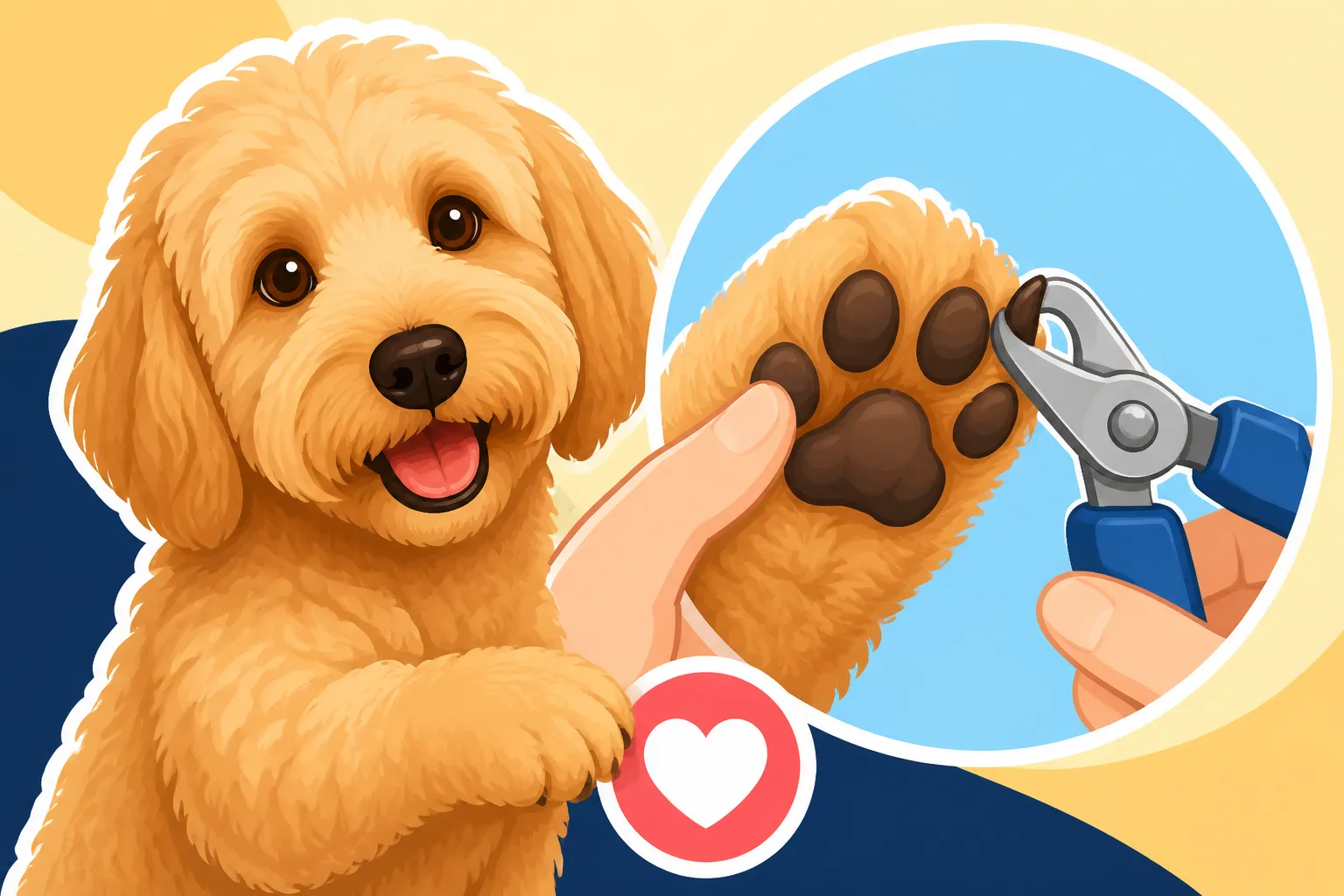
When your Goldendoodle is comfortable with paw handling and the sight/sound of the tools, it's time for the actual trim. Find a comfortable, well-lit spot where you and your dog can relax. Have your clippers, styptic powder, and treats ready. Gently hold your Goldendoodle's paw, isolating one toe. You'll want to extend the nail slightly by gently pushing the paw pad up and back. For dark nails, look for the triangular tip of the nail. You'll want to cut only the very tip, a small straight cut where the nail starts to curve downwards, avoiding the pink quick. A good rule of thumb is to take off only the white, non-sensitive tip. If you're unsure, it's always better to take off too little than too much.
Make quick, confident snips. A hesitant cut can be more uncomfortable for your dog. After each nail, immediately offer a treat and praise. Take breaks if your Goldendoodle gets antsy. You don't have to do all four paws in one session, especially when starting out. Even just one or two nails a day can make a difference and keep the experience positive. Remember that consistency will help keep those nails from becoming overgrown, which means less risk of hitting the quick in the future. Goldendoodle Nail Trimming Between Appointments is all about these small, regular maintenance trims.
Finishing Touches with a Grinder (Optional but Recommended)
After clipping, many Goldendoodle owners like to use a grinder to smooth out any sharp edges and further shorten the nails safely. This is where a grinder really shines, especially for Goldendoodles who tend to have very rounded, thick nails that clippers might not get perfectly smooth. With the grinder, the same desensitization process applies – gradually introduce the tool, ensuring your dog is comfortable with the sound and vibration before you start grinding. Hold the paw firmly but gently, separating each toe so you can work on one nail at a time.
Turn the grinder on and lightly touch the tip of the nail, grinding a small amount at a time. Move the grinder around the tip of the nail, rather than holding it in one spot, to prevent heat buildup, which can be uncomfortable. Grind until the nail is short and smooth, but stop well before you reach the quick. If you see a small black dot appearing in the center of the nail, you're getting very close to the quick and should stop. Again, treat and praise after each successful nail. The goal is for the nails to be flush with the paw pads when your Goldendoodle is standing on a hard surface.
Dealing With a Goldendoodle That Hates Nail Trims
It's a familiar refrain from Goldendoodle owners: "My dog hates getting their nails trimmed!" You're not alone. Many Goldendoodles develop a strong aversion to nail care, often due to a previous bad experience, sensitivity, or just a lack of proper desensitization. But giving up isn't an option, as we've discussed, due to the health implications of overgrown nails. The good news is that with patience, consistency, and a shift in approach, you can often turn things around.
Building Positive Associations for Goldendoodle Nail Care
If your Goldendoodle already has a negative association with nail trimming, you need to hit the reset button. Forget about actually trimming for a while and go back to square one: building positive associations. This involves pairing every single step of the process with something your Goldendoodle absolutely loves. Start by simply showing them the clippers or grinder, then immediately giving them their favorite treat or a few minutes of intense playtime. Don't even touch their paw yet. Repeat this many times over several days.
Next, progress to touching the tool to their paw (again, no actual trimming), followed by treats and praise. Then, gently hold their paw for a second or two, treat. Gradually build up to touching a nail with the clipper, treating. You can even "fake" a trim by pressing the clippers together near their paw without actually cutting, then treat. The key is to break down the process into tiny, manageable steps and reward heavily for compliance, no matter how small. Make it a game, a treat-delivery system, a positive ritual. Consider using a lick mat with peanut butter or cream cheese to distract them during the actual trim – a long-lasting, high-value distraction can be a game-changer. Remember, even if it feels slow, this foundational work is invaluable. Training a Goldendoodle Puppy for the Grooming Table delves into similar desensitization techniques.
When to Seek Professional Help for Difficult Goldendoodles
Sometimes, despite your best efforts, a Goldendoodle's fear of nail trimming is just too deeply ingrained, or they're too large and strong to handle safely on your own. This is not a failure on your part; it simply means you need to call in the professionals. Veterinary clinics and professional groomers are equipped to handle even the most reluctant Goldendoodles. They have specialized tools, techniques, and often extra staff to ensure the safety of both the dog and the handler.
Your vet might even be able to prescribe a mild sedative for extremely anxious dogs, making the process less traumatic for everyone involved. Some trainers specialize in cooperative care, teaching dogs to willingly participate in grooming procedures. Don't let shame or frustration prevent you from getting your Goldendoodle the care they need. Regular professional trims, even if it means extra cost (see Goldendoodle Grooming as the Biggest Line in the Budget), are far better than letting nails grow to a painful length. Many groomers offer "nail walk-in" appointments specifically for this service, which can be quicker and more affordable than a full groom.
Common Goldendoodle Nail Trimming Mistakes to Avoid
Even with the best intentions and the right tools, it's easy to make mistakes when trimming your Goldendoodle's nails. Knowing what these common pitfalls are can help you avoid them and ensure a smoother, safer experience for your furry friend. A little foresight can prevent a lot of pain and anxiety down the line.
Cutting the Quick: What to Do and How to Prevent It
The fear of cutting the quick is perhaps the most common anxiety for Goldendoodle owners, and for good reason. It's painful, it bleeds, and it can set back your dog's progress with nail trimming. If you do accidentally nick the quick, don't panic! Grab your styptic powder immediately, apply a generous pinch directly to the bleeding nail, and apply firm, direct pressure for a few seconds. The bleeding should stop fairly quickly. Offer your Goldendoodle a very high-value treat and lots of calm reassurance. It's important not to make a huge fuss, as your anxiety can transfer to them.
To prevent quicking, always take off small amounts of nail at a time. If your Goldendoodle has dark nails, look at the underside of the nail – the quick often appears as a slightly darker, more opaque circle within the clear outer nail. When using clippers, aim for the tip that curves downward. With a grinder, you'll see a white ring, then a small black dot appear as you get closer to the quick; this is your signal to stop. Regular, frequent trims are the best prevention because they encourage the quick to recede, making future trims easier and safer.
Ignoring Rear Goldendoodle Nails and Dewclaws
It's tempting to focus only on the front paws, which are often more visible and easier to access, but neglecting the rear nails and especially the dewclaws is a common mistake. Goldendoodles often have quite active hind legs, and their rear nails wear down a little differently than the front. More importantly, dewclaws (the thumb-like claw on the inner side of the leg, usually on the front paws, sometimes on the rear) rarely touch the ground and therefore don't wear down naturally at all. They are prime candidates for overgrowth.
When dewclaws get too long, they can grow in a full circle and actually pierce the paw pad or the skin on the leg, causing immense pain, infection, and potential lameness. Always check your Goldendoodle's dewclaws (if they have them) every time you do a nail check or trim. They need regular trimming, just like the other nails. Make sure you gently lift the leg and inspect them carefully, as they can sometimes be hidden by all that lovely Goldendoodle feathering. Think of them as tiny, often forgotten, ticking time bombs if left untended.
Skipping Trims Until the Next Groomer Appointment
This is a trap many Goldendoodle owners fall into. You rely on the professional groomer for the major overhaul every 6-8 weeks, but those nails don't stop growing. Skipping maintenance trims at home means that by the time your Goldendoodle's next appointment rolls around, their nails might be significantly overgrown again. This makes the groomer's job harder, potentially leading to longer, more stressful sessions for your dog, and can even result in "dismatting surcharges on a Goldendoodle" because of the time and effort required. More importantly, it means your dog spends weeks walking around with nails that are too long, putting unnecessary strain on their joints and increasing their risk of injury.
Regular, quick trims at home – even just once a week, taking off tiny slivers – can make a huge difference. Not only does it keep the quick from growing out too far, but it also reinforces positive associations with paw handling and makes the entire process less of a "big deal." Think of it as preventative maintenance. It’s far easier to remove a tiny bit of nail frequently than to tackle significantly overgrown, sensitive nails every couple of months. Consistent at-home care complements professional grooming and ensures your Goldendoodle's paws remain healthy and comfortable year-round. Goldendoodle Grooming Every Six Weeks Adds Up and Why Goldendoodle Matting Is Almost Always Preventable both highlight the importance of continuous home care.
Establishing a Consistent Goldendoodle Nail Care Routine
The secret to stress-free Goldendoodle nail trimming isn't some magic trick; it's consistency and routine. Just like Goldendoodle Exercise and Mental Work Every Day is vital for their well-being, regular nail maintenance needs to be a non-negotiable part of their schedule. When nail care becomes predictable, your Goldendoodle learns to anticipate it, and with positive reinforcement, it becomes far less daunting for everyone involved.
Frequency is Your Best Friend: Weekly Checks and Trims
For most Goldendoodles, a weekly nail check is ideal, with trims happening as needed. This might mean a quick snip of one or two nails every few days, or a more comprehensive trim once a week. The goal is to keep the nails short enough that they don't touch the ground when your Goldendoodle is standing on a flat, hard surface. If you can hear their nails clicking on the floor, they're too long. This frequent approach has several benefits: it keeps the quick recessed, making future trims safer; it prevents major overgrowth; and it keeps your Goldendoodle accustomed to having their paws handled.
Even if you rely primarily on a professional groomer, those weekly checks and minor trims are crucial. They bridge the gap between appointments and ensure your Goldendoodle isn't walking around uncomfortably for half of their grooming cycle. Think of it as maintaining their perfect "pedicure" rather than waiting for it to become a disaster zone. Make it a bonding activity, not a chore. A few minutes of paw handling, a quick trim or grind, and lots of praise and treats will go a long way in creating a positive association. Goldendoodle Puppy Training Before Its Coat Changes emphasizes how early routine can cement good habits for life.
Incorporating Nail Care into Your Goldendoodle's Grooming Schedule
For Goldendoodles, whose coats require significant attention, nail care should be an integral part of their overall grooming schedule. Whether you're doing a quick brush-out or a more thorough Line Brushing a Goldendoodle Down to the Skin, take a moment to check their nails. Pair nail trimming with other enjoyable grooming activities to create a holistic, positive experience. For example, after a relaxing brushing session, take a moment for their paws.
Many Goldendoodle owners find that establishing a designated "grooming station" or "grooming routine" helps. This could be a specific spot in the house, a mat, or even a small, elevated table (if your dog is trained to stand still). When your Goldendoodle learns that this specific time and place means gentle handling, treats, and then they're done, it reduces their anxiety. It's about predictability and positive reinforcement. Make it clear that while it's important, it's also quickly over and leads to good things. By consistently integrating nail care, it becomes just another normal part of being a Goldendoodle, rather than a dreaded event.
Health and Comfort Benefits of Proper Goldendoodle Nail Care
While the immediate goal of nail trimming is often to prevent damage or discomfort, the long-term benefits of consistent, proper Goldendoodle nail care extend far beyond preventing a quick tear. It impacts their overall mobility, comfort, and even their confidence in navigating the world. It’s truly an investment in their long-term well-being.
Preventing Pain and Promoting Mobility
As we've touched on, overgrown nails are a source of chronic, low-level pain that can escalate. They push the toes up, preventing the paw from properly gripping surfaces, leading to slipping and splaying. This continuous, unnatural pressure on the toe joints can contribute to conditions like arthritis, particularly in larger Goldendoodles. Imagine trying to run or jump when your toes are constantly being pushed back – it’s just not comfortable or natural. By keeping your Goldendoodle's nails trimmed to a healthy length, you enable them to walk, run, and play without discomfort.
Properly trimmed nails allow their paws to function as nature intended, distributing weight evenly and providing optimal traction. This promotes better posture and reduces strain on their joints, hips, and spine. For an active Goldendoodle, this means they can enjoy their walks and playtime to the fullest, without the underlying ache that long nails can cause. It truly impacts their quality of life, allowing them to remain agile and comfortable throughout their years.
Enhancing Grip and Preventing Injuries
Goldendoodles, with their playful and often energetic personalities, love to explore and move. Whether they're romping in the park, dashing across a hardwood floor, or navigating stairs, their paws need optimal grip. Overgrown nails hinder this grip. Instead of their paw pads making full contact with the ground, long nails act like tiny stilts, reducing friction and making them more prone to slipping and sliding. This isn't just an inconvenience; it can lead to falls, strains, and even serious injuries like cruciate ligament tears, which are sadly not uncommon in active dogs. Cruciate Ligament Tears in a Jumping Goldendoodle is a painful reality many owners face, and compromised grip can certainly be a contributing factor.
Beyond slipping, long nails are more susceptible to breaking, splitting, or tearing. A nail caught on a loose thread of carpet, a root on a trail, or even a gap in the pavement can result in a painful injury that might require veterinary attention. By keeping their nails short and smooth through regular trimming or grinding, you significantly reduce these risks. You ensure their paws can properly grip surfaces, enhancing their stability and confidence in movement, and protecting them from common, painful accidents. It's a small act of care that yields big benefits for your Goldendoodle's overall safety and well-being.
Disclaimer
This article is for general informational purposes only and does not constitute professional advice. Laws, prices and regulations vary by location and change over time. Consult a qualified professional for guidance on your specific situation.