Cruciate Ligament Tears in a Jumping Goldendoodle
It’s a heartbreaking sight for any Goldendoodle parent: your beloved furry friend, usually a whirlwind of joyful bounces and enthusiastic leaps, suddenly limping, holding up a paw, or struggling to put weight on a back leg. Many Goldendoodles, with their inherent athleticism and zest for life, love to jump – whether it’s on and off the couch, to greet a visitor, or chasing a ball. While this exuberance is part of their charm, it unfortunately puts immense strain on their knee joints, making them particularly susceptible to a common and debilitating injury: a torn cranial cruciate ligament. This guide aims to walk you through understanding these injuries, how to spot them, and what steps you can take for treatment and prevention.
Understanding Cruciate Ligament Tears in Goldendoodles
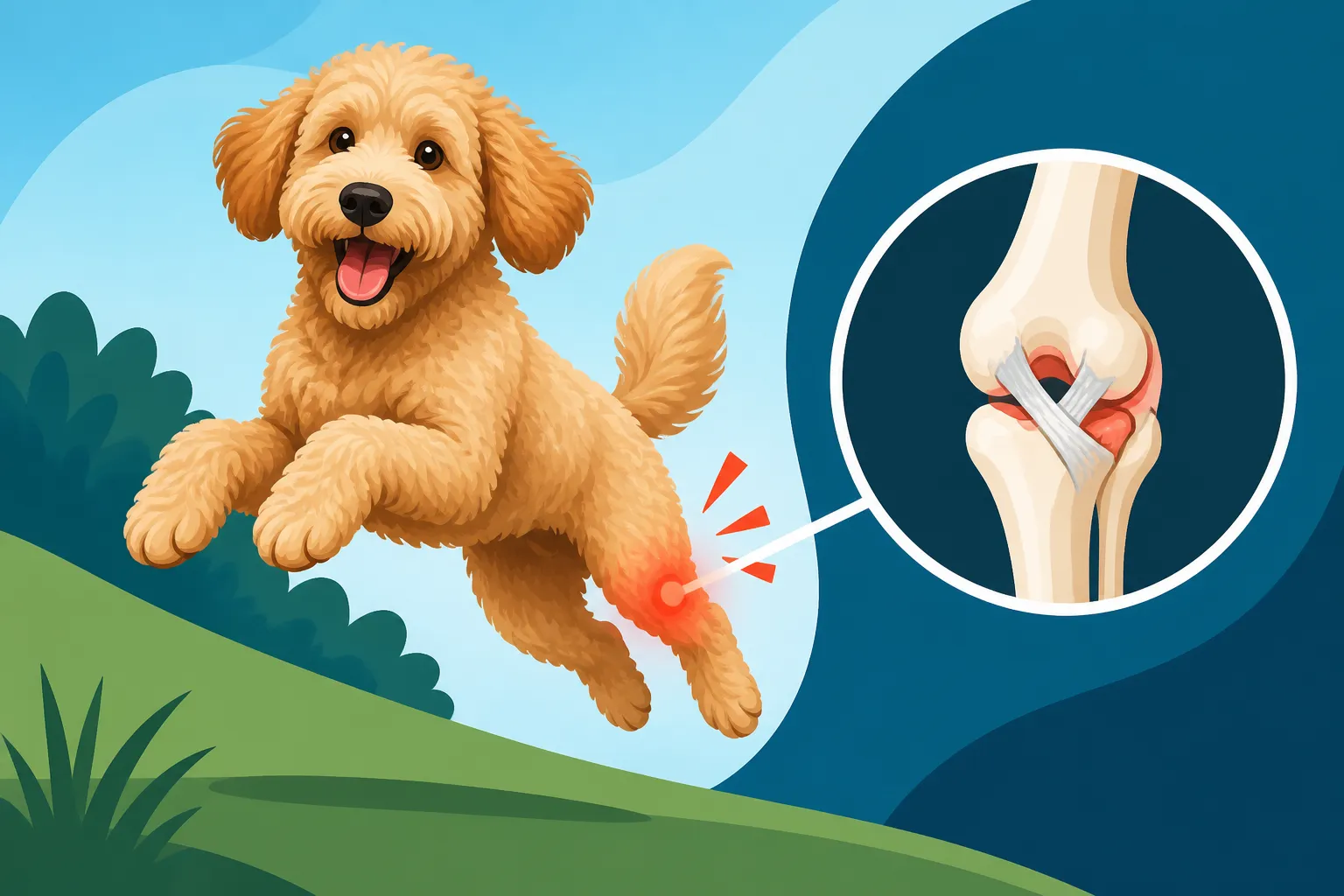
The cranial cruciate ligament (CCL), often simply called the "cruciate" by vets, is essentially the canine equivalent of the human ACL. It's a critical band of tissue within the knee joint (stifle) that provides stability, preventing the tibia (shin bone) from sliding forward excessively relative to the femur (thigh bone). When this ligament tears, the knee becomes unstable, causing pain, limping, and eventually arthritis. For active dogs like Goldendoodles, especially those with a penchant for jumping, this injury is a unfortunately common occurrence.
What is the Cranial Cruciate Ligament CCL?
Think of your Goldendoodle's knee as a hinge, perfectly designed for smooth, forward-and-back motion. The cranial cruciate ligament is one of two primary ligaments inside the knee that crisscross each other, forming an 'X'. Its main job is to keep the lower leg bone (tibia) from sliding too far forward from the upper leg bone (femur) and also to limit excessive internal rotation of the tibia. When this vital ligament is compromised, even a little, the knee joint loses its structural integrity. Every step, every twist, every jump puts abnormal stress on the joint, leading to pain and further damage. It’s like trying to walk on a hinge that’s missing a crucial pin – it just doesn't work right.
Why Goldendoodles Are Prone to Cruciate Injuries
Goldendoodles, inheriting traits from both the Golden Retriever and Poodle breeds, unfortunately carry a predisposition to certain joint issues. Golden Retrievers are known for hip and elbow problems, and Standard Poodles can also face orthopedic challenges. While hybrid vigor is often touted, it doesn't always magically erase all genetic predispositions. For Goldendoodles, several factors contribute to their susceptibility to CCL tears:
- Genetics: Both parent breeds can pass on genes that contribute to less-than-ideal joint conformation or ligament strength. Some Goldendoodles might inherit knees that are naturally angled or structured in a way that puts chronic stress on the CCL, even during normal activities.
- Activity Level and Jumping: Goldendoodles are often energetic, enthusiastic dogs that love to run, play, and jump. They'll launch themselves off the sofa, bound down stairs, or leap to catch a frisbee. While endearing, these high-impact activities put enormous, repetitive stress on their knee joints. A sudden twist upon landing can easily cause an acute tear, but more often, it's the cumulative effect of constant micro-traumas from jumping that leads to eventual rupture.
- Weight: Carrying extra pounds significantly increases the load on all joints, including the knees. A Goldendoodle that is even slightly overweight will put more strain on its CCL with every step, making it more vulnerable to tears. This is why keeping a healthy weight is absolutely crucial for their long-term joint health. You can learn more about how Goldendoodle Weight and the Load on Its Joints impacts their well-being.
- Rapid Growth in Puppies: For larger Goldendoodles, rapid growth as puppies can sometimes lead to developmental orthopedic issues, making joints more vulnerable later in life. While it's not a direct cause, it can be a contributing factor to overall joint fragility.
Acute Tears vs. Chronic Degeneration
It's helpful to understand that not all cruciate tears happen in the same dramatic fashion. There are two primary ways these injuries manifest in Goldendoodles:
- Acute Tears: This is often what people imagine – a sudden, traumatic event. Your Goldendoodle might be playing, jump awkwardly, or twist their knee, and immediately yelp, refuse to bear weight, and become severely lame. This type of injury usually involves a complete or near-complete rupture of the ligament and requires immediate veterinary attention. The pain is intense, and the instability is obvious.
- Chronic Degeneration: Far more common, especially in Goldendoodles, is a gradual weakening and fraying of the ligament over time, often due to repetitive strain or a slight conformational issue in the knee. Initially, your dog might only show a subtle limp after exercise, or some stiffness in the mornings that seems to "warm out." These partial tears can go unnoticed for weeks or months, slowly worsening until the ligament completely ruptures with a relatively minor movement. The subtle signs are easy to dismiss, but they're critical to catch early. This chronic breakdown often leads to significant arthritis even before a complete tear occurs.
Recognizing the Signs of a Cruciate Tear
Spotting a cruciate ligament tear early in your Goldendoodle can be tricky, especially with chronic degeneration. Their fluffy coats can hide subtle swelling, and their high pain tolerance or eagerness to please can mask discomfort. However, there are several key indicators that something might be amiss with their knee.
Sudden Lameness After Activity
The most unmistakable sign of a serious cruciate tear is sudden, severe lameness. Your Goldendoodle might have been running or jumping, and then suddenly stop, yelp, and refuse to put weight on one of their back legs. This typically indicates an acute, complete tear.
- Toe-Touching: Often, in the initial stages, your Goldendoodle might try to "toe-touch," meaning they gingerly touch their paw to the ground without putting full weight on it. This is their way of trying to balance and move forward while avoiding painful pressure on the injured knee.
- Holding the Leg Up: In more severe cases, or if the pain is acute, your dog might simply hold the affected leg up off the ground entirely, avoiding any weight bearing. This is a clear sign of significant discomfort and instability.
- Swelling: While harder to spot under a thick Goldendoodle coat, you might notice some swelling around the knee joint. Gently feeling the joint (if your dog allows) might reveal tenderness or warmth.
- Pain Response: Your Goldendoodle might cry out when the leg is moved, or even snap if touched in a sensitive area. Always approach a possibly injured dog with caution and allow your vet to do the full examination.
Subtle, Intermittent Limping and Stiffness
This is where catching a chronic, partial tear becomes crucial. These signs are often vague and can be easily dismissed as "just getting old" or "slept funny." But for a Goldendoodle, these can be early warnings of a cruciate issue brewing.
- Morning Stiffness: Does your Goldendoodle struggle to get up after a nap or in the morning? Do they seem stiff for the first few minutes of a walk, only to "loosen up" as they move? This is a classic sign of joint pain and inflammation.
- Limping After Exercise: Noticeable limping that appears after strenuous activity – like a long run at the dog park or an extended game of fetch – but then seems to resolve with rest, is a red flag. The ligament is being stressed and inflamed.
- "Sitting Sideways" or "Puppy Sitting": Observe how your Goldendoodle sits. If they consistently sit with one leg extended out to the side rather than tucked neatly underneath them, it's often an attempt to alleviate pressure on an uncomfortable knee. This "puppy sit" or "sideways sit" is a telltale sign that vets often look for.
- Decreased Activity: Over time, your Goldendoodle might gradually become less enthusiastic about jumping or playing. They might hesitate before tackling stairs or getting into the car. This subtle change in behavior often indicates that moving their knee is becoming uncomfortable.
- Muscle Atrophy: If a Goldendoodle has been favoring a leg for a while, you might notice that the thigh muscles on that leg start to shrink compared to the healthy leg. This muscle loss (atrophy) can be a clear indicator of chronic disuse due to pain.
Behavioral Changes and Reluctance to Move
Pain, especially chronic pain, doesn't just manifest physically. It can lead to noticeable shifts in your Goldendoodle's personality and daily habits. If your typically happy-go-lucky Goldendoodle starts acting differently, it’s always worth investigating potential physical discomfort.
- Hesitation Before Jumping: If your Goldendoodle used to leap onto the bed without a second thought, but now pauses, whines, or looks for an easier way up, their knees are likely telling them it hurts. You can find helpful advice on Why a Goldendoodle Should Not Jump Off Furniture is important for their joint health.
- Grumpiness or Snapping: A dog in pain might become more irritable, less tolerant of handling, or even snap when touched in a sensitive area. If your usually friendly Goldendoodle suddenly seems withdrawn or prone to lashing out, pain could be the underlying cause.
- Changes in Appetite or Sleep: While less specific, chronic pain can disrupt a dog's overall well-being. They might eat less, or become restless at night, struggling to find a comfortable position.
- Avoiding Play: A Goldendoodle that usually loves a game of tug or chase but now refuses or stops quickly might be trying to protect a painful joint. Pay close attention to these subtle cues.
Diagnosis and Treatment Options for a Torn CCL
If you suspect your Goldendoodle has torn their cruciate ligament, the first and most crucial step is a prompt visit to your veterinarian. Early diagnosis and appropriate treatment can significantly impact their recovery and long-term quality of life.
Veterinary Examination and Imaging
Your vet will start with a thorough physical examination, observing your Goldendoodle's gait and how they bear weight. They'll then perform specific tests to assess the stability of the knee joint.
- Cranial Drawer Test: This is the hallmark diagnostic test for a torn CCL. With your Goldendoodle lying on their side, the vet will manipulate the femur and tibia, attempting to slide the tibia forward. If there's excessive "drawer movement" (like a drawer sliding open), it confirms an unstable knee due to a ruptured CCL.
- Tibial Compression Test: Another common test, where the vet holds the femur and flexes the ankle joint. If the tibia moves forward, it indicates a tear.
- Palpation: The vet will also carefully feel the joint for swelling, pain, or crepitus (a crackling sound or sensation), which can indicate arthritis.
- X-rays (Radiographs): While X-rays cannot directly visualize the ligament (it's soft tissue), they are invaluable for several reasons:
- Assessing Joint Effusion: X-rays can show fluid accumulation (effusion) within the joint, a common sign of inflammation from a tear.
- Evaluating Arthritis: They reveal signs of osteoarthritis, which almost always accompanies a CCL tear, even partial ones. This helps the vet understand the chronicity and severity of the injury.
- Planning for Surgery: If surgery is indicated, X-rays are critical for measuring angles and planning the specific surgical procedure, such as a TPLO or TTA.
- Ruling Out Other Issues: X-rays can help rule out other orthopedic problems, such as a fracture or patellar luxation, which can mimic CCL symptoms. For example, some mini Goldendoodles might be prone to Patellar Luxation in a Mini Goldendoodle.
Surgical Interventions
For most Goldendoodles, especially active ones, surgical repair is the recommended treatment for a torn CCL. Without surgery, the knee remains unstable, leading to severe, progressive arthritis and often a tear in the other knee due to compensatory stress. There are several effective surgical techniques:
- Tibial Plateau Leveling Osteotomy (TPLO): This is one of the most common and highly recommended surgeries, especially for larger, active Goldendoodles. The surgeon makes a curved cut in the top of the tibia (tibial plateau), rotates it, and secures it with a bone plate and screws. This changes the biomechanics of the knee so that the cranial cruciate ligament is no longer necessary for stability. TPLO provides excellent long-term results and allows for a quicker return to weight-bearing.
- Tibial Tuberosity Advancement (TTA): Similar to TPLO, TTA also alters the biomechanics of the knee. The front part of the tibia (tibial tuberosity) is cut, advanced forward, and secured with a titanium cage and plate. This changes the angle of the patellar ligament, neutralizing the cranial thrust that causes instability. TTA is also very effective and often chosen for its slightly less invasive nature compared to TPLO.
- Lateral Suture (Extracapsular Repair): This older, more traditional technique involves placing a strong suture material outside the joint, mimicking the function of the torn CCL. This method is generally recommended for smaller, less active dogs, or sometimes when cost is a major concern. It doesn't alter the bone structure but aims to stabilize the joint until scar tissue can form. While effective, larger or very active Goldendoodles may put too much strain on the suture, leading to higher re-tear rates or less ideal long-term stability compared to TPLO or TTA.
The cost of these surgeries can be substantial, often ranging from $3,000 to $7,000 or more per knee, depending on your location, the surgeon's experience, and the specific procedure. This is where pet insurance can be a true lifesaver. Providers like Healthy Paws often cover a significant portion of these emergency and surgical costs, making critical care accessible without breaking the bank. Understanding Goldendoodle Knee Surgery Costs by Size can help you budget for such an event.
Here's a quick comparison of common surgical options:
| Surgical Procedure | Description | Ideal Candidates | Advantages | Considerations |
|---|---|---|---|---|
| Tibial Plateau Leveling Osteotomy (TPLO) | Bone is cut and rotated to neutralize forces on the knee, making the CCL functionally obsolete. Plate and screws secure the new angle. | Medium to large, active dogs; highly recommended for Goldendoodles. | Excellent long-term stability, rapid return to function, less arthritis progression. | Most invasive, higher cost, specialized surgeon required. |
| Tibial Tuberosity Advancement (TTA) | The front of the tibia is advanced and secured to change knee mechanics. | Similar to TPLO, good for medium to large, active dogs, sometimes slightly less invasive. | Good stability, often faster recovery to initial weight-bearing. | Similar invasiveness and cost to TPLO, may not be suitable for all knee angles. |
| Lateral Suture (Extracapsular) | A strong suture is placed outside the joint to stabilize it, temporarily replacing the CCL's function. | Smaller, less active dogs (under 40-50 lbs); sometimes a lower-cost alternative for larger dogs. | Less invasive, lower cost. | Higher chance of re-tear in large/active dogs, potentially less long-term stability, more arthritis progression without bone changes. |
Non-Surgical Management
While surgery is often the best course of action, non-surgical management might be considered in very specific circumstances, such as:
- Small, less active dogs: For tiny Goldendoodles (Toy or Mini sizes) who are less active, and are strictly rested.
- Financial constraints: When surgery is not an option due to cost, owners may opt for conservative management.
- Medical contraindications: If a Goldendoodle has other serious health issues that make anesthesia and surgery too risky.
Non-surgical management typically involves:
- Strict Rest: This is paramount. Weeks of kennel rest or very limited activity are necessary to allow scar tissue to form.
- Anti-inflammatory Medications: Non-steroidal anti-inflammatory drugs (NSAIDs) will be prescribed to manage pain and reduce inflammation.
- Joint Supplements: Glucosamine, chondroitin, and omega fatty acids can help support joint health and reduce inflammation. Many Goldendoodle owners use these proactively. You can find options for Joint Support Dosed to Goldendoodle Size Category.
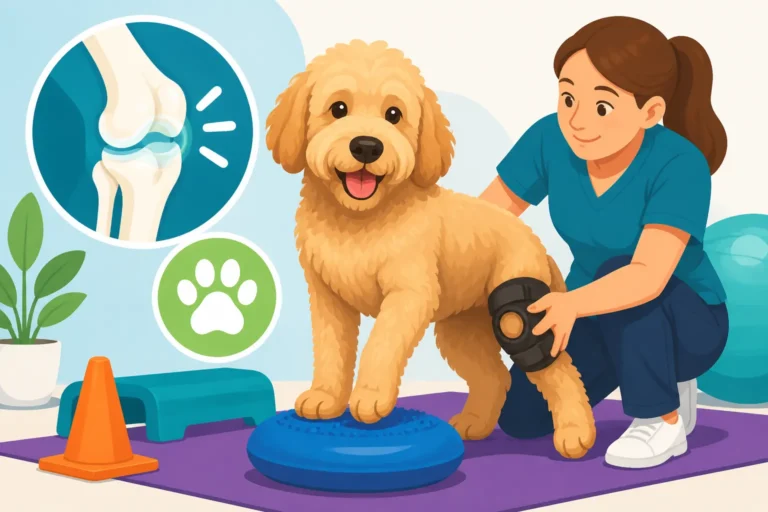
- Physical Therapy and Rehabilitation: Once initial pain subsides, controlled exercises, hydrotherapy, and therapeutic massage can help rebuild muscle, improve range of motion, and strengthen supporting structures. This is crucial for any management plan, surgical or non-surgical. You can explore options for Physical Therapy After Goldendoodle Knee Surgery.
- Knee Braces: Custom or off-the-shelf knee braces can provide external support to the joint. While they don't fix the underlying instability, they can offer some comfort and prevent further damage during activity. They require careful fitting and monitoring to avoid skin irritation.
It's important to understand that without surgical stabilization, the knee will likely develop severe arthritis over time, and there's a high risk of the other cruciate ligament tearing in the future (some studies suggest up to 50% risk within two years) because the dog will compensate by putting more weight on the "good" leg.
Prevention and Long-Term Management for Jumping Goldendoodles
The good news is that there are many proactive steps you can take to protect your Goldendoodle’s joints, even if they are naturally enthusiastic jumpers. Prevention and diligent long-term care are key to helping them live a long, comfortable life.
Modifying Jumping Behavior and Activity
Given that jumping puts significant strain on their knees, managing this behavior is crucial. It’s not about stopping them from being a Goldendoodle, but about teaching them safer ways to interact with their environment.
- "Four on the Floor" Training: Start early with positive reinforcement training to teach your Goldendoodle that all four paws must remain on the ground when greeting people. Reward them for calm greetings, and turn away if they jump. Consistency is vital.
- Ramps and Stairs: Provide ramps for accessing furniture (beds, couches) and cars, especially if your Goldendoodle is smaller or already showing signs of joint stiffness. While a large Goldendoodle can jump into a SUV, repeated high-impact landings are detrimental. Even for Cruciate Tears in an Active Goldendoodle, limiting these high-impact activities is crucial.
- Controlled Entry/Exit: Teach your Goldendoodle to wait patiently before going up or down stairs, or entering/exiting the house. This prevents frantic bounding that can lead to missteps and injury.
- Manage High-Impact Play: Limit excessive jumping during play sessions. Instead of high throws for fetch, focus on rolling balls or activities that keep their feet closer to the ground. Tug-of-war is great, but ensure they aren't leaping and twisting excessively during the game.
- Appropriate Exercise: Ensure your Goldendoodle gets enough exercise, but make sure it’s appropriate for their age and joint health. Daily walks, swimming (which is low-impact), or structured games that involve less jarring movement are excellent. For a comprehensive overview, check out Goldendoodle Exercise for Body and Mind.
Maintaining a Healthy Weight
This cannot be stressed enough: weight management is arguably the single most important factor in preventing and managing joint disease in Goldendoodles. Even a few extra pounds can dramatically increase the load on their knees.
- Regular Body Condition Scoring: Don't just rely on the number on the scale. Learn to assess your Goldendoodle's body condition. You should be able to easily feel their ribs (like running your hand over knuckles) without seeing them, and they should have a discernible waist when viewed from above and a tuck-up from the side.
- Portion Control: Measure your Goldendoodle's food precisely. Don't free-feed. Consult your vet for an ideal daily caloric intake based on their age, size, and activity level. Remember that treats count towards their daily calories!
- Lean Treats: Opt for low-calorie treats like small pieces of cooked chicken, carrots, or green beans.
- Consistent Exercise: Combine a healthy diet with consistent, appropriate exercise to help maintain muscle mass and burn calories. This ties back to the importance of Goldendoodle Weight and the Load on Its Joints.
Joint Supplements and Physical Therapy
Proactive measures and ongoing support can make a world of difference for your Goldendoodle's joint health.
- Quality Joint Supplements: Many vets recommend starting joint supplements proactively, especially for breeds prone to orthopedic issues. Look for supplements containing glucosamine, chondroitin sulfate, MSM, and omega-3 fatty acids (DHA/EPA). Brands like Dasuquin, Cosequin, or Nutramax are often recommended. Always discuss with your vet before starting any supplement regimen.
- Regular Vet Check-ups: Regular veterinary visits allow your vet to monitor your Goldendoodle's joint health, catch subtle changes early, and make recommendations for preventative care or early interventions. This is especially important for senior Goldendoodles. You can explore more on Senior Goldendoodle Mobility and Arthritis.
- Physical Therapy (Rehabilitation): Even without an injury, physical therapy can be beneficial. A certified canine rehabilitation therapist can help develop an exercise program that strengthens supporting muscles, improves balance, and maintains flexibility, reducing the risk of injury. After surgery, physical therapy is absolutely critical for a full and successful recovery, minimizing the impact of arthritis, and restoring strength and function. This dedicated rehabilitation is covered in detail in articles like Physical Therapy After Goldendoodle Knee Surgery.
By being vigilant, proactive, and willing to adapt their lifestyle, you can significantly reduce your Goldendoodle's risk of cruciate ligament tears and ensure they continue to live their happy, bouncy life for many years to come. Remember, pet insurance from providers like Healthy Paws can provide immense peace of mind, covering unexpected expenses for serious conditions like CCL tears, allowing you to focus on your Goldendoodle's recovery without added financial stress.
Disclaimer
The information provided in this article is for general informational purposes only and is not intended as a substitute for professional veterinary advice, diagnosis, or treatment. Always seek the advice of your veterinarian or other qualified animal health provider with any questions you may have regarding a medical condition or the health and welfare of your Goldendoodle. Never disregard professional veterinary advice or delay in seeking it because of something you have read in this article.