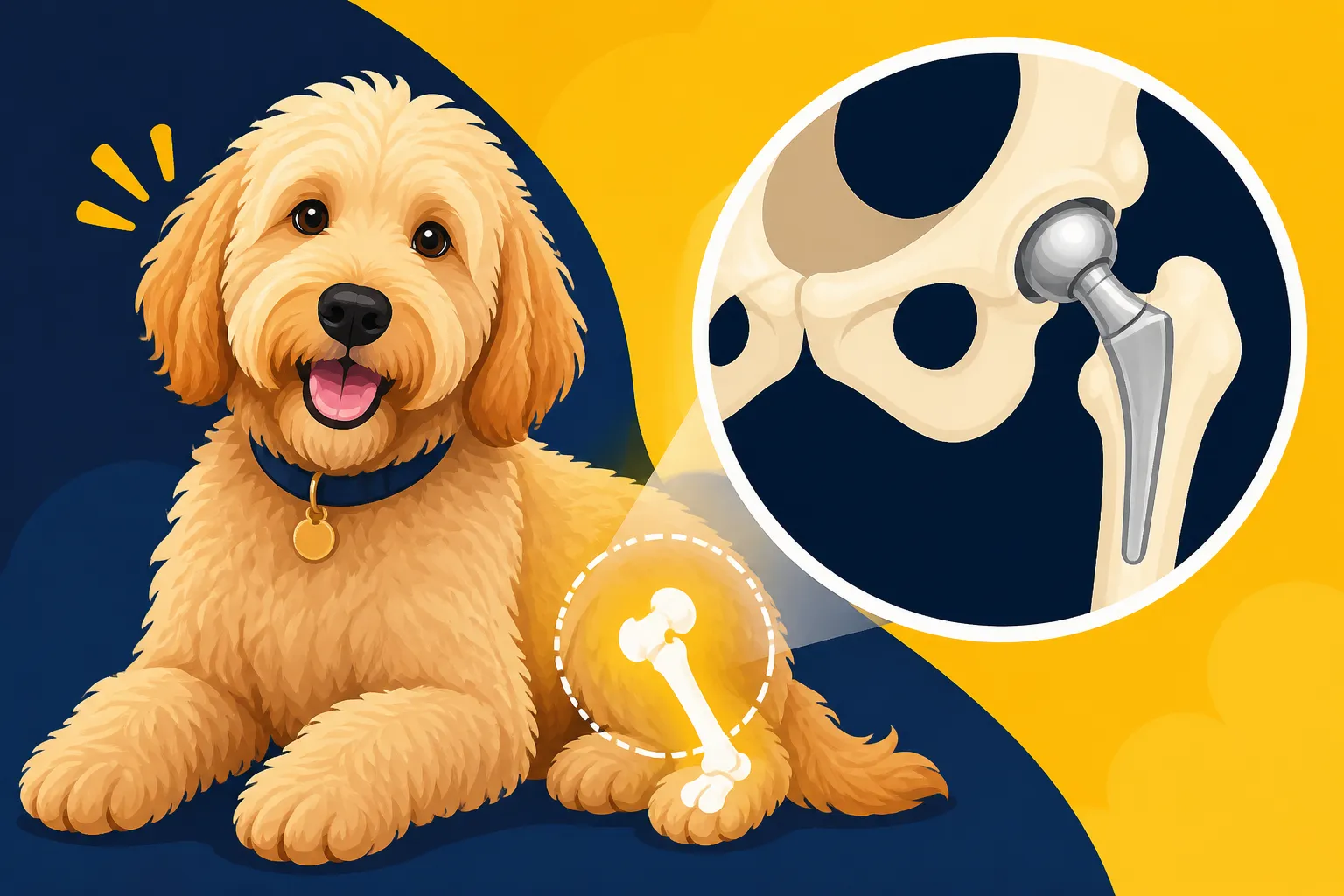
Hip Replacement Priced for a Standard Goldendoodle
Finding out your beloved Goldendoodle is suffering from hip dysplasia can be absolutely heartbreaking, especially when you've done everything you can to provide them with a happy, healthy life. The thought of surgery, particularly something as significant as a hip replacement, is not only daunting emotionally but also financially overwhelming. This guide aims to demystify the complex and often staggering costs associated with hip replacement surgery for a Standard Goldendoodle, helping you understand what to expect every step of the way.
Understanding Goldendoodle Hip Dysplasia and Its Impact
It's a tough pill to swallow when a condition like hip dysplasia strikes, particularly in a Goldendoodle, where many owners hope their mixed breed will magically escape such hereditary issues. Unfortunately, that's not always the case, and hip dysplasia is a very real concern for these wonderful dogs.
Why Goldendoodles Are Prone to Hip Dysplasia
The Goldendoodle, as a crossbreed, inherits genetic material from both the Golden Retriever and the Poodle. While Poodles are generally robust, Golden Retrievers are unfortunately quite prone to hip and elbow dysplasia, with studies showing a significant percentage of the breed being affected. This means that even with the idea of "hybrid vigor" floating around, your Goldendoodle still carries the genetic blueprint for these conditions, often from the Golden Retriever side. It's a common misconception that being a "doodle" automatically makes a dog healthier. In reality, unless both parents have undergone rigorous health testing, specifically for orthopedic issues like hip and elbow dysplasia, a Goldendoodle can still be at high risk. You might want to delve deeper into the statistics and underlying genetics by reading our article on Goldendoodle Hip Dysplasia at 15 to 20 Percent. It can be incredibly frustrating for owners to discover this, especially after believing they were choosing a healthier option.
Recognizing the Signs of Hip Problems
Spotting hip dysplasia can be tricky because dogs are masters at hiding pain. What might start as a subtle reluctance to jump into the car or climb stairs can slowly progress into something more obvious. You might notice your Goldendoodle "bunny hopping" – using both back legs together when they run – or showing stiffness after resting. They might seem less enthusiastic about walks or playing fetch, activities they once loved. As the condition worsens, you could observe lameness, limping, a decreased range of motion in their hips, or even a loss of muscle mass in their hindquarters, making one leg look thinner than the other. Early signs in a young Goldendoodle puppy might be difficulty standing or a strange gait, but often, the most significant symptoms don't appear until they're older, sometimes well into their senior years. Pay close attention during regular play and exercise; any changes in their mobility or enthusiasm could be a red flag.
The Difficult Decision: When to Consider Hip Replacement
Once hip dysplasia is diagnosed, usually through X-rays and a thorough veterinary examination, the next step is deciding on the best course of action. It's a decision fraught with emotion and practical considerations.
Non-Surgical Management Options and Their Limits
Many owners, understandably, want to explore all non-surgical avenues first. Conservative management typically involves a combination of pain medication, anti-inflammatory drugs (NSAIDs), joint supplements like glucosamine and chondroitin, and physical therapy. Weight management is also incredibly important, as extra pounds put immense strain on compromised joints. Regular, controlled exercise, such as swimming or short, leash-walks, can help maintain muscle mass without overstressing the hips. These methods can often provide significant relief and improve a Goldendoodle's quality of life for months, or even years, especially if the dysplasia is mild to moderate. However, these treatments rarely address the underlying structural issue. They manage the symptoms, not cure the disease. There comes a point for many dogs, particularly active Standard Goldendoodles, when the pain becomes unmanageable, their mobility severely declines, and conservative treatments are no longer effective. This is often when the conversation shifts to surgical intervention. Our guide on Goldendoodle Arthritis After the Age of Eight offers more insight into managing joint pain later in life.
Diagnostic Procedures to Confirm Dysplasia Severity
Before any surgeon recommends hip replacement, a comprehensive diagnostic workup is essential. This typically starts with your regular veterinarian taking X-rays of your Goldendoodle's hips. However, for a definitive diagnosis and to assess suitability for surgery, your dog will likely need to see a board-certified veterinary orthopedic specialist. This specialist will take specific radiographic views to evaluate the severity of the hip dysplasia and the extent of any secondary arthritis. They’ll also check for other orthopedic issues that might mimic hip pain. These X-rays are often more detailed than routine ones and might require sedation to get the best positioning. Specialists often refer to official grading systems, like those from the Orthopedic Foundation for Animals (OFA) or PennHIP, even if your dog wasn't screened as a puppy. Understanding Goldendoodle Hip Dysplasia and the OFA Numbers can give you more context on these evaluations. In some complex cases, a CT scan might be recommended for a more detailed 3D view of the joint. All these diagnostic steps are crucial for the surgical team to formulate the best plan, but they also contribute to the overall cost before any actual surgery takes place.
Breaking Down the Costs of Goldendoodle Hip Replacement Surgery
Let's talk numbers, because this is where the real anxiety often kicks in. Hip replacement surgery for a Standard Goldendoodle is a major procedure, and the costs reflect the specialized expertise, advanced equipment, and extensive care required.
Pre-Operative Assessments and Consultations
Before your Goldendoodle even sees the operating table, there's a significant investment in preparation. You'll start with consultations with the orthopedic specialist, which can range from $150 to $500, depending on the clinic and region (a specialist in a major metropolitan area like Los Angeles or New York will likely charge more than one in a smaller city like Omaha). Then come the diagnostic tests:
- Initial X-rays: If not already done, these can be $200-$500, especially if sedation is needed.
- Advanced Imaging: Sometimes, a CT scan (Computed Tomography) is recommended for precise surgical planning, which can add $1,000 to $2,500.
- Bloodwork and Urinalysis: These pre-anesthetic tests are crucial to ensure your Goldendoodle is healthy enough for surgery and to detect any underlying conditions. Expect $150 to $400.
- Cardiology Consult: Especially for a large breed like a Standard Goldendoodle, a cardiac workup might be required to clear them for anesthesia, potentially adding $300 to $800 for an echocardiogram and consultation.
- Anesthesia Consultation: A dedicated anesthesiologist might consult to tailor an anesthesia plan, especially for older dogs or those with other health concerns, at around $100 to $300.
All these steps are vital for ensuring the safety and success of the surgery, but they quickly add up, easily reaching $1,500 to $4,000 before the actual hip replacement has even begun.
The Surgery Itself: What Drives the Price
The core cost of the total hip replacement (THR) surgery is the largest component. This is where the highly specialized skills of a board-certified veterinary orthopedic surgeon, along with custom implants and extended hospital care, come into play. For a Standard Goldendoodle, you can expect the cost for one hip to range anywhere from $5,000 to $9,000. If both hips need replacing, the cost will essentially double, though sometimes there's a slight discount for the second surgery if done concurrently or soon after the first.
What influences this price?
- Surgeon's Fees: These are a significant portion, reflecting years of advanced training and expertise.
- Implants: The prosthetic hip joint components are specially designed for canine anatomy and are very expensive. For a Standard Goldendoodle, larger, more robust implants are needed compared to a smaller dog, which can increase the material cost.
- Anesthesia: Administering and monitoring anesthesia for a large dog for several hours requires specialized equipment and personnel.
- Operating Room Time: The surgery itself is complex and can take several hours.
- Hospital Stay: Post-operative hospitalization for pain management, wound care, and initial monitoring typically lasts 1-3 days, and this is included in the surgical package.
- Geographic Location: As mentioned, veterinary costs can vary significantly by region. A veterinary teaching hospital (e.g., at Cornell, UC Davis, or Colorado State University) might have slightly different pricing structures than a private specialty clinic, but often offer cutting-edge care.
The sheer size of a Standard Goldendoodle also plays a role. Larger dogs often require more anesthetic agents, larger implants, and more resources for handling and recovery, all of which contribute to the higher end of the cost spectrum.
Post-Operative Care, Medication, and Rehabilitation
The journey doesn't end when your Goldendoodle comes home. The success of hip replacement surgery relies heavily on diligent post-operative care and rehabilitation, which also comes with its own set of expenses.
- Medications: Your dog will need a cocktail of medications, including pain relievers, anti-inflammatories, and antibiotics, for several weeks. This can be $100 to $400.
- Rehabilitation (Physical Therapy): This is critical for regaining strength, range of motion, and proper gait. A typical rehab program involves weekly or bi-weekly sessions for 8-12 weeks, and often longer. Each session, which might include hydrotherapy (underwater treadmill), therapeutic exercises, and laser therapy, can cost $75 to $200. Over several months, this can easily add up to $800 to $2,500 or more. Some owners even opt for home-based exercises with guidance, but professional therapy yields the best results.
- Follow-Up Vet Visits and X-rays: Regular check-ups are needed to monitor healing and implant stability. Expect several visits over the first few months, often including follow-up X-rays, adding another $300 to $1,000.
- Specialized Equipment: You might need an orthopedic bed, a sling to assist with walking, or ramps, particularly for a larger Goldendoodle recovering. These can range from $100 to $500.
- Potential Complications: While rare, complications like infection, implant loosening, or nerve damage can occur, requiring further veterinary intervention and adding thousands more to the bill.
Here’s a summary of the potential costs involved in a Goldendoodle hip replacement:
| Cost Category | Estimated Range (Single Hip) | Notes |
|---|---|---|
| Pre-Operative | ||
| Orthopedic Consults | $150 – $500 | Initial specialist visits |
| Diagnostic X-rays | $200 – $500 | If not already performed; often requires sedation |
| Advanced Imaging (CT Scan) | $1,000 – $2,500 | For precise surgical planning in complex cases |
| Bloodwork & Urinalysis | $150 – $400 | Pre-anesthetic screening |
| Cardiology Clearance | $300 – $800 | Essential for larger dogs to assess cardiac health for anesthesia |
| Surgical Procedure (THR) | ||
| Surgeon's Fees | Included Below | |
| Anesthesia & Monitoring | Included Below | |
| Implants & OR Time | Included Below | |
| Hospital Stay (1-3 days) | Included Below | |
| Total Surgical Cost | $5,000 – $9,000 | Core cost for one hip; doubles for two hips (sometimes with discount) |
| Post-Operative | ||
| Medications (Pain, Anti-inflam., Antibiotics) | $100 – $400 | For several weeks post-surgery |
| Rehabilitation/Physical Therapy | $800 – $2,500+ | Multiple sessions over 2-3 months minimum |
| Follow-up Vet Visits & X-rays | $300 – $1,000 | Monitoring healing progress |
| Total Estimated Cost (Single Hip) | $8,000 – $17,000+ | This is a broad range; actual costs vary significantly |
Navigating the Financial Burden: Insurance and Payment Options
Seeing those numbers laid out can be truly daunting. It's perfectly normal to feel overwhelmed, but there are ways to manage these significant expenses.
How Pet Insurance Can Help (or Not)
Pet insurance can be an absolute lifesaver when facing a major surgery like a hip replacement, but there are crucial considerations. If your Goldendoodle was insured before any signs of hip dysplasia appeared and before diagnosis, a comprehensive policy might cover a significant portion of the costs. Many providers, like Healthy Paws, offer excellent coverage for accidents and illnesses, but they all have waiting periods and strict definitions for pre-existing conditions. If your dog has already shown symptoms or been diagnosed, hip dysplasia will almost certainly be considered a pre-existing condition and therefore excluded from coverage. This is why it's so important to enroll your Goldendoodle in pet insurance when they are young and healthy. Read our article on Goldendoodle Pet Insurance for a Dog With No Breed Papers to understand the nuances of insuring a crossbreed. Even with insurance, you'll still have a deductible to meet and a reimbursement percentage (typically 70-90%) to consider, meaning you'll still pay a portion out-of-pocket. Always review policy details carefully to understand what is covered and what isn't, especially for orthopedic conditions.
Exploring Payment Plans and Financial Aid
If you don't have pet insurance or your policy won't cover hip dysplasia, don't despair. There are other options. Many veterinary specialty clinics offer payment plans directly, or work with third-party financing companies like CareCredit, which provides low- or no-interest payment options for veterinary expenses. It's essentially a credit card specifically for healthcare costs. Additionally, there are several non-profit organizations and charities that offer financial assistance for pet owners facing expensive veterinary care, such as The Pet Fund, RedRover, or province/state-specific programs. A quick web search for "veterinary financial aid for dogs" in your area can yield results. Some Goldendoodle or doodle-specific rescue organizations might also have funds or resources to help owners, particularly if they adopted the dog from them. It's always worth discussing your financial situation openly with your veterinary team; they often have experience guiding clients through these tough choices and can provide resources.
The Long-Term Investment in Your Goldendoodle's Quality of Life
While the initial cost of hip replacement for a Standard Goldendoodle is undeniably substantial, it's important to view it as an investment in your dog's long-term comfort and well-being. A successful hip replacement can dramatically improve their quality of life, eliminating chronic pain and restoring their ability to run, play, and enjoy normal activities without discomfort. Imagine your Goldendoodle, once hesitant to move, romping happily in the park again. The joy and companionship they bring are immeasurable, and for many owners, the relief of seeing their furry family member free from pain makes the financial sacrifice worthwhile. This isn't just about extending their lifespan; it's about giving them back their zest for life. Ensuring your Goldendoodle maintains a healthy weight after surgery, as discussed in Goldendoodle Weight and the Load on Its Joints, is crucial for the longevity of the new joint.
Disclaimer
This article is for general informational purposes only and does not constitute professional advice. Laws, prices and regulations vary by location and change over time. Consult a qualified professional for guidance on your specific situation.