Goldendoodle Cruciate Repair Priced by Size
Discovering your beloved Goldendoodle is limping, in pain, and potentially facing cruciate ligament surgery can be a terrifying and financially overwhelming moment for any pet parent. The sheer uncertainty of diagnosis, the fear for their comfort, and then the staggering potential vet bills can quickly send your head spinning. This comprehensive guide is here to break down the ins and outs of Goldendoodle cruciate repair, helping you understand the different surgical options and, most importantly, giving you a realistic picture of the costs involved, often priced significantly by your Goldendoodle's size.
Understanding Goldendoodle Cruciate Ligament Tears
Cruciate ligament tears are one of the most common orthopedic injuries in dogs, and unfortunately, Goldendoodles are certainly not exempt. It’s a painful condition that often requires surgical intervention to restore stability and allow your dog to live a comfortable life again. Knowing what you're up against is the first step in navigating this challenging journey.
What is a Cruciate Ligament Tear?
Imagine the main stabilizing ligaments in your own knee, often called the ACL (anterior cruciate ligament). Dogs have a similar structure, known as the cranial cruciate ligament (CCL), located within the stifle (knee) joint. This crucial ligament connects the femur (thigh bone) to the tibia (shin bone), preventing the tibia from sliding forward relative to the femur and excessive rotation of the joint. When this ligament tears, whether partially or completely, the knee joint becomes unstable. This instability causes pain, inflammation, and can lead to progressive arthritis if left untreated. It’s a bit like trying to walk on a hinge that’s missing a crucial pin, causing everything to shift unnaturally.
The tear can be sudden and dramatic, perhaps after a misstep during vigorous play, or it can be a slow, degenerative process where the ligament weakens over time until it finally ruptures completely. It's not always a single, traumatic event; sometimes, it's the cumulative stress on an already compromised ligament.
Why Goldendoodles are Prone to Cruciate Tears
Goldendoodles, inheriting traits from both Golden Retrievers and Poodles, carry a genetic predisposition to certain joint issues, and cruciate tears can be one of them. Both parent breeds are known to have a higher incidence of orthopedic problems. Golden Retrievers, for example, are known for joint issues, and while Poodles are generally robust, the combination can sometimes lead to a "perfect storm" of factors. Larger dogs, in general, are more susceptible due to the increased stress on their joints, and many Goldendoodles fall into the medium to standard size categories.
Beyond genetics, a Goldendoodle's active and enthusiastic nature can also contribute. They love to run, jump, and play fetch with gusto, which can put significant strain on their knees, especially during quick turns or sudden stops. Obesity or being overweight also plays a massive role, as extra pounds place an undue load on the joints, accelerating degeneration and increasing the likelihood of a tear. Keeping your Goldendoodle at a healthy weight is one of the best preventative measures you can take. If you're concerned about your dog's weight, learning about Goldendoodle Weight and the Load on Its Joints can provide valuable insights.
Recognizing the Signs of a Cruciate Tear
Spotting the signs early can make a difference in your Goldendoodle's prognosis and recovery. The most common symptom is a sudden lameness or limping in one of the hind legs. Your dog might hold the leg up, reluctant to put weight on it, or only "toe-touch," meaning they gingerly place the very tip of their paw on the ground without bearing full weight. You might notice they are no longer jumping onto furniture, struggling with stairs, or simply seem less enthusiastic about their usual walks.
In some cases, especially with partial tears, the lameness might come and go, or appear worse after exercise. You might also observe swelling around the knee joint, or your Goldendoodle might start to favor the unaffected leg, putting them at risk for tearing the cruciate in that knee as well – a common and frustrating outcome. If you see any of these signs, don't delay in getting your Goldendoodle to the vet. Early diagnosis and intervention can greatly impact their recovery and long-term joint health. Understanding Cruciate Ligament Tears in a Jumping Goldendoodle can help you recognize symptoms even sooner.
The Different Surgical Options for Cruciate Repair
Once a cruciate tear is diagnosed, your veterinarian will likely recommend surgery. There isn't a one-size-fits-all solution; the best approach depends on several factors, including your Goldendoodle's size, age, activity level, and the severity of the tear. It's crucial to discuss all options thoroughly with your vet to make an informed decision.
Tibial Plateau Leveling Osteotomy (TPLO)
TPLO is one of the most common and highly recommended surgical procedures, particularly for larger, more active dogs like many Standard Goldendoodles. The basic idea behind TPLO is to change the biomechanics of the knee joint. Instead of repairing the torn ligament itself, the surgeon cuts and rotates the top part of the tibia (the tibial plateau) to create a flatter surface. This new angle prevents the tibia from thrusting forward during weight-bearing, even without an intact cruciate ligament, effectively stabilizing the joint.
The advantages of TPLO include a high success rate, excellent long-term stability, and a quicker return to full function for many dogs. However, it is an invasive and complex procedure, requiring specialized equipment and training. This complexity also means it's one of the more expensive options. Recovery involves strict confinement and a carefully managed rehabilitation program for several months.
Tibial Tuberosity Advancement (TTA)
Similar to TPLO, Tibial Tuberosity Advancement (TTA) is another common bone-modifying surgery that addresses the instability of the knee joint in a different way. In TTA, the surgeon makes a cut in the front part of the tibia (the tibial tuberosity), moves it forward, and then stabilizes it in its new position with a plate and screws. This advancement changes the angle of the patellar tendon, which then neutralizes the force causing the tibia to slide forward, providing stability to the joint.
TTA is often recommended for medium to large breeds and has a good success rate. Some vets might prefer it in certain cases, especially if there's less of a slope in the tibial plateau to begin with. Like TPLO, it's an advanced orthopedic surgery, which translates to a significant cost. The recovery protocol is also similar, demanding diligent post-operative care and rehabilitation to ensure optimal healing and function.
Lateral Suture (Extracapsular Repair)
The Lateral Suture technique, also known as extracapsular repair, is a more traditional and generally less invasive surgical option. Instead of altering the bone, this procedure aims to mimic the function of the torn cruciate ligament by placing a strong suture material outside the joint capsule. This material stabilizes the knee, preventing the "tibial thrust" that occurs with a torn ligament. Over time, the body forms scar tissue around this suture, providing additional long-term stability.
This method is often considered for smaller, less active dogs, or sometimes when the cost of TPLO or TTA is prohibitive. For a Toy or Mini Goldendoodle, it might be a more appropriate and less costly choice. The recovery time can sometimes be longer than TPLO/TTA, as the body relies on scar tissue formation, and there might be a slightly higher chance of the suture failing compared to the more robust bone-modifying surgeries, particularly in larger or highly active dogs. Still, for the right candidate, it can be a very effective solution.
Which Surgery is Right for Your Goldendoodle?
Deciding on the best surgical option for your Goldendoodle is a conversation you'll have with your veterinary orthopedic surgeon. They will consider several critical factors. Your dog's size is a major one; larger, heavier Goldendoodles typically exert more force on their knees, often making TPLO or TTA the more durable and recommended long-term solution. A smaller, less active Toy Goldendoodle, however, might do perfectly well with a Lateral Suture.
Your Goldendoodle's age and overall health also play a role. Younger, healthier dogs might be better candidates for more invasive surgeries and intense rehabilitation. The surgeon will also assess the specific anatomy of your Goldendoodle's knee and the extent of the tear. Don't be afraid to ask questions, understand the pros and cons of each procedure, and even seek a second opinion if it helps you feel more confident in your decision. It's about finding the best path to get your furry friend back on their paws.
Goldendoodle Cruciate Repair Costs by Size Category
Now for the part that often causes the most anxiety: the cost. Goldendoodle cruciate repair is a significant financial undertaking, and the price tag can vary wildly depending on several factors, with your dog's size being a primary determinant. It’s not just the surgery itself, but all the associated costs that can add up quickly.
Factors Influencing the Final Bill
The final bill for cruciate repair isn't just a single price for "surgery." It's a sum of many components. Location plays a huge role; vet costs in major metropolitan areas like Los Angeles or New York City are generally much higher than in rural regions. The expertise of the veterinary surgeon also matters; a board-certified orthopedic specialist might charge more than a general practitioner performing the surgery. Pre-surgical diagnostics, such as X-rays, blood work, and sometimes even advanced imaging like MRIs, are essential for proper planning and add to the initial cost.
Then there's the cost of anesthesia, which varies with the length of the procedure and the size of your dog, as larger dogs require more anesthetic. Medications, post-operative care, and follow-up visits, including additional X-rays to monitor healing, are all factored in. And let's not forget the crucial phase of rehabilitation. Physical therapy, hydrotherapy, and at-home exercises are vital for a successful recovery and can represent a significant ongoing expense. Some of these aspects are covered in detail in discussions around Goldendoodle Joint Health by Size Category and Physical Therapy After Goldendoodle Knee Surgery.
Cost Breakdown for a Toy Goldendoodle (Under 20 lbs)
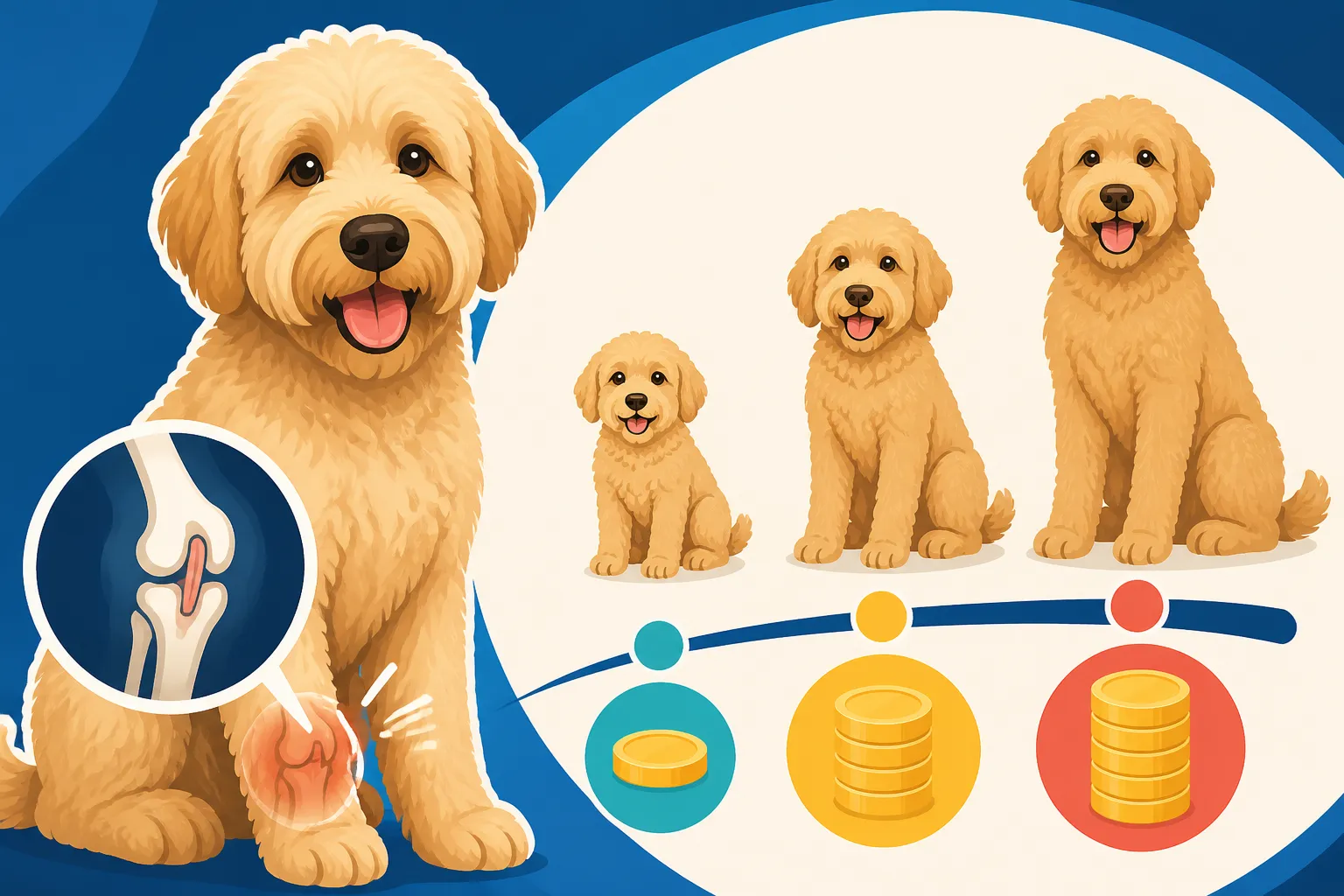
For our smallest Goldendoodles, the Toy size, cruciate repair costs can be on the lower end of the spectrum compared to their larger counterparts, typically ranging from $2,000 to $4,500. This often includes the Lateral Suture technique, which is frequently sufficient for their smaller build and lighter weight. The materials used, the amount of anesthesia, and the physical demands on the healing joint are less than for a much larger dog.
However, don't let the lower range fool you into thinking it's cheap. This still covers diagnostics, the surgical procedure itself, anesthesia monitoring, post-operative medications, and initial follow-up. While a TPLO might be an option, it's less commonly chosen for Toy Goldendoodles unless there are specific anatomical reasons or a highly active lifestyle demands it. Their smaller stature might also present unique challenges in recovery, requiring very careful handling to prevent re-injury.
Cost Breakdown for a Mini/Medium Goldendoodle (20-50 lbs)
This size category is where many Goldendoodles fall, and unfortunately, it's also a very common range for cruciate tears. For a Mini or Medium Goldendoodle, you can expect cruciate repair costs to typically range from $3,500 to $6,000. While Lateral Suture can still be an option for some less active individuals in this size, TPLO and TTA procedures become much more prevalent recommendations due to the increased weight and activity levels.
These procedures are more technically demanding and involve more specialized implants, which contributes to the higher price point. The cost includes all the same components as mentioned earlier: diagnostics, surgery, anesthesia, hospitalization, medications, and initial follow-up. The recovery period will still be intense, requiring dedicated care to ensure the new bone structure or suture holds properly. Owners of Goldendoodles in this range often look into Goldendoodle Knee Surgery Costs by Size specifically.
Cost Breakdown for a Standard Goldendoodle (Over 50 lbs)
Standard Goldendoodles, being the largest of the family, naturally face the highest costs for cruciate repair, generally falling between $4,500 and $7,500, and sometimes even higher. For these larger, heavier dogs, TPLO and TTA are almost always the recommended procedures due to the immense forces exerted on their knee joints. A Lateral Suture technique is rarely considered strong enough for long-term stability in a dog of this size and weight.
The higher cost reflects the larger implants needed, increased anesthesia time and dosage, and the greater physical demands during recovery. Rehabilitation for a Standard Goldendoodle can be more challenging, potentially requiring longer or more intensive physical therapy sessions, adding to the overall expense. The goal is to provide a durable, long-lasting solution to allow these big, active dogs to regain full mobility, which often necessitates the more advanced, and thus more expensive, surgical techniques. This often leads owners to budget specifically for Standard Goldendoodle Puppies at $3,000 to $5,000 and consider future health expenses.
| Goldendoodle Size Category | Typical Weight Range | Recommended Surgery Types | Average Cost Range | Key Considerations |
|---|---|---|---|---|
| Toy | < 20 lbs | Lateral Suture, TPLO (less common) | $2,000 – $4,500 | Less invasive options often suffice; careful handling post-op. |
| Mini/Medium | 20 – 50 lbs | TPLO, TTA, Lateral Suture (select cases) | $3,500 – $6,000 | Most common size for TPLO/TTA; higher demand on joints. |
| Standard | > 50 lbs | TPLO, TTA | $4,500 – $7,500+ | TPLO/TTA almost always recommended; higher costs for implants, anesthesia, rehab. |
Note: These are average ranges and can vary based on geographic location, veterinary specialist, and individual case complexity.
Managing the Financial Impact of Cruciate Surgery
The costs associated with Goldendoodle cruciate repair can be daunting, but there are strategies and resources available to help you manage the financial burden. Being prepared and knowing your options can make a world of difference during such a stressful time.
The Role of Pet Insurance
Pet insurance can be an absolute lifesaver when facing a major expense like cruciate surgery. Providers like Healthy Paws offer comprehensive plans that can reimburse a significant portion of your vet bills, often 70-90% after your deductible is met. However, there's a crucial catch: pet insurance operates under "waiting periods" and generally does not cover pre-existing conditions. This means if your Goldendoodle shows any signs of lameness or a cruciate issue before you enroll or during the waiting period, that condition will likely be excluded from coverage.
This highlights the importance of enrolling your Goldendoodle in pet insurance when they are young and healthy, ideally before any symptoms of orthopedic problems arise. Waiting until an injury occurs is unfortunately too late to get coverage for that specific issue. Always read the policy details carefully to understand what is covered, what the waiting periods are, and any exclusions, such as those sometimes related to Goldendoodle Hip Dysplasia at 15 to 20 Percent or other hereditary conditions.
Payment Plans and Veterinary Financing Options
If you don't have pet insurance or if the costs still exceed your budget, many veterinary clinics understand the financial strain and offer various payment options. Some clinics may have in-house payment plans, allowing you to pay the total cost over several months. It's always worth asking your vet's office what their policies are.
Another widely used option is third-party financing services, such as CareCredit. This operates like a credit card specifically for healthcare expenses, often offering deferred interest periods if the balance is paid within a certain timeframe. Approval depends on your credit history, but it can provide immediate financial relief and help you spread out the cost of surgery. Don't shy away from discussing financial concerns with your vet; they want to help your Goldendoodle get the care they need and often have resources to explore.
Budgeting for Rehabilitation and Long-Term Care
The surgical bill isn't the end of your financial commitment; rehabilitation and long-term care are absolutely vital for a successful recovery and preventing future issues. Physical therapy sessions, which can include exercises, massage, laser therapy, and hydrotherapy (underwater treadmill), typically cost anywhere from $50 to $150 per session, and your Goldendoodle might need multiple sessions per week for several months. These costs add up quickly but are crucial for rebuilding muscle, improving range of motion, and ensuring proper healing.
You'll also need to budget for pain management medications, anti-inflammatories, and joint supplements, which can be an ongoing expense. Consider investing in tools to aid recovery at home, such as supportive beds you can find on Chewy, non-slip mats, ramps to prevent jumping, and puzzle feeders to keep their mind engaged during restricted activity. For long-term health, maintaining a lean body condition is paramount; incorporating balanced, portion-controlled meals, perhaps from services like Ollie, can aid in weight management and reduce strain on their joints, potentially preventing the need for another surgery in the future. Remember, investing in their recovery now can save you significant pain and expense down the line.
Disclaimer
The information provided in this article is for general informational purposes only and does not constitute veterinary advice. Always consult with a qualified veterinarian for any health concerns or before making any decisions related to your Goldendoodle's medical care. Prices mentioned are estimates and can vary significantly.