Why a Fluffy Goldendoodle Puppy May Shed as an Adult
It’s a truly disheartening moment when you bring home that adorable, fluffy Goldendoodle puppy, dreaming of a low-shedding companion, only to find yourself covered in dog hair a few months down the line. Many new Goldendoodle owners feel misled or confused when their seemingly non-shedding puppy starts dropping tumbleweeds of fur as it matures. This guide will walk you through why that fluffy Goldendoodle puppy you fell in love with might indeed shed as an adult, delving into the genetics, the inevitable coat change, and how to manage those shedding surprises.
The Allure of the Fluffy Goldendoodle Puppy
When you first meet a Goldendoodle puppy, especially one with that soft, cloud-like puppy fluff, it’s easy to assume you’ve found the perfect low-shedding dog. Breeders often highlight the "hypoallergenic" potential, and that adorable, downy coat certainly looks like it won't shed a single strand. But that initial fluff can be incredibly deceiving, setting up owners for an unexpected reality check.
Puppy Fluff Versus Adult Coat
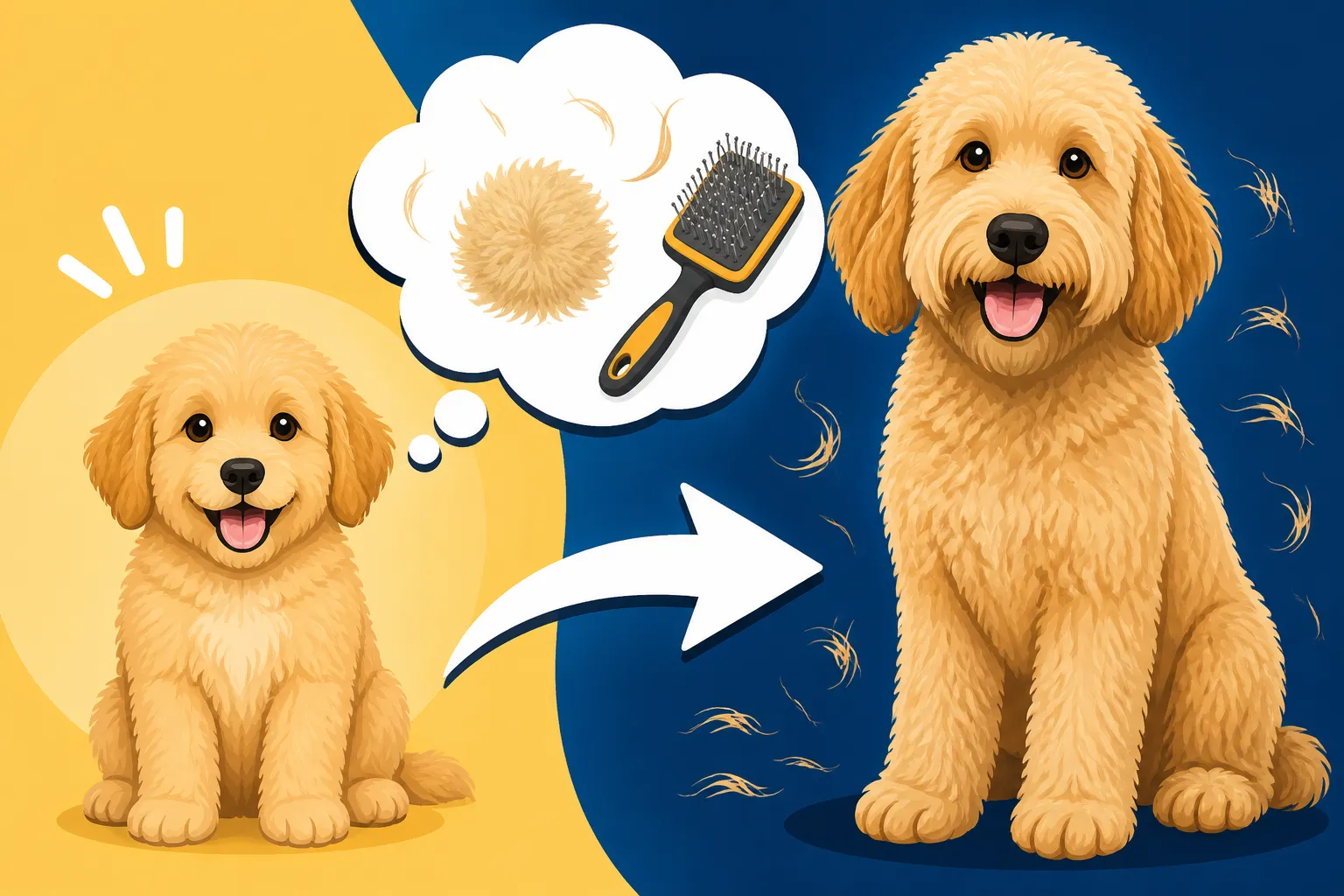
Think of a Goldendoodle puppy's coat like a baby's soft, fine hair. It’s light, often doesn't tangle easily, and generally doesn't shed much at all. This delicate puppy fluff is a temporary stage, designed to keep them warm and cute, but it's not indicative of the robust, often dense adult coat that will eventually replace it. Many prospective owners look at this puppy coat and project their hopes onto it, imagining it will stay exactly the same. They might even choose a puppy specifically because its coat feels and looks so wonderfully non-shedding. However, it's crucial to understand that Why a Goldendoodle Puppy Coat Predicts Nothing about its adult shedding tendencies or final texture.
As the puppy grows, its body prepares for a more durable, protective adult coat. This transition is a natural biological process, but it often surprises owners who were expecting a continuation of that easy, low-maintenance puppy fuzz. The density and texture will change, and with that change, the shedding profile often does too, bringing out the shedding genes that were hidden beneath the puppy fluff.
The "Hypoallergenic" Myth and Early Hopes
The term "hypoallergenic" is heavily associated with Doodles, including Goldendoodles, and while they can be lower shedding than some breeds, it's a deeply misunderstood concept. Many people choose a Goldendoodle specifically because they believe it won't trigger allergies, or that a fluffy coat guarantees no shedding. The reality is that no dog is truly 100% hypoallergenic, and a dog's allergen production doesn't directly correlate with how much hair it visibly drops. Dander, saliva, and urine all carry allergens.
When a breeder or even a well-meaning friend says a Goldendoodle is hypoallergenic, it’s often interpreted as "zero shedding." This leads to owners having very high hopes for their fluffy puppy, especially if there are allergy sufferers in the household. These early hopes, fueled by the puppy's seemingly non-shedding fluff, often clash with the later reality of the adult coat. Understanding Why No Goldendoodle Is Truly Hypoallergenic is key to setting realistic expectations from the start and avoiding disappointment when that fluffy puppy begins to shed.
Genetics: The Root of Goldendoodle Coat Types
The ultimate texture and shedding level of your Goldendoodle’s adult coat are primarily dictated by its genetics, specifically certain genes inherited from both the Golden Retriever and Poodle parent lines. These aren't always visible in a young puppy, which makes predicting the adult coat a bit of a gamble, especially in earlier generations like F1s.
The Furnishings Gene and Its Role
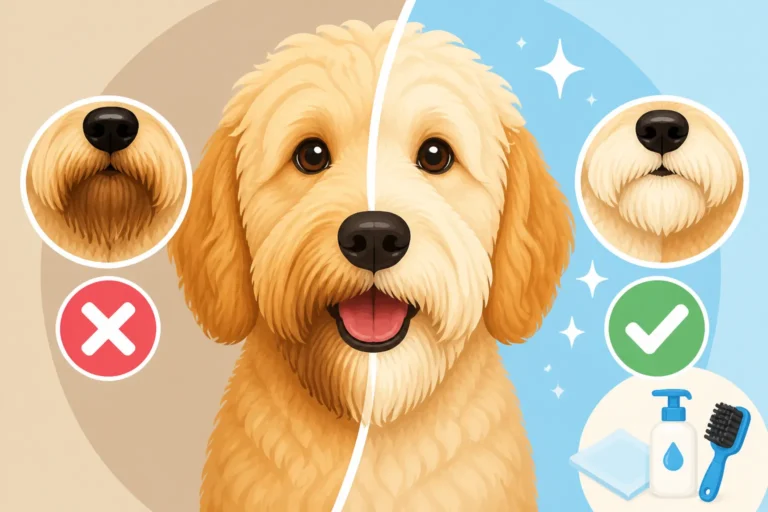
One of the most significant genetic markers for low-shedding in Doodles is the "furnishings" gene, often referred to as the F/f gene. This gene is responsible for the distinct facial hair – the beard, mustache, and eyebrows – that gives Goldendoodles their classic "doodle" look. Dogs that have at least one copy of the dominant 'F' allele (F/F or F/f) will have furnishings and are typically much lower shedding because their hair grows continuously, similar to a Poodle's, and sheds minimally.
However, if a Goldendoodle inherits two copies of the recessive 'f' allele (f/f), they are considered "unfurnished." An unfurnished Goldendoodle will have a smooth, Golden Retriever-like face, lacking the characteristic beard. These unfurnished dogs are much more likely to shed significantly, often resembling a Golden Retriever in their shedding habits, regardless of how fluffy they might have appeared as a puppy. This is because their coat growth cycle includes a shedding phase that releases dead hair, unlike the continuously growing Poodle-like coat. You can learn more about this crucial trait in The Furnishings Gene and the Goldendoodle Beard. A fluffy puppy with an f/f genotype will shed.
The Curl Gene and Shedding
Another gene influencing the Goldendoodle coat is the KRT71 gene, which dictates curl (Cu/cu). This gene determines whether the coat is straight, wavy, or tightly curled. While many people associate curl with non-shedding, it's not the curl itself that prevents shedding. Rather, the curl often traps any shed hair within the coat, making it less likely to fall onto your furniture and floors. However, a curly coat without furnishings will still shed.
- Straight Coat: Often referred to as "flat" or "I-coat," these Goldendoodles tend to resemble Golden Retrievers more closely. They usually have two copies of the straight hair gene (cu/cu) and often lack furnishings, leading to higher shedding.
- Wavy Coat: The most common Goldendoodle coat, often called a "fleece" coat. These dogs usually have one copy of the curl gene (Cu/cu) and at least one copy of the furnishings gene. They are generally low to moderate shedder.
- Curly Coat: Also known as a "wool" coat, these Goldendoodles typically inherit two copies of the curl gene (Cu/Cu) and have furnishings. Their tight curls are excellent at trapping shed hair, making them appear to shed very little.
It's important to differentiate that while a very curly coat might seem non-shedding because the hair is caught in the curls, the underlying genetic mechanism for low shedding is primarily linked to the furnishings gene. Why a Goldendoodle Curl Gene Is Not a Shedding Gene helps clarify this distinction; the curl helps contain shed hair, but the furnishings gene dictates how much hair is actually shed from the follicle.
| Coat Type (Appearance) | Genetics (Simplified) | Shedding Level (General) | Grooming Needs (General) |
|---|---|---|---|
| Flat/Straight | unfurnished (f/f) | Moderate to High | Moderate, sheds |
| Wavy/Fleece | furnished (F/f or F/F) | Low | Moderate to High, mats |
| Curly/Wool | furnished (F/f or F/F) | Very Low | High, mats |
Why an F1 Goldendoodle is a Genetic Wild Card
The F1 Goldendoodle (first generation, 50% Golden Retriever, 50% Poodle) is often hailed for its "hybrid vigor," but when it comes to coat genetics, it can be the biggest genetic wild card. Because an F1 is a direct mix of two purebreds, the inheritance of the furnishing and curl genes is completely random.
- Golden Retriever: Typically f/f (unfurnished) and cu/cu (straight).
- Poodle: Typically F/F (furnished) and Cu/Cu (curly).
When you cross these, an F1 Goldendoodle will always inherit one 'F' from the Poodle and one 'f' from the Golden, making them all F/f (furnished). This means most F1s will have the furnishings and be low-shedding. However, the curl gene can be Cu/cu (wavy) or Cu/Cu (curly), leading to variations in coat texture. The real surprise comes in subsequent generations if breeders aren't careful. For instance, if you breed two F1 Goldendoodles together (F2 generation), you can produce puppies that are F/F, F/f, or f/f. This means some F2 puppies will be unfurnished and shed a lot, even if both parents were low-shedding and fluffy! This unpredictable nature is why a simple fluffy puppy coat doesn't guarantee a non-shedding adult, especially in early generations where genetic expression hasn't been stabilized.
The Goldendoodle Coat Change: A Rite of Passage
One of the most surprising and often frustrating stages for new Goldendoodle owners is the infamous "coat change." This is the period when your puppy's soft, easy-to-manage fluff transitions into its denser, more mature adult coat. What might have felt like a low-shedding dream can quickly turn into a matting nightmare with unexpected shedding.
When the Puppy Coat Starts to "Blow"
Most Goldendoodles undergo their significant coat change between the ages of 8 to 12 months, though it can start a little earlier or later. During this time, the fine, single-layered puppy coat begins to shed out, making way for the thicker, often curlier or wavier double-layered adult coat. Imagine a human teenager suddenly growing a thicker, more complex head of hair – it's a similar kind of transformation.
This period is not just about shedding; it's also about a dramatic increase in coat density and texture. The new adult hair starts growing in, intertwining with the shedding puppy hair, creating a perfect storm for matting. Many owners report that their previously manageable puppy suddenly becomes a matted mess almost overnight. It's a challenging phase that requires diligence and patience. Why a Goldendoodle Coat Turns at Nine Months explains the physiological reasons behind this transition in more detail, preparing you for what to expect.
The Sudden Appearance of Shedding and Mats
Before the coat change, you might have happily told friends that your Goldendoodle puppy barely sheds. Then, almost like a switch flips, you start noticing strands of hair on your clothes, dust bunnies collecting in corners, and, most dramatically, mats forming in places they never did before. This is the shedding puppy coat getting trapped by the emerging adult coat.
The mats aren't just cosmetic; they can be incredibly painful for your dog, pulling on their skin and creating hot spots or skin irritations if left untended. This is often when owners realize that their "non-shedding" fluffy puppy has, in fact, turned into a shedding, high-maintenance adult. The reality often hits hard because the dog wasn't shedding much before, leading to a false sense of security. It's during this time that many Goldendoodles end up at the groomer needing to be shaved down because the matting is too severe to brush out. Surviving the Goldendoodle Coat Change offers practical advice for navigating this tricky period, emphasizing consistent grooming to prevent severe matting and manage the increased shedding.
Managing Expectations and Actual Shedding
Coming to terms with a shedding Goldendoodle after expecting a non-shedder can be frustrating, but understanding what "low shedding" truly means and how to manage it through proper grooming can make a world of difference.
Realistic Expectations for Goldendoodle Shedding
Let's get one thing straight: all dogs shed. Even hairless breeds shed skin cells. The term "low-shedding" for a Goldendoodle (especially those with furnishings) means that they shed significantly less than a Golden Retriever, and the hair they do shed tends to get caught in their coat rather than falling out and spreading everywhere. This is why you often hear Goldendoodle owners say, "I never find hair on my furniture, but I get handfuls when I brush them!" That’s the shed hair being trapped, which is great for your floors, but tough on their coat if not brushed out.
Instead of aiming for zero shedding, which is unrealistic, aim for managed shedding. A well-groomed Goldendoodle, even one that technically sheds, will leave very little hair around your home. The frustration often stems from the initial expectation of a completely shed-free dog. Embracing the reality that some shedding is normal, and that your role is to manage it, is the first step toward a happier coexistence.
Grooming as the Key to Managing Shedding
If your fluffy Goldendoodle puppy starts shedding as an adult, consistent and correct grooming becomes your most powerful tool. This isn't just about aesthetics; it's about your dog's comfort and health.
- Regular Brushing: This is non-negotiable. For a Goldendoodle, "regular" means at least 2-3 times a week, and often daily during the coat change or if they have a very dense, curly coat. The key is to "line brush" down to the skin, using a slicker brush to lift the coat in sections and a metal comb to ensure you've removed any tangles or trapped shed hair. Don't just brush the top layer! Brushing a Goldendoodle Often Enough to Stop Matting details this crucial technique.
- Appropriate Tools: Investing in the right tools makes a huge difference. A good quality slicker brush and a sturdy metal comb are essential. You might also find a dematting spray helpful for working through minor tangles. Many excellent grooming tools can be found on Amazon or Chewy, with a wide range of options to suit your Goldendoodle's specific coat type. The Slicker Brush and Comb a Goldendoodle Needs provides a comprehensive guide to selecting these tools.
By dedicating time to thorough brushing, you actively remove the dead, shedding hair before it has a chance to form mats or end up on your couch. This routine is what truly transforms a potentially shedding dog into one that is easy to live with, even if its adult coat isn't as magically non-shedding as its puppy fluff.
What to Do If Your Fluffy Puppy Becomes a Shedder
Discovering your Goldendoodle's adult coat sheds more than expected isn't a dead end. With the right approach to grooming and care, you can still have a happy, healthy dog with a manageable coat. It just means a little more active participation from you!
Embracing Regular Home Grooming
The best defense against shedding and matting is a strong offense: consistent home grooming. This is where you become your Goldendoodle's first line of defense. Start making grooming a positive, relaxing experience from puppyhood, even if they aren't shedding yet.
- Establish a Routine: Pick a regular schedule – every other day, or even daily if their coat is dense or actively changing. Consistency is more important than marathon sessions. Short, positive sessions are more effective and less stressful for your dog.
- Use the Right Technique: As mentioned, line brushing is crucial. Work in small sections, parting the hair and brushing from the skin out. Follow up with a metal comb to ensure there are no tangles. Focus on common matting areas like behind the ears, in the armpits, and around the collar.
- Invest in Quality Products: A good detangling spray can be a lifesaver for working out small knots before they become major mats. Look for sprays available on Chewy or Amazon that are formulated for dog coats. Regular bathing with a conditioning shampoo (ensuring you thoroughly dry the coat afterwards) also helps keep the skin and coat healthy, making brushing easier. Detangler Sprays That Help a Goldendoodle can guide you to effective options.
Professional Grooming Strategies
Even with diligent home grooming, most Goldendoodles benefit immensely from professional grooming. These experts have the tools, experience, and knowledge to handle Goldendoodle coats, especially during the challenging coat change phase or if matting becomes an issue.
- Regular Appointments: Plan to book your Goldendoodle for a professional groom every six to eight weeks. This schedule keeps their coat in top condition, prevents matting, and ensures any shedding hair is properly removed. Booking a Goldendoodle Groom Every Six to Eight Weeks is a great resource for understanding why this frequency is so important.
- Discuss Shedding Solutions: Talk to your groomer about your Goldendoodle's specific shedding patterns. They might recommend certain coat lengths or techniques, like de-shedding treatments (though these are less common for furnished Goldendoodles whose hair doesn't "blow out" like a double-coated breed, they can still help with dead hair).
- Maintain Between Grooms: Your groomer can work wonders, but their efforts won't last if you don't maintain the coat at home between appointments. See their work as a fresh start, a clean slate that you need to protect with your regular brushing routine.
Diet and Supplements for Coat Health
While genetics and grooming are the primary factors in shedding, a healthy diet and appropriate supplements can also play a supportive role in maintaining a healthy coat and skin, which can, in turn, influence shedding.
- High-Quality Diet: Ensure your Goldendoodle is eating a high-quality dog food. Look for foods with real meat as the first ingredient and a balanced nutritional profile. A diet rich in essential fatty acids, vitamins, and minerals supports overall skin and coat health. Brands like Ollie offer fresh, human-grade food options that can contribute to a lustrous coat.
- Omega Fatty Acid Supplements: Many Goldendoodle owners find success adding omega-3 and omega-6 fatty acid supplements to their dog's diet. These fatty acids, often derived from fish oil, can improve skin hydration, reduce dryness and flakiness, and promote a shinier, healthier coat. A healthier coat tends to shed less due to irritation or poor condition. Always discuss any supplements with your veterinarian before introducing them. Omega Oils for a Goldendoodle Coat provides more information on how these can benefit your dog.
Ultimately, understanding that your fluffy Goldendoodle puppy's adult coat might shed more than you initially hoped for is the first step. With a proactive approach to grooming, realistic expectations, and a healthy lifestyle, you can absolutely keep your Goldendoodle looking and feeling great, minimizing the hair around your home, and strengthening the bond you share.
Disclaimer
This article is for general informational purposes only and does not constitute professional advice. Laws, prices and regulations vary by location and change over time. Consult a qualified professional for guidance on your specific situation.