Daily Brushing Through a Goldendoodle Coat Change
The Goldendoodle coat change period can feel like a sudden, overwhelming battle against mats and tangles, leaving many new owners completely bewildered and their beloved pups uncomfortable. This guide is here to walk you through exactly what's happening with your Goldendoodle's coat during this tricky phase and how implementing a consistent daily brushing routine can save both of you a world of frustration and pain.
Understanding the Goldendoodle Coat Change
Let's be honest, when you first get a Goldendoodle puppy, their soft, fluffy coat is one of their most endearing features. It feels like a cloud, and you probably think, "This is great! Low maintenance!" But then, almost overnight, that changes. This isn't just a simple shed; it's a fundamental transformation of their hair, and if you're not prepared, it can feel like you've suddenly adopted a different dog.
The Puppy Fluff Giving Way
Your Goldendoodle puppy's coat is distinct from their adult coat. It's often finer, softer, and doesn't have the same texture or density that it will develop later. Think of it like a baby's hair versus an adult's; the texture is just different. This puppy coat isn't meant to last forever. As your Goldendoodle matures, their genetics kick in, and that fluffy, easy-care puppy hair starts to give way to the more robust, adult Goldendoodle coat that's either wavy, curly, or even straight, depending on their specific genetic makeup and generation. Why a Goldendoodle Puppy Coat Predicts Nothing explains this phenomenon in more detail. This transitional period is a critical time when the old and new hair types are present simultaneously, creating the perfect storm for matting.
When to Expect the Change
There’s no exact date on the calendar, but generally, you can expect the Goldendoodle coat change to begin somewhere between 8 and 12 months of age. Some dogs might start a little earlier, others a touch later, but this is the primary window. It's not a sudden "poof" and all the puppy coat is gone; it's a gradual process that can last for several weeks, or even a few months. During this time, the finer puppy hair is trying to shed out, but it gets caught and intertwined with the emerging, stronger adult hair. This is precisely why diligent care becomes absolutely vital. You might notice your dog looking a bit scruffier, or feeling thicker and more dense to the touch, especially around the ears, armpits, and collar area – those classic spots where mats love to form. For more on the timeline, check out The Goldendoodle Coat Change at Eight to Twelve Months.
Why Daily Brushing Becomes Non-Negotiable
You might have gotten away with brushing your Goldendoodle puppy every few days, or even less frequently, when they were younger. That honeymoon phase is officially over once the coat change begins. To skip even a day or two during this period is to invite a matting disaster that can quickly get out of hand, causing discomfort and potentially expensive trips to the groomer.
The Root Cause of Coat Change Matting
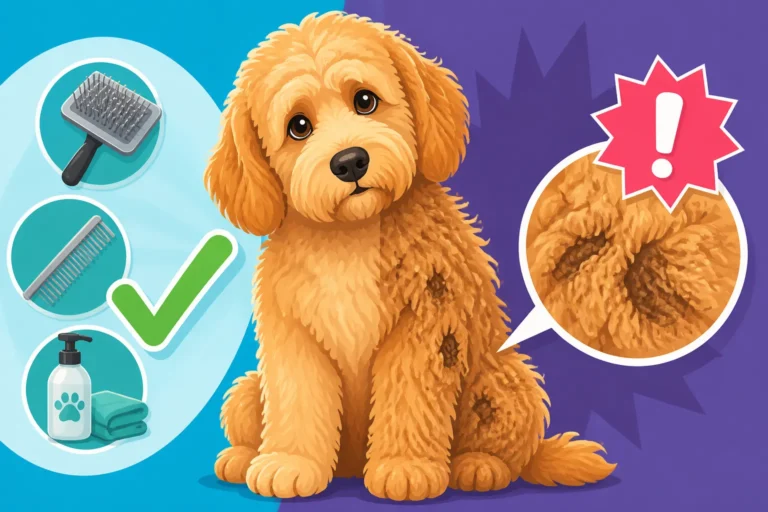
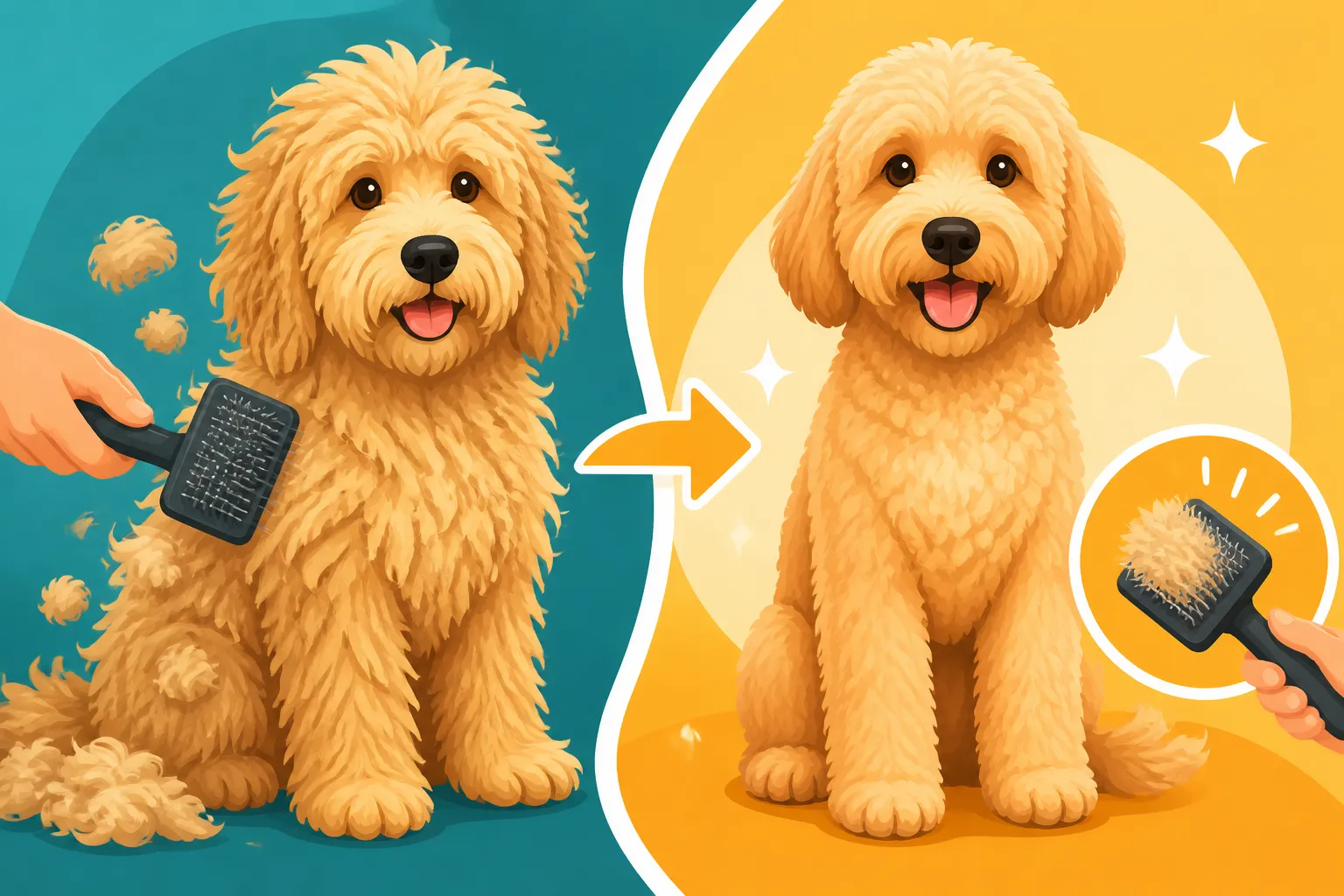
Imagine trying to brush out two different types of hair that are all tangled up together. That's essentially what's happening with your Goldendoodle's coat during this transition. The fine, wispy puppy hair sheds, but instead of falling out, it gets trapped within the denser, often curlier, adult coat that's growing in. This creates an incredibly intricate web of hair that rapidly forms mats. These aren't just surface tangles; they can quickly become felted, dense patches that pull at your dog's skin. The more intertwined the different hair types become, the faster and more severely the mats form. Areas of high friction, like under the collar, behind the ears, armpits, and groin, are especially susceptible because movement and rubbing further compact the shedding puppy hair into the new adult coat. This stage truly illustrates Why a Goldendoodle Suddenly Mats at Nine Months.
Pain and Skin Problems from Untreated Mats
It's not just an aesthetic issue when mats form; they are a serious welfare concern for your Goldendoodle. Mats pull on the skin every time your dog moves, causing constant discomfort and even pain. Imagine having a knot in your hair that's constantly tugging at your scalp – now multiply that across your entire body. Severe matting can restrict movement, making walking, running, and even lying down uncomfortable. Beyond the pain, mats trap moisture and dirt against the skin, creating a breeding ground for bacteria and yeast. This can lead to painful skin irritations, hot spots, and infections that require veterinary attention. In extreme cases, mats can restrict blood flow, especially around the ears or tail, leading to more severe health problems. When a Goldendoodle arrives at the groomer with severe matting, the only humane option is often a complete shave-down, which can be stressful for the dog and expensive for the owner. It’s a painful cycle that is almost always preventable with consistent home care. For context on preventing severe matting, read Why Goldendoodle Matting Is Almost Always Preventable.
Your Daily Brushing Routine During the Coat Change
Okay, so you understand why daily brushing is crucial. Now, let's talk about how to actually do it effectively. This isn't just a quick once-over; it's a dedicated session that requires the right tools, technique, and a patient approach. Make it a positive experience, and both you and your Goldendoodle will benefit.
Gathering the Right Tools
You can't fight a battle without the right arsenal, and matting during a coat change is definitely a battle! Investing in good quality grooming tools is non-negotiable. Forget those cheap wire brushes that just skim the surface. You'll need:
- Slicker Brush: This is your primary weapon. Look for one with fine, bent wire bristles that are firm but flexible. It's designed to separate hair down to the skin and work out tangles. You can find excellent options on Chewy or Amazon.
- Metal Comb: A good quality metal comb with both wide and narrow-set teeth is essential for checking your work and finding any hidden tangles the slicker brush might have missed. After brushing, the comb should glide through the coat easily. The Slicker Brush and Comb a Goldendoodle Needs goes into more detail.
- Detangling Spray: A good detangling spray helps lubricate the coat, making it easier for the brush to slide through and reducing friction. This is especially helpful if you encounter a stubborn tangle. Many brands are available through Chewy that are safe for dogs.
- High-Value Treats: Positive reinforcement is key! Keep a stash of your Goldendoodle's absolute favorite treats on hand to reward cooperation and make brushing a positive experience.
- Grooming Table (optional but highly recommended): For larger dogs, a grooming table with a noose can make the process much easier on your back and keep your dog stationary. For smaller dogs, even a non-slip mat on a sturdy elevated surface can help.
Here's a quick look at the essential tools:
| Tool | Purpose | Key Feature | Where to Find |
|---|---|---|---|
| Slicker Brush | Loosening tangles, removing dead undercoat | Fine, bent wire bristles | Chewy, Amazon, Pet Stores |
| Metal Comb | Checking for mats, reaching deep tangles | Dual-density teeth (wide/narrow) | Chewy, Amazon, Pet Stores |
| Detangling Spray | Lubricating coat, easing brush glide | Dog-safe formula, usually conditioning | Chewy, Amazon, Pet Stores |
| High-Value Treats | Positive reinforcement, distraction | Your dog's absolute favorite (e.g., small bits of cheese) | Most pet stores, or your fridge! |
| Grooming Arm/Table | Elevating dog, securing for steady brushing | Sturdy, non-slip surface, adjustable noose | Amazon, Specialized Pet Supply Stores |
Step-by-Step Line Brushing
This isn't a casual stroke of the brush; it's a methodical process. Line brushing is the gold standard for Goldendoodle coats, especially during the coat change. It ensures you get down to the skin, where mats truly form.
- Prep the Area: Find a comfortable spot where your dog can stand or lie down. A non-slip mat is helpful. Have all your tools within reach.
- Mist with Detangler: Lightly mist a section of your dog's coat with detangling spray. Don't soak it, just enough to add a little slip.
- Part the Coat: Using your free hand, part your dog's coat horizontally or vertically, revealing a thin "line" of skin. Start at the bottom of a leg, or the flank, and work your way up.
- Brush from the Skin Out: With your slicker brush, brush downwards, moving the brush against the grain of the coat, then in the direction of hair growth. The key is to make sure the bristles touch the skin and sweep through the hair, working in small sections, one "line" at a time. This separates the puppy coat from the adult coat. Line Brushing a Goldendoodle Section by Section can provide more visual guidance on this technique.
- Lift and Brush: Once you've brushed one line, allow the hair to fall back over it, then part the coat a little higher, creating a new "line" just above the previous one. Repeat the brushing motion, ensuring you're overlapping slightly with the section you just finished. This method ensures you don't miss any areas.
- Comb Check: After you've worked through a section with the slicker brush, take your metal comb and try to run it from the skin all the way through to the ends. If the comb snags, there's still a tangle or mat there that the slicker missed. Go back with your slicker brush and detangler until the comb glides through smoothly.
- Systematic Approach: Work your way methodically across your dog's body, section by section. Pay special attention to high-friction areas: behind the ears, armpits, groin, under the collar, and the tail. These are often the first places mats develop.
Making it a Positive Experience
Brushing doesn't have to be a chore for either of you. In fact, it should be a bonding experience. If your Goldendoodle associates brushing with positive things, they'll be much more cooperative.
- Start Early: If you have a puppy approaching the coat change, start practicing now! Even short, daily sessions with gentle brushing and plenty of treats will build a positive association. Training a Goldendoodle Puppy for the Grooming Table is excellent reading for this.
- Keep it Short and Sweet: Especially when you're first introducing daily brushing during the coat change, aim for frequent, short sessions (5-10 minutes) rather than one long, overwhelming one. You can break it up throughout the day if needed.
- High-Value Rewards: Every few minutes, or after successfully brushing a particularly tricky spot, give a small, high-value treat. Praise your dog enthusiastically with a happy voice.
- Gentle Touch: Always be gentle. If you hit a snag, don't yank! That will only create a negative association. Instead, spray with detangler, gently work at the mat with the slicker brush, and use your fingers to loosen it.
- Choose the Right Time: Brush when your dog is calm and relaxed, perhaps after a walk or a play session when they're a bit tired. Avoid trying to brush when they're hyped up or feeling antsy.
- Consistency is Key: The more consistent you are, the less likely severe mats will form, and the easier the sessions will be. Daily brushing helps maintain a manageable coat and reinforces the routine.
Troubleshooting Mats and Keeping Ahead
Despite your best efforts, sometimes a mat still manages to sneak its way in. Don't panic! Early detection and gentle intervention are key. The goal is always prevention, but knowing how to handle those inevitable tangles is part of being a Goldendoodle owner during this phase.
Dealing with Small Tangles
You've just finished a thorough line brushing session, and BAM, you find a small knot behind an ear. Annoying, right? But small tangles are much easier to deal with than large, felted mats.
- Assess the Tangle: Is it a loose knot or a tight, dense mat? If it's just a small knot, you have options.
- Apply Detangler: Saturate the tangle generously with a good quality detangling spray. Let it sit for a minute or two to penetrate the hair. Products from Chewy designed for detangling are perfect for this.
- Finger Pick First: Gently try to pull the knot apart with your fingers, working from the outside edges inwards. You're trying to loosen the hairs, not rip them out.
- Use the Comb Teeth: If finger picking isn't enough, use the wider teeth of your metal comb. Start at the very end of the tangle, and gently pick at it, working small sections at a time, moving towards the skin. Hold the hair at the base of the mat (closest to the skin) with your fingers to prevent pulling on the skin itself.
- Slicker Brush Gently: Once loosened, use the slicker brush to carefully brush through the area, always working from the ends of the hair and moving towards the root.
- Never Cut a Mat with Scissors: This is a crucial safety warning. It's incredibly easy to cut your dog's skin, which is often pulled taut and hidden underneath a mat. A seemingly harmless snip can result in a trip to the emergency vet. If you absolutely cannot brush it out, you need professional help.
When to Call the Groomer
Sometimes, despite all your efforts, a mat becomes too large, too tight, or too close to the skin for you to safely remove at home. This is where your professional groomer comes in.
- Don't Wait: If you find a mat you can't easily resolve, call your groomer immediately. Don't let it sit and get worse. The sooner they can address it, the less traumatic and expensive it will be.
- Be Honest: When you call, describe the matting honestly. Let them know if it's severe or if you're concerned about your dog's comfort. This helps them block out enough time and prepare for what might be needed.
- Expect a Shave-Down: For truly felted mats, especially those close to the skin or covering a large area, a groomer's only humane option is often to shave the area or even the entire dog. They use special blades that get underneath the mat to protect the skin. While it might not be the haircut you envisioned, it's essential for your dog's health and comfort. When a Goldendoodle Mat Has to Be Shaved details why this is often necessary.
- Regular Appointments: Even with daily brushing, many Goldendoodle owners find that booking professional grooms every 6-8 weeks is essential, especially during the coat change. A good groomer can identify potential problem areas, give a thorough bath and blow-dry, and ensure the coat is completely mat-free. This period is a prime example of why Goldendoodle Grooming Every Six Weeks Adds Up is a common budget line item.
Long-Term Coat Health After the Change
The good news is that the coat change is a finite period. Once your Goldendoodle's adult coat has fully grown in, the intensity of the matting struggle will likely decrease. However, Goldendoodles generally require consistent grooming throughout their lives.
- Maintain Routine: Even after the coat change, aim for regular brushing, ideally several times a week, if not daily, depending on your dog's coat type (curly coats often require more frequent brushing). This prevents future matting and keeps their skin and coat healthy.
- Professional Grooming is Key: Continue with those 6-8 week professional grooming appointments. Your groomer is an invaluable partner in maintaining your Goldendoodle's coat. They can handle deep cleaning, trimming, and identifying any new skin or coat issues. Booking a Goldendoodle Groom Every Six to Eight Weeks is a solid piece of advice for Goldendoodle owners.
- Nutrition Matters: Remember that a healthy coat starts from within. Feeding a high-quality, balanced diet rich in omega fatty acids can contribute to skin and coat health, making it more resilient and less prone to dryness or shedding that contributes to tangles.
- Observe and Adapt: Every Goldendoodle is unique. Pay attention to your dog's specific coat type and how it behaves. Some will be more prone to matting than others. Adjust your brushing frequency and grooming routine as needed to keep your Goldendoodle comfortable and looking their best.
The Goldendoodle coat change is a challenging but temporary phase. With patience, the right tools, and a consistent daily brushing routine, you can navigate this period successfully and ensure your beloved companion remains happy, healthy, and mat-free.
Disclaimer
This article is for general informational purposes only and does not constitute professional advice. Laws, prices and regulations vary by location and change over time. Consult a qualified professional for guidance on your specific situation.