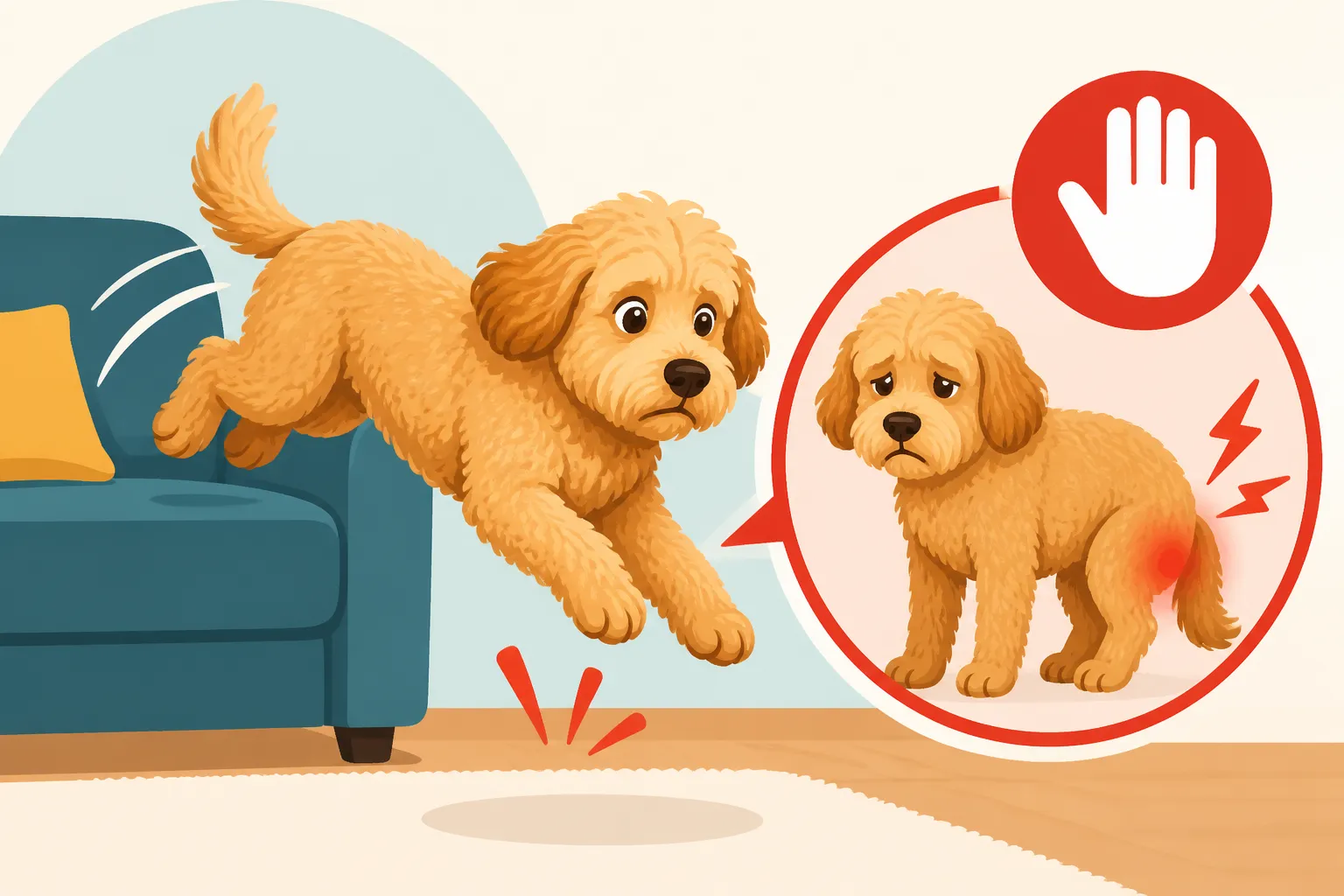
Why a Goldendoodle Should Not Jump Off Furniture
It's a familiar sight for so many Goldendoodle parents: your furry friend, full of boundless energy, leaping off the sofa or bed with an enthusiastic thump. While it might look cute and agile in the moment, that seemingly harmless jump can actually put a significant amount of stress on your Goldendoodle's delicate joints, especially over time. This guide is here to walk you through why those frequent leaps pose a risk and what you can do to protect your beloved companion from potential injuries and long-term joint issues.
The Mechanics of a Goldendoodle Jump and Its Impact
When your Goldendoodle launches itself off a piece of furniture, the forces at play are far greater than you might imagine. It’s not just a gentle hop; it’s a full-body impact that can wreak havoc on their skeletal system, particularly their joints. Understanding what's happening internally can help you appreciate why prevention is so crucial.
The Force of Impact on Developing Joints
Think about the physics involved: gravity pulls your Goldendoodle down, and when they land, that kinetic energy needs to be absorbed. Their joints, particularly their elbows, hips, and knees, bear the brunt of this impact. For a young Goldendoodle puppy, whose growth plates are still open and haven't fully fused, repeated hard landings can be especially damaging. These delicate areas are soft and vulnerable, making them susceptible to injury or abnormal development if continually stressed. It’s like repeatedly hitting a weak spot – eventually, it's going to give.
Even in adult Goldendoodles, where growth plates have closed, the cartilage that cushions their joints can suffer wear and tear from sudden, high-impact movements. This isn't just about a single catastrophic injury; it's also about the cumulative effect of many small traumas over months and years. Each jump adds a tiny bit of stress, potentially leading to inflammation, micro-fractures, and eventually, degenerative joint disease like arthritis, often seen as your Goldendoodle ages. Owners are often surprised at how quickly conditions like arthritis can set in if preventative measures aren't taken early.
Goldendoodle Joint Vulnerabilities Inherited from Parent Breeds
Goldendoodles inherit their unique charm and traits from both the Golden Retriever and the Poodle, but unfortunately, they can also inherit some of their joint predispositions. Both parent breeds are known for certain orthopedic issues that can be exacerbated by activities like jumping from furniture. For instance, Golden Retrievers are notorious for conditions like hip dysplasia and elbow dysplasia. These are genetic conditions where the joints don't form correctly, leading to instability and arthritis. A Goldendoodle carrying these genes might have already compromised joints, making them even more vulnerable to injury from impact.
Poodles, especially the larger standard varieties, can also contribute to joint concerns such as patellar luxation, where the kneecap slips out of place, and Legg-Calvé-Perthes disease, a condition affecting the hip joint. While Goldendoodle breeders often try to screen for these issues, no test is 100% foolproof, and genetic predispositions can still surface. Knowing that your Goldendoodle might already have a higher baseline risk for these problems should make you extra vigilant about protecting their joints from unnecessary strain. It's a key reason why understanding What a Goldendoodle Inherits From Each Parent Breed is so important for their overall health.
Common Injuries That Result from Furniture Jumping
The potential injuries from furniture jumping range from minor aches to severe, life-altering orthopedic problems. Many owners might not immediately connect a sudden limp or a subtle change in gait to a jump that happened weeks or months prior, but the connection is often there.
Minor Sprains, Strains, and Bruises
Most often, a Goldendoodle might experience a minor sprain or strain after an awkward landing. This could manifest as a slight limp, a reluctance to put weight on a paw, or general stiffness. You might notice them favoring a leg for a day or two, perhaps letting out a small yelp if you touch a sore spot. While these might seem less serious, they are warning signs. Repeated minor injuries can weaken ligaments and tendons, making them more susceptible to more significant tears in the future.
Sometimes, the impact might cause bruising or muscle soreness that isn't immediately visible under their fluffy coat. Your Goldendoodle might just seem a little "off," perhaps less enthusiastic about their usual playtime or walks. It's crucial not to dismiss these subtle cues. Just like us, dogs can experience pain and discomfort, and what appears to be a quick recovery might simply mean they're good at masking their lingering soreness. Catching these early signs means you can intervene with rest and gentle care before it escalates into something more serious.
Serious Orthopedic Injuries and Their Consequences
Unfortunately, the consequences can be much more severe than a simple sprain. One of the most common and devastating injuries from jumping is a cruciate ligament tear, particularly the cranial cruciate ligament (CCL), which is equivalent to an ACL tear in humans. This often happens when a dog lands awkwardly, twists, or overextends their knee. The sudden stress can cause the ligament to partially or fully rupture, leading to immense pain, instability, and an inability to bear weight. Surgical repair, often involving a TPLO (Tibial Plateau Leveling Osteotomy) or TTA (Tibial Tuberosity Advancement) procedure, is usually necessary. This is a major surgery, and recovery can be long and arduous, involving extensive physical therapy. The costs can easily run into the thousands of dollars, making something like pet insurance from providers like Healthy Paws an invaluable safety net for unexpected emergencies like this.
Another serious concern, particularly for smaller Goldendoodles, is an exacerbation of patellar luxation. While some dogs might have a genetic predisposition to this, a hard landing can cause a previously stable kneecap to permanently dislocate or worsen an existing mild luxation. Fractures, though less common from simple jumps, can also occur if the landing is particularly hard or on an unforgiving surface. These types of injuries not only cause immediate pain but can lead to chronic arthritis and mobility issues later in life, significantly impacting your Goldendoodle's quality of life. Understanding Cruciate Tears in an Active Goldendoodle can give you more insight into this debilitating injury.
Preventing Furniture Jumping and Protecting Goldendoodle Joints
The good news is that many joint injuries can be prevented with a combination of thoughtful management, consistent training, and proactive care. It’s about creating an environment that minimizes risk and supports long-term joint health.
Training and Management Strategies to Limit Jumping
The first step is always prevention. Start early with your Goldendoodle puppy, teaching them that furniture is for calm relaxation, not a launchpad. Use positive reinforcement to reward them for staying on the floor or using designated pet-friendly steps or ramps. A simple "off" command can be incredibly useful. Practice it regularly, rewarding them generously when all four paws are on the floor. Consistency is key; if you sometimes allow jumping and other times forbid it, your Goldendoodle will be confused.
Consider physically limiting access to high furniture when you can't supervise. Baby gates can be your best friend, especially if your Goldendoodle has a favorite jump-off spot. For beds or tall sofas, invest in dog ramps or stairs. It might take a little patience to teach your Goldendoodle to use them, but it’s a small investment for their long-term health. Make using the ramp a positive experience with treats and praise. Remember, a Goldendoodle that learns good habits early will carry them through life, helping to prevent issues like Goldendoodle Arthritis After the Age of Eight.
Supportive Measures for Long-Term Joint Health
Beyond preventing jumps, you can actively support your Goldendoodle's joint health through various measures. Maintaining a healthy weight is paramount. Excess weight puts additional strain on all joints, accelerating wear and tear. Work with your vet to determine an ideal weight for your Goldendoodle's size and age, and adjust their diet and exercise accordingly. This is crucial for their overall wellbeing, as discussed in Goldendoodle Weight and the Load on Its Joints.
Regular, appropriate exercise is also vital. This means controlled activities like leash walks, swimming, or playing fetch on soft surfaces, rather than high-impact acrobatics. Avoid activities that involve repetitive jumping or twisting, especially during their puppy growth phases when their joints are still developing. Speak to your vet about joint supplements that might be beneficial, particularly for larger Goldendoodles or those with a known predisposition to joint issues. Supplements containing glucosamine, chondroitin, and MSM can help support cartilage health, and omega-3 fatty acids can reduce inflammation. These aren't magic bullets, but they can be part of a comprehensive strategy.
A healthy Goldendoodle can be an active Goldendoodle, and ensuring proper nutrition can make a huge difference. High-quality dog food provides the building blocks for strong bones and connective tissue. Remember, proactive care throughout their life can significantly reduce the risk of debilitating conditions.
Recognizing the Signs of Injury and Seeking Professional Help
Even with the best preventative measures, accidents can happen. Knowing what signs to look for and when to contact your veterinarian is crucial for a swift diagnosis and effective treatment.
Observable Signs of Pain or Injury
It's not always a dramatic yelp and a three-legged hop. Sometimes, the signs of joint pain or injury can be subtle, especially in a dog known for its stoic nature like many Goldendoodles. Keep an eye out for any changes in their gait or posture. Are they limping, even slightly, after a period of rest or activity? Do they seem stiffer in the mornings or after naps? Are they reluctant to jump onto your lap, go up stairs, or engage in their usual play? These are all red flags.
Other signs might include changes in behavior: decreased energy, irritability when touched, or a refusal to bear weight on a specific leg. You might notice swelling around a joint, heat to the touch, or even muscle atrophy if they've been favoring a limb for a while. Watch how they move, how they lie down, and how they get back up. Any deviation from their normal routine or obvious discomfort warrants attention. Ignoring these signs could allow a minor injury to become a chronic problem, leading to long-term pain and diminished mobility.
The Importance of a Prompt Vet Visit and Diagnosis
If you suspect your Goldendoodle has sustained an injury, the most important thing is to schedule a visit with your veterinarian right away. Don't try to self-diagnose or wait to see if it "gets better." Early intervention can make a world of difference in the prognosis and recovery time. Your vet will conduct a thorough physical examination, assessing your Goldendoodle's range of motion, palpating their joints for swelling or pain, and observing their gait.
They might recommend diagnostic imaging such as X-rays to check for fractures, dislocations, or signs of arthritis. In some cases, more advanced imaging like an MRI or CT scan might be necessary to visualize soft tissue damage, such as a torn ligament. Based on the diagnosis, your vet will discuss treatment options, which could range from rest and pain medication to more intensive treatments like physical therapy or surgery. For serious injuries requiring surgery, pet insurance like that offered by Healthy Paws can significantly ease the financial burden, allowing you to focus on your Goldendoodle's recovery without added stress. Understanding Physical Therapy After Goldendoodle Knee Surgery can also provide insights into the rehabilitation process.
Table: Common Joint Injuries from Jumping and Treatment Approaches
This table provides a quick overview of some common injuries Goldendoodles can sustain from high-impact activities like jumping from furniture, along with typical treatment strategies.
| Injury Type | Common Symptoms | Typical Treatment Approach | Recovery Time (Approx.) |
|---|---|---|---|
| Sprain/Strain | Mild limping, stiffness, tenderness to touch | Rest, anti-inflammatory medication, cold/heat packs | 1-3 weeks |
| Patellar Luxation | Intermittent skipping/hopping, leg held up intermittently | Mild cases: physical therapy, weight management. Severe cases: surgical correction. | Weeks to months (if surgery) |
| Cruciate Ligament Tear (CCL) | Sudden lameness, inability to bear weight, swelling | Surgical repair (TPLO, TTA), extensive rest, physical therapy, pain management. | 3-6 months post-surgery |
| Hip/Elbow Dysplasia (Exacerbation) | Chronic lameness, reluctance to move, bunny hopping, pain | Pain management, joint supplements, physical therapy, weight control. Surgery in severe cases. | Lifelong management |
| Fracture | Severe lameness, swelling, deformity, extreme pain | Surgical fixation (plates/screws), casting, strict rest, pain management. | 6-12 weeks, possibly longer |
Remember, this table is for informational purposes only. Always consult your veterinarian for an accurate diagnosis and treatment plan tailored to your Goldendoodle's specific condition. Proactive care and immediate attention to signs of injury are the best ways to keep your Goldendoodle healthy and happy.
Disclaimer
The information provided in this article is for general informational purposes only and is not a substitute for professional veterinary advice. Always consult with a qualified veterinarian regarding any medical concerns or before making any decisions about your Goldendoodle's health or treatment.