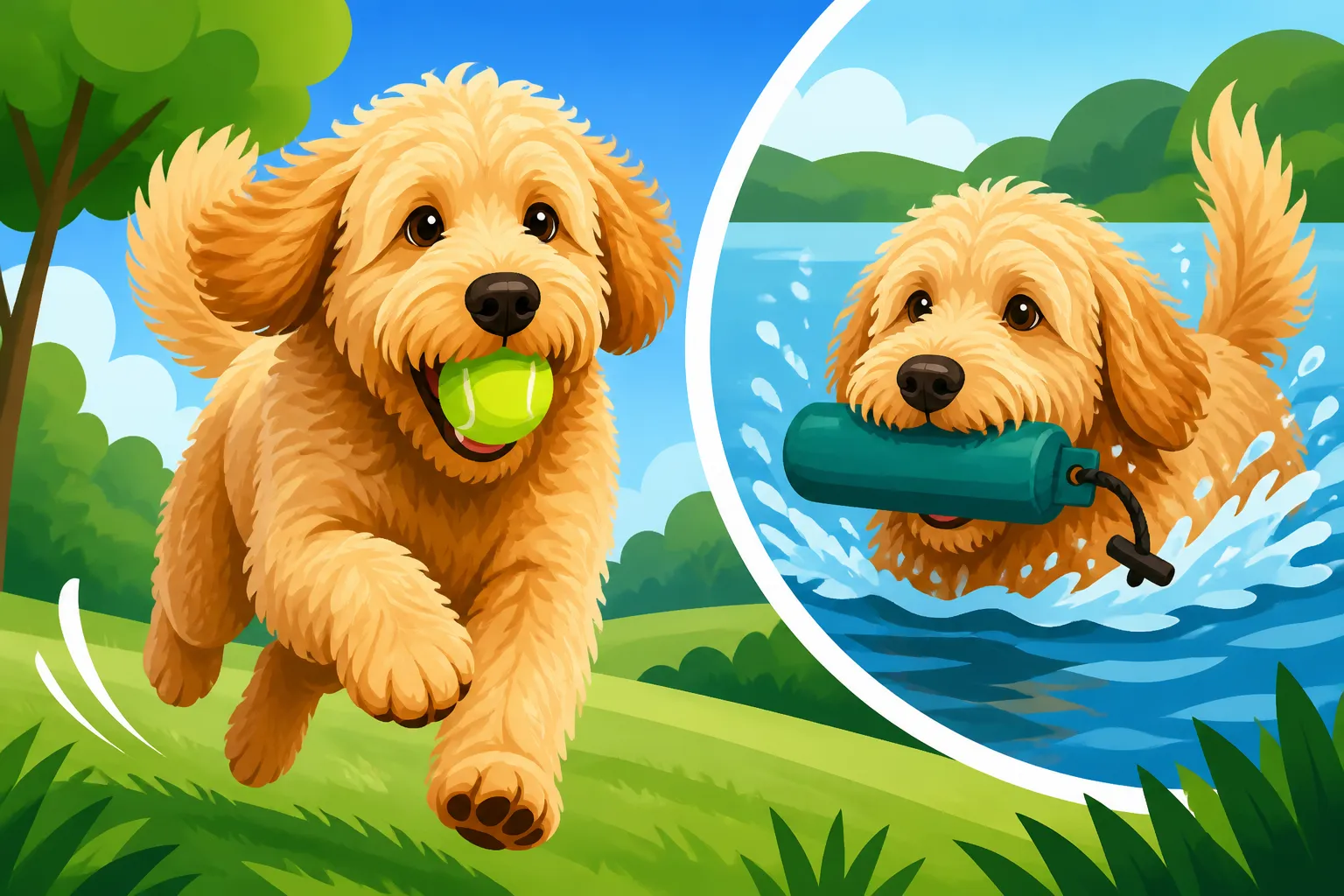
Goldendoodle Fetch and Retriever Drive
One of the most charming and, let's be honest, sometimes overwhelming traits of a Goldendoodle is their inherent desire to retrieve. If your Goldendoodle is constantly bringing you toys, dropping balls at your feet, or trying to instigate a game of chase with anything they can get their mouth on, you're experiencing that powerful retriever drive firsthand. This guide is all about understanding where that drive comes from and how to channel it into fun, engaging activities that both you and your furry friend will adore, rather than feeling like your house has become a permanent fetch arena.
Understanding the Goldendoodle's Innate Retriever Drive
It’s no secret that Goldendoodles come from two incredibly smart and active breeds: the Golden Retriever and the Poodle. Both of these parent breeds bring a lot to the table, but when it comes to the urge to fetch and carry things, you can definitely see the Golden Retriever shining through. They were, after all, bred for generations to retrieve game for hunters, making them incredibly keen on finding, picking up, and bringing things back. This isn't just about playing; it's a deep-seated instinct.
The Golden Retriever's Influence on Fetch Behavior
Think about the Golden Retriever parentage for a moment. These dogs were developed to work closely with people, often in challenging environments, retrieving ducks and other fowl without damaging them. This required intelligence, a "soft mouth," eagerness to please, and an undeniable drive to bring things back to their handler. When you see your Goldendoodle charging after a tossed ball with unbridled enthusiasm, or gently picking up a dropped sock to deliver it to you, you're witnessing generations of selective breeding at play. It’s not just a cute quirk; it’s a genetic blueprint.
This drive is often accompanied by a high level of biddability, which means they are generally quite eager to cooperate and learn from their human companions. This makes training, including advanced fetch games, a truly rewarding experience. Your Goldendoodle wants to engage with you, and often, retrieving is their favorite way to do it. You’ll find that The Retriever Biddability Inside a Goldendoodle is a cornerstone of their personality and a huge asset in training.
The Poodle's Contribution to the Game
While the Golden Retriever gets a lot of credit for the "retrieve" part, don't underestimate the Poodle's role. Poodles were originally water retrievers, too, hunting ducks in Europe for centuries. They are highly intelligent, agile, and eager to please, all traits that make them excellent partners in any retrieving activity. The Poodle side of your Goldendoodle means they’re not just going to run after something; they're going to think about it. They'll figure out the best way to get it, often with impressive speed and grace.
This combination creates a dog that is not only driven to retrieve but also has the mental capacity to learn complex commands and variations of the game. They're not just mindless fetch machines; they're intelligent problem-solvers who enjoy the mental stimulation that comes with a good game. This intelligence is a huge advantage, as you'll notice that Why Goldendoodles Learn Faster Than Most Crosses means you can introduce intricate rules and scenarios to your fetch sessions, keeping things fresh and exciting for both of you.
Channeling That Drive: Training for Fetch and Beyond
Understanding their inherent drive is the first step; the next is learning how to harness it. This isn't just about throwing a ball endlessly. It’s about structuring the game, adding rules, and using it as a powerful tool for exercise, mental stimulation, and strengthening your bond. A well-trained retrieve isn’t just impressive; it’s incredibly useful for tiring out your energetic Goldendoodle.
Starting with the Basics: "Take It" and "Give"
Before you can have a grand game of fetch, your Goldendoodle needs to understand the fundamentals. These aren't just polite manners; they're the building blocks for more advanced retrieval tasks. "Take It" teaches them to pick up an item on command, while "Give" (or "Drop It") teaches them to release it willingly. Many Goldendoodles will naturally pick things up, but getting them to give it back reliably, especially when something more exciting is happening, takes practice.
Start in a quiet, distraction-free environment with a toy they love but aren't obsessed with. Offer the toy with a "Take It" command, letting them mouth it. The moment they take it, praise them. Then, offer a high-value treat in exchange for the toy, using your "Give" command. The instant they release the toy, give them the treat and praise. Repeat this many times. The goal is to make "Give" the most rewarding thing they can do. You can find excellent durable retrieve toys, like those from KONG or Chuckit!, on Amazon. These early training sessions are vital for establishing good habits and preventing resource guarding later on.
Advancing the Game: "Retrieve," Distance, and Direction
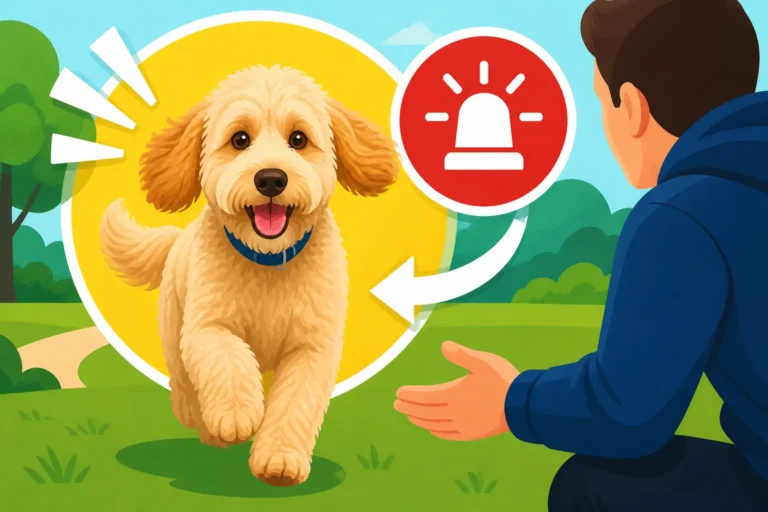
Once your Goldendoodle consistently understands "Take It" and "Give," you can start putting the pieces together for a proper retrieve. Begin by tossing the item a short distance, using your "Retrieve" command. When they pick it up, encourage them to come back to you. The moment they return, use "Give." If they don't come directly back, try squatting down, clapping, and using an excited tone to encourage them. Avoid chasing them, as this often turns into a game of keep-away.
Gradually increase the distance of your throws and start introducing distractions. Play in different environments, like a park or a large, fenced yard. You can also begin teaching directional commands, like "Left" or "Right," by using hand signals and body language to guide them toward the tossed item. This not only makes the game more challenging but also provides invaluable Goldendoodle Exercise and Mental Work Every Day. Remember to keep training sessions short and positive, especially when introducing new elements. Goldendoodle Training Sessions and How Long to Run Them should ideally be kept to 5-10 minutes to maintain their engagement and enthusiasm.
Making Fetch a Life Skill: Retrieving Specific Items
Beyond just a ball, the retriever drive can be channeled into helpful tasks around the house. Imagine your Goldendoodle fetching your slippers, the remote, or even bringing in the mail! This is where the intelligence of both parent breeds truly shines. Start with items they are already familiar with and enjoy picking up. Use a distinct name for each item, like "Get the ball" or "Find the rope."
You’ll start by placing the item near them, giving the specific command, and then the "Retrieve" command. As they become proficient, you can gradually increase the distance and even hide the item, turning it into a fun scent game. Always reward heavily when they bring you the correct item. Training Treats Sized for a Mini Goldendoodle or even a standard Goldendoodle can be small, soft, and high-value to keep their motivation high without overfeeding. This kind of nuanced training helps solidify their understanding and makes them truly helpful companions.
Common Challenges and Troubleshooting
Even with a strong retriever drive, you might encounter some common bumps in the road. It's perfectly normal, and usually, a slight adjustment to your approach can make all the difference. Remember, consistency and patience are your best friends.
The "Keep-Away" Game
One of the most frustrating scenarios is when your Goldendoodle retrieves the item but then runs away with it, turning fetch into "keep-away." This usually happens because they've learned that bringing the toy back immediately ends the fun, or that you chasing them is part of the game. To counteract this, always have two identical toys. When they come back with the first toy, immediately show them the second, even if they haven't dropped the first one yet. As they drop the first to investigate the second, give your "Give" command, praise, and then toss the second toy. This teaches them that bringing the toy back starts a new round of fun, rather than ending it.
Another reason for keep-away can be a lack of a solid "Give" command. If your Goldendoodle isn't willingly dropping the item, revisit the basic "Give" training by exchanging the toy for a high-value treat every single time. Make the exchange more rewarding than holding onto the toy. Goldendoodle Impulse Control Exercises can also help them learn to manage their excitement and follow commands even when they'd rather do something else.
Lack of Enthusiasm or Short Attention Span
Sometimes, a Goldendoodle might seem less than thrilled about fetch, or they might lose interest quickly. This could be for a few reasons. First, is the toy truly exciting for them? Experiment with different textures, sizes, and types of toys. Some prefer squeaky toys, others love a soft plush, and many adore a classic tennis ball. Also, consider the environment. Too many distractions can make it hard for them to focus.
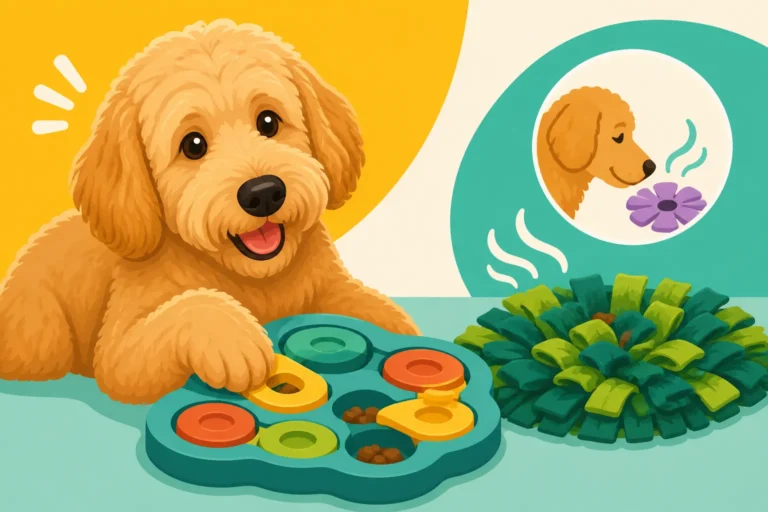
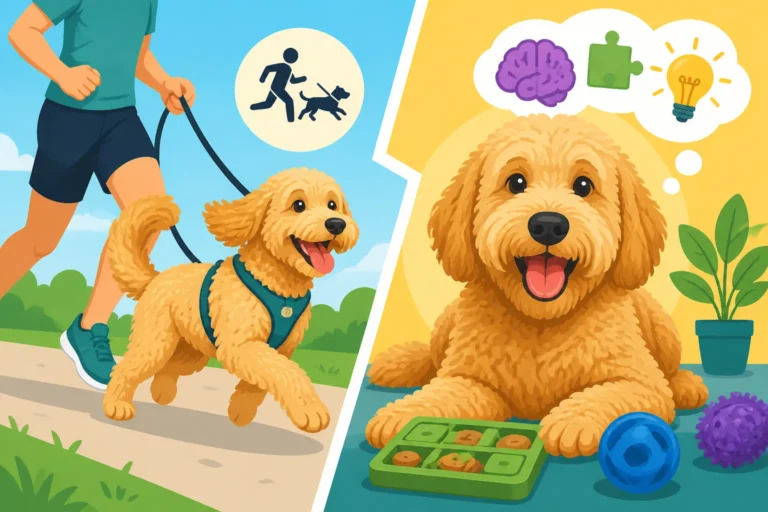
Secondly, ensure your energy is infectious! Dogs feed off our enthusiasm. Be excited, praise lavishly, and make it the most fun game ever. If they're losing interest quickly, shorten the sessions. It’s better to have five enthusiastic retrieves than twenty half-hearted ones. Gradually build up the duration. Remember, Why Physical Exercise Alone Never Tires a Goldendoodle – they need mental engagement too. Incorporate puzzle toys from Amazon or mental games before or after fetch to keep their brains working.
| Common Fetch Challenge | Symptom | Solution |
|---|---|---|
| Keep-Away Game | Dog retrieves but runs off, won't drop toy. | Use two identical toys, reward dropping with a new toss or high-value treat. |
| No Enthusiasm | Ignores toy, retrieves slowly, or loses interest. | Try different toys, increase your excitement, shorten sessions, reduce distractions. |
| Chewing the Toy | Retrieves but immediately starts chewing it. | Interrupt gently with a "Leave It" or "Give" command, redirect to a chew toy. |
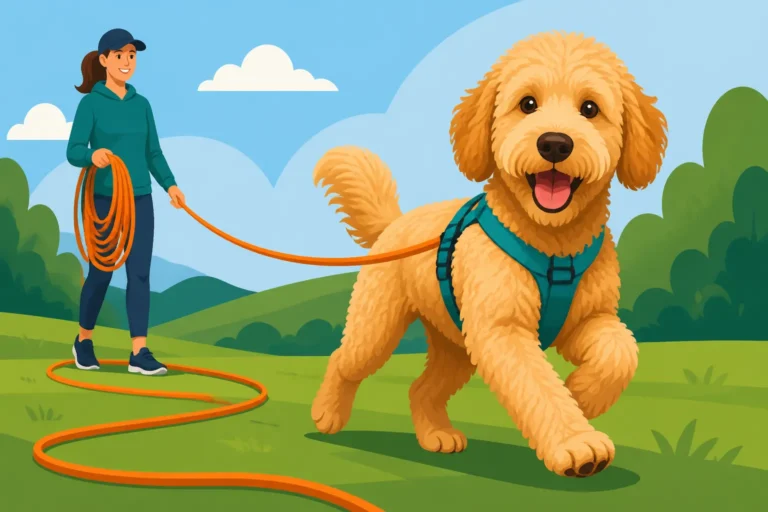
| Not Coming Back | Picks up toy but doesn't return to you. | Use a long line, make yourself more exciting than the toy (squat, praise), reward heavily for return. |
Over-Arousal and Nipping
Some Goldendoodles, especially puppies or young adults, can get overly excited during fetch, leading to nipping or jumping. This is often an energy management issue. For these pups, focus on building impulse control alongside the retrieving. Incorporate "Sit" or "Down" before each toss, and only throw the toy when they are calm. If they start getting too wild, end the game immediately with a "Too bad!" and walk away for a minute. This teaches them that calm behavior earns the game, while over-arousal makes it stop.
You can also incorporate moments of calm into the game. After they retrieve, ask for a "Sit" and a moment of stillness before the next toss. This helps them practice self-regulation even when excited. For some really high-energy Goldendoodles, a combination of physical exercise and mental work is crucial. Puzzle Toys That Occupy a Goldendoodle for an Hour can be a fantastic way to burn mental energy without escalating physical excitement, which might lead to nipping.
Keeping Fetch Fun and Safe
Fetch isn't just a game; it's a fantastic bonding opportunity and a vital source of physical and mental stimulation for your Goldendoodle. To keep it that way, always prioritize safety and keep things interesting.
Choosing the Right Toys
The world of dog toys is vast, but for fetch, you want something durable, appropriately sized, and safe. Avoid anything too small that could be a choking hazard or too large for them to comfortably carry. Rubber balls, ropes, and flying discs are often great choices. Inspect toys regularly for damage and discard anything that's breaking apart, as ingested pieces can be dangerous. Brands like Kong and Chuckit! are well-known for their durable fetch toys, and you can easily browse a wide selection on Amazon.
Consider the environment you're playing in. If you're near water, opt for floating toys. If you're on rough terrain, choose something tough that won't get torn up immediately. And don't forget variety! Rotating toys can keep the game fresh and exciting.
Incorporating Fetch into Daily Life and Exercise
Fetch doesn't have to be a dedicated half-hour sprint in the park every day. Integrate it into your walks by tossing a lightweight ball in an open field or playing a few rounds in your backyard. For Goldendoodles, who need a good balance of physical and mental activity, fetch is an excellent way to combine both. They get to run, chase, and use their instincts, all while engaging their brains to follow commands and bring the item back.
Consider how fetch can serve as a reward for other behaviors. For example, after a successful training session on Goldendoodle Leash Manners by Size, a few rounds of fetch can be a wonderful, high-value reward. On rainy days, indoor fetch games with soft toys can help burn off some energy, especially for smaller Goldendoodles. This also contributes to Rainy Day Enrichment for a Goldendoodle, ensuring they stay stimulated even when outdoor activities are limited.
Advanced Retriever Games and Scent Work
Once your Goldendoodle is a fetch pro, you can take their retrieving skills to the next level. Try hiding toys around the house or yard and asking them to "Find It" or "Search." This transforms fetch into a scent game, which is incredibly enriching for their powerful noses. You can even combine different commands, such as "Sit, wait, find it!" This engages multiple layers of their brain.
Another fun option is to teach them to retrieve items from a specific location, like "Go get the toy from your basket." Or, if you're feeling adventurous, you could explore actual scent work classes, where their natural drive to find and retrieve can be honed into a fascinating skill. This kind of advanced work not only deepens your bond but provides profound mental satisfaction for your intelligent Goldendoodle. Platforms like BAXTER & Bella offer online resources and courses that can guide you through these more advanced training techniques, helping you unlock your Goldendoodle's full potential.
Ultimately, your Goldendoodle's retriever drive is a gift. With a little understanding and consistent, positive training, you can transform this instinct into endless hours of fun, engagement, and a deeper connection with your beloved companion.
Disclaimer
This article is for general informational purposes only and does not constitute professional advice. Laws, prices and regulations vary by location and change over time. Consult a qualified professional for guidance on your specific situation.