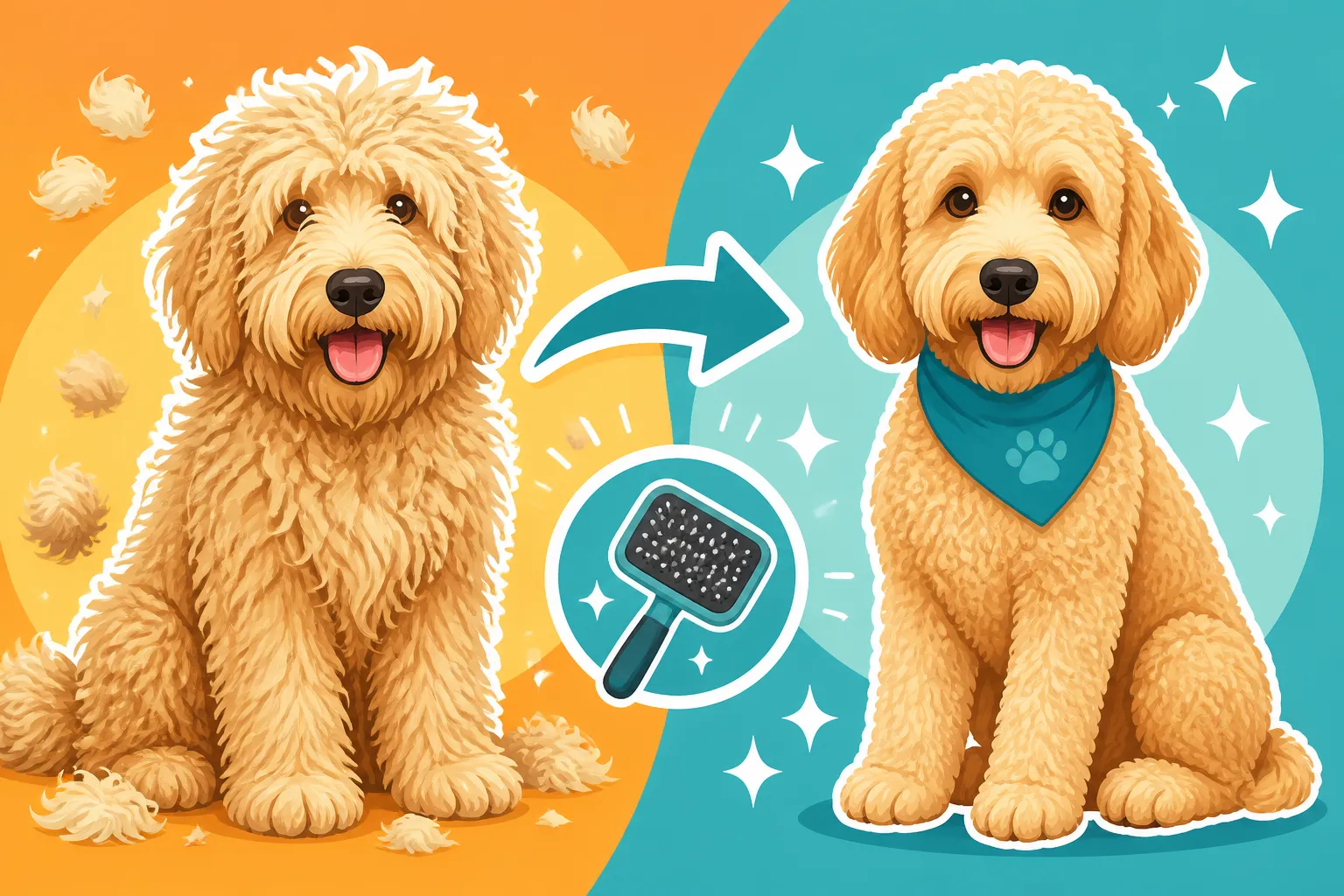
Surviving the Goldendoodle Coat Change
One of the most surprising, and frankly, frustrating, experiences for many new Goldendoodle parents is the "coat change." You bring home that adorable, fluffy puppy, envisioning a lifetime of soft, low-shedding snuggles, only to discover that around adolescence, their easy-care puppy fur decides to stage a massive rebellion. This guide is here to walk you through exactly what this infamous Goldendoodle coat change entails, why it happens, and most importantly, how to survive it without resorting to a total shave-down (unless you want to!).
Understanding the Goldendoodle Coat Change Phenomenon
The Goldendoodle coat change isn't just a slight increase in shedding; it's a fundamental transformation of your dog's fur, evolving from soft, wispy puppy fuzz into the denser, more mature adult coat. This period can be incredibly challenging for owners, primarily due to the sudden and often severe matting that can occur if you're not prepared.
What Actually Happens During the Coat Change
Think of your Goldendoodle's puppy coat as a fine, soft baby blanket. It’s lovely and easy to manage, usually not matting much at all. Then, somewhere between 8 and 12 months, this baby blanket starts to mix with a much coarser, thicker adult "tapestry" that's trying to grow in. The problem is, these two very different textures of hair don't play well together. The fine, wispy puppy hair gets tangled around the emerging adult hair, creating a perfect storm for knots, tangles, and dense mats right down to the skin. It’s like trying to comb fine silk threads through stiff wool – it just gets caught. This is exactly why you'll often hear about Goldendoodle owners suddenly finding massive mats appearing seemingly overnight. It’s not just shedding; it’s a complete textural shift happening across their entire body. You might have had weeks of perfectly easy brushing, then one morning, it feels like you're trying to detangle a sheep.
Why the Coat Change Is So Prone to Matting
The matting during the coat change is a direct result of these two distinct hair types – the puppy coat and the adult coat – trying to coexist on your Goldendoodle's body. The soft, wispy puppy hair, which is typically quite light and often doesn't shed much, becomes trapped by the incoming, denser, and sometimes curlier adult hair. Imagine a Velcro strip (the adult hair) grabbing onto a feather boa (the puppy hair). It’s a recipe for disaster. This isn't unique to Goldendoodles; many breeds with complex or double coats experience a similar "blowing coat" phase, but with Goldendoodles, the varying genetic contributions from the Golden Retriever and Poodle sides can make this transition especially unpredictable and intense. One moment you're gliding a brush through easily, the next it feels like you've hit a brick wall of felt. This is also Why a Goldendoodle Puppy Coat Predicts Nothing about their adult shedding or matting tendencies.
When to Expect the Goldendoodle Coat Change to Hit
The timing of the Goldendoodle coat change can feel a bit like a mystery, adding to the frustration for unprepared owners. There's no exact date on the calendar, but there's a general window you should be aware of.
The Typical Age Range for the Transition
Most Goldendoodles will begin their infamous coat change somewhere between 8 and 12 months of age. However, like everything with these wonderful crossbreeds, there's a good deal of individual variation. Some might start as early as six months, while others might not fully dive in until they're closer to 18 months old. It often coincides with their adolescent phase, which, let's be honest, already brings its own set of challenges! This makes it even more crucial to be proactive rather than reactive. As your Goldendoodle approaches that 8-month mark, it's time to mentally prepare and potentially ramp up your grooming routine before you see the first signs of matting. It's truly a critical period in their first year of life where your diligent care can save you, and your dog, a lot of discomfort and expensive trips to the groomer.
Signs That the Coat Change Has Begun
You might not notice a sudden increase in shedding on your furniture, as Goldendoodles are often heralded as low-shedding. Instead, the primary sign of the coat change starting will be a dramatic increase in matting. You'll brush your dog one day, and everything seems fine. The next day, you find a tight, dense mat behind an ear, in an armpit, or under their collar. These are the "hot spots" where friction is common, and the mixed puppy and adult hair gets tangled first. You might also notice their coat feels thicker, perhaps a little coarser, or that your regular slicker brush just isn't getting through as easily anymore. It's a subtle shift at first, but once it starts, it can accelerate rapidly. Pay close attention to these areas: behind the ears, armpits, inner thighs, under the collar or harness, and around the tail. These are the zones where mats form first and often the fastest, signaling that the coat change has truly begun in earnest.
Daily Brushing: Your Best Weapon Against the Coat Change
During the Goldendoodle coat change, brushing isn't just a recommendation; it's an absolute necessity. Skipping even a day or two can lead to mats that are incredibly difficult, if not impossible, to remove without shaving.
Mastering the Art of Line Brushing
Line brushing is the most effective technique for preventing mats and ensuring you get down to the skin, which is where mats truly start. It involves sectioning off your dog's coat and brushing in small layers, rather than just skimming the surface. Start by laying your Goldendoodle on their side. Using a slicker brush, part the hair down to the skin near their belly or leg. Hold the hair above the part with one hand, and with the other, brush the small section of hair beneath your hand, working your way from the skin outwards. Once that section is tangle-free, move up slightly, creating a new "line" and repeat the process. This slow, methodical approach ensures you're clearing any puppy hair that's clinging to the adult coat. It's painstaking, especially for a larger Goldendoodle, but it's the only way to truly stay on top of the matting. Without proper line brushing, you're merely brushing the top layer, leaving the real problem areas untouched. Line Brushing a Goldendoodle Section by Section is a skill worth developing early. You can find excellent slicker brushes and metal combs on Amazon or Chewy to get started.
Essential Tools for the Coat Change
Having the right tools is paramount. You’ll need a good quality slicker brush that has firm but flexible pins. Don't skimp here; a cheap brush won't penetrate the dense coat effectively. A sturdy metal comb with both wide and narrow teeth is also non-negotiable. The comb is your "mat detector" – after brushing a section with the slicker, run the comb through. If it snags, you've missed a tangle, and you need to go back with the slicker brush. A detangling spray can also be a lifesaver, helping to loosen minor tangles and reduce static. Lastly, a grooming table or even a raised non-slip surface can make the process much easier on your back and keep your Goldendoodle still. Trust me, trying to brush a wriggly Goldendoodle on the floor for an hour is a workout you don't need! For serious knots, a mat splitter or dematting tool can be useful, but use these with extreme caution as they can easily cut skin if not handled properly.
Here's a quick overview of essential grooming tools for the coat change:
| Tool | Purpose | Key Features | Frequency of Use |
|---|---|---|---|
| Slicker Brush | Main tool for removing tangles & dead hair | Firm, flexible pins; ergonomic handle | Daily |
| Metal Comb | Checks for mats, detangles smaller knots | Wide and narrow teeth; stainless steel | After every brush |
| Detangling Spray | Loosens tangles, reduces static, adds moisture | Dog-safe formula, often includes conditioner | As needed |
| Grooming Table | Elevates dog for easier access, provides stability | Non-slip surface, adjustable height (optional) | For every grooming session |
| Mat Splitter | Cuts through dense mats (use with extreme caution) | Sharp blades, protected edges | Rarely, only if necessary |
Professional Grooming During the Goldendoodle Coat Change
While daily home brushing is crucial, professional grooming plays an equally vital role in managing the coat change, especially if you want to keep your Goldendoodle's coat longer.
Why Frequent Groomer Visits Are Essential
During the coat change, your Goldendoodle will benefit immensely from more frequent professional grooming appointments. Instead of the typical 8-10 week schedule, you might need to bring them in every 4-6 weeks. A professional groomer has high-velocity dryers that can blast out loose puppy hair and specialized tools that can get through dense coats without causing discomfort. They can also spot impending mats that you might miss and address them before they become severe problems. Think of your groomer as your partner in crime against the dreaded mats. They have the expertise to navigate the complexities of the changing coat, and their services can literally save your dog from having to be shaved down due to extreme matting. It's an investment, yes, but far less costly than dealing with skin issues or sedated dematting sessions later. Make sure you're Booking a Goldendoodle Groom Six Weeks Out (or even more frequently) during this critical phase.
Communicating Your Needs to the Groomer
Open and honest communication with your groomer is key during this time. Don't be shy about discussing the challenges you're facing. Let them know you're trying to grow out the coat, or if you're struggling with specific areas. Show them any spots where you're finding persistent tangles. A good groomer will appreciate your input and can offer advice on home care, or suggest a haircut length that's more manageable for both you and your Goldendoodle during this transition. If you're hoping for a specific "teddy bear cut" or a longer style, they need to know if the coat condition allows for it. If the matting is too severe, they may have no choice but to shave it shorter, which is always done for the dog's comfort and skin health first. Be prepared for this possibility and understand that a shavedown is not a reflection of your failure but a necessary step for your dog's well-being.
Navigating Common Coat Change Challenges
The Goldendoodle coat change isn't always smooth sailing. You're likely to encounter a few common hurdles, from stubborn mats to managing the dog's comfort during grooming.
Dealing with Stubborn Mats and Undercoat Issues
Even with diligent brushing, a few stubborn mats are almost inevitable during the coat change. If you encounter a mat that you simply cannot brush out gently, do not pull or tug aggressively. This is painful for your dog and can cause skin irritation or even hematomas. Instead, try applying a generous amount of detangling spray (like those you can find on Chewy or Amazon) directly to the mat, letting it soak in for a few minutes. Then, gently try to separate the mat with your fingers or the fine end of your metal comb, working from the outer edges inward. If it's still too dense, it might be time to use a mat splitter, but again, with extreme care to avoid cutting the skin. Often, it's best to let your professional groomer tackle these, as they have the expertise and specialized tools to do so safely. Remember that When a Goldendoodle Mat Has to Be Shaved, it's for their comfort and health. It’s always better to shave out a mat than to cause your dog pain or injury trying to brush it out.
Keeping Your Goldendoodle Comfortable During Grooming
Grooming sessions during the coat change can be lengthy and challenging, both for you and your Goldendoodle. To make it more bearable, break up sessions into shorter, more frequent intervals if needed. Reward your dog with high-value treats and praise for cooperation. Start with areas they tolerate well before moving to more sensitive spots like ears or armpits. Ensure you have a non-slip surface so they feel secure. If your Goldendoodle is particularly anxious or sensitive to grooming, consider muzzle training them. This isn't a punishment, but a safety measure for both of you, ensuring that an accidental nip doesn't happen out of fear or discomfort. A positive, patient approach will pay dividends. If your dog consistently struggles, speak to a professional trainer or groomer about cooperative care techniques that can make grooming a more positive experience. Establishing a calm routine from puppyhood helps immensely when the coat change hits.
Life After the Coat Change: Maintaining the Adult Coat
Once your Goldendoodle's adult coat has fully grown in, you'll find that managing it is often a bit easier than the challenging coat change period. However, ongoing maintenance is still crucial for keeping them comfortable and mat-free.
Adjusting Your Brushing Routine Post-Change
While the intensity of daily brushing might slightly decrease once the coat change is complete, regular brushing remains non-negotiable for most Goldendoodles, especially those with curlier, Poodle-dominant coats. You'll likely settle into a routine of brushing every other day, or at least 3-4 times a week, ensuring you're still line brushing to the skin. The adult coat, while less prone to the specific type of matting seen during the transition, can still tangle easily, especially in high-friction areas. Keeping up with your metal comb checks is also important to catch any minor tangles before they become major mats. Remember, the goal is prevention. A well-maintained adult coat is beautiful, comfortable, and much easier to groom both at home and professionally. You might also find your Goldendoodle sheds a little more subtly with their adult coat, so consistent brushing helps manage that too.
Long-Term Professional Grooming Strategies
After the coat change, you can often return to a more standard professional grooming schedule, typically every 6-8 weeks. However, this largely depends on the length you prefer for their coat and your commitment to home brushing. If you like a longer, fluffier look, more frequent 4-6 week appointments might still be beneficial, or you'll need to be extra diligent with daily home grooming. Discuss with your groomer what schedule makes the most sense for your Goldendoodle's specific coat type and your lifestyle. Regular professional trims help maintain coat health, prevent split ends, and keep their furnishing (facial hair, beard) tidy. Don't forget that consistent visits also help your Goldendoodle remain accustomed to the grooming process, making each visit less stressful for them. This commitment is part of Twelve Years of Goldendoodle Bills Added Up, but it's essential for their well-being.
Disclaimer
This article is for general informational purposes only and does not constitute professional advice. Laws, prices and regulations vary by location and change over time. Consult a qualified professional for guidance on your specific situation.